Travesty!

Tommy Tuchel’s Terrible Tactical Tinkerings.
So the 2026 World Cup, bloated and corrupt, draws to a close having defied the odds and produced a tournament that exceeded all (very low admittedly) expectations. The final was entirely in line with this analysis, a truly dreadful game finally delivering the right result.Spain, by far the best team in the competition, staggered over the line, bruised and bleeding, to give the Argentinian anti-football the kicking it deserved.
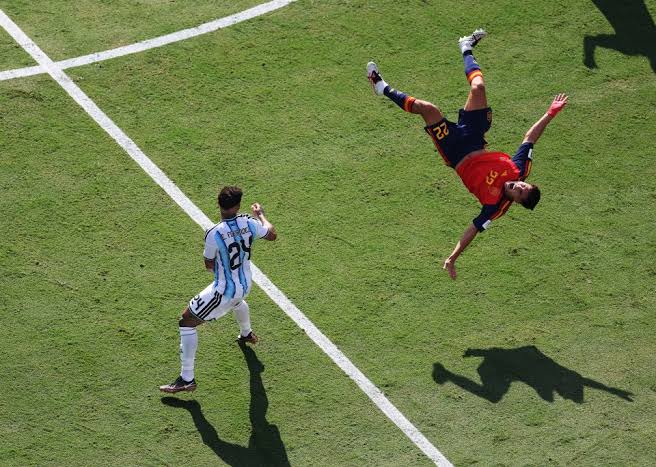
Argentina really were disgraceful, even before their childish, violent tantrums in reaction to losing. Dodgy refereeing decisions, the full panoply of foul play ( shirt pulling, diving, harassing the referee, exquisitely timed nudges, trips, punches and body checks out of the referee’s line of vision,  through to more blatant kicks, scythes, and general gbh.)

What of England? (This Royal throne of Kings, this sceptered isle, this earth of majesty, this seat of Mars, this other Eden, demi-paradise, this fortress built by Nature for herself against infection and the hand of war, this happy breed of men, this little world, this precious stone set in the silver sea, etc etc. Shakespeare eh? Great writer, but not so hot when it came to churning out catchy chants for the fans on the terraces) On paper, finishing third represents a performance that only the most blinkered fan could have predicted. The 6-4 win over the sublime French team was an extraordinary watch, but the overwhelming impression it left was not of joy or pride, but of regret for what might have been. And it’s all down to Thomas Tuchel, I’m afraid.

I was excited about his appointment. His tenure as manager of Chelsea had provided exhibit A for the case that managers and coaches  really  do make a difference. A good manager can weld a group of previous under performers into genuine contenders. They forge a team unity, particularly important in these days when the squad wins trophies, not the first eleven. They select the right eleven for each game, set appropriate tactics, and, most significantly, make tactical and personnel changes in mid game, on the back of what they have seen on the field. Generally speaking, that’s the crucial skill that separates the second division manager from the truly elite. Tuchel did all of that at Chelsea (and several other of Europe’s elite club sides) and there seemed no obstacle to him repeating it as manager of England. How wrong I was.

Doubts first began to trouble me with the announcement of the squad. There were some frankly inexplicable decisions. Djed Spence rather than Trent Alexander Arnold (yes, yes, yes, I know, but bear with me). Jordan Henderson, only a year or two away from the ceremonial award of his bus pass. Ivan Toney, an even less effective bollard after a couple of years of taking the Saudi Shilling. No Adam Wharton, the most effortlessly incisive passer of the ball in the Premier League. Dan Burn ahead of Harry Macguire. Noni Madueke. No natural left back included in reserve. (Yes, yes, Djed Spence, I know) I know many people were exercised about the lack of Cole Palmer, Jarrod Bowen, Phil Foden, Morgan Gibbs White etc, but I could understand those decisions.
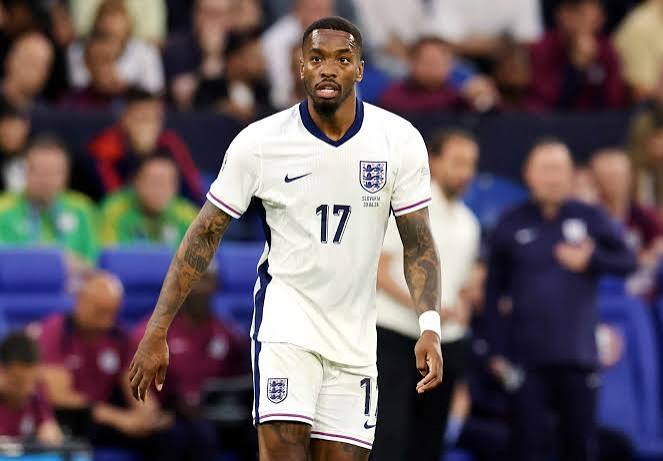
Spot the difference…

As the tournament progressed, England seemed less cohesive than under Southgate, the vastly under-appreciated previous manager. One half of slick passing does not a World Cup winner make. Up until the Mexico game, it all seemed very familiar. Highly talented players in the England squad arrive at the tournament physically and mentally exhausted after a gruelling, ultra competitive Premier League campaign. Many of them will have played sixty plus games, so playing for England with unfamiliar tactics against the world’s best is usually just a bridge too far. The turning point was the game against Mexico. A combination of slick, incisive attacking play, and heroic backs- to -the -wall defending with ten men into extra time produced an extraordinary game. Tuchel was hailed for his subs, and the way he got his men over the line. It was to prove a pyrrhic victory and in hindsight, seemed to give Tuchel entirely the wrong message, a message that put paid to England’s dreams of making the final. 

Having gone 1-0 up early in the second half, the semifinal was entirely and completely winnable. But then, almost immediately, Argentina were roused from their shithousery, just as they were when two goals down to Egypt. They started to play. First relentlessly pressing England out of all possession, and then, via Messi, working pockets of space, overloads and crossing opportunities. The situation was crying out for Tuchel to work his A- lister magic, to make those three or four subs that would wrest control back with the possibility of exploiting Argentina’s  camping in our half , and hitting them on the break. 

What he actually did was unfathomable, a schoolboy tactical error that someone on Hackney marshes would have been embarrassed by. A sacking offence, actually, because it lost us the game in an entirely predictable way. That Argentina would react in the way they did to going a goal down was equally predictable. It’s what they do. When they have to score, suddenly they find another gear and commit men forward. They win the ball high, stay high and work space. Why didn’t Tuchel anticipate this and make some subs? If you’re being overwhelmed, you don’t take off attackers for defenders, you strengthen the midfield, particularly when one of your key players is absolutely exhausted.You don’t try and win the headers in the box, you try to stop the crosses coming in. You don’t leave Harry Kane on, barely able to shuffle around the midfield, never mind break forward, particularly when at that point his only threat was going to be from set pieces, but we were nowhere near winning another corner.

There has been a tidal wave of criticism of this online of course, but so much of that has missed the mark entitrely (of course). Let’s be clear: there is absolutely nothing wrong with parking the bus to protect a lead. The greatest sides in history have been willing and capable of doing that. But you have to do it properly. Tuchel’s version of parking the bus was utterly inept. In fact, it wasn’t so much parking the bus, as parking the bus and leaving the key on the dashboard and the door open.

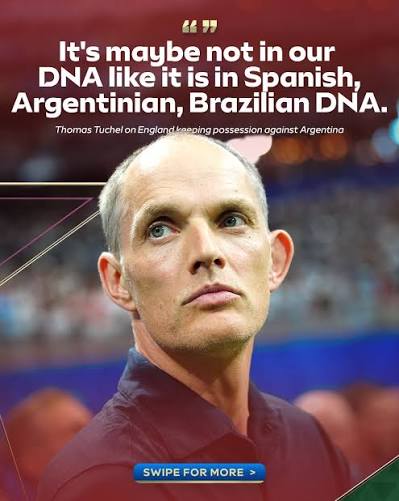
The most infuriating aspect of this is Tuchel’s comments after the match about keeping possession not being “part of England’s DNA”. What?! That was clearly true twenty years ago, but since the blessed Pep, possession is everything. Even teams in Division 2 try to play out from the back. It’s not our DNA you muppet, it’s the players you selected and those you refused to bring on. Kobi Mainoo, for a start. Bring on Mainoo to add legs and numbers to midfield and pass the ball to each other. Bring on Eze to hold the ball. Bring on Saka for forward threat and defensive awareness. Bring on Watkins to replace Kane. Bring on Rashford, for pace and running in behind. It’s unfathomable that Tuchel could not see this.

The players could see it. Wayne Rooney, surprisingly the best world cup pundit by a mile called it right. The minute Konsa came on for Gordon the game was lost and the message to the England players was clear: you’re not good enough against Argentina. That will fester in their minds for ever and a day and they will inevitably have lost some faith, some confidence in their manager. Of course, everyone makes mistakes. But there are mistakes and then there are avoidable catastrophes. This was an example of the latter. There’s only one appropriate response.

Tuchel has to go. Time for Neil Warnock…… (not really)

Ps

A final thought  about Djed Spence. As a Boro supporter, I’m very familiar with his strengths and weaknesses. Even with us, even after being told by Neil Warnock he was a non-league player, he was still incredibly dangerous going forward, and carried the ball beautifully at pace, but positionally, as a defender, he was hopeless. The positional weakness only becomes an issue when England dominate possession. In a backs-to-the-wall performance, Spence’s speed and tackling make him very hard to beat. He turned into an English equivalent, in terms of tenacious tackling and blocking, of Wan Bissaka. Well done Djed, son. And Boro might pick up a tasty sell-on bonus when Spurs sell him double quick. Not all gloom and doom then!

World Cup Memories

The Trump/ Infantino axis of evil has made it difficult to summon up any enthusiasm for the 2026 World Cup. Add in £1,000 tickets, nonsensical “hydration breaks”, the random banning of foreign nationals (press, players, officials and trainers) and the outrageously bloated size of the tournament  and “difficult “ becomes “impossible”.

And yet, a couple of weeks into the tournament, the actual football has slowly begun to work its magic, as it always does. There’s always something inspiring about the way certain teams, outside of the elite tier,  emerge to become fan favourites. So far it’s been the thrilling performances of Morocco and Japan, and the never say die spirit of minnows like Cape Verde and Iran that have captured the imagination. Throw into the mix the breathtaking attacking play of Spain and France, and the usual roller coaster of following England and you have a competition that has got off to a great start. 

This is the sixteenth World Cup I have watched, starting back in 1966 when I was nine years old. I didn’t know it at the time, but England’s only triumph in that year created deep scars, as it left me with the misapprehension that England were always the best team in world football and would always be contenders. It didn’t take long to disabuse myself of that notion, but it was a painful awakening. Perversely, looking back, there were some unlooked for benefits arising from England’s many failures to qualify back in the Seventies and Nineties. The first of those was being able to focus on the tournament as a whole instead of being obsessed with England’s games. It has been a real pleasure over the years getting to know other teams over the course of 4 weeks or so, watching them grow and develop. Back in the day it was a treat just to see world class players and teams. These days football fans take that for granted, with live games from the best leagues and cup competitions from around the world televised every day of the week. There are rarely any surprises when it comes to players or teams these days because we’ve all already seen them before. There have been some memorable moments in the last sixty years – here are my own personal highlights.

1 Mexico 1970

Still thinking that England were contenders, this was a fabulous tournament to watch. Exciting, glamorous, sun soaked, exotic – the television footage revealed fabulous stadia, loud, crazy fans that seemed a world away from the bovril drinking,  pipe smoking old cynics who always seemed to surround  thirteen year old me on the terraces of a permanently windswept Ayresome Park. As did the football – outrageous skills displayed to a samba beat, exemplified by the peerless Pele. Funnily enough, it was two slightly more prosaic incidents that live in my memory. The first was Bobby Moore’s tackle on Pele – a masterclass of concentration, calmness and timing.

The second, of course, was Gordon Banks’ astounding save from Pele’s thunderous downward header, involving him scrambling from the near post when the cross came in, to the far post just in time to scoop the ball up from ankle height and over the bar, seemingly in defiance of the laws of physics. We were so close to beating West Germany as well, but for dirty tricks involving Gordon Banks and “food poisoning”.

We were all so impressed by the romance of the Brazilians – Jairzinho, Rivelino et al – so much so that at the beginning of the next season there was a fashion amongst the Boro faithful for renaming our own heroes in the vain hope that some of the exotic magic of Mexico would rub off on them. Transforming Big John Hickton into Hicktino didn’t really do it though. The influence of the Azteca stadium had cast a longer shadow though. When we played kick about football three years later at Newham Grange Park in the Sixth Form, the pitch, in the slightest of depressions in the field, revelled in the name The Azteca. 

2. West Germany 1974

My all time favourite World Cup, mainly because I was 17 at the time and everything that happens to you at seventeen, when you’re on the cusp of being an adult, is forever after bathed in a golden light. This was despite the fact that, for the first time in my lifetime, England did not qualify. Incontrovertible proof that we were being left behind in terms of tactics, players and approach. It was also the Johan Cruyff World Cup, (Or Joe Hann Kruff as Jack Charlton called him) the glorious Dutch team and their intoxicating brand of “Total Football”. I vividly remember lying at home on the sofa watching Holland versus Sweden with my Dad, famously a professional cynic and all round curmudgeon when it came to football and anything foreign. When Cruyff executed his now famous turn, I literally fell off the sofa. It’s commonplace now, but back then no-one had ever seen anything remotely like that manouevre. My dad looked up idly from the racing pages of the paper to watch the replay. His verdict? “Clever Clogs. Didn’t bloody score though.”

Other highlights were the wonderful Polish team with flying wingers (Lato in particular) and thrilling overlapping full backs and an extraordinary range of goals scored outside of the box from virtually every team. Tikka takka and endlessly recycling the ball were mercifully absent from this brand of football.

3. Argentina 1978

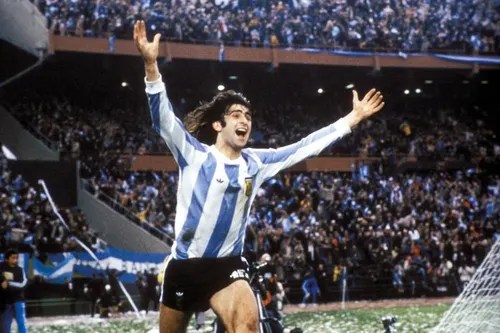
Another non-qualification, building the legend of “thirty years of hurt.” The Holland team was even better at this tournament and were robbed of the trophy by Argentina, who were characterised by a streak of cynicism to accompany the brilliance of Ardiles and Mario Kempes, possibly the coolest player on the planet then and now. I saw him play regularly in the 1981/82 season. Flowing dark hair, impeccable kit with shirt out of his shorts and a tan that would require many hours on the sunbed now,  he strutted around the middle of the pitch, all flicks and feints.

I never saw him tackle, or chase back. He would have choked on his Malbec if someone had explained the concept of pressing to him. But every time he got the ball in the box, he scored. He was absolutely lethal. The overwhelming impression left of this tournament was the ticker tape celebrations seen through grainy and flickering television pictures – the World Cup as an event that was impossibly foreign, far away and exotic.

4. Espana 1982

At last – qualification again! A great world Cup because of a) Bryan Robson and b) I was there! I saw England play Spain and get knocked out after a goalless draw, despite finishing unbeaten. Brooking and Keegan managed not to score a sitter between them. The highlight was going to the Bernabeu to see the final, purchasing tickets at El Corte Ingles a couple of days before the game for pennies (or pesetas). Can’t remember a thing about the game, apart from the Paolo Rossi hattrick and Tardelli’s famous second goal celebration. On the same trip I went to see The Rolling Stones at Atletico Madrid’s stadium, and I can’t remember a thing about that either. Maybe it’s a Madrid thing.

Mexico 1986

This was notable for the emergence of the great Gary Lineker as a world class forward, the first time we had had one of those for years. His hat trick against Poland made the hairs on the back of your neck stand up. Also notable for the arrival of Maradona on the world stage, a truly great player carrying on the line from Pele and Cruyff. The Hand Of God goal that cheated England out of the tournament hinted at dark undercurrents beneath the surface of genius. His second goal in this game remains one of the greatest goals of all time – outrageous skill, balance and drive.

Italy 1990

My third favourite World Cup after 1974. England had a great team- Lineker, Waddle, Barnes, Walker, Shilton and the young Paul Gascoigne were all world class players – but it appeared to emerge more by luck than judgement after a disappointing start and a bit of player power with the manager Bobby Robson. The semifinal against Germany was a classic world cup game and we were extremely unlucky to go out. Classic BBC coverage cemented this tournament’s place in history, with Nessun Dorma, Des Lynham (“Shouldn’t you be at work?”) and Gazza’s tears. It came at a perfect time when English football was reviving after decades of hooliganism and violence. The seeds were being sown for the gentrification of the sport, and football became a fashionable interest to claim – you can always tell when politicians begin to brag about their love of the game. (remember when the odious David Cameron revealed his essentially phoney persona by confusing Aston Villa and West Ham?)

South Korea and Japan 2002

A personal dimension to this one. I happened to come down with pneumonia right at the beginning of the tournament. It was the perfect illness – I felt absolutely fine as long as I was lying down in bed, but the minute I tried to walk, I felt completely exhausted and ill. Consequently, much to the suspicion of my teaching colleagues at the time, I watched every ball of this world cup – three games a day – and loved all of it. It was a time also notable for the fact that when I wasn’t watching football in bed, I was reading. I read the complete His Dark Materials trilogy by Philip Pullman – the greatest love story in literature. Or maybe that was the pneumonia talking.

So what of this year’s tournament? It’s hard to look beyond France or Spain as winners, but there may well be some shocks ahead. You can’t quite rule out Morocco and if England get past the altitude of Mexico city and the Azteca they could make it to the semi-finals. I fear though that some of Tuchel’s selections will come back to bite him on the bum. Djed Spence instead of Trent? No Harry Macguire or an alternative left back? Jordan Henderson instead of Adam Wharton? If they do get to the final, Declan Rice should retire and donate his body to medical science, if he is still alive by then. They shoot horses don’t they?