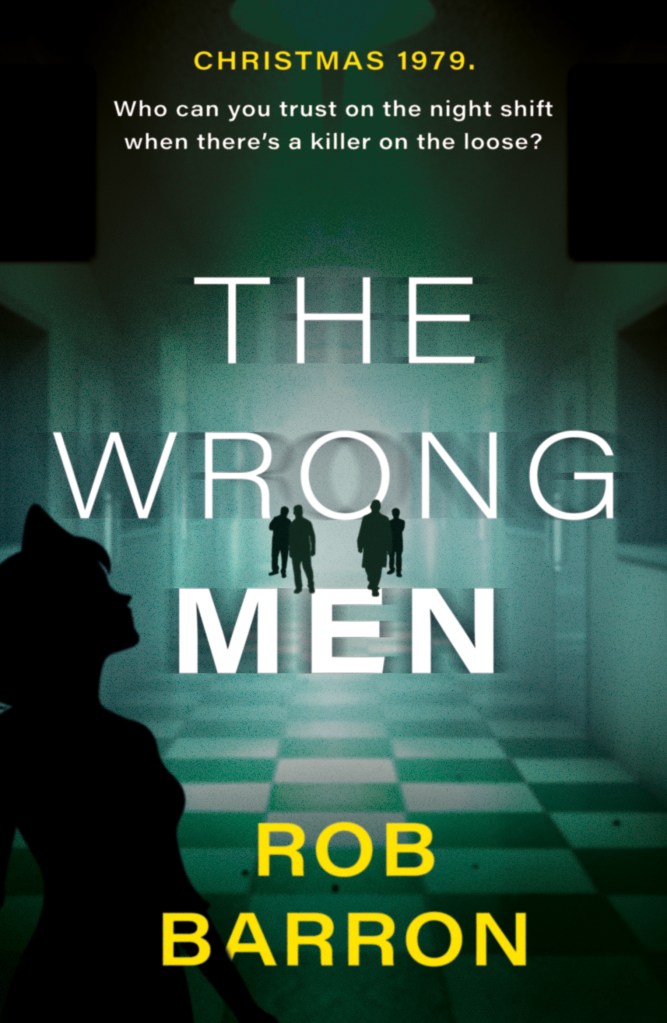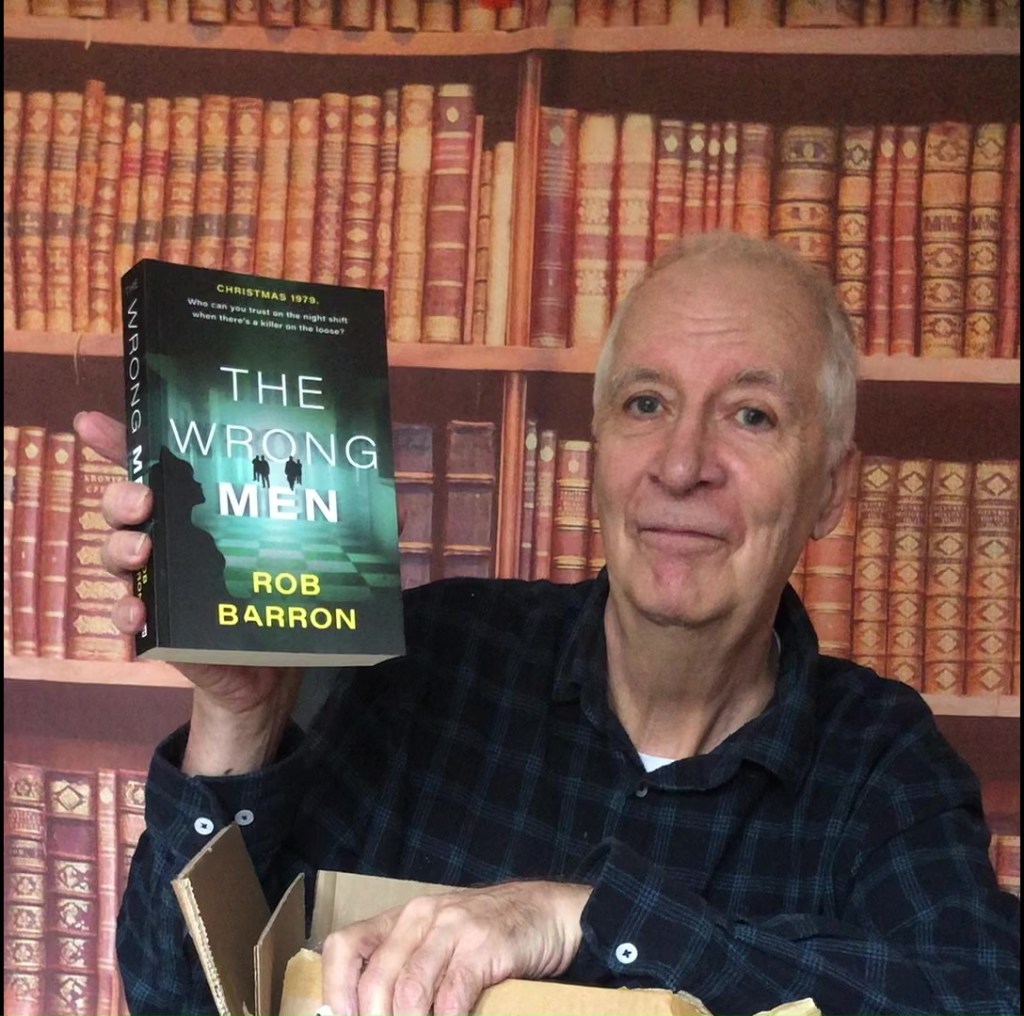
My twisty 1979 murder mystery, The Wrong Men, is published by The Book Guild on March 28th 2026 – link to buy here: https://shorturl.at/JoiAh. You can also buy it, and all of my other books, at my bookshop, here: https://www.rjbarron.co.uk/bookshop/
If you read the book and like it, I’d be very grateful if you could leave a review on Amazon and spread the word amongst all of your reader friends. Reviews and word of mouth make a big difference.While you’re waiting, have a look at this interview with me about the book by The Creative Writing Programme in Brighton. I am a graduate of their two year programme of study. You can read the transcript below or visit their website here: https://www.creativewritingprogramme.org.uk/inspiration
New Novel From Alumnus Rob Barron
17 Mar
Rob Barron took the Creative Writing Programme from 2022 to 2024. His novel The Wrong Men is published on 28th March 2026. Here he talks about his writing life.
Your novel The Wrong Men is out this month. It is about a hospital porter who discovers a murdered consultant in the mortuary. Could you tell us about the inspiration behind this story? It’s a story I’ve wanted to tell for over forty years, ever since I had a job as a porter in York District Hospital after leaving University. It was a fascinating experience – porters are the only staff members who go everywhere in the hospital and routinely interact with everyone, and hospitals are extraordinary places – this one in particular was full of larger than life characters. I also wanted to use my memory of living in York at the time when the Yorkshire Ripper was still at large, and the pervasive sense of unease this generated among many of the female students I knew at the time. It was an opportunity to write something in the guise of a murder mystery that is really about growing up as a man at a time of institutionalised misogyny.
It is a detective story, could you tell us about your planning process and how you keep track of all the seeds you have to sow along the way when writing crime fiction? I decided to scatter lots of seeds, knowing that in the editing process some would be pulled up and thrown away. It requires meticulous rewriting and tracking the separate threads. I’m guilty of using a colour coded spreadsheet to double check that there were no loose ends and that the whole thing was coherent. Crime fiction seemed to need a very different process than that used in other genres. The first draft was about revealing the story to myself and all the other drafts were trying to conceal the story from the reader.
You grew up in the north of England and both your YA novels and The Wrong Men are all set in Yorkshire, could you tell us about the importance of setting in your writing? The first novel I self-published. Zero Tolerance is a contemporary satire set in south London, so I’m not wedded to the north, but, generally, setting is a crucial aspect of my writing. I love to create an authentic sense of place and time. For me it underpins the notion that fiction is a way of transporting someone from their current reality to somewhere else. The somewhere else in this instance is York, a beautiful historic northern city and a busy hospital at night. The sense of the end of the Seventies is also important.
Did you start writing this novel while doing the Creative Writing Programme? Yes. I was just about to finish my YA novel but I was excited about the idea for The Wrong Men so I started that as well. For a while I was writing them in tandem.
How did you finish The Wrong Men and what was your journey to publication? The workshop part of the Creative Writing Programme was very helpful. It imposed a certain discipline because of the regular submissions and feedback. By the second year the book really had its teeth in me and I raced to the end. The feedback from tutors and fellow students was incredibly helpful and lots of changes were made to the original piece. Even after I had started to send it off to agents and publishers, I made significant changes based on reader feedback that eventually convinced me that I’d been wrong about certain choices I’d made in the earlier drafts. I sent if off to lots of different people and had the usual number of rejections, with about half a dozen people who requested the whole manuscript. In the end I had a couple of offers that were for partnership publishing, and I eventually accepted the one from The Book Guild. A couple of weeks after signing the contract I got an email out of the blue from a publisher who I’d sent the whole manuscript to a year before. They had “found” it again, loved it and offered me a three book deal on the strength of it. Sod’s Law! I felt I had to honour the contract I’d already signed. It was a good lesson though, not to give up. Somebody somewhere will understand what you were trying to do and will want to publish.
You have previously published two YA novels – The Watcher and the Friend and When The Cold Wind Blows, but this is your first adult novel – could you tell us whether your writing process differs when writing YA and adult fiction? In some ways I don’t think the idea of target audience is very helpful. The two YA novels are aimed as much at adults who like fantasy fiction as children. So, no, my writing process was exactly the same, apart from the specifics of editing to hide the story from the reader mentioned above.
What are you working on now? I’m writing sequels for both of them. The final part of the YA trilogy (working title When Stars Collide) and the follow up to The Wrong Men. Unfortunately, all of the work you have to do to promote and market a new book takes up a lot of time – it doesn’t leave much room for new writing. This is a good reminder to get on with it!
What are your top tips for someone starting out on their writing career?
- Write a story you want to tell.
- Ignore trends
- Generate words
- Put characters together and watch the magic happen
- Edit ruthlessly. If you’re not sure, get rid of it
- Listen to advice and then ignore it if doesn’t strike a chord with you
You can find out more about Rob on his website, BlueSky, Twitter and Instagram accounts. And if you want to write a novel, why not sign up for the Creative Writing Programme starting in September in bookish venues across the south-east of England and online. Our 10-week Introduction to Creative Writing course starts on 29 April if you want to dip your toe in the water.