The Things We Never Say by Elizabeth Strout

Strout’s latest novel would be a worthy Booker Prize winner

The latest novel from Elizabeth Strout, The Things We Never Say, is her third to make the long list for the Booker Prize. It may be that this is the one that finally wins it. She’s been a name since her debut novel, Amy and Isabelle, in 1998 and each release has added to her stellar reputation. This is her eleventh full-length novel, and it’s magnificent. It’s a departure from her familiar cast of characters – this one focuses on Artie Dam, a 57 year old teacher in a coastal town in Massachusetts. It’s a gentle but unswerving portrait of a life and all of its connections – work, family and friends. Strout has an uncanny ability to weave the most unpromising, dull domestic details, the details that make up real people’s lives, into something absolutely compelling. 

Artie is one of life’s good guys. You can see that in Strout’s presentation of his approach to teaching and his students, in particular the way he models how to be a decent human being in the way he behaves, his words and actions. He is the epitome of fairness, talks to his students with respect, treating them first and foremost as fellow human beings. The result of this instinctively kind approach is to inspire love. Two of his students in particular, Danny and Rhonda think that Artie has rescued them from their very different predicaments. Artie is never fully aware of that, but Strout’s resurrection of the very old-fashioned but immensely powerful third person omniscient narrator means that we, the readers, are. It’s an awareness that lends a heroic aura to Artie. It’s a little guy heroic aura rather than a classical one, but Strout clearly places much more value on one and not the other.
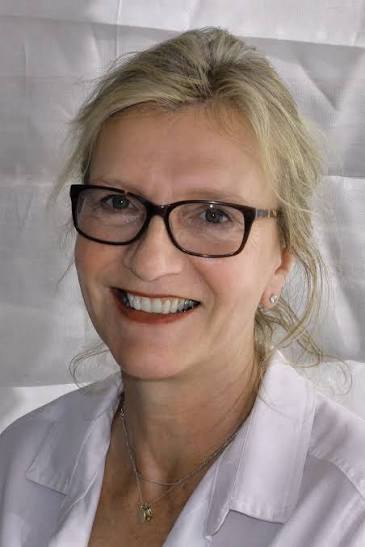
Strout’s depiction of Artie’s relationship with his son Rob is one which all parents will recognise and envy – recognise the ongoing worry and the distance that adulthood brings, and envy the genuine quality of their communication as time passes. His wife Flossie also plays a big part in the novel. At first it seems that this is a long standing marriage that has settled into a comfortable and mutually supportive relationship. Strout, as ever, is excellent on the small details of life that glue people together and equally good at dropping bombshells that disrupt what she has painstakingly created.

All of these small lives (and she includes herself and her readers in that definition) are threaded through with major tragedies, high emotion and cataclysmic events. Just when you think that it is just going to be a small novel about small things, (with its pleasures and frustrations) it becomes much more than that. Big things happen, secrets are spilled and lives are changed. And if that’s not enough, her treatment of the 2024 Presidential election and the way that all of the main cast of characters worry about what is happening to America through the Trump and MAGA phenomenon is brilliant: subtle, realistic, thoughtful.

It’s an outstanding meditation on the gap between everyone’s rich internal lives, and what we choose to share with the people around us. To quote (yet again) the great Elvis Costello, “It’s the damage that we do and never know, it’s the words that we don’t say that scare me so.” As the title suggests, Artie decides to keep all of his most challenging thoughts to himself so as not to disrupt his own life and that of those around him. Whether you think he’s right or wrong, it’s a dilemma that most people will find familiar and one which generates drama, tension and high emotion.  Artie’s life and its attendant secrets will linger long after you’ve finished this short but outstanding novel.


Land by Maggie O’Farrell

A review

You might have already read some less than flattering reviews of Maggie O’Farrell’s latest novel, Land. She’s hot stuff at the moment in the wake of the Oscar winning film adaptation of Hamnet, so there seems to be more attention focused on this novel, even though it’s not actually a follow up to Hamnet. That was The Marriage Portrait, a weighty novel based on Robert Browning’s narrative poem, My Last Duchess.

Given the brilliance of the original poem, and its familiarity to a generation of GCSE literature students, (one positive achievement of the appalling Mr Gove) and her track record with Hamnet, it was reasonable to expect another tour de force, but in truth it was something of a damp squib in the end. (you can read a fuller review of that novel via the link below)

Land arrives almost as a second chance and is being treated as if it is the real follow up to her Oscar success. So, although I loved both book and film of Hamnet,  it was with some trepidation that I started Land, particularly after reading the negative reviews. I needn’t have worried. This is an absolutely beautiful book. Great characters and relationships, great plot and meaty themes, all delivered through wonderful, shining  prose. It got better and better as it went on drawing the reader in, principally via a complete engagement with the characters and their situation.

It’s set on the Atlantic coast of Ireland, starting in 1865. The opening scene portrays Tomas, a map maker employed by the occupying Brits, surveying the land in driving rain, in preparation for the production of the finished map. He is assisted by his son, Liam, who is longing to be back home out of the cold and rain. After a mystical encounter in a mysterious ancient copse, Tomas comes to the realisation, via a mental breakdown,  that mapmaking, turning Gaelic names into English, is an act of collaboration with the oppressors, and he refuses to continue.

From that vivid scene, a whole series of intertwining threads emerge, at the centre of which is Tomas’ family: his wife Seraphina, and his children Liam, Edna, Rose and Eugene. It’s a generous, far reaching book that explores rich themes, and global settings: India, New York, Liverpool, all figure. It dabbles with magic realism, family multi generational saga, anti colonialism, Catholicism, but somehow manages to weld all of the separate elements into an immensely satisfying whole. In the end,O’Farrell manages to pull this off because of the skill with which she draws the relationships of the family members. We are pulled along because we care about what happens to them. 

That makes it a book that is much more satisfying than anything that might tickle the fancy of the “look at me, aren’t I cleverer than you” critic of The Harvard Review, Kazuo Robinson. Robinson’s criticisms are not only mean spirited, they are largely inaccurate. He savages O’Farrell’s prose, quoting several examples to prove his “point” that the writing is twee, vague and lazy. So easy to do, with any novel, if you start reading with pen and paper to hand, principally to record any examples that you can use to the purpose. He is, of course, quite wrong. The writing is beautiful: by turns luminous, lyrical,  powerful, precise. He lambasts her for a cliched shamrock green portrayal of the working class characters, for being too “Oirish”, for being too didactic, without once considering whether it’s the writer’s responsibility to portray the whole country and all its people, through her own chosen subjects – setting, plot, characters, themes. Of course, it is not. Her responsibility is to tell an engaging, authentic story  – nothing more – and she does that brilliantly. 

What a strange approach to a novel of immense and subtle pleasures, to blind yourself to them and to choose instead sneering and nitpicking from your lonely academic ivory tower. Of course, there is no objective truth when it comes to measuring Art, and it’s perfectly acceptable not to like a novel, this one or any other, regardless of reputation, but this feels more like a manufactured pose rather than an honestly held opinion. If you have the misfortune to come across Robinson’s review when scouring the internet, either before or after you read Land, ignore it. Choose life, as Irvine Welsh once said. Choose life and read a lovely book for pleasure.