
They fuck you up, your mum and dad.
They may not mean to but they do.
They fill you with the faults they had
And add some extra, just for you.
Philip Larkin
It’s the damage that we do and never know
It’s the words that we don’t say that scare me so
Accidents Will Happen – Elvis Costello
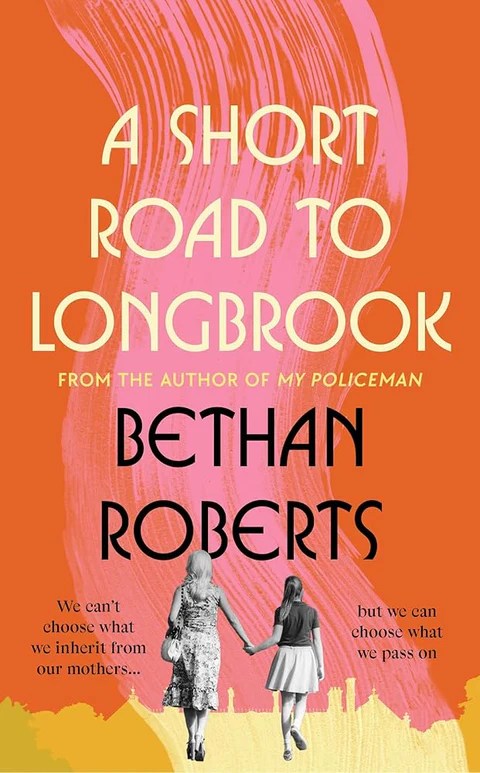
Somewhere between those two quotes lies the terrain that this novel, the latest by Bethan Roberts, inhabits. A Short Road to Longbrook, explores the long shadow cast by mistakes made in the past. It tells the story of Lillian Wells, flipping between 1965, when she was 16 years old, living with her single mother Winnie and 2005, when she is living with her only daughter, Rachel, who is on the verge of leaving home to go to university. As the novel unfolds, characters and relationships acquire added layers of depth and complexity. Mysteries about Lillian’s family history are simultaneously laid bare and made more obscure as questions are answered in a way that only leads to more questions.
Structurally, the novel is a triumph, with the time shifts subtly handled, so that the unfolding of events resembles an archaeological dig, uncovering layers to reveal secrets, surprises, explanations and, inevitably, more questions. The more Lillian discovers about her mother’s troubled history, the more she fears for herself and her own daughter, with the anxiety of repeating the mistakes of the past a constant, nagging worry. Everyday life in the mid-sixties is authentically evoked, with its meat paste sandwiches, its Babychams and editions of Titbits. There are times when it appears to be set in a place that still has one foot in the fifties, where ballroom dancing has more cultural heft in the popular imagination than The Beatles. It seems strange that a sixteen year old with a pixie hair cut in 1965 would not be more plugged in to the swinging sixties, but perhaps this reflects the reality that the lived experience of a particular time is a more mixed one than that which a simplistic social history would have us believe. It was fascinating to see how relationships, particularly between mothers and daughters, continued to be problematic, regardless of the era, even when, forty years later, it’s evident that most women had much more freedom, and many more opportunities than before.
The Longbrook of the title is the local psychiatric hospital, its name having been transformed into a local shorthand, to be spoken of in hushed, fearful tones. To be committed there carried a terrible stigma, and its presence looms large in the lives of the characters. When I was growing up in the North East at around about the same time, our equivalent was Sedgefield, a nearby town with a notorious psych hospital. “If you carry on like that, you’ll end up in Sedgefield” was the standard response to any behaviour that could be deemed eccentric. The fact that, some years later, it became the constituency of future Prime Minister Tony Blair, seems strangely fitting somehow.
Roberts has a real eye for detail and makes a series of acute observations about individual idiosyncrasies that communicate some sense of mental disturbance. Phobias, tics, repetitive behaviours are all described with sensitivity and understanding, as is the portrayal of the slow slide into anorexia and the vice-like grip it has on sufferers that is so hard for onlookers to understand and come to terms with.
There are no easy stereotypes here. Probably the greatest triumph is the portrayal of Jim, Lillian’s first love. Where one might expect a picture of an inadequate man struggling to deal with a spirited woman and falling back on anger and an instinct to save face and control his woman, Jim comes across as a thoughtful soul, who is bowled over by Lillian and tries to understand her and support her. He doesn’t always succeed and shows his anger, frustration and incomprehension on more than one occasion, but in the end, this does not define him. Instead, it positions him as a man who is doing his best to be a good person, no matter what the cost. Roberts portrays his interior response to the challenges presented by his relationship with Lillian with much subtlety and nuance. Here is a man who is caught between observing the social norms of the day and expressing his love in a way that communicates both passion and respect. He is also shown, in the relationship with his daughter, to be the figure that Lillian lacked as a child – a father who was present and communicative.
All in all, this is an engaging, thoughtful and subtle book with an impact that resonates long after you finish it. A Short Road to Longbrook is published by Chatto and Windus and you can buy it here: https://uk.bookshop.org/p/books/a-short-road-to-longbrook-bethan-roberts/7901374?ean=9781784746018&next=t


