Intermezzo by Sally Rooney

Sally Rooney seems liberated by slipping under the radar for the release of her fourth novel.
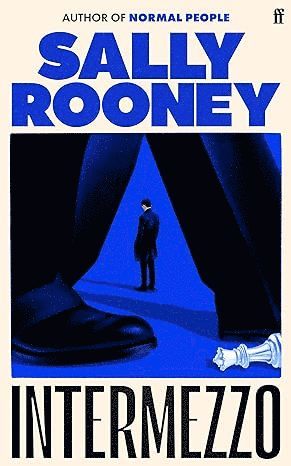

The release of a new Sally Rooney novel is an event, something to look forward to and savour when it finally comes. There was a lot riding on this novel, her fourth in 6 years. Her last outing, Beautiful World Where Are You?, was a disappointment, particularly after the fireworks of Normal People. Self indulgent, too obviously autobiographical, too self conscious of her place as an up-and-coming superstar of letters, it was dull and strangely irrelevant, like the third album from your once favourite rock band whose new songs are all about alienation of life on the road in hotel bedrooms. Seriously guys, who cares? On the back of that, I’m particularly happy to report that Intermezzo is an unalloyed triumph and a step up into a seemingly effortless maturity as a writer.

I don’t know if I missed something, but there didn’t seem to be the same hype about this novel. A bit of pre publication publicity, to whip up interest and anticipation, but then, on release, it all seemed to go quiet, as if Rooney was no longer the bright young tyro. And publishing, like every other industry that flogs culture, loves nothing more than something new and shiny. So it made for a strange experience when reading the latest Rooney. It was like reading any other novel- lower expectations, without the annoyance of negotiating all that young person social media stuff that so characterised her earlier work. It seems to have liberated her, not having to perform, to live up to her persona, and instead to focus on producing an immensely satisfying novel.
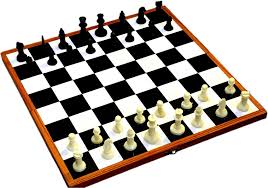
It’s contemporary, about a tangle of romantic relationships, with plentiful graphically choreographed sex scenes, set in the Republic of Ireland (so far, so Rooney), but it’s so much more than that. It tells the story of two brothers, Peter and Ivan, miles apart in so many ways (age, job situations, outlook, relationships), who are dealing with the aftermath of the death of their father. Ivan, the younger by ten years, is on the spectrum and has a hand to mouth “career” in Data Analysis. His real talent, however, is for chess.

Once a teenage prodigy, tipped for greatness, he is on a downward curve when the book begins, competing in minor, local tournaments. Peter is a Dublin lawyer – successful and sophisticated in both his career and, on the surface, his relationships. They are virtually estranged from each other and the novel traces their  attempts to make sense of their relationship, and of the world, in the light of their bereavement.

Both Peter and Ivan are in relationships where there is a significant age gap. Peter is instinctively judgemental about Ivan taking up with a divorcee ten years older than him, while seeing no problem in his own relationship with a much younger woman. Rooney examines the immense pressures felt by the older woman, from the Catholic Church, her friends, neighbours and family, such that she keeps it a secret for as long as possible. It’s just one of a series of “issues” Rooney deals with in a subtle and humane way. Most impressive is her avoidance of cliche and stereotype when portraying the main characters and their relationships. They are warm, unflinching sympathetic portrayals. She recognises them principally as human beings, individuals, rather than just types and the novel is richer, more complex and more satisfying as a result. Her sensitive portrayal of two men, completely inhabiting each persona in the distinct sections of the book is unusual and brilliantly convincing. If this had been a male novelist portraying women in such an authentic and nuanced way we would never hear the last of it. They both navigate complex relationships, with their mother, with each other and with significant women. They both make crass mistakes. As a result, they are entirely compelling and credible.

Stylistically, it’s a very interesting departure for Rooney. It’s told in alternating styles to correspond to the two main characters. Ivan’s story is immediately more engaging. The traditional third person narrative is warm and engaging, and the reader instinctively takes his side, as a picture emerges of a sensitive, thoughtful young man who has grown up in the shadow of his more extrovert, bullish brother.
The sections that focus on Peter use a distancing, staccato style of repeated brusque observations of the world and the people in it. At first, that becomes annoying very quickly, and you can’t wait to return to the more soothing world of Ivan’s narrative. But then, over time, the style differentiates the two worlds on an emotive level, in the sense that the reader feels the tension and discomfort of Peter’s world through the prose style and it becomes clear that Rooney has cleverly represented Peter’s state of mind. It functions like a verbal equivalent of impressionist painting. Positively pointillist, in fact.

One of the more annoying characteristics of serious literary fiction is that very often, in order to signpost their command of their art, too many writers make “bold” decisions about style. You know the sort of thing: no paragraphs; no full stops; writing the novel backwards. They are often disastrous in terms of reader enjoyment and I feared at first that the same sort of thing was going on here. But no. It actually works brilliantly. (Although I still cling to my conviction that Rooney’s insistence on not using conventional speech marks, is a similar, entirely redundant stylistic tic that serves only to irritate and draw attention to itself, like a loud precocious child at a party.)

The other outcome of alternating between Ivan’s experience and Peter’s is that it underlines one of the central points of the novel: self reflection, self absorption can seriously sabotage relationships, between brothers, lovers, friends, parents and children. The reader can see the obvious love that exists between these pairs of characters much more clearly than they can themselves. Resolution, when it comes in all its forms at the end of the novel, comes as a relief, not as an annoying sentimental cop out, because we’ve been screaming at them silently throughout the book, “Just tell him (or her), for gods sake!” Rooney is excellent at exploring the fall out resulting from not communicating honestly and openly because of the fear of what might happen. She did it brilliantly with Marianne and Connell in Normal People and repeats it here. As Elvis Costello told us so presciently all those years ago, “It’s the damage that we do and never know/It’s the words that we don’t say that scare me so.”

Notwithstanding my churlish note about Speech punctuation – a tiny pinprick of irritation in a sea of pleasure – Intermezzo is a wonderful novel from a writer just getting into her stride. There’ll be a lot more to come from her, I’m sure of that. Can’t wait for the next one!

Caledonian Road

O’Hagan triumphs with that rare beast – a State of the Nation novel with heart.

The latest novel from Andrew O’Hagan, Caledonian Road, is a big beast, in every sense of the term. Physically, it’s got some heft. 640 pages of hard back book makes demands on the wrists. It’s also dealing with weighty, contemporary issues, so all told, the experience of reading it provides a holistic mind and body workout. Sounds like a week at a Spartan health farm, where the motto is no pain, no gain, but fear not dear readers, this novel also provides pure pleasure.

O’Hagan handles the intermingling of the personal and political with real skill and delicacy. A lesser novelist would have eschewed ideology and party politics for fear of committing the ultimate sin in the eyes of the serious, sensitive, superior and above-the-fray Literature Critics, that is the sin of taking sides. Ideology is both vulgar and limiting in this fragrant, lofty world. Evenhandedness is much more mature, much more subtle, much more human, darling. Perhaps. It’s certainly much more boring, in my opinion.

O’Hagan says a hearty bollocks to that and has dived in headfirst to this dissection of contemporary London society, and the power structures that both drive it and destroy it. He does it primarily through great storytelling. The novel succeeds first and foremost on that fundamental, primary level. The characters, their relationships, triumphs and disasters are memorable and compelling, even the utterly ghastly ones. Maybe especially the ghastly ones.

For the protagonist, Campbell Flynn, O’Hagan treads well-travelled paths. Working class lad done good, from the grim dereliction of 1970s  Glasgow, Flynn at the time of the novel’s start is an academic, a cultural commentator, and a media darling down in that there London. Not a million miles away, obviously, from O’hagan’s own background, material previously plundered in his exquisite Mayflies. And not just London, but very specifically Kings Cross, an area recently reinvented by money and gentrification, but one which has pungent resonance for any refugee from the North. As a first entry point for East Coast  Scots and Northerners, its streets, legends, and institutions retain a powerful grip on those arriving wide eyed from the sticks. Judd Street, the Eight till Late, the Scala, Peabody housing, Squats and Short Life flats, ULU, one hour rooms in lines of seedy hotels, kicking used syringes and condoms to one side leaving one’s flat in the morning – they are all part of the memory kaleidoscope conjured by the name Kings Cross.

As a big beast, the novel is teeming with characters, so much so that O’Hagan thoughtfully provides a cast list of two fully crammed pages. It’s essential if you want smooth passage through this behemoth, and a trick that Dickens himself could have profitably employed. The plot is multi-stranded and brilliantly handled, so that by the time the book has reached the halfway point, every time a new section of the book begins, there’s a sense of excitement at the resumption of that particular plot thread. That happens for all of the separate threads. That’s a real achievement. Usually, there’s always at least one thread that the reader has less engagement with, where you feel you’re treading water and sticking with, out of a sense of obligation. Here, all of them sing.

It’s a novel with laudable ambition, tackling big, serious issues. Any analysis of the current, woeful state of the UK would examine these topics in some depth, and O’Hagan looks them straight in the eye and explores them with both a pitiless forensic gaze and nuance, which allows him to eschew simplistic judgements and portray the issues and the characters with multilayered complexity. These are not the scribblings of a naive schoolboy marxist. He manages to cover

  • People trafficking
  • Cancel culture
  • British exceptionalism
  • The aristocracy
  • Public Schools
  • Russian money laundering
  • Social Media
  • Celebrity Culture
  • Gentrification
  • Housing 

All of this produces an excoriating picture of the malign influence of the British establishment, their sense of entitlement and superiority, and the devastating impact they have had on destroying Civil Society for everyone except the super rich. The “freedom” this class espouses becomes simply freedom for millionaires to become billionaires without the state interfering.

There will be readers at this point who are thinking, “Bloody hell, this sounds far too political for me. I don’t understand this stuff and/or I just want a story about people and relationships” Keep the faith, you apoliticals! O’Hagan delivers on that front as well, with a huge range of individuals and families, all of whom, even the nasty Tories, are portrayed sympathetically. It’s Dickensian in that sense, and similar in many ways to Zadie Smith’s White Teeth. An energetic, densely populated romp set in multicultural, class-riven contemporary London, it is, like Dickens, a serious work masquerading as an entertainment. Or the other way round.

There was one dud note for me at the beginning. His portraits of Media stars, the establishment, and the political classes all rang true and had the hallmark of authenticity. I found, at first, his depiction of knife wielding, estate dwelling, drug dealers less successful. It felt as if he had spent some time eavesdropping on an unfamiliar underclass and had produced a two dimensional portrayal. By the end, however, I was convinced and O’Hagan had totally won me over. This is A Great Novel, and I can’t wait for the adaptation, film or TV. Already commissioned, apparently.

My Novel of the Year – by a mile.

Hot Stew

A review of Fiona Mozley’s second novel

This is an unexpectedly fabulous book. Mozley received lots of critical acclaim for her debut novel, Elmet, published in 2017, but, I have to confess, I was underwhelmed by it. It seemed to me to be one of those novels that sacrificed the more humble virtues of plot, character and credibility of motivation for obliqueness and a certain poetic sensibility. Having arrived at an interesting (though not really believable) story, she recast it through a vague lens of obscuring the connections and back stories and motivations to make it more “interesting”.

The reader is forced to become a detective, piecing together fragments of description and dialogue, working out time shifts and changes in perspective until a narrative emerges just in time for a vaguely satisfying resolution to come into view. Of course, you can only do this if you’re an experienced and sophisticated reader, so in a very real sense you’re being set a test. If you like the book, you’re an intellectual. If you don’t and you wish that the author would just bloody well tell the story, then you’re out of your depth and should stick to Mills and Boon. The real sign, the dead giveaway, is when the puzzling out of the connections is actually more interesting, more satisfying than the story that is eventually revealed.

Hot Stew is a million miles away from this. It’s a wonderful confection of a book, Dickensian in its portrayal of contemporary Soho, and the depiction of an extraordinary range of characters and relationships. It also functions very effectively as a critique of modern urban life and the interplay of rich elites with us ordinary folk. Mozley portrays all of them with skill and verve, so that the reader is propelled along by concern for the characters and the forward motion of the plot. She handles a vast cast of characters, who interconnect and intersect at times, very skilfully, and with an instinctive feel for pacing and sequencing. Aspects of the plot verge on the dreaded magic realism, and at times one has to suspend one’s disbelief with an industrial winch, but it’s all done with a knowing wink that left me at any rate, indulgent of any flaws or half baked, unresolved threads. This is partly because it’s funny and partly because Mozley is on the right side – there is a clear affection for the area and for people forging lives and relationships from adversity. This is a welcome departure from the world of Elmet, that turns rural Yorkshire into a kind of Deliverance style grim struggle, a world of violence, amorality and shabby survival. In Mozley’s Soho, there is love and humour, as well as exploitation and snobbery.

It’s received a lukewarm reaction from the critics, in comparison to Elmet. That is clearly because it’s written in a transparent, open style that invites its readers to participate in receiving an entertaining and thought-provoking story. Come on Fiona, wise up! You’ll never win the Booker like that – but you will win readers, who, like me, will eagerly await your next offering.