Land by Maggie O’Farrell

A review

You might have already read some less than flattering reviews of Maggie O’Farrell’s latest novel, Land. She’s hot stuff at the moment in the wake of the Oscar winning film adaptation of Hamnet, so there seems to be more attention focused on this novel, even though it’s not actually a follow up to Hamnet. That was The Marriage Portrait, a weighty novel based on Robert Browning’s narrative poem, My Last Duchess.

Given the brilliance of the original poem, and its familiarity to a generation of GCSE literature students, (one positive achievement of the appalling Mr Gove) and her track record with Hamnet, it was reasonable to expect another tour de force, but in truth it was something of a damp squib in the end. (you can read a fuller review of that novel via the link below)

Land arrives almost as a second chance and is being treated as if it is the real follow up to her Oscar success. So, although I loved both book and film of Hamnet,  it was with some trepidation that I started Land, particularly after reading the negative reviews. I needn’t have worried. This is an absolutely beautiful book. Great characters and relationships, great plot and meaty themes, all delivered through wonderful, shining  prose. It got better and better as it went on drawing the reader in, principally via a complete engagement with the characters and their situation.

It’s set on the Atlantic coast of Ireland, starting in 1865. The opening scene portrays Tomas, a map maker employed by the occupying Brits, surveying the land in driving rain, in preparation for the production of the finished map. He is assisted by his son, Liam, who is longing to be back home out of the cold and rain. After a mystical encounter in a mysterious ancient copse, Tomas comes to the realisation, via a mental breakdown,  that mapmaking, turning Gaelic names into English, is an act of collaboration with the oppressors, and he refuses to continue.

From that vivid scene, a whole series of intertwining threads emerge, at the centre of which is Tomas’ family: his wife Seraphina, and his children Liam, Edna, Rose and Eugene. It’s a generous, far reaching book that explores rich themes, and global settings: India, New York, Liverpool, all figure. It dabbles with magic realism, family multi generational saga, anti colonialism, Catholicism, but somehow manages to weld all of the separate elements into an immensely satisfying whole. In the end,O’Farrell manages to pull this off because of the skill with which she draws the relationships of the family members. We are pulled along because we care about what happens to them. 

That makes it a book that is much more satisfying than anything that might tickle the fancy of the “look at me, aren’t I cleverer than you” critic of The Harvard Review, Kazuo Robinson. Robinson’s criticisms are not only mean spirited, they are largely inaccurate. He savages O’Farrell’s prose, quoting several examples to prove his “point” that the writing is twee, vague and lazy. So easy to do, with any novel, if you start reading with pen and paper to hand, principally to record any examples that you can use to the purpose. He is, of course, quite wrong. The writing is beautiful: by turns luminous, lyrical,  powerful, precise. He lambasts her for a cliched shamrock green portrayal of the working class characters, for being too “Oirish”, for being too didactic, without once considering whether it’s the writer’s responsibility to portray the whole country and all its people, through her own chosen subjects – setting, plot, characters, themes. Of course, it is not. Her responsibility is to tell an engaging, authentic story  – nothing more – and she does that brilliantly. 

What a strange approach to a novel of immense and subtle pleasures, to blind yourself to them and to choose instead sneering and nitpicking from your lonely academic ivory tower. Of course, there is no objective truth when it comes to measuring Art, and it’s perfectly acceptable not to like a novel, this one or any other, regardless of reputation, but this feels more like a manufactured pose rather than an honestly held opinion. If you have the misfortune to come across Robinson’s review when scouring the internet, either before or after you read Land, ignore it. Choose life, as Irvine Welsh once said. Choose life and read a lovely book for pleasure.
A Review of “The Marriage Portrait” by Maggie O’Farrell

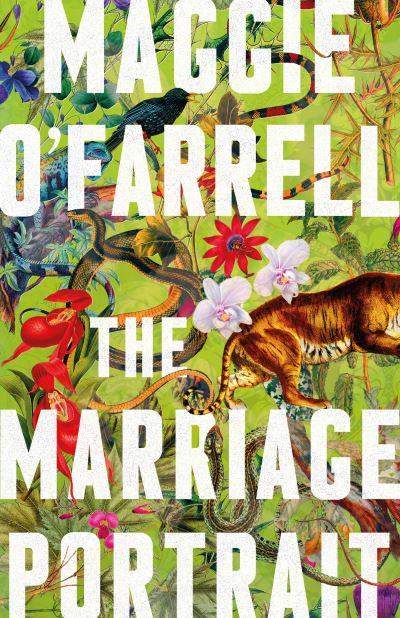
“Hamnet” was in my top five novels of the year in 2021, and many other people’s as well, if Twitter is anything to go by, so the announcement of her follow up, “The Marriage Portrait”, earlier this year caused great excitement. English teachers who have taught GCSE Literature in the last fifteen years will be very familiar with the source material: My Last Duchess by Robert Browning. 

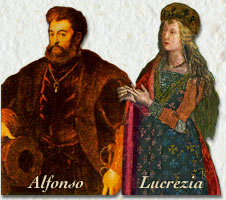
The poem, written in 1842, is a wonderful thing. It’s a long poem, a dramatic monologue, in the voice of an Italian Duke, Alfonso of Ferrara. The Duke is escorting a servant of a visiting nobleman around his palatial aristocratic pile. The visitor is there to negotiate a marriage between the Duke and his daughter. They stop at a portrait, hidden behind a curtain,  of the Duke’s late wife.  Browning brilliantly conveys, from his own lips, the cruelty and snobbery of the Duke.

By the end of the poem, the reader is left with an uneasy near certainty that Alfonso has engineered the murder of his young wife, seemingly because she was open hearted and friendly with people other than himself, specifically, people from a lower social class than himself. It’s master class of innuendo and suggestion. Without saying anything incriminating, the case against the Duke and the world he represents seems watertight.

It’s also a marvellous poem for GCSE students. It’s a great example of a poem that at first sight, and after first reading, seems impenetrable: obscure, dull, irrelevant. With a bit of reassurance, and a bit of skillful handholding, students can learn the fact that poetry, with its supercharged language, can be made to yield its secrets, like a tightly folded bud opening its petals one by one. Repeated reading reveals new insights, new possibilities, new pleasures. Once experienced, the joys of poetry seem just a little bit more real, a little bit more accessible, and students seem a little bit more willing to try another difficult one.

And so, given the magic wrought by O’Farrell in Hamnet, it seemed like a rich seam of material to mine. I started, with eager anticipation, a useful store of knowledge, and a fund of goodwill towards the writer. And there is a lot here to admire. I read it quickly, carried along by the narrative and the language. But…..

By the end, I was racing to finish for a different reason. How can I put this politely? It’s a little…..dull. The period and place are beautifully evoked. The language shimmers and sparkles. But the plot, which is the spine of any novel in my opinion, disappoints. The fact that, because of the original poem, the plot is so well known isn’t really the issue here. After all, O’Farrell starts the novel with Lucrezia, the Duchess of the marriage, realising she has been brought to an isolated rural loggia to be murdered. The rest of it is a procession of inevitability.

O’Farrell tries to use structure to shake things up a little, switching between the scenes at the end of her life, “imprisoned” in her husband’s country retreat, and incidents from her childhood in Florence. The scenes in Florence are more engaging somehow. The portrait of a privileged, but loving family, makes a sharp contrast with the Ferrara scenes. There’s a charm and an interest in the depiction of Lucrezia’s childhood, the eccentric younger child of the family. One luminous early section concerns the encounter between Lucrezia and the tiger her father commissions on a whim, to add to his menagerie of exotic creatures, kept down deep in the dungeons below the family home. Her determination to leave her bedroom and travel in the dark to encounter this magnificent beast radiates with poetry and significance. The idea that the Tiger allows her to stroke it through the bars without savaging her, imbues our protagonist with qualities that mark her out as a rare character of substance.

There’s also a pleasing attempt to use the plot to give the Duchess an escape route. No spoilers here, but it is plausible and the idea is satisfying. Ultimately, though, it is rather thrown away, as if O’Farrell herself felt a little uncomfortable about changing history.

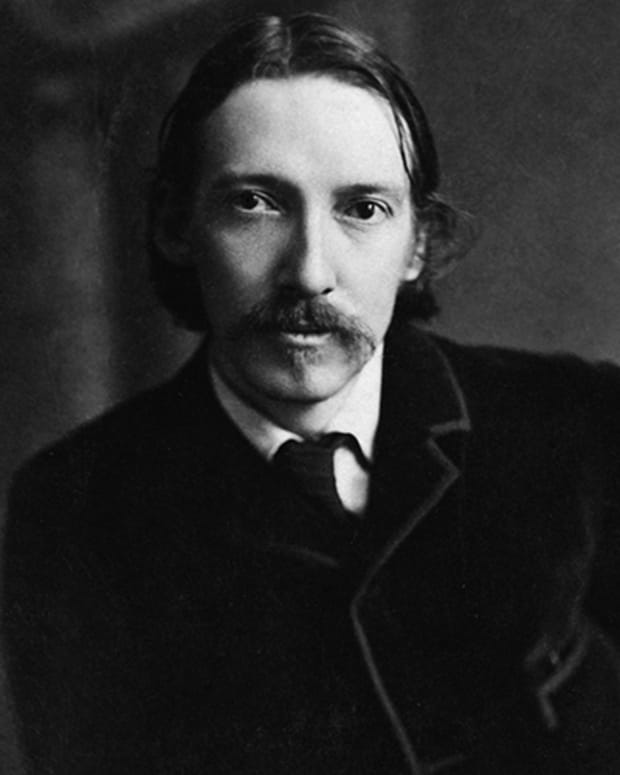
In the end, the problem is that O’Farrell, gifted novelist though she is, cannot compete with Robert Browning’s original. (Picture of Browning , right) The subtlety and nuance of his version of events requires readers to work hard to unpick its story. He pays them the ultimate compliment of trusting their intelligence to pick up the thread he has carefully woven through the verse. Somehow, it makes for a more satisfying read than O’Farrell’s four hundred plus pages of prose, no matter how beautiful much of it is.

I was left with a feeling of disappointment and let down. What promised much delivered very little. I’m hoping her next novel will abandon a reworking of our literary heritage and strike out with something new. It’s a difficult habit to kick though, once you’re in the grip of addiction. And there’s so much to choose from: 

  • Goblin Market by Christina Rossetti (All that suppressed sex and oozing juice of ripe fruit. It could certainly stand a Game of Thrones mash up)
  • London by William Blake. (who was that mysterious man wandering around those “Chartered streets”?)
  • Dickens’ affairs with Ellen Ternan and Georgina Hogarth. (With the added Gothic bonus of the Great Man’s attempts to have his wife locked up in an asylum)

And, of course, that old favourite, beloved of English teachers of a certain vintage, from the days of 100% coursework and “creative responses”, a retelling of The Ancient Mariner from the point of view of the Albatross. That would be a challenge. It was certainly beyond the grasp of most of the Year 11 kids who attempted it in the Eighties.

On second thoughts, I have some advice for Ms O’Farrell. Just step away from your laptop, Maggie, take some time out, and come up with a contemporary tale set in the here and now. Now that would be worth waiting for.