
A review of Simon Hart’s Political diaries

Just to give you a flavour of Simon Hart’s powers of political analysis, here’s a memorable sentence from the book:
Their styles are so different, that I’ve decided that when it comes to politics (thank goodness for this clarification!) Boris “fucks” and Rishi “makes love”. Both are strangely effective.
Both presumably guarantee an earth-moving orgasm every time. No such joy from Simon Hart’s political memoir, which will not trouble the scorers in the pantheon of political history. The lack of an index is a bit of a giveaway. This is not serious history, just tittle-tattle, self-justification and whining about unfairness. By the end even Hart seems a little embarrassed about how the thin gruel is that his book contains, (yet rather pleased about the raunchy sentence above – Tories are sexy, Labour are dull. Yawn.)
Several factors conspired to bring me to this book: a series of glowing reviews (“remarkable insight”, “engrossing, entertaining, ..so funny”,) an unquenchable appetite for revelations about the disaster of government since 2010, and the serendipity of finding it available, pristine and untouched in my local library. Circumstances that were too good to turn down at the time, but, in the end, I almost wished I had passed on this and got something else instead.
It barely delivers on the shocking revelations front, apart from a couple of scarcely believable, tawdry anecdotes that were well-trailed prepublication.

The first was the tale of the Tory MP ringing in the middle of the night to be rescued, having found himself in a brothel with a Russian spy (well, we’ve all been there).
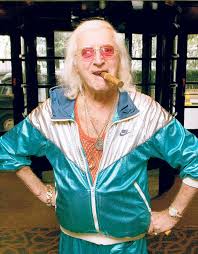
The second was this beauty: “ a departmental SPAD went to an orgy at the weekend and ended up taking a crap on another persons head…..in a separate incident a Commons employee went to a party dressed as Jimmy Saville and ended up having sex with a blow up doll” Obviously, apart from that, the Tories are straight up regular guys.

Don’t read the book if you’re expecting page after page of scandalous behaviour like this by the naughty party. The majority of the book is mind numbingly dull: endless reports of Cabinet awaydays, PMQs, events in Wales (Hart was Secretary of State for Wales at one point) and name dropping accounts of drinking sessions or meals out with sycophantic journalists. It does, however, perform an invaluable public service in reminding us just how ghastly, how inept, how morally bankrupt the Tories in office were. Barely a page goes by without details of one Tory after another getting found out for a misdemeanour: child abuse, rape, corruption, bullying, watching pornography in the commons. The cases accelerate when Hart becomes Chief Whip under Rishi Sunak, presumably because in that role he was privy to information about all badly behaved MPs. The main conclusion Hart draws from this is that the Tory party needs to improve its candidate selection process, to avoid the serial sex offenders, criminals, bullies and freeloaders. It seems to have escaped him that the Johnston intake, in 2019, was so full of those sorts of loathsome chancers that a better vetting process would have left them with a list of suitable candidates down to double figures.
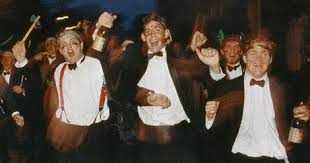
To everyone else in the country, it was perfectly clear that these rogues were quintessentially Tories. Their sins, not aberrations or mistakes, but an essential part of who they were and what they believed in. Born to rule, rich, entitled and convinced that the rules laid down to regulate behaviour were meant for the little folks, not for them. It was The Bullingdon Club writ large.
It appears from these diaries that virtually no work of any meaningful kind goes on. Yes, there are late meetings and early meetings, but they are all fuelled by expensive lunches and dinners, where the drink flows freely. The meetings involve endless wrangling, navigating a route around different political factions, leading to absolutely nothing in terms of improving the lives of people. All of their energies appear to go into party management to ensure a compliant parliamentary party, using patronage and threats of exposure to keep everyone in line. This becomes clearer in the years when Hart was chief whip, when the diary is overwhelmingly about Tory MPs relentlessly hassling him for honours. Hart himself says that he was thinking about calling the book ”About my Knighthood” because that’s how most Tories started a conversation with him. It’s a portrait of a system that runs on naked corruption, and self serving venality. These people ooze entitlement, and the notion of serving their constituents seems never to cross their minds.
The biggest insight the book provides is into the full, horror shit show that is the mindset of the average Tory MP: entitled, snobby, completely deluded about their values, actions, and how they are viewed by Joe Public. Everything that goes wrong is someone else’s fault, usually the media in general and the BBC in particular which Hart ludicrously seems to think is a branch of the Communist Party. Here are a few snippets, giving us a pretty accurate snapshot of the cut of Hart’s jib.
First is his description of Mark Drayford, the Labour leader of the devolved Welsh Assembley. Hart as Welsh Secretary had a lot of dealings with him and seems incensed that Drayford was more popular than him and got a lot of plaudits for his handling of Covid. Here’s Simon Hart’s verdict: “Drakeford’s public persona was one of a dull academic, the sort of lefty philosophy lecturer you used to find at Luton Polytechnic in the 1970s. A Welsh Jeremy Corbyn…” “ Drakeford looks like a scruffy old university lecturer with dirty shoes” Multi-layered snobbery or what?
His contempt for public service is also never far from the surface. Here is one example he casually throws in when describing Starmer. “ He may have been the Director of Public Prosecutions but as some of our MP lawyers observe, any decent lawyer goes into private practice”
His political judgement is hopelessly awry. Every description of PMQs, whether it be Johnson, Truss or Sunak at the helm, gives the impression that the Tory incumbent aced it every week, with Starmer missing open goal after open goal. He is baffled by the reputation of Gavin Williamson, who he describes as “one of us” and who is treated “terribly unfairly”.


He opines, with a straight face presumably, that “we have done a good job on water.” Blimey. Just imagine how bad it would have been if they’d messed it up.
He describes a lunch with Laura Kuensberg and provides further evidence of his razor sharp political antennae: “ For all the years I have known her, I would have no more clue now how she votes than on the day we first met.” Really, Simon? You must be the only person in the country with a double figure IQ who doesn’t know that Kuensberg is virtually in the Tory cabinet.

Once again, Hart provides clear evidence that the average Tory really doesnt see what all the fuss is about. It’s perfectly normal that the news should have an instinctive Tory bias because well, so does the country. If anything, the BBC is in the grip of Commies. The depth of delusion is compounded by his casual barbs about the left in general. “Why are they always so angry? It must be so exhausting.”
Perhaps because they see that all that has gone wrong with the country was avoidable. The damage inflicted as policy by a series of governments from the Right and Far right. You got away with it for so long because at first the damage only affected the people at the bottom, and no-one gives a toss about them. Things began to get sticky for the Tories in power as more and more people could see with their own eyes the damage being inflicted on the institutions of civil society. Just walk down the High Street, try to rent a flat or swim in the sea. That’s Tory shit you are navigating around.
Just like your swim, this is a book that will require you to wash your hands after reading it.

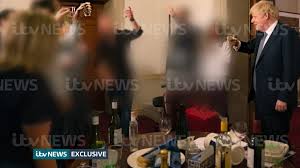
Ps – nearly forgot. Surely Hart has some insight into the Government’s handling of Covid? And the parties?
Parties? Didn’t happen, mate. Vaccine rollout. Starmer Curry.













 The Old Grey Owl