
“In an era where young adults face increasingly complex social and political realities, Barron has written a book that offers both an absorbing escape and a compelling message.“
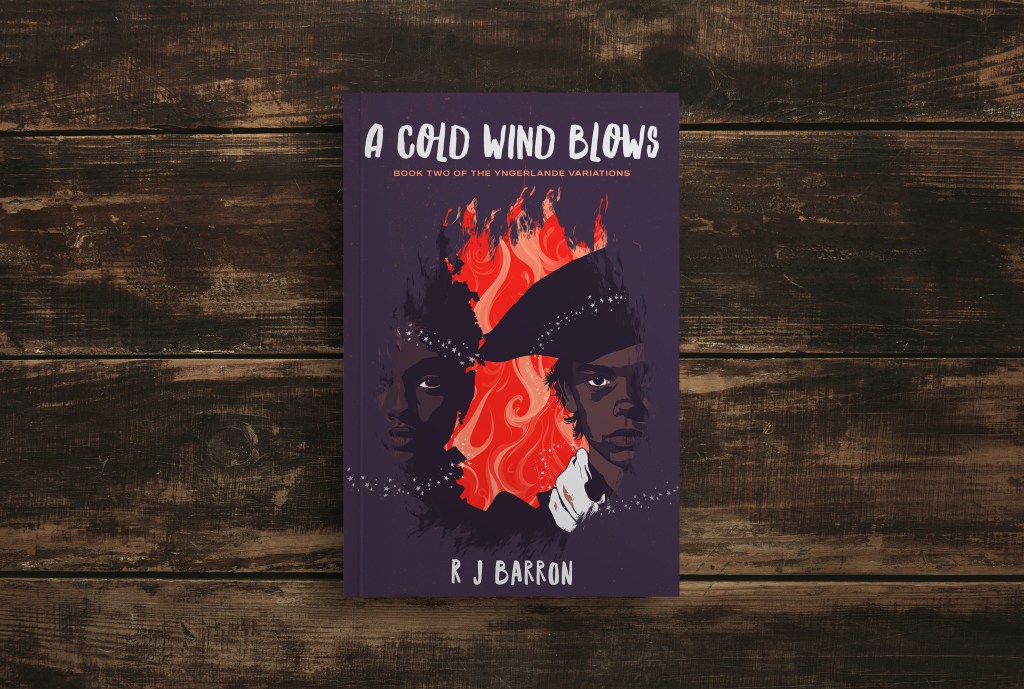
The first reviews are beginning to come in. This one is from Maria Ashford of Bookshelfie
The middle volume of a fantasy trilogy faces a particular challenge: it must advance the story without feeling like mere connective tissue between a promising beginning and a climactic end. This is the case in retired English teacher R.J. Barron’s “A Cold Wind Blows”, the second installment in his Thomas Trelawney series. Though we haven’t read the first book, it feels like Barron largely succeeds in this difficult task, deepening both the mythology of his dual-world book while maintaining the accessible warmth that makes the series appealing to middle-grade readers.
To start off, readers should probably read the first book before this one, though a brief summary is helpfully provided for those who haven’t. The plot picks up when several months have passed since the events of The Watcher and The Friend, and thirteen-year-old Thomas has returned to the mundane challenges of school life in England. Meanwhile, in the parallel realm of Yngerlande, the political tensions that simmer beneath Queen Matilda’s rule are beginning to boil over. Princess Gaia—formerly Clara, a London orphan—undergoes intensive magical training under the guidance of Silas Cummerbund, developing abilities that grow more impressive by the day. As the spy Shrike observes with alarm, “She can move objects from afar without touching them. She can be in two places at once.”
In the same vein of C.S. Lewis, Barron’s greatest strength lies in his ability to ground fantastical elements in the recognizable experiences and emotions of young people. Princess Gaia’s magical education can be read as an extended metaphor for adolescent development—the awkward acquisition of maturity and the growing awareness of one’s place in a larger world. When Silas reassures her after a setback, saying “It’s much better than it was last week and ’twill be twice as good again next week,” we hear the voice of every patient teacher helping a student through difficulty.
The novel’s political dimension adds unexpected sophistication for adults to what might otherwise seem like standard fantasy fare. Queen Matilda’s egalitarian society—where “people of colour, women, people who go where their love takes them” enjoy full citizenship—faces threats from reactionary forces led by Oliver and Jacob, grandsons of the deposed king. Clara articulates the stakes plainly: “They want to turn back the clock.” This isn’t subtle allegory, but it doesn’t need to be. Barron writes with the moral clarity that young readers deserve, presenting complex social issues in terms they can understand and apply to their own world.
The book’s structure alternates between character moments and mounting suspense, and this gentle pacing largely works against dramatic momentum. Some of the most affecting passages involve Grace, Thomas’s sister, who now lives contentedly in Yngerlande but still carries the burden of separation from her family. “Of course, Silas. I am with the best of people here,” she says, “but still, I remember the life I had.” Where the novel occasionally stumbles is in its adherence to familiar fantasy tropes. These elements, while competently handled, may feel predictable to readers well-versed in the genre. Barron’s villains, particularly Oliver and Jacob, remain somewhat one-dimensional, their motivations never deeply explored beyond generic power-hunger and bigotry.
Yet these weaknesses don’t significantly diminish the book’s considerable pleasures, and young adult readers are unlikely to notice anyway. Barron writes with genuine affection for his characters, and their relationships feel relatable and fun to read despite the magical circumstances. The friendship between Grace, Gaia, Della, and Amelia provides moments of real warmth and humour, while the mentor-student dynamic between Silas and Gaia anchors the more fantastical elements. The novel builds to a cliffhanger that effectively sets up the trilogy’s conclusion.
To conclude, “A Cold Wind Blows” is a gripping read that succeeds as both fantasy adventure and coming-of-age story, offering young readers and older children heroes who face their challenges with courage. While it may not surprise experienced fantasy readers, it provides exactly what its intended audience needs. In an era where young adults face increasingly complex social and political realities, Barron has written a book that offers both an absorbing escape and a compelling message.
See if you agree with her. Buy A Cold Wind Blows here: https://t.co/n8wew492re
 The Old Grey Owl