Caledonian Road

O’Hagan triumphs with that rare beast – a State of the Nation novel with heart.

The latest novel from Andrew O’Hagan, Caledonian Road, is a big beast, in every sense of the term. Physically, it’s got some heft. 640 pages of hard back book makes demands on the wrists. It’s also dealing with weighty, contemporary issues, so all told, the experience of reading it provides a holistic mind and body workout. Sounds like a week at a Spartan health farm, where the motto is no pain, no gain, but fear not dear readers, this novel also provides pure pleasure.

O’Hagan handles the intermingling of the personal and political with real skill and delicacy. A lesser novelist would have eschewed ideology and party politics for fear of committing the ultimate sin in the eyes of the serious, sensitive, superior and above-the-fray Literature Critics, that is the sin of taking sides. Ideology is both vulgar and limiting in this fragrant, lofty world. Evenhandedness is much more mature, much more subtle, much more human, darling. Perhaps. It’s certainly much more boring, in my opinion.

O’Hagan says a hearty bollocks to that and has dived in headfirst to this dissection of contemporary London society, and the power structures that both drive it and destroy it. He does it primarily through great storytelling. The novel succeeds first and foremost on that fundamental, primary level. The characters, their relationships, triumphs and disasters are memorable and compelling, even the utterly ghastly ones. Maybe especially the ghastly ones.

For the protagonist, Campbell Flynn, O’Hagan treads well-travelled paths. Working class lad done good, from the grim dereliction of 1970s  Glasgow, Flynn at the time of the novel’s start is an academic, a cultural commentator, and a media darling down in that there London. Not a million miles away, obviously, from O’hagan’s own background, material previously plundered in his exquisite Mayflies. And not just London, but very specifically Kings Cross, an area recently reinvented by money and gentrification, but one which has pungent resonance for any refugee from the North. As a first entry point for East Coast  Scots and Northerners, its streets, legends, and institutions retain a powerful grip on those arriving wide eyed from the sticks. Judd Street, the Eight till Late, the Scala, Peabody housing, Squats and Short Life flats, ULU, one hour rooms in lines of seedy hotels, kicking used syringes and condoms to one side leaving one’s flat in the morning – they are all part of the memory kaleidoscope conjured by the name Kings Cross.

As a big beast, the novel is teeming with characters, so much so that O’Hagan thoughtfully provides a cast list of two fully crammed pages. It’s essential if you want smooth passage through this behemoth, and a trick that Dickens himself could have profitably employed. The plot is multi-stranded and brilliantly handled, so that by the time the book has reached the halfway point, every time a new section of the book begins, there’s a sense of excitement at the resumption of that particular plot thread. That happens for all of the separate threads. That’s a real achievement. Usually, there’s always at least one thread that the reader has less engagement with, where you feel you’re treading water and sticking with, out of a sense of obligation. Here, all of them sing.

It’s a novel with laudable ambition, tackling big, serious issues. Any analysis of the current, woeful state of the UK would examine these topics in some depth, and O’Hagan looks them straight in the eye and explores them with both a pitiless forensic gaze and nuance, which allows him to eschew simplistic judgements and portray the issues and the characters with multilayered complexity. These are not the scribblings of a naive schoolboy marxist. He manages to cover

  • People trafficking
  • Cancel culture
  • British exceptionalism
  • The aristocracy
  • Public Schools
  • Russian money laundering
  • Social Media
  • Celebrity Culture
  • Gentrification
  • Housing 

All of this produces an excoriating picture of the malign influence of the British establishment, their sense of entitlement and superiority, and the devastating impact they have had on destroying Civil Society for everyone except the super rich. The “freedom” this class espouses becomes simply freedom for millionaires to become billionaires without the state interfering.

There will be readers at this point who are thinking, “Bloody hell, this sounds far too political for me. I don’t understand this stuff and/or I just want a story about people and relationships” Keep the faith, you apoliticals! O’Hagan delivers on that front as well, with a huge range of individuals and families, all of whom, even the nasty Tories, are portrayed sympathetically. It’s Dickensian in that sense, and similar in many ways to Zadie Smith’s White Teeth. An energetic, densely populated romp set in multicultural, class-riven contemporary London, it is, like Dickens, a serious work masquerading as an entertainment. Or the other way round.

There was one dud note for me at the beginning. His portraits of Media stars, the establishment, and the political classes all rang true and had the hallmark of authenticity. I found, at first, his depiction of knife wielding, estate dwelling, drug dealers less successful. It felt as if he had spent some time eavesdropping on an unfamiliar underclass and had produced a two dimensional portrayal. By the end, however, I was convinced and O’Hagan had totally won me over. This is A Great Novel, and I can’t wait for the adaptation, film or TV. Already commissioned, apparently.

My Novel of the Year – by a mile.
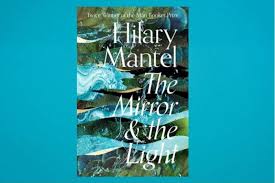
The View from the Great North Wood – A Review of “The Mirror and the Light”

The Covid-19 Lockdown means that reading is now, more than ever, a life saver. And books that once seemed intimidating, mighty tomes such as this are now just appetisers. Just think what we’ll know by the end of all of this..

After about 1900 pages of Wolf Hall, Bringing up the Bodies and now The Mirror and the Light, I imagined that turning the last page of Mantell’s latest novel, was similar to breasting the finishing tape of a marathon. Pride, satisfaction, disbelief, and memories of pain, struggle and pleasure. I’m still not quite sure in what proportions those last three are mixed.

The analogy breaks down almost immediately however, because, after a sticky opening hundred pages or so, I raced through the bulk of it, savouring every page. And, more to the point, the Marathon is all about the runner’s experience, the course itself just exists. But the reader’s experience, regardless of their personal response to it, is of a magnificent, towering achievement. There are passages of sublime beauty and power, and it drags you along, careering towards the inevitable end. It is a mighty work and will almost certainly pick up the Booker hattrick. The Booker, though, like all cultural awards, has never been an indicator of quality. Other factors cloud that judgement: The Zeitgeist. Timing. Events. Political correctness. Length. Subject matter. And on all of those counts, Mantell is a shoo in, not least because she has become the literary equivalent of Dame Maggie Smith or Judy Dench, a National Treasure.

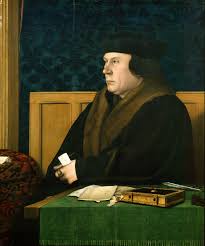
Just to be clear about this, I loved Wolf Hall and thought Bringing up the Bodies was even better. I’m just not sure whether, in the end, all of those words were necessary. The main schtick of the trilogy seems to be, from Mantell’s many interviews, the idea that Thomas Cromwell was a working-class arriviste who needed to be rescued from the heavy hand of mainstream establishment condemnation. This was to be achieved by drilling directly into his imagined psyche and portraying him as a three dimensional, living breathing man of his time. This is achieved, but frankly that had been achieved by the end of Book 2 and I’m really not sure what this new one has added. Or at least, what it has added that could not have been accomplished in 500 pages. So example after example is piled on, accreting more and more detail. It’s almost Knaufsgaardian in its use of domestic detail. Many incidents seemed to be included simply so that Cromwell’s half of the conversations can be repeated later as evidence against him.

To this end, Mantell takes no prisoners in terms of the expectations she has of the reader. Hundreds of characters, many of whom have multiple names, come and go in scenes and conversations with little explanation. It is particularly tiresome when the previous book was published several years before. The list of characters at the beginning of the book is a warning of what’s in store. They will be, in most readers’ copies, the most well-thumbed pages in the book as the reader goes back and forth desperately trying to ascertain who exactly is Southampton, or Surrey or Wyatt.

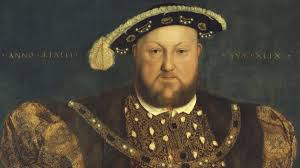
To put Cromwell firmly centre-stage, he is always referred to as “He”, ostentatiously at times when he is sharing the stage with Henry VIII. Sometimes Mantell ties herself in knots maintaining this stylistic tic, while realising that she has to make it clear who “He” actually is. Hilary, love, its OK, we get it. We know you think that Cromwell is more important, more interesting than that King geezer. You really don’t have to keep going on about it.

The other stylistic quirk is the by now ubiquitous, terribly modern use of the present tense to make things more immediate, more dramatic. Generally, in the hands of lesser writers who have been advised by Boutique literary consultants, it’s terribly cliched, boring, inflexible and predictable. Mantell, in contrast, does it brilliantly. It does add immediacy and it does create tension when really none should exist because, let’s face it readers, we all know he’s going to die and how.

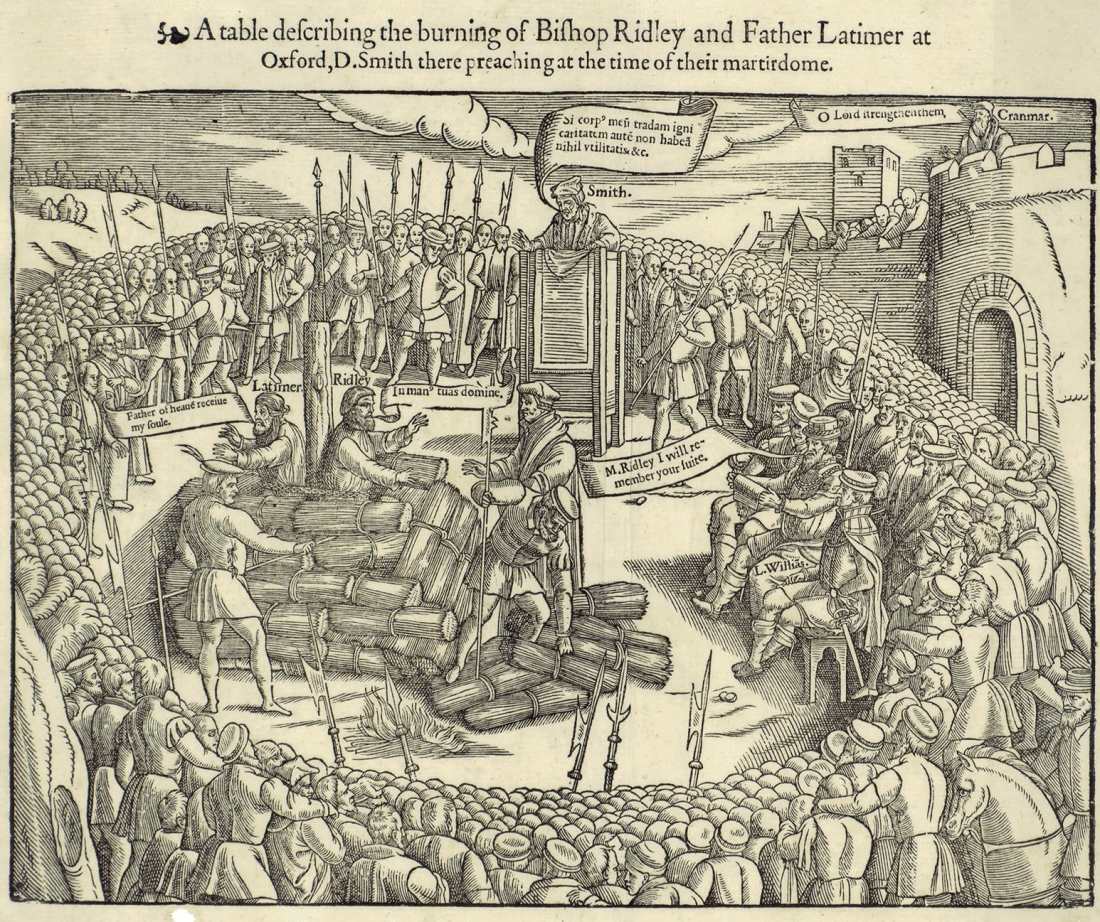
In the end, I just don’t think it’s worth it. More than a study of the man, it becomes a study of the religion and politics of the time. It’s a brutal, cruel, savage, amoral world, fuelled by ridiculous primitive disagreements over religion. Of course Cromwell is going to have his head chopped off because he is serving a childish psychopath who wanted to live the fairy story of Kingship and was going to scream and scream until he got what he wanted. And what he wanted was plentiful sex with a young sex nymph who idolised him and didn’t make him feel inadequate. He wanted to feel forever young and to show the world he was a thrusting macho proper man who could get a woman pregnant with a boy (because they were the only pregnancies that counted).  This was a world where Cromwell, in his many internal musings, could think that cutting off someone’s head with an axe was proof of the gentle mercy of Henry and the superior civilization of England. The more gruesome details of the vile tortures and methods of execution of Spain, France and The Holy Roman Emperor almost convince one to agree with him. Until you catch yourself, shamefacedly, in the thought. In the end, I was left thinking that too much time has been spent fetishising this dreadful period of English history, agonising over the political and personal nuances and rivalries at play. Brutal dictators deserve less of our attention

More civilized than thou?………………………………

The real interest is how things are still exactly the same, give or take the rack, being hung, drawn and quartered, or being burned alive. Boris Johnson is similarly childlike, petulant and wanting to be loved and for the true religion versus heretics, just substitute Brexiteers and Remainers. Dominic Cummings as Thomas Cromwell anyone?

This is a book that is definitely worth reading. It’s beautifully written by a writer at the height of her powers. There is much to enjoy and admire. It’s just not as good as the critics will tell you it is (probably without reading it, some of them), and the subject is not as important as Mantell has convinced herself it is. Why not read it and disagree with me? Let’s face it, you’ve got plenty of time in lockdown to do that. If things go badly, you’ve probably got enough time to read all three, starting at the beginning. Good luck