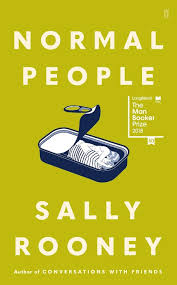
Intermezzo by Sally Rooney

Sally Rooney seems liberated by slipping under the radar for the release of her fourth novel.
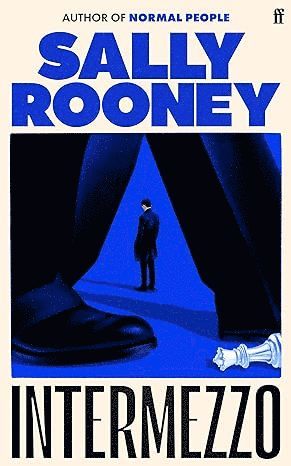

The release of a new Sally Rooney novel is an event, something to look forward to and savour when it finally comes. There was a lot riding on this novel, her fourth in 6 years. Her last outing, Beautiful World Where Are You?, was a disappointment, particularly after the fireworks of Normal People. Self indulgent, too obviously autobiographical, too self conscious of her place as an up-and-coming superstar of letters, it was dull and strangely irrelevant, like the third album from your once favourite rock band whose new songs are all about alienation of life on the road in hotel bedrooms. Seriously guys, who cares? On the back of that, I’m particularly happy to report that Intermezzo is an unalloyed triumph and a step up into a seemingly effortless maturity as a writer.

I don’t know if I missed something, but there didn’t seem to be the same hype about this novel. A bit of pre publication publicity, to whip up interest and anticipation, but then, on release, it all seemed to go quiet, as if Rooney was no longer the bright young tyro. And publishing, like every other industry that flogs culture, loves nothing more than something new and shiny. So it made for a strange experience when reading the latest Rooney. It was like reading any other novel- lower expectations, without the annoyance of negotiating all that young person social media stuff that so characterised her earlier work. It seems to have liberated her, not having to perform, to live up to her persona, and instead to focus on producing an immensely satisfying novel.

It’s contemporary, about a tangle of romantic relationships, with plentiful graphically choreographed sex scenes, set in the Republic of Ireland (so far, so Rooney), but it’s so much more than that. It tells the story of two brothers, Peter and Ivan, miles apart in so many ways (age, job situations, outlook, relationships), who are dealing with the aftermath of the death of their father. Ivan, the younger by ten years, is on the spectrum and has a hand to mouth “career” in Data Analysis. His real talent, however, is for chess.

Once a teenage prodigy, tipped for greatness, he is on a downward curve when the book begins, competing in minor, local tournaments. Peter is a Dublin lawyer – successful and sophisticated in both his career and, on the surface, his relationships. They are virtually estranged from each other and the novel traces their  attempts to make sense of their relationship, and of the world, in the light of their bereavement.

Both Peter and Ivan are in relationships where there is a significant age gap. Peter is instinctively judgemental about Ivan taking up with a divorcee ten years older than him, while seeing no problem in his own relationship with a much younger woman. Rooney examines the immense pressures felt by the older woman, from the Catholic Church, her friends, neighbours and family, such that she keeps it a secret for as long as possible. It’s just one of a series of “issues” Rooney deals with in a subtle and humane way. Most impressive is her avoidance of cliche and stereotype when portraying the main characters and their relationships. They are warm, unflinching sympathetic portrayals. She recognises them principally as human beings, individuals, rather than just types and the novel is richer, more complex and more satisfying as a result. Her sensitive portrayal of two men, completely inhabiting each persona in the distinct sections of the book is unusual and brilliantly convincing. If this had been a male novelist portraying women in such an authentic and nuanced way we would never hear the last of it. They both navigate complex relationships, with their mother, with each other and with significant women. They both make crass mistakes. As a result, they are entirely compelling and credible.

Stylistically, it’s a very interesting departure for Rooney. It’s told in alternating styles to correspond to the two main characters. Ivan’s story is immediately more engaging. The traditional third person narrative is warm and engaging, and the reader instinctively takes his side, as a picture emerges of a sensitive, thoughtful young man who has grown up in the shadow of his more extrovert, bullish brother.
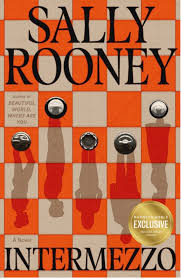
The sections that focus on Peter use a distancing, staccato style of repeated brusque observations of the world and the people in it. At first, that becomes annoying very quickly, and you can’t wait to return to the more soothing world of Ivan’s narrative. But then, over time, the style differentiates the two worlds on an emotive level, in the sense that the reader feels the tension and discomfort of Peter’s world through the prose style and it becomes clear that Rooney has cleverly represented Peter’s state of mind. It functions like a verbal equivalent of impressionist painting. Positively pointillist, in fact.

One of the more annoying characteristics of serious literary fiction is that very often, in order to signpost their command of their art, too many writers make “bold” decisions about style. You know the sort of thing: no paragraphs; no full stops; writing the novel backwards. They are often disastrous in terms of reader enjoyment and I feared at first that the same sort of thing was going on here. But no. It actually works brilliantly. (Although I still cling to my conviction that Rooney’s insistence on not using conventional speech marks, is a similar, entirely redundant stylistic tic that serves only to irritate and draw attention to itself, like a loud precocious child at a party.)

The other outcome of alternating between Ivan’s experience and Peter’s is that it underlines one of the central points of the novel: self reflection, self absorption can seriously sabotage relationships, between brothers, lovers, friends, parents and children. The reader can see the obvious love that exists between these pairs of characters much more clearly than they can themselves. Resolution, when it comes in all its forms at the end of the novel, comes as a relief, not as an annoying sentimental cop out, because we’ve been screaming at them silently throughout the book, “Just tell him (or her), for gods sake!” Rooney is excellent at exploring the fall out resulting from not communicating honestly and openly because of the fear of what might happen. She did it brilliantly with Marianne and Connell in Normal People and repeats it here. As Elvis Costello told us so presciently all those years ago, “It’s the damage that we do and never know/It’s the words that we don’t say that scare me so.”

Notwithstanding my churlish note about Speech punctuation – a tiny pinprick of irritation in a sea of pleasure – Intermezzo is a wonderful novel from a writer just getting into her stride. There’ll be a lot more to come from her, I’m sure of that. Can’t wait for the next one!
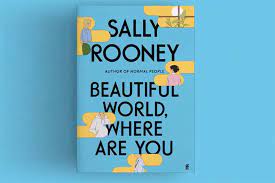
Beautiful World, Where Are You?

Sally Rooney’s third novel frustrates and disappoints in equal measure.

The View from The Great North Wood

I’m sad to report that the answer to the question posed by the title of Rooney’s third novel, “Beautiful World Where Are You?” is, “Well, not here, at any rate.”

I had looked forward to this for some time, keenly anticipating more of the glorious writing that characterised “Normal People”, a novel I loved, with great surprise after finding her first effort, “Conversations with Friends”, a full blown example of the Emperor’s new clothes. The critics gushed, and told us we were witnessing a new kid on the block who was authentically chronicling life and love as experienced by the middle class, educated twenty-somethings of Dublin (and by extension, everywhere else). I found it tediously thin and empty. “Normal People”, on the other hand, is one of the great novels of the twenty first century, a subtle and beautiful story of an enduring and evolving relationship between a “difficult” middle class young woman and a talented working class young man.

So I come to this with some perspective. Neither an adoring fan, nor an anti-woke critic, I really wanted to love this book. And there is much here to enjoy and admire, but ultimately, it disappoints. It tells the story of four young adults in Dublin and some unspecified Irish seaside town, and their attempts to find meaning in their lives and relationships, doing so via different perspectives, omniscient narrator and text/ digital message exchanges.

Rooney seems at pains to demonstrate how much she really is the voice of a new generation by laying on with a trowel the importance of social media to all of these characters. Time and time again, scenes are punctuated with exhaustive (and exhausting) descriptions of tapping on social media icons, scrolling through news feeds, checking messages etc etc. Sally, we get it. You don’t need to do this. We all do these things, even old fogeys like me. It’s a bit like Charles Dickens droning on about closing the doors on that new-fangled train type thingy. Interestingly, the key relationship, the friendship between Eileen and Alice, only seems to work digitally, when they are writing to each other. Whenever they are together physically in the real world, they fall out, and their friendship seems false and unsupportive.

The social media stuff, and the painstaking, repetitive description of the physical choreography of sex, shows that Rooney seems to want to challenge Knausgard in her relentless accretion of the mundane details of the business of living. Again and again, we are battered with flat, colourless prose recording hands resting on limbs, legs touching and not touching. And just like Knausgard, it is draining and dull and says nothing, a mere inventory masquerading as an insight into a new configuration of millennial sexual relationships.

It’s also hard to love a book that focuses on such unlikeable characters. The two women, Alice and Eileen, apparently best friends, are tiresome in the extreme. Alice is a thinly-veiled portrait of Rooney herself, a young female Dublin novelist who is lionised from her debut novel. This in itself is a little depressing. It’s like the Rock Band who have made it big. Their first album is sparky, innovative, full of energy and ideas. The difficult second album is more of the same with greater technical competence. Then, when they’ve broken through and are established in the mainstream and are selling out stadiums in America, the third album is written in hotel rooms and includes songs about the emptiness of life on the road in endless hotel rooms. The songs reflect their changed circumstances, but who gives a toss? It’s very difficult to empathise with the neuroses of the creative rich and famous.

After a vague nervous breakdown, she now clearly despises the trappings of fame and despairs of the emptiness of her life and world. No matter how hard I tried, I really couldn’t summon any sympathy for a woman afflicted by wealth, fame and privilege. Her friend Eileen, from their university days, is presented as the junior partner in the friendship. Less successful, less confident, her relationship with Alice mirrors that with her elder sister, Lola, despite the fact that Eileen loathes Lola and idolises Alice. Her lack of agency, her diffidence in articulating clearly what she wants, her self-pity about her life, is after a while, simply grating, generating annoyance rather than empathy. A key narrative thread in the novel is her long-standing love for Simon, five years older than she is, who she has known from home since childhood. They have had a history of almost, but not quite, falling into the relationship that clearly both of them want, but circumstances and other relationships, and bad timing have prevented from happening. Simon is probably the only likeable character out of the four, and is in some sense, a rehash of Connell from “Normal People”. Committed to social justice, modest, strikingly fit and handsome, and successful in terms of a career in the political world, he seems like a nice self-effacing kind of chap. Obviously he is markedly inept in terms of opening himself up to intimacy, but dear readers, there are worse crimes to be indicted for.

There is an element of their relationship that works well for me and it’s another echo of “Normal People” which was a tour de force on tentative, awkward communications between people who really like each other but are scared they might say the wrong thing and ruin it all. This is beautifully done there and once again, the conversations between Eileen and Simon are toe-curlingly awkward and realistic, leaving the reader wanting to shout at them, “Just tell each other straight, for God’s sake” Rooney is brilliant on this kind of self-sabotage through embarrassment and feelings of lack of self-worth.

“Telling each other straight” is the one positive quality I could discern in Felix, the final character of the four. He seems to be the partner of choice for Alice so that Rooney can signal her right-on ness yet again. He’s an unskilled working-class chap who she meets on some Tinder-type dating app. Their first date is a disaster but she is intrigued by him. As the novel progresses, we learn that he was a low achiever at school, and does not read, so has little idea of her career as a novelist, but it is clear from Rooney’s descriptions and his dialogue that he is intelligent. The dialogue between Alice and him is refreshing and thought provoking. They fence around like all of the others, but Felix’s great strength is that he is fairly clear and straightforward about what he wants from her. He’s respectful about asking though – this is not a portrait of an abusive man – but Rooney deliberately muddies the waters by including a scene where Alice finds some particularly nasty, violent pornography on his phone. The fact that she does not judge him negatively for this seems to be part of Rooney’s schtick that modern love and sex is different somehow.

I don’t buy it I’m afraid. He lets her know he is bisexual and makes a mockery of his own name by making it very clear he’d like to have sex with the gorgeous Simon, right in front of Alice and everyone else. Rooney seems to be saying that, these days, for these fabled millennials, sex is just another appetite and is disconnected from other emotional connections. Loyalty, fidelity, exclusivity in relationships seems so last century. The ghastly Felix, appears utterly selfish on one level, such that, in a scene late on in the book, when he gets back home to be reunited with his beloved dog and there is a detailed description of him lovingly stroking it, I feared for the dog’s honour. We were genuinely just a short step away from a bold depiction of the love that dare not speak its name. Fear not, gentle reader, the dog survived, honour intact. As did Felix’s relationship with Alice, which just did not ring true to me.

There are some redeeming features. The opening 4 or 5 chapters are wonderful. She is a beautiful, precise writer, and effortlessly draws the reader in to a scenario. I was expecting something magnificent, but ultimately, I was disappointed. She is also brave enough to tackle big ideas. The email/message exchanges between Alice and Eileen have them dissecting weighty themes about the meaning of life. What is important? What really matters in life when climate change and populism threaten our very existence? Rooney concludes it is the connections we make with other people and the pursuit and enjoyment of cultural beauty. The trouble is, after a little while, one’s heart sinks when yet another musing whatsap message exchange about the meaning of life hoves into view. In the end, I just flicked to get to the narrative. Ideas are all very well, but let’s not forget about the story.

Speaking of the story, very early in the novel she gives us ten pages of back story, telling us about the childhood connections between Eileen, Simon and Alice. It’s a curious pause in the proceedings. On its own, it’s a masterful bit of plotting which could have been the outline of a very satisfying, better novel. And then I realised that it was too close to the plot/milieu of Normal People, so she couldn’t just repeat that again. So in effect, it’s a what-happens-next continuation of Normal People in disguise.

The weirdest aspect of the novel for me, given that I think that Rooney is a great stylist, is the curiously flat, perfunctory prose that sucks all of the life out of every description. There is a distance set up between the reader and the characters, and in effect, between the characters themselves, because the style makes it so hard to care about what happens either way. At times it’s like reading the shipping forecast, or a clinical psychotherapist’s academic report, holding up a mirror to the participants.

She’s a wonderful writer, but at the moment the scoresheet reads won 1, drawn 1, lost 1. She needs a big result from the next book. I’ve got my fingers crossed.

The View From the Great North Wood – Normal People.

Normal People: Great book, slightly disappointing TV adaptation.

Now the terrestrial television version is finally over, I can deliver the review I’ve been sitting on after bingeing the series on I-Player, to avoid spoiling it for those people still ploughing on with week by week. I don’t know this as I write, but I imagine that the viewing figures showed a steady decline from the opening episodes, whose early brilliance, with the promise of much more, became a distant, hard -to- keep- hold -of memory by the end.

The Sally Rooney Conundrum

I came to the series with some history as far as Rooney is concerned. Her first novel, Conversations with Friends launched her onto the literary scene in a blaze of glory. The reviews were universally gushing. This, they shouted, was a major new talent, the voice of the millennials, someone who really understood how that generation felt and thought and acted. Someone fresh and exciting and new. And young. More than anything else, her greatest asset as far as the panoply of cultural commentators were concerned, was her youth.

As someone who has studied and taught literature for all of my adult life, and what’s more, someone with an abiding love and passion for books, I have always looked out for the new kids on the block. I’m also someone who has been partial to the more experimental novelists, both in terms of style and structure. The difficult read was always for me an incentive not a passion killer. And so, I snapped up Conversations with Friends, eager to join the ranks of the disciples. I began to turn the pages with the juiciest phrases from the reviews echoing in my mind: whip smart, forensic examination of twenty something relationships. Funny. Incisive.

After thirty pages, I was puzzled. After fifty I was annoyed. What a dreadful book. Trite, dull, shallow nonsense acted out amongst a menage a trois, with supporting cast, all drowning in narcissistic entitlement. A real case of the Emperor’s New Clothes or Old Wine in New Bottles. I developed a theory that this was yet another manifestation of the modern phenomenon of Literary agents and Publishers preferring young, attractive women to old grey-haired dudes because they were easier to market and promote. It was easier to envisage shipping shedloads of product if it had been produced by a photogenic babe with her finger on the Instagrammable pulse of the millenial generation. This theory gained traction in my very small brain when it was announced that Rooney’s second book, “Normal People” had been listed for the Booker prize. That greater traction converted to obvious conspiracy theory territory when my research showed that Normal People had not even been published when it was listed for this major Literary prize. That was the clincher. I fumed from my unsuccessful writer’s garret and railed against the cosy, cliquey, corrupt literary establishment stitch up, and vowed never to read it and to diss Rooney’s name whenever the opportunity arose.

And that, for me, would have been a perfect and entirely satisfactory end to my virtuous rage, but for one fatal mistake.

I read it.

I finally decided to give it another chance after reading, almost continuously so it seemed, endless glowing references to it, endorsements and general positivity, some from people whose judgement I generally have a lot of time for. I reluctantly concluded that I might have got it wrong and been a bit hasty. I’m sure you’ll find that easy enough to believe.

I started again, sure that my original withering critical assessment would be vindicated. It starts quite slowly and obliquely (another one my moans about modern fashions in literature), so that you have to work hard to piece together relationships and point of view and setting and situation. Or everything, in short. But then, very quickly, after only a couple of pages, the fog lifted to reveal a gorgeous landscape. I was enthralled. The book is a beautiful, beautiful thing of subtlety, wonder , emotion and intellect. The depiction of contemporary Secondary school life, with its airy cruelty, social media fuelled bullying and shifting allegiances between well defined, well known cliques that are impossible to break down, infiltrate or change was masterful. The taboo relationship between the classes and cliques, and its accompanying, soaring exhilaration and embarrassment was beautifully, sensitively explored. I loved the way that the central relationship was so precious, so wondrous to Marianne and Connell that they became paralysed by fear that one wrong word or move would finish it. On some deep level, neither of them really believed they deserved the other and this always translated into, for the observer, an infuriating inability to communicate with each other about their own needs. The subtleties of class and alienation, so often in modern times ignored or badly rendered, were navigated with a rare combination of authority and humanity, as were the perils of the working-class boy arriving at and surviving an elite University.

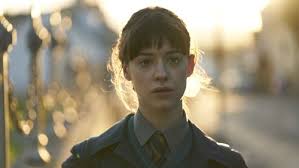
Daisy Edgar Jones surviving ghastly grey school uniform

It’s a glorious novel about the earth-shattering, life affirming, all- enveloping effect of finding someone who you connect with, at that most tender and exciting time of one’s life, when all things  are possible and one fears that none of them will come to pass.

I was so pleased that I decided to read it, after dismissing Rooney as an establishment darling, a judgement I look back on with some embarrassment. It seems pretty obvious to me now, that my conspiracy theories about literary agents were fuelled by my own frustrations as a budding writer, of not being able to attract a spark of interest in getting my books called.

So, having revised my opinion, I was really looking forward to the TV adaptation. The first episode was fabulous, and promised a binge worthy series. The two actors embodied the characters as I had envisaged them and the awkward choreography of school and relationship was beautifully portrayed. But then, as it progressed, it lost its way. The TV version simply did not deliver the characters’ interior life in the same depth as the book, so the viewer was left baffled by a series of decisions or non-decisions they made. Marianne’s descent into the two appalling abusive boyfriends after Connell, in Italy and Sweden, was utterly unconvincing to me, when in the book, it made perfect sense. The same applied, for me at any rate, about their ridiculous lack of communication about flats and the like, and Marian’s family background.

Paul Mescal sporting rare smile in Young Person angst -fest

And then we come to the matter of televised sex. At the risk of sounding like my mother back in 1974, or the legendary Brenda from Bristol on the prospect of a General Election (“What, another one?”) did we really need it? After the second half hour episode, every scene where they got their kit off was just filling airtime. By then, we had all got the point that “it isn’t like this with anyone else”. And the much trumpeted (well, by The Daily Mail, anyway) forty minutes in total of sex scenes completely misrepresented the balance of the original book.

Notwithstanding all of this, the two main actors were spectacularly good. I have a feeling that we will be seeing an awful lot more of them in the future. Paul Mescal’s  performance as Connell, sensitive, intelligent literate working class boy who is also good at sport and socially successful, was brilliant. His portrayal of the difficulties this  hugely talented character had in finding his niche amongst the posh kids, his breakdown after the suicide of his friend from Sligo , culminating in a heart rending scene of uncontrolled male sobbing was so convincing, so perfect it made me once again worry about my own son and the position of young male twentysomethings in society today. It’s much harder growing up these days than it was in my day, back in the Seventies. Daisy Edgar Jones as Marianne was also fabulous, particularly in the earlier episodes at school and at home, as someone who was alone in her abusive family and with no friends until Connell comes along. I’d also like to give a special mensh to Desmond Eastwood who played Niall, Connell’s flat mate and friend at Trinity. A minor character, he completely slipped my notice when reading the book, but he struck me as being just perfect in the adaptation. Just as in real life, the normal, ordinary, kind, helpful, supportive people tend to go under the radar, and  Niall seemed like an absolute sweetie, the kind of friend everyone needs, who can crack a joke or smooth things over, when all around him over-sensitive people are falling apart, sometimes self-indulgently, sometimes as vulnerable human beings.

So, what a wasted opportunity, after a wonderful start. It could have been so much better. It’s still head and shoulders above most things on TV at the moment, but the book drove me to want more from it. If you didn’t like the TV version, and as you can see, I can absolutely relate to that, please don’t deprive yourself of the pleasure of the book. It is a major piece of work.