My Books of the Year

Professional Reader

It’s that time of year again. Journalists in every publication are boshing together a Christmas present guide for all of the literati out there. So here’s mine. Please note – these suggestions spring only from the books that I have read myself. This is not an attempt to cast a definitive verdict on the books published this year. I’m lucky to be able to read a huge number of books in my retirement, but I’m sure there are many contenders that I haven’t got round to yet. Some on the list, as the reviews make clear, are there because they are interesting in some way, rather than brilliant. With those caveats, here we go…
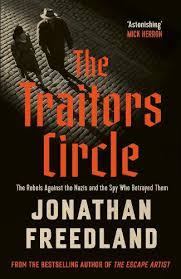
The Traitors’ Circle – Jonathan Freedland

My Book of The Year – and it’s not even a novel!

Freedland explores the lives of nine influential people in Nazi Germany who have severe misgivings about Hitler, the war and the whole Nazi project. They are loosely interconnected, their paths criss-crossing throughout the period, and all in some way, try to work against the regime. It’s clearly a dangerous path to choose, as anyone not fully signed up to Nazism is picked off in one way or another. Lack of preferment, prison, concentration camps, disappearances and murder in plain sight are all visited upon anyone who speaks out. It’s brilliantly constructed, with short chapters scrolling through the roster of characters Freedland establishes from the beginning, each one ending in a teaser or cliffhanger. The overall effect is one of a tightly plotted detective novel. An enthralling, thrilling read.

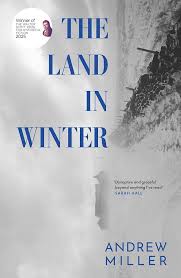
The Land in Winter – Andrew Miller

Listed for the Booker Prize, this is a glorious piece of historical fiction, set during the Big Freeze of 1962/63. Subtle and satisfying, this is an enormously enjoyable novel of relationships. A book for adults, as Woolf famously said of  Middlemarch. If Flesh is better than this, It’ll be a great novel. But the Booker judges are nothing if not unreliable in their judgement

Long review here: https://growl.blog/2025/07/09/the-land-in-winter-by-andrew-miller/

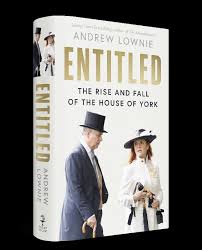
Entitled – the rise and fall of the House of York – Andrew Lownie

This book would have been unthinkable even a few years ago, such is the iron grip the Royal family have on the British establishment. But now, open season has been declared on the ghastly Royals. They have presented a juicy target ever since the Queen died, and the tabloids have been plugging away at their pet targets: Harry and Meghan, Camilla, and Andrew and Fergie. The Mail and the Telegraph have been twisting in agonised indecision over this as performative hatred of paedophilia has vied with slavish arse licking of anything Royal. For normal people, it’s the whole corrupt lot of them. For previously arch royal sycophants, it’s worth sacrificing two embarrassing Minor Royals in the belief  that the Body of Royalty as a whole might be saved by the judicious amputation of some corrupt and rotting limb.

The book is basically gossip, but it’s enjoyable reading about just how appalling these two were (and are). If it has a fault it’s that it’s just a little dull and not shocking enough. Some of the more shocking revelations Lownie treats us to are:

  1. Andrew routinely leaving his semen stained tissue paper scattered on the floor for staff to collect and dispose of
  2. Reports of forty prostitutes being shipped to his hotel room on some Trade Envoy Jolly over the course of a four day stay.
  3. On being told by a young woman at his table for some dinner that she was a Secretary, Andrew, horrified, replying, “How uninteresting. Is that the best thing you could find to do?”

Nice Guy. Between their divorce and The Epstein scandal, the book is reduced to a litany of descriptions of their serial affairs, financial mismanagement, and corruption. It establishes behind any reasonable doubt that Andrew is dim, privileged, entitled, boorish and utterly boring, while Sarah is a sex machine spendaholic space cadet. Still, worthwhile to have one’s prejudices so well researched and confirmed.

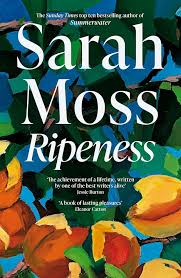
Ripeness – Sarah Moss

What a lovely novel this is, from someone writing at the top of their game. Structurally and stylistically, it’s a treat, with alternating sections telling the stories of the same character, Edith, fifty years apart. The younger Edith tells her own story, in the first person, through the device of a lengthy letter to a child, to be read in the future, explaining the circumstances of the child’s birth and subsequent life. The sections dealing with the older Edith are set in rural Ireland and are told in the third person. Beautiful descriptions of both the countryside around Como and small town/village life in the Republic are subtly blended with Edith’s reflections on first growing up and then getting old. Honestly, this is a must read book. Beautiful and thought provoking. Longer Review here: https://growl.blog/2025/06/05/ripeness-by-sarah-moss/

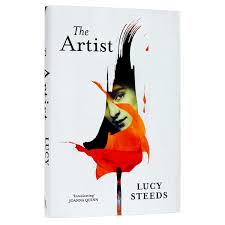
The Artist – Lucy Steed

Reading this in the depths of winter, this historical novel set in the sundrenched summer of a village in Provence is a therapeutic treat, like a session in a natural light booth for SAD sufferers. A young journalist, Joseph,  suffering from the traumas of the first world war, travels to the remote home of celebrated artist, Eduard Tartuffe, to undertake a profile of him for the art journal he works for. He finds the great man sour and difficult, and  living alone except for his niece Ettie. As he wins Eduard’s trust and  gets closer to Ettie, secrets are revealed. A lovely book.

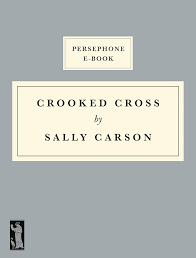
Crooked Cross – Sally Carson

This year’s long forgotten rediscovery, Crooked Cross was written in 1933 by an English woman Sally Carson based on her experiences on holiday in Bavaria. It tells the story of the slow build up of nazism and the way it overwhelms everyone’s lives, even in the backwaters of a Bavarian village, explaining how, in an incremental way, ordinary tolerant people can be drawn into the most despicable acts.

A timely text in the light of the current wave of racist populism that is sweeping across Europe and America. Oh no, I forgot. We’re not allowed to make any Nazi/Fascist comparisons between today’s political titans and those of the 1930s. Actually, it’s impossible not to, if you have any regard to historical facts. It’s a worthy revival, if only to publicise the parallels between then and now and between them and us, but it shows its age. Despite the subject matter, it lacks real drama and/or tension and didnt quite live up to its reputation.

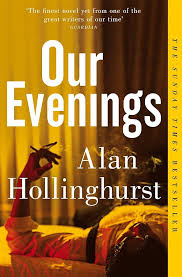
Our evenings- Alan Hollinghurst

I must confess, I’ve started several of Hollinghurst’s novels, and have never liked, much less finished, one of them. It’s just one of those things – he’s lionised by the literary establishment, but for some reason, he just doesn’t do it for me. This latest got rave reviews and it starts brilliantly. There was a moment when I thought this was going to be the Hollinghurst novel where I finally got it, but unfortunately, by the end I was a little underwhelmed. But reader, I finished it! And that’s a first.

It’s a whole life story novel that follows Dave Win’s progress as a gay, half English, half Burmese actor, navigating public school, the disapproval of his family and the casual racism and homophobia he encounters. The relationship with his mother is beautifully observed, but another relationship, with the bully at school who goes on to achieve high office in a Tory government, promises much, but ultimately fizzles out without delivering. If you don’t share my antipathy towards Hollinghurst,  it’s definitely worth a punt

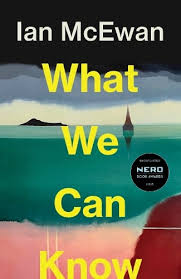
What We Can Know – Ian Mcewan

The latest from McEwan shows his powers are undiminished, after a career at the very top of English fiction. The book is framed as an academic literary investigation, in a Britain clinging on after a series of ecological disasters in 2125, into a celebrated poet and climate change denier from the Britain of 2020. It’s a strange mixture, at times compelling, often fascinating, and at other times annoying.

The good stuff is the unrolling of the climate disaster and the unforeseen impacts that has had (Nigeria is the preeminent power, and America has disintegrated into a ferret sack of competing warlords and clans.) The bad stuff is the suffocating superiority of the middle class literary types, with their casual snobbery, all, seemingly, having affairs with anyone and everyone. I’d like to think McEwan is trying to skewer them and their ghastly attitudes, but I fear that he may actually share many of them. That’s harsh – it’s beautifully written, as ever,  and worth a read.

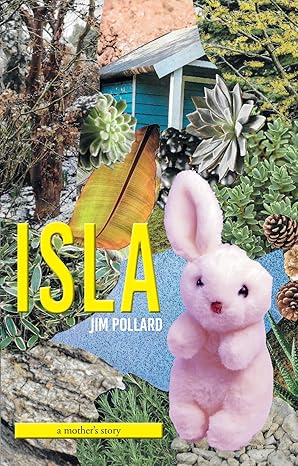
Isla  – Jim Pollard.

One of the pleasures of exploring the work of independent writers is that you come across things that deserve much greater exposure. This one’s a gem. Pollard, an ex-teacher and journalist, has specialised in books about men’s health, accumulating an impressive back catalogue, irregularly punctuated by his novels. His latest, Isla, is inspired by the Madeleine McCann case, and explores the aftermath over a lifetime of such a traumatic event. It’s set in Paris and London, and beautifully evokes both cities. There are no easy answers to the questions the novel poses and no obvious ones either. This is a great read.

Longer Review here: https://growl.blog/2025/05/21/isla-by-jim-pollard-a-review/

And you can buy it here: notonlywords.co.uk/isla

Main review here:

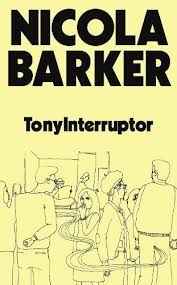
Tony interruptor- Nicola Barker

Barker is consistently one of the most interesting of British novelists, who deserves a much higher profile. Her books are often odd, awkward little things, and this one is no exception. It would be a delightful stocking-filler.

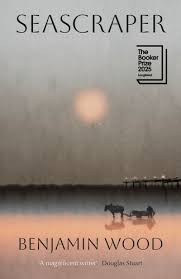
Seascraper – Benjamin Wood

An excellent story of a young man who lives with his mother on the grim and exposed coastline of Morecambe Bay. He scrapes a living, continuing the work learned alongside his late father, pillaging the cockle beds in the shallows of the Irish Sea. It’s hard work, alone save for his horse in all weathers. He keeps his sanity by writing and playing songs on a second hand guitar, ( all concealed from his mother)  working towards playing the folk night of a local pub. His world is suddenly turned upside down by the appearance of an American film man who descends on the community researching the beach as a location for his next film. It’s a small and perfectly formed gem.

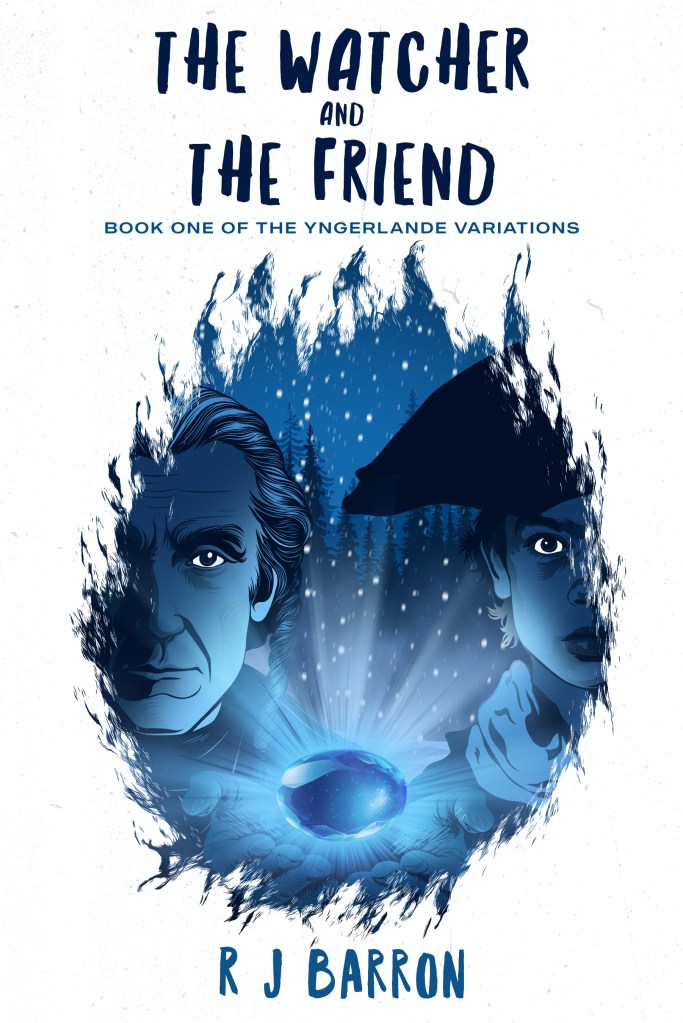
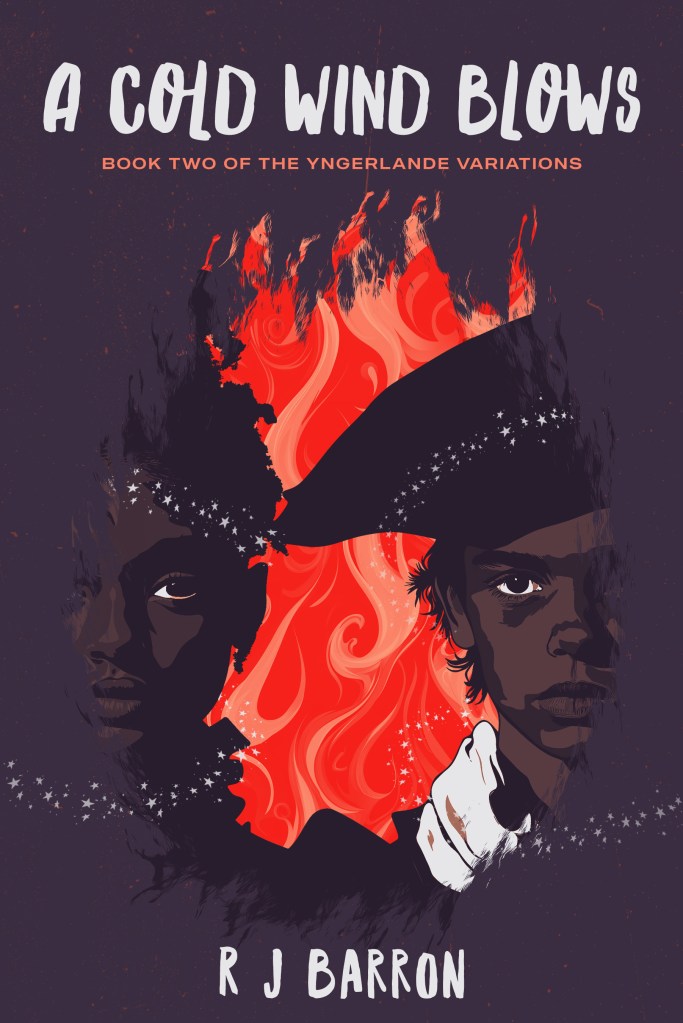
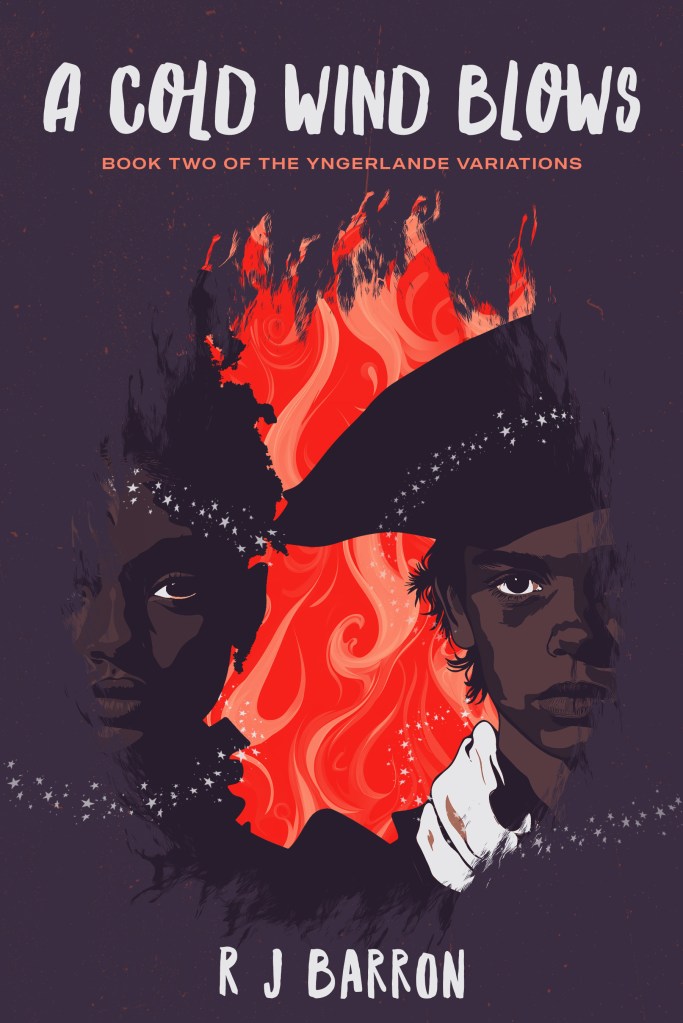
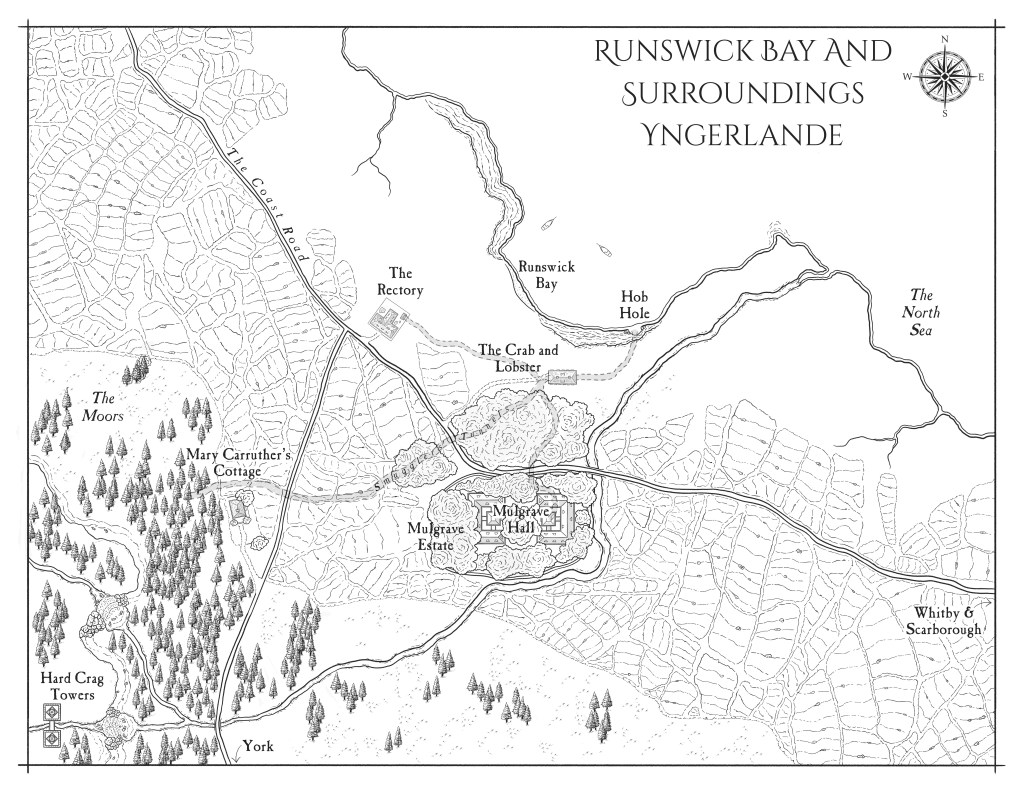
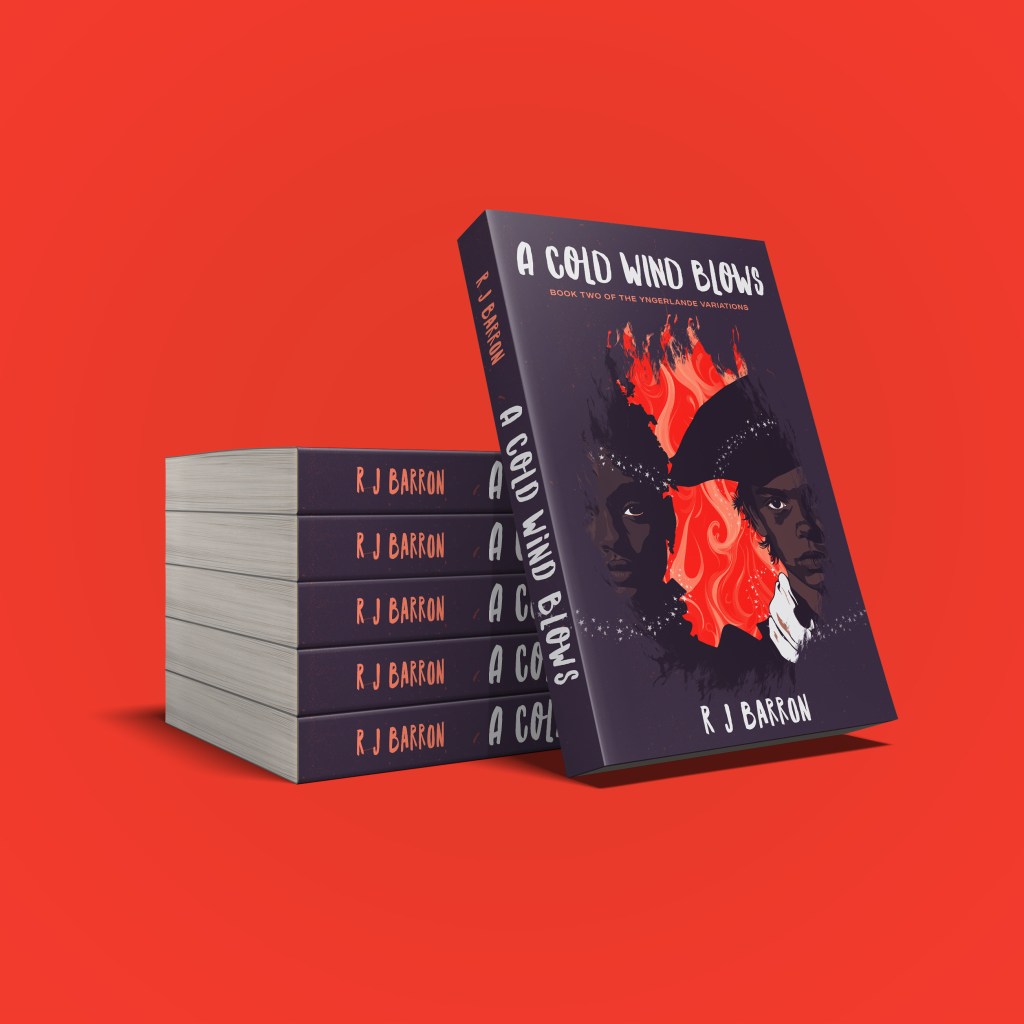
Obviously, the real book of the year is my very own, A Cold Wind Blows. The book is part 2 of a fantasy trilogy, set in Yngerlande, a parallel world to England in 1795. Yngerlande is a place of absolute and perfect equality, but their tolerance and liberalism is put at risk by an attempted counter revolution from the surviving relatives of the Old Mad King from generations before. They want to overturn all of the social advances made and establish a patriarchal, white supremacist regime. Thomas Trelawney, a thirteen year old boy from modern day England, finds himself the possessor of previously unknown powers, when he is summoned to help protect the Realm from the forces of Darkness. Think of it as Harry Potter meets Lyra Silvertongue meets Outlander. “A slice of Fantasy brilliance” said one reviewer. And they were right! You can buy it here: https://shorturl.at/UcRWb

Those that didn’t quite make it…

This could be for a number of reasons: Only just come out, I’ve heard about and intend to read, waiting for it to arrive. That sort of thing. Here they are:

Lots to read in 2026!

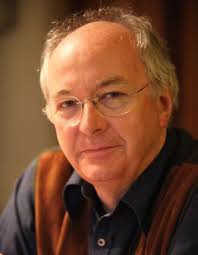
The Rose Field by Philip Pullman – a Review.

A major disappointment as the metaphors run out of road.

Spoiler Alert! Unhelpful plot revelations ahead!

A new book by Philip Pullman is usually something of a treat. A literary event in fact. This one has particular significance – it’s the concluding volume of the Book of Dust trilogy, and as he gets older (he’s 78 now) there is always the fear that it is the last he will ever write. Before I go any further, it’s only right that I reveal myself to be a massive fan. Pullman is one of my literary heroes and an inspiration as far as my own writing is concerned. The Northern Lights trilogy is fully deserving of all the plaudits heaped upon it, not least for the fact that, by the end, it has become one of the all time great love stories.

So it’s with some sadness that I have to report that The Rose Field is a major disappointment. It’s full of lovely writing, and Pullman’s imagination (a key consideration in the light of one of the book’s themes) is in full working order, but as a coherent piece of story telling, it fails to land.

It comes in at a baggy 620 pages long, and I got the impression it could have just as well have finished after 1,620 pages, and we still wouldn’t have been anywhere near a satisfactory conclusion. Pullman, as a Great Man of Letters, has now achieved the status of “He Who Cannot Be Edited”. Pity the poor editor assigned to the task: “Phillip, do you really need all those bits with the characters discussing Dust?” is a question only a very brave soul, with no aspirations to a long term career in publishing, would ask. But it is the question that shouts out of almost every page. By the time we get to page 554 and Lyra and Malcolm start discussing Binary Absolutism, it’s screaming.

Equally unfortunately, lots of other things emerge, trade winds that blow the good ship Narrative off course, time and time again. Crucial developments occur completely out of the blue – the fact that the loathsome Olivier Bonneville is the half brother of Lyra is revealed towards the end, seemingly as another device to keep the pot boiling. Minor characters emerge and then disappear. Supposedly important characters do exactly the same. (I’m thinking of Leila Pervani here). Two thirds of the way through the book, the narrative drive of the book appears to suddenly come from a “battle” against a character who has sprung out of nowhere, the sorcerer, Sorush, involving armies of various creatures. There doesn’t appear to be any plausible reason for this development in terms of characters, relationships, or previous events, and is there simply to add a bit of action to keep the reader engaged. It seems Pullmann has taken a leaf out of Tolkien’s book, and emphasised the “quest” aspect of the story with this out-of-kilter battle. Oh the irony, after Pullman’s much discussed dismissal of Tolkien as being “thin” and not being about much. This is what he says about The Rose Field himself: “I think of The Rose Field as partly a thriller and partly a bildungsroman: a story of psychological, moral and emotional growth. But it’s also a vision. Lyra’s world is changing, just as ours is. The power over people’s lives once held by old institutions and governments is seeping away and reappearing in another form: that of money, capital, development, commerce, exchange.”

That’s one of Pullman’s greatest difficulties here. He makes the key mistake of thinking he is writing about something and Something Very Important at that, so the story takes a back seat. Tolkien could teach him a thing or two about telling a compelling tale. 

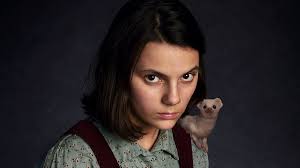
Just a reminder of the greatness that is Lyra Silvertongue and Pan

All of this adds to the impression that Pullman is desperately trying to write himself out of several of the corners that the first two (five?) volumes have backed him into. One of these is the growing relationship between Lyra and Malcolm Poulstead. The awakening of friendship into love is something Pullman has form on. The changing of the relationship between Lyra and Will in the Northern Lights trilogy was beautifully done, and forms the backbone of the books. He attempts the same thing here, using the daemons of these two characters to add depth and subtlety to the development. Once again, it’s really well done (apart from the nagging suspicion he’s re-treading old ground), but then, right at the end, he pulls the rug from underneath his readers. It’s as if he’s just realised that the relationship between two characters who are eleven years apart in ages, where Malcolm used to be Lyra’s teacher, could be deemed a little problematic, a little too groomy. In one conversation, right at the end of the book, he trashes all of the careful build up, by having Pan tell Lyra that Malcolm was in love with Alice and that they (Pan and Lyra) “will have to put the idea in his head”. Job done. One more loose end tied up as if by magic.

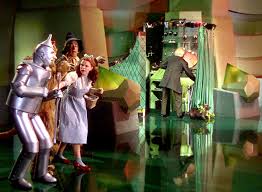
There’s similar botching when it comes to explaining Dust, “Alkahest”, Rose oil and Pan’s  decision to leave Lyra at the end of The Secret Commonwealth to go in search of Lyra’s missing “Imagination”. It’s bound to fail, because they are ideas born of beautiful, powerful,vague metaphors. Their power and beauty comes from their very vagueness – that’s how metaphors work –  through association and connotation. The minute you try to rationalise them, their power and beauty drain away and they are left like the Wizard of Oz after the curtain is ripped aside – small and a little pathetic.

By the end of the book I was torn. I couldn’t make up my mind whether Pullman should have stopped after finishing Northern Lights and turned to something completely new, or whether I should be grateful he started The Book Of Dust for the pleasures it produced. The trouble is that once you have set the bar so high, it’s a very long way to fall when you don’t quite get it right the second time around. Maybe it’s time to write another Ruby in The Smoke – short and punchy, and not a binary absolute in sight.

Another Great Review for A Cold Wind Blows

“A slice of fantasy brilliance”

Always great to get reviews out of the blue from someone who so clearly gets it. This one from AndrewSarahBookReviewer. Yes, that’s their mysterious handle. Have a read and see if you agree by reading it yourself. Links to Amazon at the end of this blogpost.

A Cold Wind Blows doesn’t read like something written by a man testing his first dip into children’s fantasy. It reads like someone who knows how to pull history, myth, and magic into one big imaginative storm, and then quietly pretend it’s all casual. But here’s the catch, it’s almost criminal that a story this rich, this layered, and this cinematically British isn’t stirring up more noise online.

Let’s start from the top.
You’ve got Silas Cummerbund, a name that sounds like it belongs in both a Dickens novel and a secret magical agency. The man’s half mentor, half mystery, and fully fascinating. Then there’s Princess Gaia, trained to harness her hidden powers, facing danger, betrayal, and probably more character development than most fantasy heroines get in a trilogy.

The world of Yngerlande isn’t just imagined; it’s constructed, with history breathing beneath the soil, loyalty and treachery doing a slow, deadly waltz, and danger watching from the kitchen (because, of course, there’s a suspicious kitchen boy named Shrike ). You’ve got everything, a sharp mind for structure, a love of lore, a solid moral compass, and that old-school narrative warmth modern fantasy often lacks.

It’s classic fantasy craftsmanship, the kind that brings back that old-school sense of wonder and storytelling gravitas. You can feel the teacher in you on every page, that precise attention to pacing, that clean sentence rhythm, the moral backbone hiding beneath the adventure. There’s something deeply nostalgic about your writing, it’s the kind of story that whispers “just one more chapter” until the reader realizes it’s 3 a.m. and they’ve stopped pretending to be an adult.”

Many thanks to Sarah for such a wonderful Review!

See for yourself – click here to buy: https://shorturl.at/HYY27

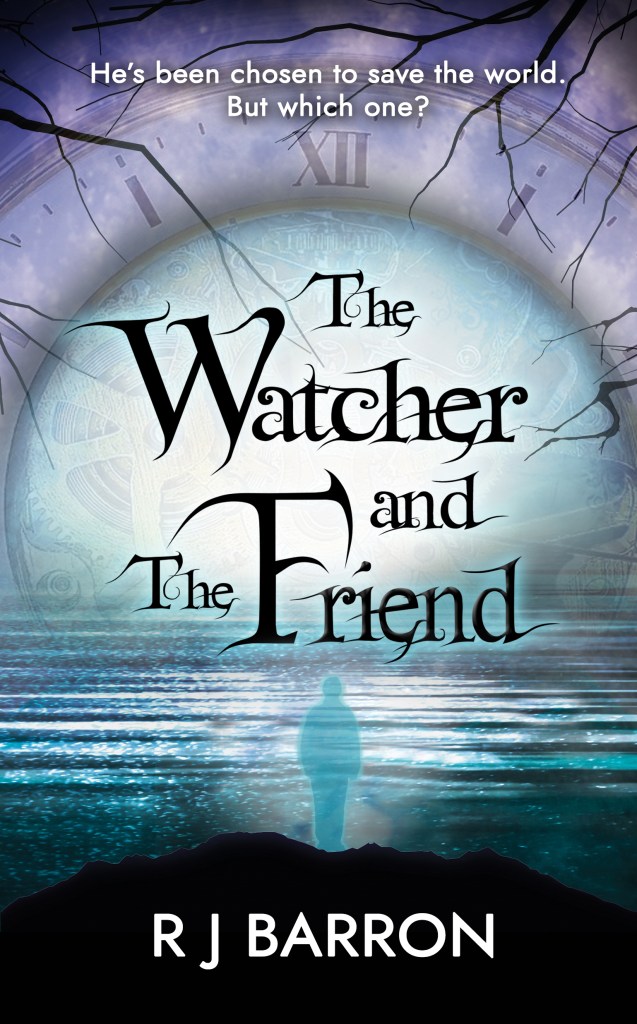
Book 1 in the trilogy, The Yngerlande Variations, is available here. The Watcher and The Friend: https://shorturl.at/4OAZK

Christmas Crackers

My books of the year, 2024

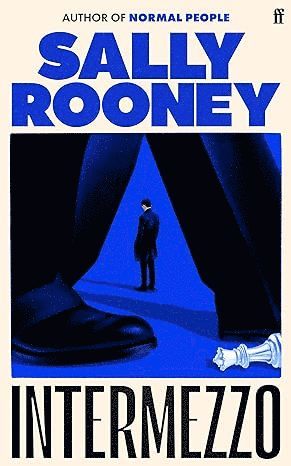
Sally Rooney triumphs with the novel of the year, a welcome return to form after the disappointing Beautiful World, where are you? Stylistically and structurally interesting, this portrayal of two brothers, separated by age, temperament and position in society, groping their way to recovery after the death of their father, is subtle, sensitive and engaging. Rooney explores how lack of communication in relationships entrenches misunderstanding and generates misery, but with a glimmer of hope that rapprochement is possible.

Full review here: https://growl.blog/2024/11/15/intermezzo-by-sally-rooney/

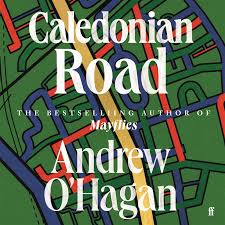
Andrew O’Hagan’s weighty state of the nation novel is but a short head behind Rooney. Caledonian Road is a positively Dickensian romp through London society, skewering the establishment, the media, populism, the ghastly Tory party and their upstart illegitimate child, Reform UK, to name but a few. Clever and clear sighted, the novel rises above satire through its multi layered plot delivering thoughtful, engaging and moving relationships to add heart to its steely intellectual societal analysis. Can’t wait for the TV adaptation.

Full Review here: https://growl.blog/2024/07/03/caledonian-road/

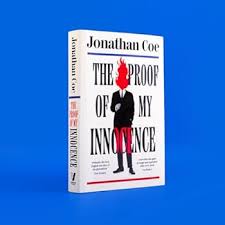
Jonathan Coe on top form with this clever dissection of the rise of far right think tanks  in the US and here alongside the rise of the cosy crime genre. At times it’s hard to tell which he is more appalled by. It’s structurally clever, placing the murder of a journalist who has spent forty years since leaving Cambridge investigating the murky dealings of the poshos he endured as a provincial oik. He has paddled along a back water while they rub shoulders with the rich, the privileged and the powerful. Very funny, very sharp, pleasingly meta. Almost nudged O’Hagan out of second place. But not quite.

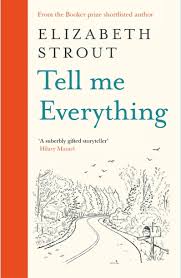
Elizabeth Strout does what she does best – an immaculately observed portrayal of small town life for a cast of older characters, focusing on Lucy Barton once again. The seemingly meandering tales they tell each other hide an interesting murder plot from years before, but that is almost a distraction from the forensic examination of love, friendship and relationships amongst people who are getting old and reflecting on the choices they have made in their lives.

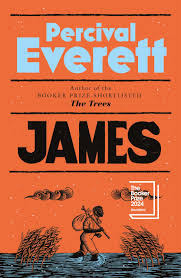
Percival Everett made the Booker shortlist for this re-imagining of Huckleberry Finn from the point of view of James, the slave. It’s a lovely, skilful piece of work that has at its heart an ingenious conceit that twists our understanding of the slave master relationship. Although it’s clever, by the end I was beginning to grow tired of what is essentially a one trick pony. Still, worthy of your consideration for end of year reading, or gifting.

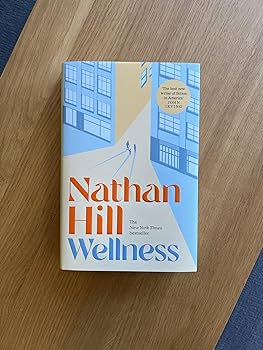
Nathan Hill’s breakthrough debut, The Nix, was one of the great American novels of the last few years, but that was back in 2016. It’s been a long wait, but trust me, this follow up is worth it. The opening section that sets up the central relationship is an absolute treat. It doesn’t quite maintain that ( it’s a big book) but it’s still a triumph. Beautiful prose, compelling relationships and characters, Hill makes Jonathan Frandsen look like an amateur.

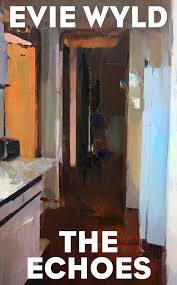
Read this, read her previous novel, The Bass Rock, read anything of hers you can get your hands on and wait eagerly for what she does next. Quite simply, Evie Wyld is a wonderful writer. End of.

David Nichols is the master of romantic relationship novels. Funny, perceptive engaging, You are here is the latest, tracking the start of a romance between two characters, set up by one concerned friend, who are thrown together on the coast to coast walk, from St Bees in Cumbria to Robin Hoods Bay, on the North Yorkshire coast. This is a minor Nichols work, leaving the reader with a feeling of slightness, insubstantiality, but even so, much better than a lot of the talked about novels of the year. (See Christmas Turkeys, below). A parochial point, I know, but I was particularly thrilled by the references to Teesside and Middlesbrough FC, as the characters started the last leg of the walk. Can’t think of many other cultural works where this happens – Teesside must be the most invisible, most unheralded area of the UK.

Stop Press!

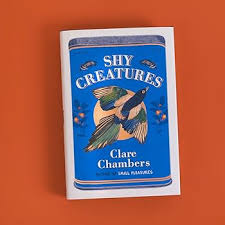
A late entry that I just had to include. I’m only half way through this book, but it’s too good to ignore. If you liked Clare Chambers’ Small Pleasures, you will love this. Suburban lives, small frustrations, unfulfilled relationships threaded through with a weird tale of a Boo Radley figure who comes to light in a near derelict house in Croydon. Sublime.

The Perfect Christmas Presents

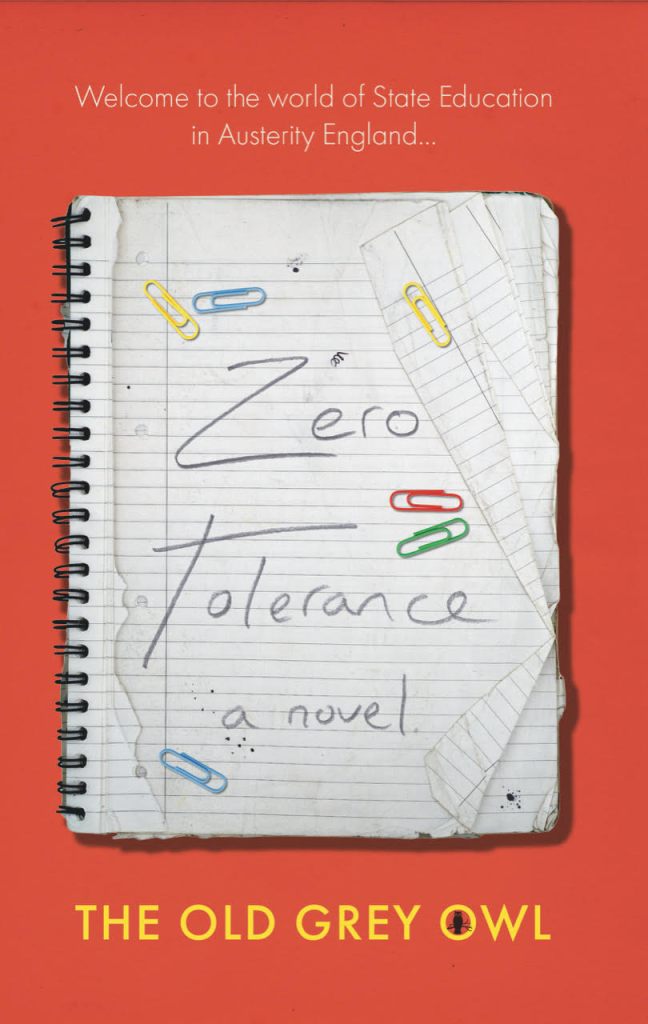
Obviously, if you’re looking for gift ideas, I think you’ll find my own books will hit the spot. Zero Tolerance will give you a real insight into the scandal breaking about unethical behaviour in certain Academy Trusts. For the teacher in your life. You can buy the ebook or a paperback, and read the reviews by clicking the link below:

https://wordpress.com/page/growl.blog/1142

Fans of Fantasy, YA and children’s books need look no further than The Watcher and The Friend, from Burton Mayers Books. The sequel, A Cold Wind Blows, is scheduled to come out next year. For a flavour, check out the podcast audio book.

https://www.amazon.co.uk/s?k=the+watcher+and+the+friend+r+j+barron&crid=15DH4BU4YWUF5&sprefix=the+watcher+and+the+friend+r+j+barron%2Caps%2C200&ref=nb_sb_noss_2

Christmas Turkeys

A little unfair this title. Some of these books were just a little disappointing, a little overhyped. Others were just plain dreadful.

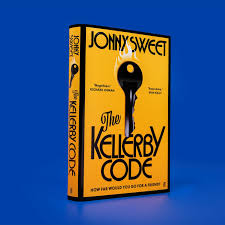
Picture the scene: It’s Christmas morning and you’re a little heady from the breakfast prosecco. You rip open the first of a pile of presents, to find The Kellerby Code waiting for you. Your nearest and dearest tell you it’s the word of mouth hit of the year, so funny, like Saltburn and you can’t wait to get started. Let me save you some time here. Put the book down. Forget you ever received it. Wipe it from your memory. Because this is the clear winner of the Turkey of the year. I know this sounds mean, but my longer review will explain why.

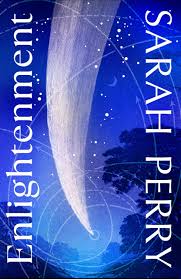
What’s happened to the writer who produced The Essex Serpent? Sarah Perry’s atmospheric debut stands clearly as her high watermark, as her Christianity seems to have overwhelmed her concern for craft. Enlightenment is dull and clumsy, and, just like the equally disappointing Melmoth, the critics raved about it. Do any of them actually read the books they are sent? Apologies to Christians everywhere – Happy.. er … Christmas.

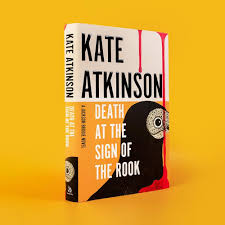
A new Jackson Brodie crime outing from The wonderful Kate Atkinson is usually a cause for unconfined celebration. It starts so well – a clever play on cosy crime (bit of a theme this year). Brodie is reunited with Reggie Chase, the feisty, clever orphan from When Will There Be Good News? Chase is now a rookie cop who unofficially teams up with Brodie to investigate a case with links to his latest job. It’s an improbable mash up involving all the classic elements of old school murder mystery: isolated country house, list of stereotypical Agatha Christie suspects, all snowed in together as the bodies mount up. Sounds great fun, and it is, until the twists of the ever more unbelievable plot become tiresome.

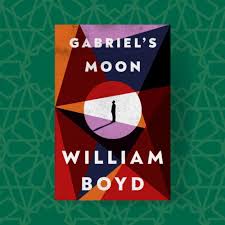
William Boyd is the grand old man of English letters, but his latest, a brazen attempt to begin a multi million selling spy series to rival Bond is limp, derivative and lazy. It’s sad to see it and say it but the prose is risible. Every scene begins with a description of the place and the main characters, down to the clothes they are wearing. If that’s not enough to slow the action down, Boyd can’t resist any opportunity to tell us what drinks the character has and then, what they have to eat. ( “ a cheese and onion sandwich and a Dubonnet”)  There must be about thirty scenes where Gabriel meets someone in a pub, bar or restaurant. Phoned in, reversing the charges.

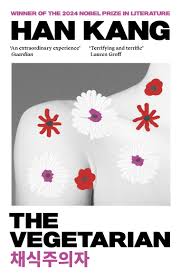
Han Kang’s novel won the 2024 Nobel prize for Literature. Seriously, I wouldn’t want to go for a drink with anyone who was on the panel. This was such a deadly dull,  dreary trudge, that I gave up after fifty pages. Life’s too short.

Caledonian Road

O’Hagan triumphs with that rare beast – a State of the Nation novel with heart.

The latest novel from Andrew O’Hagan, Caledonian Road, is a big beast, in every sense of the term. Physically, it’s got some heft. 640 pages of hard back book makes demands on the wrists. It’s also dealing with weighty, contemporary issues, so all told, the experience of reading it provides a holistic mind and body workout. Sounds like a week at a Spartan health farm, where the motto is no pain, no gain, but fear not dear readers, this novel also provides pure pleasure.

O’Hagan handles the intermingling of the personal and political with real skill and delicacy. A lesser novelist would have eschewed ideology and party politics for fear of committing the ultimate sin in the eyes of the serious, sensitive, superior and above-the-fray Literature Critics, that is the sin of taking sides. Ideology is both vulgar and limiting in this fragrant, lofty world. Evenhandedness is much more mature, much more subtle, much more human, darling. Perhaps. It’s certainly much more boring, in my opinion.

O’Hagan says a hearty bollocks to that and has dived in headfirst to this dissection of contemporary London society, and the power structures that both drive it and destroy it. He does it primarily through great storytelling. The novel succeeds first and foremost on that fundamental, primary level. The characters, their relationships, triumphs and disasters are memorable and compelling, even the utterly ghastly ones. Maybe especially the ghastly ones.

For the protagonist, Campbell Flynn, O’Hagan treads well-travelled paths. Working class lad done good, from the grim dereliction of 1970s  Glasgow, Flynn at the time of the novel’s start is an academic, a cultural commentator, and a media darling down in that there London. Not a million miles away, obviously, from O’hagan’s own background, material previously plundered in his exquisite Mayflies. And not just London, but very specifically Kings Cross, an area recently reinvented by money and gentrification, but one which has pungent resonance for any refugee from the North. As a first entry point for East Coast  Scots and Northerners, its streets, legends, and institutions retain a powerful grip on those arriving wide eyed from the sticks. Judd Street, the Eight till Late, the Scala, Peabody housing, Squats and Short Life flats, ULU, one hour rooms in lines of seedy hotels, kicking used syringes and condoms to one side leaving one’s flat in the morning – they are all part of the memory kaleidoscope conjured by the name Kings Cross.

As a big beast, the novel is teeming with characters, so much so that O’Hagan thoughtfully provides a cast list of two fully crammed pages. It’s essential if you want smooth passage through this behemoth, and a trick that Dickens himself could have profitably employed. The plot is multi-stranded and brilliantly handled, so that by the time the book has reached the halfway point, every time a new section of the book begins, there’s a sense of excitement at the resumption of that particular plot thread. That happens for all of the separate threads. That’s a real achievement. Usually, there’s always at least one thread that the reader has less engagement with, where you feel you’re treading water and sticking with, out of a sense of obligation. Here, all of them sing.

It’s a novel with laudable ambition, tackling big, serious issues. Any analysis of the current, woeful state of the UK would examine these topics in some depth, and O’Hagan looks them straight in the eye and explores them with both a pitiless forensic gaze and nuance, which allows him to eschew simplistic judgements and portray the issues and the characters with multilayered complexity. These are not the scribblings of a naive schoolboy marxist. He manages to cover

  • People trafficking
  • Cancel culture
  • British exceptionalism
  • The aristocracy
  • Public Schools
  • Russian money laundering
  • Social Media
  • Celebrity Culture
  • Gentrification
  • Housing 

All of this produces an excoriating picture of the malign influence of the British establishment, their sense of entitlement and superiority, and the devastating impact they have had on destroying Civil Society for everyone except the super rich. The “freedom” this class espouses becomes simply freedom for millionaires to become billionaires without the state interfering.

There will be readers at this point who are thinking, “Bloody hell, this sounds far too political for me. I don’t understand this stuff and/or I just want a story about people and relationships” Keep the faith, you apoliticals! O’Hagan delivers on that front as well, with a huge range of individuals and families, all of whom, even the nasty Tories, are portrayed sympathetically. It’s Dickensian in that sense, and similar in many ways to Zadie Smith’s White Teeth. An energetic, densely populated romp set in multicultural, class-riven contemporary London, it is, like Dickens, a serious work masquerading as an entertainment. Or the other way round.

There was one dud note for me at the beginning. His portraits of Media stars, the establishment, and the political classes all rang true and had the hallmark of authenticity. I found, at first, his depiction of knife wielding, estate dwelling, drug dealers less successful. It felt as if he had spent some time eavesdropping on an unfamiliar underclass and had produced a two dimensional portrayal. By the end, however, I was convinced and O’Hagan had totally won me over. This is A Great Novel, and I can’t wait for the adaptation, film or TV. Already commissioned, apparently.

My Novel of the Year – by a mile.