Traitor’s Legacy by S J Parris

An ARC review for NetGalley
A new SJ Parris novel is always an event to celebrate, particularly for someone like me,  with an incurable weakness for historical crime. I’ve read and loved all of Parris’ Giordano Bruno novels, set mainly in Elizabethan England, with the occasional foray into Europe. Parris has established Bruno as an attractive and  sympathetic hero. An ex catholic monk, philosopher, and possible heretic,  he ticks all the boxes: Good looking, intelligent, brave and a respecter of strong women.

So it was with some trepidation that I began her latest novel, when I found out that Parris had ditched Bruno for a new protagonist, Lady Sophia de Wolfe. It’s a bold move, when the Bruno novels have been so successful.

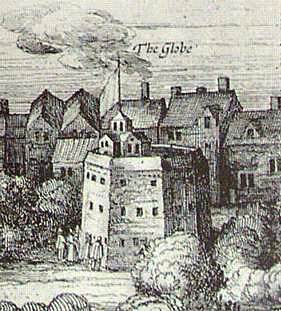
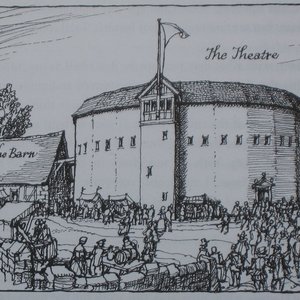
By and large, it works, with some caveats. The depiction of Elizabethan London is convincing. The plot is handled with Parris’ usual aplomb, requiring the merest hint of goodwill on the part of the reader (usually in connection with De Wolfe’s protection of her child – there’s no way this would pass with so little comment, but I’m just splitting hairs here) There’s a delightful rendering of the transportation of The Theatre in Shoreditch to The Globe, Bankside in the opening chapter and a knowing, touching scene focusing on a conversation between Shakespeare and the protagonist, about love and the loss of a child, towards the end. De Wolfe, a character who has already appeared in several of the Bruno novels, partly as a love interest, finds herself recently widowed (and therefore available for all kinds of adventures). By the end, her daring romps across London convince Robert Cecil to reemploy her as a spy working for Elizabeth’s government, thus setting us up for a new series. Good. I for one look forward to seeing her in more. But please, Stephanie, don’t completely abandon Bruno. There’s life  in the old dog yet.
If a new series of De Wolf adventures emerges, I would just make these pleas to S J Parris, as a huge fan.

  1. Do something about Anthony Munday, a playwright attached to the same company as De Wolf’s son Toby, and a second division rival to Shakespeare. He’s potentially an excellent character but his devoted lapdog impersonation in this novel began to grate after a while. GIven De Wolfe’s lack of romantic interest in him, this relationship promises more irritation than interest.
  2. Please abandon the use of the present tense. I know it’s what younger audiences are meant to like and it’s what Creative writing tutors and Boutique consultancies tell writers to adopt for more “Immediacy”, but really that’s nonsense. (See Jonathan Coe on this in his latest, “The Proof of My Innocence.”). To me it feels affected and inauthentic. You didn’t need it in the Bruno novels and you don’t need it here.

But they are just nitpicks in the grand scheme of things. What a potential reader needs to know is this: S J Parris/Stephanie Merritt has come up with another winner. Fans of historical crime should settle in and enjoy the ride.
Death and The Harlot by Georgina Clarke

An ARC review for NetGalley

Fans of historical crime fiction set in Georgian England will love this reissue from Georgina Clarke. Set in Soho in 1759, it has all the ingredients of a successful historical murder mystery in the vein of Leonora Nattrass: authentic setting, engaging heroine, page turning twisty plot, hints of future romance and the setting up of a series.

It’s a delight. The heroine, Lizzie Hawkins, lives and works as a member of a more genteel brothel, run under the benevolent (mainly) eye of the Madam, Ma Farley. Lizzie tells the tale with a subtle combination of intelligence, warmth and cynicism. From the beginning we can see she is not one of your run of the mill bawds, and as the story progresses, her own back story is gradually revealed. She is drawn into the investigations that take place when one of her clients is found dead in the yard behind a Soho pub. She works closely with Will Blackstone, one of the original Bow Street runners, under the leadership of John Fielding, the brother of the celebrated literary figure, Henry. From initial suspicion and mistrust, they grow to respect each other as Blackstone increasingly realises that Lizzie is someone of depth and integrity.

The plot is unfolded with skill and pace and the reader is carried by this forward propulsion as the mystery thickens and is then resolved after a climactic showdown between Lizzie and the villain.The resolution at the end is both satisfying and carries the promise of more to come in future books. Clarke has written a sequel and a third book is due later in 2025. I will definitely be reading both of them to see what develops between Lizzie and Will.

I had just a couple of doubts about the world Clarke creates. Although she shows the abject misery of the street prostitutes, addled with gin, sleeping rough, and willing to provide any service to pay for food and more gin, there is something strangely sanitised about Lizzie’s experiences as a higher class working girl, and the other members of Ma Farley’s establishment. Lizzie gives full vent to her feelings about her work: her exhaustion, her disgust, her contempt for her clients, but despite that, it seems a relatively safe and tranquil situation that Lizzie is too comfortable with. It’s clear that Clarke knows her stuff and has done a shedload of research about the period, but I felt that the reality would have been more perilous, even for the cosseted girls of Ma Farley’s. I also didn’t quite believe in the wonderful Lizzie, who was a little too untouched by her experiences. She’s a great character: appealing,  beautiful, feisty, intelligent, but a little too kind, it seemed to me.

More positively, I thought Clarke was unflinching in her portrayal of the aristocracy and the gentry – callous, entitled predators, slicing through the seedy side of London, blissfully untroubled by the human wreckage left in their wake. Some things never change. Overall, a highly enjoyable recreation of 18th century London life and a compelling crime mystery to boot. My Thanks to Verve publishers and NetGalley for providing a free ARC copy for review.

Death and The Harlot will be published by Verve in 2025