Romance is not Dead

The new album by Fontaines DC is alive and kicking
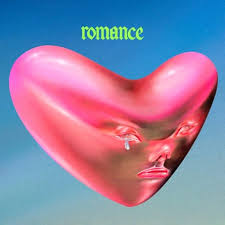
More than five years worth of water has disappeared under the bridge since Dublin’s finest, Fontaines DC, released their debut album, Dogrel. There have been two more since then – A Hero’s Death and Skinty Fia, but neither of them generated the same excitement as their first, with its originality and verve.

They arrived heralded as nouveau punk and although those comparisons are always inevitably flawed and misleading, there was something in that characterisation. That album was many things but, like the original punks, one thing it was not, was polite. There was an authenticity and a couldn’t-care-less attack to it. This is us, it seemed to declare, and we don’t care what you say about it. This was my review of it at the time:

But now comes their fourth studio album, Romance, and it’s a game changer. Old heads with old hands now and they have produced something of rare beauty that triumphantly confirms what that first album promised: They’re gonna be Big. The start of the album generates fear of disappointment, with the title track, Romance. Moody, doomy synth washes with dark, dark lyrics: 

Into the darkness again,

In with the pigs in the pen

Don’t worry! It’s a deliberately misleading start. It’s not doom and gloom that await you in this album, it’s joy and beauty. This is not a band trying to curry favour with its potential new audience, playing it safe. It would have been so easy to start the album with Favourite for some uplifting poppy melody, but that is a trap they sidestep, preferring instead to make demands on their fan base. And they are demands that are worth responding to. After three listens, the subtle pleasures of vocals, lyrics and atmospheric layers lodge themselves in your brain, and you’ll wonder why you doubted them in the first place.

The album goes from strength to strength. The single, Starburst, is the perfect antidote to the slow gloom of Romance. First, strange mellotron is studded by liquid arpeggio piano notes that ooze a grave, poignant portent. Then the uptempo beat and word heavy, almost rapping rhythmic vocals – this will be the standout track on first listen. But that won’t last, as the subtle pleasures of all the other tracks begin to elbow you for attention.

The melodies are gorgeous, the lyrics subtle and clever, the vocals sweet, particularly the unexpected harmonies that punctuate many of the songs. It’s a repeat of the Black Keys scenario, back in 2011. After releasing three well respected hard electric blues rock albums, that clocked up mega critical approval but few sales, the Black Keys suddenly discovered how to write classic pop songs with killer hooks and choruses and came up with El Camino. Still quintessentially Black Keys, with their DNA pulsing through it, it was a compulsively fabulous commercial record. So it is with Fontaines and this album. It retains its Dublin accent, but uses it to tell better stories that will pull in a bigger audience. They look a little different as well. But then, don’t we all….

Fontaines now…

Fontaines then…

The two standout tracks for me at the moment have that unmistakable classic quality of great songs: they sound like they’ve been discovered, excavated in an archaeological dig rather than having been newly created. It’s as if they’ve always been here. Have a listen, first to the sublime “Bug”.

Then the closing song of the album, “Favourite”. In a pre-streaming age, this would have been the opener to pull the audience in, on vinyl or CD. Lovely shiny guitar riff and cleverly worked chorus, this is classic pop.

Do yourself a favour and follow these instructions.

  1. Play the two tracks linked here.
  2. Buy the record, or download it.
  3. Try and get a ticket to see them live.

You know it makes sense

My Childhood was small, but I’m gonna be Big

Dogrel – Fontaines DC

Of course, the great thing about Spotify for all of us old timers who still love music, is that you can try out anything you hear about and see whether it tickles your fancy. It’s risk free, unlike back in the day when, if you were lucky, you heard something on John Peel late at night and were sufficiently struck to go out and buy it the next weekend. You had to be sure, because an album was a huge investment back then and a balance had to be struck between the excitement of finding something new and the responsibility of not blowing your beer money on something that would eventually turn out to be either ordinary or a little embarrassing.

Nowadays, the fact that I read about how great Sharon Van Etten’s latest record was and that that led me to download it from Spotify, only to find that, actually, it was a dreadfully dull dirge, these days that is not such a disaster. It remains in my Spotify library, untouched. I gave it another go (the third) last week, in a rare fit of open-minded second chance giving. It was still pants.

But all of this is made meaningless by the occasional discovery of something beautiful and stirring. Which brings me on to the wonders that are Fontaines DC, who, I discover, are listed for the Mercury Prize. In the same way The Black Keys had echoes of the first half of the Seventies, with their bluesy rock, guitar, bass and drums based sound, Fontaines DC recall the sound and feel of the latter part of The Seventies. On first hearing, on Spotify in the car, I almost had to pull off the road, so strong were the associations. I was transported back to the refectory at Leeds University, sweat condensing on the ceiling as we bounced to The Clash, thrilled by the raw energy of it, intrigued by the intelligence of the lyrics, and intoxicated by the sense of the sweeping away of the old.

There’s no sweeping away of the old here. All that was, has gone and is back again, so nothing shocks in quite the same way, but the songs are wonderful, the lyrics clever, the melodies a sweet counterpoint, the drive insistent. The illegitimate love child of The Clash and The Pogues, after a quick fumble with Joy Division, Fontaines DC produce a compelling love letter to Dublin, their home city. In the opening song, “Big” they announce their intent with a great first line: “Dublin in the rain is mine/ A catholic city with a pregnant mind”. The song also boasts a chorus that should be etched on the consciousness of every teacher.

“My childhood was small,

My childhood was small.

But I’m gonna be Big.

I’m gonna be Big”

A lovely reminder of the bygone age of “Every Child Matters”

On “Television Screens”, the first few bars, with the driving drums and bass and spiky, jangling guitar, slicing across are eerily reminiscent of Joy Division, so much so that when  that section arrives at the point when the vocals should interject, people of a certain age, will be able to see in their mind’s eye, Ian Curtis, manically flailing his arms around, juddering from side to side as if someone had inserted an extra battery, about to launch into the lyrics. What’s even more reassuring is that when it turns out to be not Curtis but lead singer Grian Chatten, there is no disappointment, just a feeling of being in very safe hands

Their love of all things Irish permeates the album, which concludes with “Dublin City Sky” , a gorgeous Pogues-like ballad about love and loss, and  “Boys from the Better Land” with its memorable verse,

“ You’re not alive until you start kicking
When the room is spinning and the words ain’t sticking

And the radio is all about a run away model
With a face like sin and a heart like a James Joyce novel”

It turns out that they have been nominated for The Mercury prize. No matter what happens with that (and I have a very bad track record of picking winners) think of this as a gift from me to you. An early Christmas present. Download it. Because one thing I am sure of.

Their childhood was small. Their childhood was small. But they’re gonna be Big. They’re gonna be Big.

Don’t take my word for it, have a listen and make your own mind up.