The Chains He Forged

I’m reposting an old story and podcast so that new followers will get the alert. It’s a Christmas Ghost story

A ghost story for Christmas by The Old Grey Owl

Click the link below to listen to the podcast of this story:

https://anchor.fm/old-greyowl/episodes/The-Chains-He-Forged—a-Ghost-story-for-Christmas-en747n/a-a3q6q6i

Marley was alive, to begin with, but that’s not how it stayed. After a while, he died. This is how everyone’s story turns out, yours and mine, in the end.

They discovered the body when they finally unlocked the door to the loft, expecting to find a decaying rat or pigeon. The smell, which had steadily grown stronger over the previous weeks, was like a punch in the face when the cold, stale air billowed through the open doorway.

The old building was full of musty smells, creaking floorboards and hidden, disused rooms. They had been promising to refurbish it for years: the addition of a new block here, replacement windows there. There was even talk at one stage of razing it to the ground and replacing it with a plate glass, chromium and cedar-clad cathedral of prize-winning architect design. Staff had joined focus groups to talk to the architects and builders and pastel coloured plans had been drawn up and displayed with much pride in the old library. When the crash pulled the plug on all of the planned public sector investments, the grand schemes were quietly forgotten and the crumbling pile slumbered on undisturbed as the occasional tile or stained piece of plaster flaked and fell to the ground, as if the building was an ancient sleeping behemoth suffering from psoriasis.

It was the thing that Marley was most looking forward to about his new job. A Headship in a new school, in a gleaming new building, fit for the 21st century. Like him, he thought smugly. Fit for the 21st century. A Headteacher who had jettisoned all of those tired, ridiculous practices so common when he had started teaching. Learning styles, group work, discovery learning, thinking skills. What on earth had they all been thinking of? Marley had sniffed the way the wind was blowing early. He’d read the right books, gone on the right courses, networked on Twitter with the right people and had adopted the right poses.

The head he had first worked under, Richard Fitzwig, seemed like an exhibit from a museum now. Yes, it had been a happy place, but it’s easy to be happy when the Head lets you do what you want. Wiggy wouldn’t last five minutes in a school today. How happy would those kids be now, applying for jobs and courses on the back of crap grades? At least now, after three years of relentless focus on results and behaviour, they had something to show for it. And of course, there had been casualties on the way. Collateral damage, as he liked to think of it. Exclusions, “arrangements” for off-rolling, the endless detentions and uniform checks and silent lines and mobile phone battles. Not to mention the set piece assemblies to humiliate the ring leaders. What were they called again? “Flattening the Grass” assemblies, yes that was it. He smiled grimly at the memory.

And if many of the kids and more of the staff resented what he had had to do, then so be it. No-one had said it was a popularity contest. But, in his more reflective moments, usually alone in the small hours, he wondered. Part of him envied the easy camaraderie some of his colleagues seemed to have. And the same part was relieved he was leaving. The headship was just reward for hours of thankless work turning the school round, but more than that it was an opportunity to start afresh as the coming man in a shiny new building.

He looked around his bare flat, magnolia walls hardly troubled with pictures, shelves untouched by photos or books. A kitchen littered with a week’s worth of pizza boxes and foil trays. One Christmas card, from his mother, a bleak accusation of the lack of personal success to match his professional achievements. Not even a jokey card from Bella, for old times sake. Her poetry was for someone else now. Not that he’d ever understood it, mind you. He was a scientist, a rationalist, who chose the minimum number of words to communicate exact meaning, not nuance. She’d tried to explain it to him one day, when he was newly qualified, and it had sort of made sense then, but not any more. Nuance was for losers. Once he’d settled into his new job, the salary would mean he could buy somewhere bigger, somewhere more appropriate to his new status. And maybe then it would be worth investing something of himself in it, so it became his home, rather than an extension of his office. Whether it would be worth investing anything in anyone else was a different question. He had been badly burned last time. People always let you down, he thought, and the only way to guard against that was to keep everyone at arm’s length. Easier that way.

He roused himself, making a deliberate effort to shake off this dangerous introspection. Through the window he could see the blurred grey light of Christmas Eve ebbing away. There was a gust of wind and a flurry of thin snowflakes swirled across the pane. He shivered. Maybe this run was not a good idea after all. He could always leave it until January. But no, he needed to get it out of the way so he could leave the school and that life behind him, and the run would do him some good. Once he got going, he wouldn’t feel the biting wind. He reached for his rucksack, checked his laces and grabbed the keys before heading downstairs to the front door of his block.

There was already a thin dusting of snow on the pavement, and the knifing wind blew it up into dancing clouds and the beginnings of drifts in the corners. He took one final look at his watch underneath the gloves. One o’clock. He should be back in a couple of hours if all went well and the building was empty. He’d unlock and disable the alarm as usual, collect the last of his stuff from his office and most importantly, remove a couple of things from his computer, just in case. He’d intended to do it on his last day, but there had been too many people milling around, so he had resolved to wait until now, Christmas Eve, when he could be sure that he’d be the only human being in the building.

Fifteen minutes later, he rounded the corner, and saw the familiar turrets and towers of the sprawling, dirty red brick institution where he had worked for the last ten years. When he told people where he worked, they would invariably gush about how amazing it was. Hogwarts they called it. He had tried to explain the first few times it had happened that, close up, it was a dirty, crumbling, inefficient, fire hazard, but gave up when it became clear that people didn’t want their gothic fantasies to be spoiled. After a while he just smiled and nodded and agreed with them. And then, inevitably, they would move on to what a shame it was that the school had gone downhill so far and so fast, and how it was all down to the sorts of children that went there these days. He’d be glad to leave that behind as well.

As he pounded the last few metres, his breath steaming into the darkening sky, he noticed with a start that the gate was open. Turning into the car park, his worst fears were confirmed. There were half a dozen cars parked in front of the school, and the yellow lights blazed out into the gathering gloom. He pulled up, and leaned forward, his hands resting heavily on his knees, his breath coming in laboured pants and gasps.

“Shit,” he thought, “It’s open. Who the hell is in there?”

The poster on the plate glass of the entrance answered the question. The Longdon Players production of “A Christmas Carol”. Damn. Of course, how could he have been so stupid? And, yes there had been an email about it to all staff, but he had been so caught up in his leaving that it hadn’t registered. The local amateur theatre group had a two-week run at the school, before and after Christmas. They must be in doing some last-minute tweaking before they went again on December 30th.

He removed his headphones and pushed tentatively at the main entrance door. There was no-one behind the desk on reception and no signing-in book. Gary, the site manager, must have come to some arrangement with the Theatre group. He’d be hunkered down somewhere watching the football, and he’d re-emerge to switch off the lights and lock up when they had all gone. He looked up. Beyond the harsh neon lights that flooded the foyer, all was in darkness, but he could hear the distant noise of people, from the small theatre space in the far corner of the building. Good, he thought. If he slipped in and up to his office, he could avoid anyone noticing him and get away without any awkward conversations. If it took longer than he thought, he had the keys to be able to lock up again after he had set the alarm.

He switched on the torch on his phone and crept up the main staircase. If he turned on the main lights that would bring someone running, so he followed the eery, silvery light from his phone, occasionally catching his breath at the strange looming shadows it conjured up as he made his way to his office on the second floor. He had been here late at night on his own many times before and there was no doubt about it, it was a creepy place. In the wind, the building emitted the full panoply of creaks and groans and whispers, and with no lights save for the shimmering, unsteady beam from his phone, the shaky pools of darkness would have tested the most determined rationalist.

Still, that had worked to his advantage many times in the past. Being a key holder, and often on call for building and alarm issues, he had had to unlock and have a quick check many times in the past. And once in, on his own, he was free to do a little sneaking around. Hacking in to the passwords of every member of staff was child’s play for someone like him. He had never done anything criminal. He wasn’t stupid after all. But information was very powerful and he had information on everyone. He was conflicted about leaving all of this behind. One the one hand it would be something of a relief to not have that capacity in the future. As a Headteacher, he would have power of a different, more respectable kind, and it would be a triumph of sorts to have got away with some of his deceptions. But then again.

He unlocked his office and switched on the light, blinking as it pinked into life. There was a chill in the air as the seasonal shut down of the boiler had begun to take its toll. Those people down in the theatre must be freezing, he thought. He could just about hear the strains of one of the songs from the show, floating up from the rehearsal.  The office was stripped down to the bare bones, with just a few reminders of the previous five years. He went over to his computer and switched it on. There, on the key board, was a Christmas card. It was sealed and addressed to “Ben Marley”.

He sat down and shook his head. What a waste of money. People were so stupid. Why on earth didn’t they just send a group email to everyone? The virtue-signallers could link it to some charity thing if they really felt the need. And the Greens could feel smug about cutting down on waste. He just didn’t want to spend money and he didn’t feel the need to dress that up in any finer motive. Christmas was just one big con.

Still, he could take it home with him and it could join the one from his mother. He ripped open the envelope and pulled out the card. A bog-standard holly and robin snow scene. At least he was spared the sanctimonious Christian nonsense. He opened it up.

“Dear Ben. Thanks for all of your hard work and support over the years. Enjoy your well-deserved promotion. Now you will really find out what it’s all about! Here’s some advice from someone who knows. Take some time and trouble nurturing relationships with your colleagues. It will help in the long run. Regards, Margaret.”

His pleasure at getting a hand-written card from the Head, who normally got her PA to do all of that for her, was soured by his annoyance at the thinly veiled criticism of her advice. Relationships indeed. She should mind her own bloody business. Maybe he wouldn’t take it home after all. He picked it up and looked at it closely again. With a flourish, he ripped it into pieces and dropped them into his bin. He’d like to think of her finding it on her return in the New Year. That would show her.

And then he saw it, just to the side of the monitor. A neatly stacked pile of what looked like more cards, all identical in white envelopes. There must have been about twenty-five of them all in the same pile. Who the hell were these from? He took the top one from the pile and examined it. In black biro in capital letters on the front of the envelope was a single word: MARLEY. The card inside had a simple message: “Fuck off and Die, you miserable bastard.” It was signed “Jack, 10B4”.

He grabbed at the second card in the pile and ripped it open. It had exactly the same message, this time signed, “Sophie, 10B4”. He didn’t bother with the others. His heart sank. All of them, every single one, hated him with a passion. Yes, he had been very harsh with them since September, but that was necessary to knock them into shape for their GCSEs. Yes, the exam specification and the league tables demanded that everyone be drilled to within an inch of their lives, and he wasn’t paid to be an entertainer or a social worker. It would be him that would get it in the neck if they didn’t get the results that the school needed. People got the sack for that kind of poor performance. There were no second chances these days.

The first flush of pain he had felt converted steadily into anger. How dare they? What cowards, to wait until he was leaving the school before they were brave enough to put their names to this outrage, after months of lessons with sullen faces brought on by screaming and shouting and eventual compliant silence. In a fit of rage, he swept the pile of cards from his desk onto the floor, before turning his attention to his computer and memory stick.

He worked steadily for a couple of hours, deleting files, copying them, and getting rid of emails. Finally, he stretched and yawned and looked away from his computer for the first time. The window was a dark square now and to his surprise it framed a blizzard of thick snowflakes. It was time to go. He rubbed away at the condensation on the window and looked outside. The show had settled and there was a couple of inches laying in the car park. There were no cars there now and, strangely, no tracks. They must have all gone before the snow had really got going. Now he came to think of it, he hadn’t heard anything from the theatricals downstairs for some time. He shivered at the sight of the snow swirling in the darkness outside. His run back home was going to be a lot more challenging than the one earlier.

He took one last look around the office, the cards still strewn across the floor, and locked the door, fumbling with his keys in the darkness. The corridor was heavy with darkness, but right at the far end, a thin yellow light leaked from the doorframe of the last classroom. This high up he could hear the wind moan and the walls creak, as if the old bones of the building were flexing in the aches and pains of accumulated years. And then, just as he was about to feel his way to the staircase, there was another noise.

He stopped and listened. There it was again. But it couldn’t be, surely? He narrowed his eyes and bent his head down towards the far end of the corridor. Yes, again. The sound of a distant child softly crying. Using the torch on his phone again, he navigated his way to the end of the corridor and flung open the door of the lighted classroom. A small boy, sitting at a table at the back of the room, jumped out of his seat in fright, shocked by the violent entrance.

His face was tear stained and he was wide-eyed and staring. He was about ten or eleven years old, and he was wearing a shabby, old-fashioned looking uniform. He held a cap in his hands.

“What on earth are you doing here? Who are you?” Marley demanded.

“Please Sir,“ stammered the boy, “I’m Ignorance. Or was it Want? I can never remember which I am. Maybe I’m both.”

He wrung the cap between his hands and wiped his runny nose on one of his wrists.

Marley looked utterly baffled. “Ignorance? Want? What are you talking about lad? And what the hell are you doing here? Who else is here?”

He scanned the four corners of the room, as if a gang of the young boy’s accomplices were about to spring out and attack him.

“No-one Sir. I am quite alone. Quite alone in the world.”

Marley looked more closely at him. He was filthy. His hands and finger nails were black with accumulated grime, and his clothes were threadbare. Marley’s frown deepened and then suddenly broke into a smile.

“Of course!” he exclaimed, “The production. You’re from the Theatre thing, aren’t you? Do they know you’re up here on your own? They’ve all gone, I think.”

The boy wiped the tears from his face. “Beggin’ your pardon Sir, but I dunno. I dunno nuffink about no theatre group.”

“What are you talking about? You must be from the production. Don’t play games with me lad. Otherwise, where’ve you sprung from? Who are you?  What are you doing here?”

The boy looked up at him, his eyelashes jewelled with tears. “But I’m always ‘ere Sir.  Always ‘ave been. Always will be.”

“What do you mean, ‘Always here’?  I’ve never seen you before.”

“No, Sir, you ain’t. I’m always ‘ere, but you never seem to see me. No-one sees me. I sees you and I hears yer shout at the kids. Always shoutin’, never listenin’, that’s you. Not that you’re the only one, Sir, oh no. There’s plenty like you. More in the last few years, if anyfing. But you’re the worst.”

The boy pointed a bony finger at him and fixed him with his beady eye.

“You’re the worst,” he repeated.

Marley stared at him, mouth open. The chill in the room had started to bite and he shivered involuntarily.

“Is some kind of a joke?” he demanded. “Did someone in 10B4 put you up to this? “

The boy’s eyes flicked to the back of the room. There was a set of rickety stairs leading to a tiny landing in front of a door. Marley’s eyes followed the boy’s. The door led to the loft, a kind of attic space under the eaves. It had been used for storage before Health and Safety regulations prevented it. Nobody went in there now.

“They’re in the loft, aren’t they?” he demanded, a triumphant smirk on his face. “Aren’t they?”

The boy simply smiled without answering. In the silence that filled the gap came the moaning of the wind outside. It was really starting to blow hard now, and the rafters creaked and groaned as the gusts of wind battered them. Marley stared again at the door. Slowly, the handle started to turn.

“I knew it!” Marley exclaimed. “We’ll soon settle this nonsense.”

He strode up to the staircase, leaped up the five or six steps to the landing and grabbed the handle. The door would not open.

“Locked in, are you?“ he shouted through the door. “Shall I leave you in there? Wouldn’t be so brave spending the night in darkness locked in the loft, would you? You know what they say about it don’t you? Haunted it is. Haunted.”

As he was shouting these threats through the door, he fumbled with his keys. He found the right one, unlocked the door and opened it. It was pitch black inside.

“Come on out,“ he called into the room, “ You’re caught. You might as well give up now before you make things worse for yourself.”

He reached for the light switch which was outside the loft on the balcony and pressed it. The loft space was suddenly flooded with white-bright lighting, revealing the cobwebbed beams and dusty floorboards inside. There was a sound of scuffling, as if a rat had scuttled away into a distant corner. Marley stepped inside.

“I know you’re in here,” he said in a raised voice. “Just come out from where you’re hiding so we can get this thing over with.”

There was a sharp chill to the air inside and the wind in the darkness beyond was howling steadily now. He took another step inside. There was a sudden noise behind him. He whirled round to see the boy, still holding his cap, out of his seat and standing just outside the doorway on the landing.

“What are you doing? You’re not helping, you know” Marley said. “You kids, you’re your own worst enemies sometimes.”

The boy smiled at him, his tear-tracked, dirty face lit up like a beacon.

“Sometimes,” he repeated.

There was a sudden gust of wind and the timbers of the loft screeched and shifted. The door, caught in the blast, slammed with a tremendous bang. The boy turned the key in the door, reached for the light switch and the loft was plunged into inky darkness.

*

In the darkness outside, all was still and the sky was full of fat snowflakes gently floating down. The wind of earlier had subsided completely and the thick layer of snow on the ground muffled all the sounds of traffic. Gary drew the entrance gates shut, pulled off his gloves and fiddled with the padlock and key, cursing against the cold.

“Bloody theatre company. A no show on Christmas Eve. That administrator bloke must think I was born yesterday, saying he hadn’t sent any email booking a rehearsal.”

He paused, struggling to get his gloves back on over his frozen fingers. “Still,” he smiled, “It’s not all bad. Double time is double time, whether anyone showed up or not.”

*

Several weeks later, Gary was in his office taking the detectives through the CCTV footage of the holidays. They finally located Christmas Eve, and there, in grainy black and white, was film of Marley walking across the car park. Walking next to him was what appeared to be a young boy, from the theatre group, dressed as a Dickensian urchin. From the moment the camera picked him up until he entered the building, Marley didn’t turn or appear to talk to the boy. It was almost as if he did not know he was there.

They ran the film on, hoping to see someone, anyone, leave the school later. There was nothing. “That kid must still be in the building, “ said the senior detective on the case, a balding, corpulent man who gave the impression that he’d really rather be back in his warm office tidying up paperwork.

“But who is he?” asked Gary. “I’ve never seen him here before.”

The detective raised an eyebrow. “I think the question is, ‘Where is he?’”

In the months that followed, there were several TV appeals, posters all over the neighbourhood, and an extensive search of the school. The boy, whose blurred image stared out accusingly at anyone who chose to look, was never identified, nor found. Eventually, they were all discreetly taken down, discoloured and tatty by this time, as if people did not want to be reminded of the harsh realities of the world for which, somehow, they felt they were unfairly being made responsible. More comfortable to take them down, rather than look away.

When the police left, with cursory thanks and platitudes, Gary was left alone in front of the screen. He scrolled back to the point when Marley and the boy entered the school, and, on a whim, switched to one of the other cameras on the feed, pointing out from the main entrance, towards the front gate. There they were again, together but entirely separate, walking through the steadily mounting snow. And then he stopped. He froze the final shot. There on the screen, stretching back from the entrance to the main gate, like a line of punctuation marks, was a track of footprints.

One line for two people.

He stared, and shivered, as the wind rattled the panes of his window and the bones of the building creaked and groaned.

The Old Grey Owl

@OldGreyOwl1

https://growl.blog/

oldgreyowl.57@gmail.com

“It was the day my Grandmother made a cup of tea..” In praise of the slow start.

Earlier this year, the best-selling British crime author, Mark Billingham (left), caused a little controversy at the Times Cheltenham Literary Festival when he said that if a novel does not grip him after twenty pages he “throws it away angrily”. He reckons that he does this with 50% of the books he starts to read. “Life’s too short,” he says, “and there are so many great books out there.”

This is an opinion that has divided readers, but it’s one that will be familiar to anybody who has tried to submit a manuscript to publishers or agents, and it’s very much in line with their thinking. You know the drill: submission guidelines that specify the first three chapters in the initial submission. The publishing and self-publishing industry is a growth area of one thing above all else. And its not new novelists. No, it’s companies largely inhabited by people who have fallen foul of those same submission guidelines and can’t get published. What’s the next best thing to do? Why, advise other wannabe authors of course. Look through the individual agent pages of literary agencies, where each agent is desperately trying to pitch themselves and their own USP. “I’m looking for submissions that grab me immediately, that make me desperate for the rest of the manuscript. I immediately know that the novel is going to be amazing from the way it gripped me relentlessly from the start.”

Oh dear. Really? This is as hackneyed and depressing as the relentless mantra, “Show Not Tell” or the terribly modern obsession with writing in the first person or (but usually “and”) writing in the present tense because it makes the novel so much more immediate and engaging. Whenever I see that I have to suppress a yawn, knowing that I’m going to be reading an identikit novel that is indistinguishable from all the others. Don’t get me wrong. In the hands of a skilful practitioner, the first person does all that the gurus promise. It’s just that it’s not often in those hands, and the voice of this first person, unless the character is meant to be a wannabe novelist with a penchant for purple prose, is all too often crashingly inauthentic.

But I digress. Iain Banks (below), the brilliant Scottish writer, has a lot to answer for. Ever since his wonderful novel, “The Crow Road” began with the immortal first line, “It was the day my grandmother exploded”, critics, publishers and agents have demanded fireworks right from the off. In that book, it was bold, refreshing, innovative and exhilarating. In the hands of lesser exponents it is simply cliched and desperate. Everyone has been told they have to do it. The first 3 chapter submission requirement underlines that. And so, all books have to follow the same pattern.

How sad! How reductive! How depressing! Like virtually all rules of writing, it’s unhelpful and misleading. If that’s what your book needs, then go for it. But don’t do it because some guide to writing told you to. And if your book needs an opening that is a leisurely unfolding, with space to breathe and think, then be brave enough to do that. The real fireworks are those that aggregate from your deliberate, mindful laying out of a setting, a situation, characters and a dilemma and then, come with a joyful rush at the end.

The real dilemma here is that this approach takes us perilously close to a knee jerk dismissal of all advice, all criticism, all agents. And in the relentless pursuit of publication, it is all too easy to fall into the trap of thinking that agents are just cynical manipulators, who care nothing for fiction or creativity, and are simply obsessed with the question, “Can I see this book selling shedloads of copies?” One of the key lessons to learn when dipping your toe into the shark-infested waters of publishing, is that to stand any chance of being recognised, you have to develop the capacity to take criticism with good grace. Ninety percent of it is accurate and helpful, no matter how sharp the sting.

But sometimes, you have to say no. It may not get you past an agent’s rejection pile, but if you don’t believe in the text, then it won’t go much further than the second hurdle. If you think your book needs a leisurely unfolding, it probably does. Sometimes, the budding writer knows more than the established agent. But only sometimes.

If you liked this blog try my novel, Zero Tolerance, available from the link below:

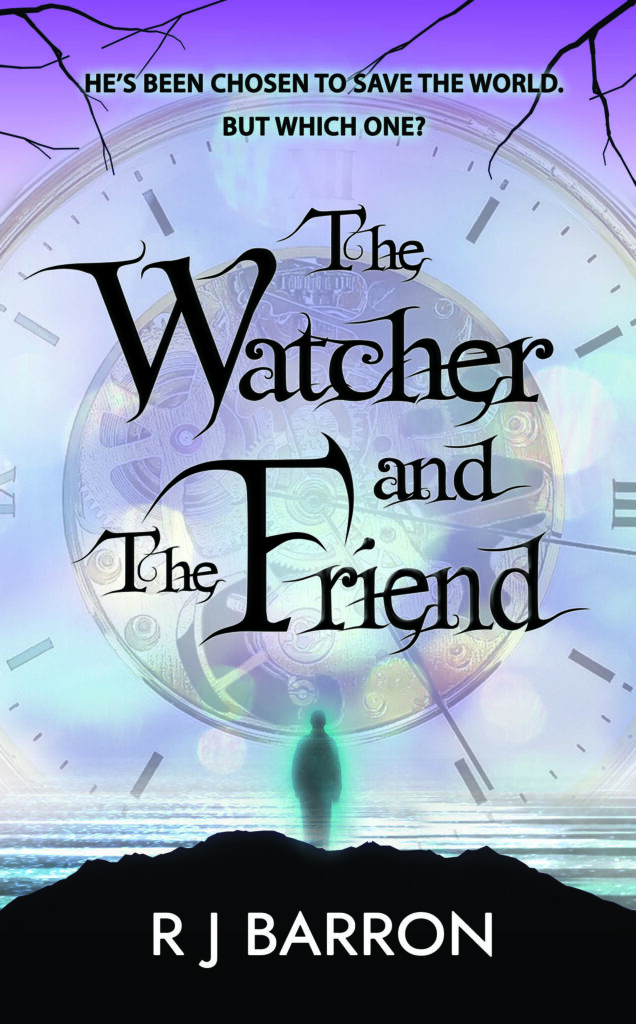
Or, if you prefer Children’s Fantasy adventure, try The Watcher and The Friend, available from the link below:

This blog first appeared in Barron On Books at http://www.rjbarron.co.uk

Inspiration, Stealing and Intertextuality

How what we read always bubbles up into what we write, even when we aren’t aware it’s happening

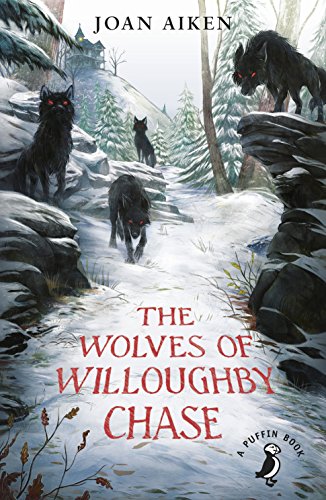
A guest appearance in the blog today from children’s author, R J Barron, writing about the links between his new novel, The Watcher and The Friend and the work of Joan Aiken, in particular, The Wolves of Willoughby Chase. The connections between what we read and what we write, even years later, are mysterious and powerful. Read on for more

In the first part of this blog, I wrote about my serendipitous discovery, over many years, as a teacher and a parent, of Aiken and the Wolves Chronicles. Here, I’m going to look at the links between her wonderful books and my own children’s debut, “The Watcher and The Friend”.

It wasn’t until much later, after my book was written, that I realised the connection. Even when my editor had explicitly asked me about the inspiration, and the books I would compare it with, I did not come up with “Wolves of Willoughby Chase”. Budding writers will be familiar with this part of the process. Agents are thinking about selling, marketing, promoting. And that leads them to think about genre. What other books is your book like, so we can directly appeal to lovers of those books in the hope that they will give your book a punt? I said Narnia (The Grandfather Clock) His Dark Materials (parallel world, moral dilemmas, emerging feelings between young protagonists), Thomas Kempe (ghostly messages written across time and space). And it’s true, there is a connection between all of those books and my own. Originality is a very overrated quality in my opinion. Everything is connected, and ideas breed other ideas. The Jim Jarmusch quote is a useful guide here: Authenticity is invaluable; originality is non-existent.” In other words, whatever you steal, make it your own. If you’re alive in the world, it’s impossible to produce something original. You’d have to lock yourself away for a lifetime to achieve that, like a jury in a murder trial. And for what? Instead, we should celebrate the connections between our own work and that of others, even connections that have emerged from the sub-conscious.

And the sub-conscious was exactly where my ideas lurked, in the shadows, skulking. But now they are out, wide-eyed and blinking in the sunlight, the connections are perfectly clear to me. Here they are:

Alternative History

In Aiken’s novels, the strength of the parallel world she creates is the fact that England’s real history has been tweaked only very slightly, as if an acetate copy has slipped on top of the original. The effect is disconcerting. The reader feels as if they are standing on shifting sand and everything, including the things we take for granted, has to be re-assessed, re-evaluated in some way. The power comes not from the precision of the words themselves, but the suggestions held by the white spaces in between the words. Everything seems to be at once familiar and strange at the same time.

The time shift in “The Watcher and The Friend” is different. At first it appears that Tom has simply gone back in time, to the Runswick bay and North York Moors of 1795. The clue first appears in Tom’s reaction to historical England, as we are told that there was something not quite right about it, something he couldn’t put his finger on, but which jarred, or irritated like a tiny pebble in one’s shoe. The reason he couldn’t work out what it was the fact that it was something so familiar to someone who lives in South London in the early twenty first century – the absolute diversity of the population. All kinds of people from all over the world, living relatively harmoniously together. This state of diversity and equality is extended in The Watcher to all groups – women hold positions of power, same sex relationships are commonplace and so not worthy of comment. As we subsequently learn from an amused Silas Cummerbund, Tom has journeyed not to England in 1795, but to Yngerlande, a parallel world, also in 1795, where there is perfect equality. There has been no history of Empire, colonisation or slavery, and therefore power relations have not developed in the same toxic way as in our own world.

Settings – Country side and weather

The Wolves of Willoughby Chase appears to be set in a mini ice age, with permanent ice and snow serving as a perfect backdrop to the wolf packs that are terrorising the country. This is very deliberately echoed in The Watcher and The Friend. One early chapter, The Frozen North sets an atmosphere that can be so powerful in children’s fiction, and descriptions of snow, in both countryside and “Georgian” towns and villages, are used to provide an atmosphere that is both beautiful and harshly challenging. For many children in the UK, apart from those who live in remote areas in the hills, snow is an unfamiliar occurrence and one which is mainly evocative of classic children’s books read or films (such as the Harry Potter series) seen. It’s a powerful motif of adventure, something that is both thrillingly beautiful and to be escaped from at the same time. The escape from a snow bound forest, and its attendant dangers, into a domestic setting with food and warmth and closed doors, fulfils a most basic human desire for security.

In The Wolves of Willoughby Chase, the early escape back to the big house after being pursued by wolves that descend from the hills into the estate is a key example of this. Lucy’s encounter with Mr Tumnus in The Lion, the Witch and The Wardrobe is another. In The Watcher, such snowy scenes of pursuit and escape play a significant role in the novel: in the wolf attack on the lonely snowy roads across the Moors to the coast; the scene where Della, Tom, Dan and Clara emerge from the smugglers’ tunnels high up on the top of the Moors, to encounter a group of Redcoats who have tracked them down in a thick, snowy forest; and the snowy streets of York on Christmas Eve, thronged with Redcoats nervously on guard outside the Queen’s Christmas Ball in The Assembly Rooms. All of these echo Aiken’s deployment of memorable settings to create a strong and vivid sense of place.

Creatures – Wolves, Steedhorns and Steedwings

The combination of a parallel world and a historic setting allows the writer to give full vent to their imagination as far as reality is concerned. Creatures that come from old folk and fairy tales naturally inhabit this land. The archaic setting gives permission for imagination to flourish. These creatures are surely the kind of things that would have existed in this strange alternative universe. Aren’t they?

And so, very real and very frightening wolves, are joined in my book by Unicorns (or Steedhorns, as Yngerlande terms them) and flying horses (Steedwings). Not the sickly pink, disneyfied versions. No, these creatures are large and rough and shaggy, with brown coats and matted hair. The Steedhorns are commonplace and considered a pest by the local farmers, because of the damage they do to crops and the environment whereas the Steedwings are rarely seen and thought by most people to be the stuff of old tales.

In Aiken’s  version of England the same cast of wild and fierce animals are present as a source of danger: primal, terrifying, ancient in the shape of the packs of wolves that roam the countryside with a careless lack of fear as far as human beings are concerned. Casual references to bears abound, along with flocks of sheep, (rescued from the slaughterhouse) a pink whale and many individual creatures that tag along after Simon, a prototype eco warrior, years ahead of his time, is the future King of England with an uncanny affinity with animals of all kinds. For children, animals in fiction are both a blameless repository of affection, and an echo of an ancient wilder world than their own. Aiken taps into this unerringly – perhaps she was an animal lover herself?

Strong female characters

Dido Twite is possibly Aiken’s greatest creation. Missing presumed drowned in the North Sea at the end of Black Hearts in Battersea, she reappears mysteriously at the beginning of the next book in the series, Nightbirds to Nantucket, on board a whaler headed towards the Newfoundland coast. The story of her rescue does not detain the reader for more than a paragraph or so and no-one who has read Black Hearts needs to know more than that, so delighted are they that Dido has returned. The legend has it that readers were distraught at the end of Black Hearts at the thought that Dido might have died and wrote to Aiken begging for her resurrection. I love the fact that this was not part of a grand plan on behalf of the author but instead it emerged at the behest of her readers. Proof again that reading is a social act of reconstruction for each individual, and that once a writer has let their work go, it no longer belongs to them, but has an independent life of its own, being constantly regenerated every time it is read afresh. And once Aiken had been diverted down that path by her readers, a whole warren of paths and turnings sprang up that had not been envisaged when The Wolves of Willoughby Chase was being planned. This is the very nature of the writer’s imagination. The act of writing begets deeper, richer, better writing; better than could ever have been planned, no matter how meticulous the creator.

The Dido that returns does not disappoint. Feisty, independent, brave, loyal, she brings a young, and as yet unjaundiced, eye on the idiocies of the adult world. The book sings whenever she is on the page, not least because of Aiken’s fabulous inventiveness in terms of Dido’s language. Even without speech tags or description, the character is immediately identifiable through her dialogue alone. Croopus! What a creation!

Like Aiken’s books, the most important characters in The Watcher are female, despite the fact the protagonist, Thomas Trelawney, is a thirteen year-old boy. As well as a group of younger female characters (Tom’s sister Grace, the mysterious girl Clara, who trails stars in her wake, Della Honeyfield, the dashing coachdriver and her partner Dr Amelia Church) the book paints a positive portrait of an older woman, Mary Carruthers. As Silas Cummerbund tells Tom early in the book, “With age comes wisdom, Thomas. Most of the old women I know are fearsomely clever, and the world would be a better place if people listened to them a bit more often. Your world and mine.”

A world under threat – plots and rescues

First and foremost, The Watcher, like the Wolves Chronicles, is an adventure, an entertainment. The story carries important messages about the world we live in, but the book stands or falls on the story alone. If the reader is not engaged, no message of any kind, no matter how pressing and relevant it is, will have any purchase. In the alternative history that underpins the stories of the Wolves chronicles, the ongoing struggle for power of the Hanoverians versus the Jacobeans provides much of the drama of the plots. Revolution, counter revolution, plots hatched and foiled ( usually at the last minute), hiding places, treachery, chases, discoveries – all of these regularly punctuate the pages of the novels in a breathless chase towards a final resolution. They are exciting adventures and readers turn the pages eager to experience the next twist or turn.

And so it is with The Watcher, I hope. I make no claims by this comparison – it’s up to readers to respond. I’m just struck, after the event, of a similar technique, a similar structure that underpins my book. In The Watcher, Yngerland in 1795 is a diverse, tolerant society. The only hierarchy is that generated by money. Apart from that, all “minority” groups are treated with equal respect and have an equal place in society with equal status. It serves as a model for our own world, particularly when it comes under attack. The “old Guard” – white rich landowners, with the figurehead of the grandson of a King who had been deposed many years earlier – secretly try to mount a coup against the Queen, Matilda, a black woman who represents everything they despise. The old guard want to preserve their interests, establish their privilege and consign all other groups to servitude. The Watcher, The Reverend Silas Cummerbund, has an ancient role of guarding the portal between Yngerlande and England, and working together with the new “Friend”, Thomas, they work to foil the plot. Their struggle to save Yngerlande involves wolf attacks, invisible ghosts, chases through smugglers tunnels, capture in dank cellars and flight across a snowbound North York Moors, all against a background of a snowy five days in the run up to Christmas. They succeed, of course, winning this first battle, but the war is clearly not over.

This blog has been a musing on connectedness and intertextuality. If you’re a teacher, a reader or a writer, I hope you’ve got some inspiration from this reaffirmation of how important children’s fiction is and how what you read as a child resonates down the years. I loved writing The Watcher (and I’m looking forward to the next four volumes in the series) and it’s clear to me now that the enjoyment I derived was in part down to the pleasure I had had years before in reading Joan Aiken’s books. If you haven’t read them, let me enthusiastically encourage you to begin. You have a treat in store. And as a writer taking the first faltering steps towards a readership, it would be remiss of me not to encourage you to do the same with my Aiken-inspired first children’s novel, The Watcher and The Friend. See if you can spot the connections as clearly as I now do myself.

If you’re interested in The Watcher and The Friend, try a lttle more. Click the links below either to read the first few chapters, or, even better, to buy a copy.

Click the buttons below to buy The Watcher and The Friend at your preferred bookshop

This piece first appeared in the barrononbooks blog at www.rjbarron.co.uk

A review of “Sorrow and Bliss” by Meg Mason

Sorrow and Bliss is one of those much-touted novels that seem to gain traction in the Spring so that many people select them as one of their Summer holiday reads. Then you get tweets and Instagram posts from influencers saying how wonderful it was, to which in their turn, in the time -honoured, strange, traditions of twitter, followers gush back, agreeing how amazing it was and the churn of interest continues. Good marketing, I suppose. And, of course, I wouldn’t be complaining if one of my books was at the centre of such a fabricated whirlwind of interest. But there’s more than sour grapes to this less than enthusiastic review. Many of these books represent a triumph of marketing over substance and I’m afraid Sorrow and Bliss is another that disappoints.

It’s targeted at women readers so single-mindedly that it might as well have a pink cover. The quotes on the inside cover are all from famous women, apart from a couple that are just attributed to a publication. There are two large quotes highlighted on the front cover, one from Ann Patchett and the other from Jessie Burton – both female writers surfing a certain zeitgeist at the moment. A comparison with Fleabag is also heavily underlined. That’s like comparing The Tempest to Love Island because it’s got people in it and it’s set on an island. Waller Bridge is a gloriously talented writer and Fleabag is funny, refreshing and moving – everything that Sorrow and Bliss isn’t but wants so desperately to be. The only thing missing are references to Sally Rooney, the media’s favourite young darling. Maybe there are contractual barriers to that, but I’m sure the publishers would have been falling over themselves, to get that agreement over the line. Maybe Rooney comes at too high price these days to be even mentioned in publicity puffs, who knows. But then Rooney’s last book did brilliantly and convincingly portray working class characters that were recognisably human. And we don’t want that sort of thing to catch on, do we?

Haven’t we got over this kind of thing yet? I know you’ve got to have a consistent message and aim mercilessly at your target audience, but this is 2021 and personally, I find the concept of women’s books and men’s books (oh no, sorry, obviously men don’t read at all) rather insulting and hopelessly out of date. At a time when the debate is about gender fluidity and all of that, this stuff seems positively antediluvian.

Meg Mason

Sorry, I digress. Back to the book. Well, let’s deal with the good stuff first. It is genuinely funny at times. On a couple of occasions, I laughed out loud, and that is not something you can fake. Some of the observations about relationships and family dynamics are acute and amusing, and Mason can clearly write. As an experienced journalist you would expect no less, but not wanting to be churlish, she is more than competent at structuring the narrative and balancing dialogue and description, but then so are many Sixth formers. If that is meant to be enough, we’re setting the bar extremely low.

And that’s really all the good stuff. The main problem is that the characters and their dilemmas are so crashingly dull and unbelievable. I’m sure this won’t stop someone snapping this up for a three episode mini-series, but the appeal there, will be, to my mind, the book’s greatest weakness. It invites us to care about the emotional dramas of a white, highly privileged woman from the English upper classes. An endearingly eccentric posh family who live in the middle of London and whose friends and relations are movers and shakers in the Art world, or Finance, or Government or whatever. After one in a series of traumas (discovering that her hastily married husband is an abusive control freak. Sorry, but marriage is important enough to do due diligence surely?), one such family treasure scoops up Martha, the protagonist, takes her to Paris and then lets her live rent free in his fabulous bijou appartement, somewhere very bohemian and rive gauche.

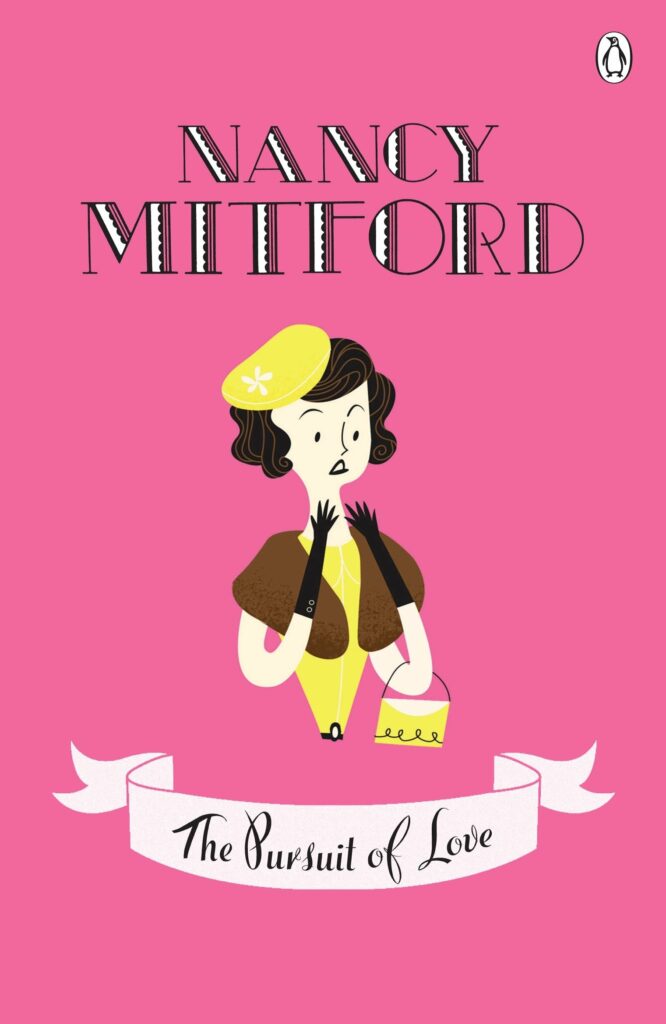
If only all women escaping abusive men and disfunctional families could just slip across La Manche. Why can’t people stand on their own two feet and rely on their family rather than the nanny state? Then we wouldn’t have to pay for ruinously expensive housing benefit etc. Excuse my sarcasm, but this is so out of touch with reality it’s painful. It reminded me a little of “The Pursuit of Love”, the Nancy Mitford novel that was serialised in the BBC earlier this year. That was brilliant, and gave the impression that the author was to some at extent at least, satirising the idle upper classes. Mason, on the other hand, gives no clue about any glimmer of social awareness. Instead, she creates the impression that she is writing about a familiar social milieu, one that she assumes everyone inhabits. Or everyone that reads books, that is. And I suppose that for Meg and her chums, journalists for The Sunday Telegraph, The Financial Times, Vogue, Marie Claire and Elle, it is very familiar.

But enough of class war, back to literary analysis. The husband in this dismal scenario, the nice one that is, married after Martha has escaped from the clutches of Husband 1, Mr Nasty, is a chap called Patrick. That’s where his resemblance to a human being in 2021 begins and ends. There is nice and nice. Patrick is NICE. He puts up with a lot of shit because Martha is very high maintenance and Patrick, as a black adoptee in a very posh family seems to feel that it would be impolite (the greatest British upper class sin) to have any views, feelings, thoughts, standards about anything that might cause any upset. And throughout the novel, he is treated abysmally by absolutely everyone. By the end, I found him so annoying and unbelievable, I really wanted to be casually vile to him as well.

He does, to be fair, provide the only narrative driving force of the novel, which is the desire to see them get married in the first place and then to see them and their marriage survive. Well, OK, maybe “driving force” is a little misleading, because it suggests that I gave a toss about either of them. Maybe narrative meander would be more accurate, a reason to keep going to the end before losing consciousness.

The final piece de resistance of this whole sorry debacle was the treatment of mental illness, a topic so fashionable it squeaks. I got the feeling that the spectre of Martha’s unspecified condition was meant to excuse the whole range of her excesses. Certainly, it features heavily in the largely positive reviews of the book. You know you’re on dodgy ground when depiction of mental illness is described using the word “brave”. This anything but brave. The deliberate vagueness around the condition is thought by many to be a glittering triumph, but I found it yet another cop out. Mason even includes a note at the end of the book: “The medical symptoms described in the novel are not consistent with a genuine mental illness. The portrayal of treatment, medication and doctors advice is wholly fictional”

What? You wouldn’t do that with a physical illness so why do it with a mental one? It smacked of someone slightly out of their depth and who couldn’t really be bothered to do the research. It’s always possible of course that I’ve got this wrong and Mason has had personal or family experience of mental illness, in which case I apologise sincerely. All I can say is that it didn’t ring true for me – a clumsy plot device, rather than an artistic decision.

So once again I find myself out of step with mainstream opinion. Sorry if you loved it but it just did not speak to me convincingly at all. This was definitely a case of mainly Sorrow, little Bliss.

This review was first published at www.rjbarron.co.uk

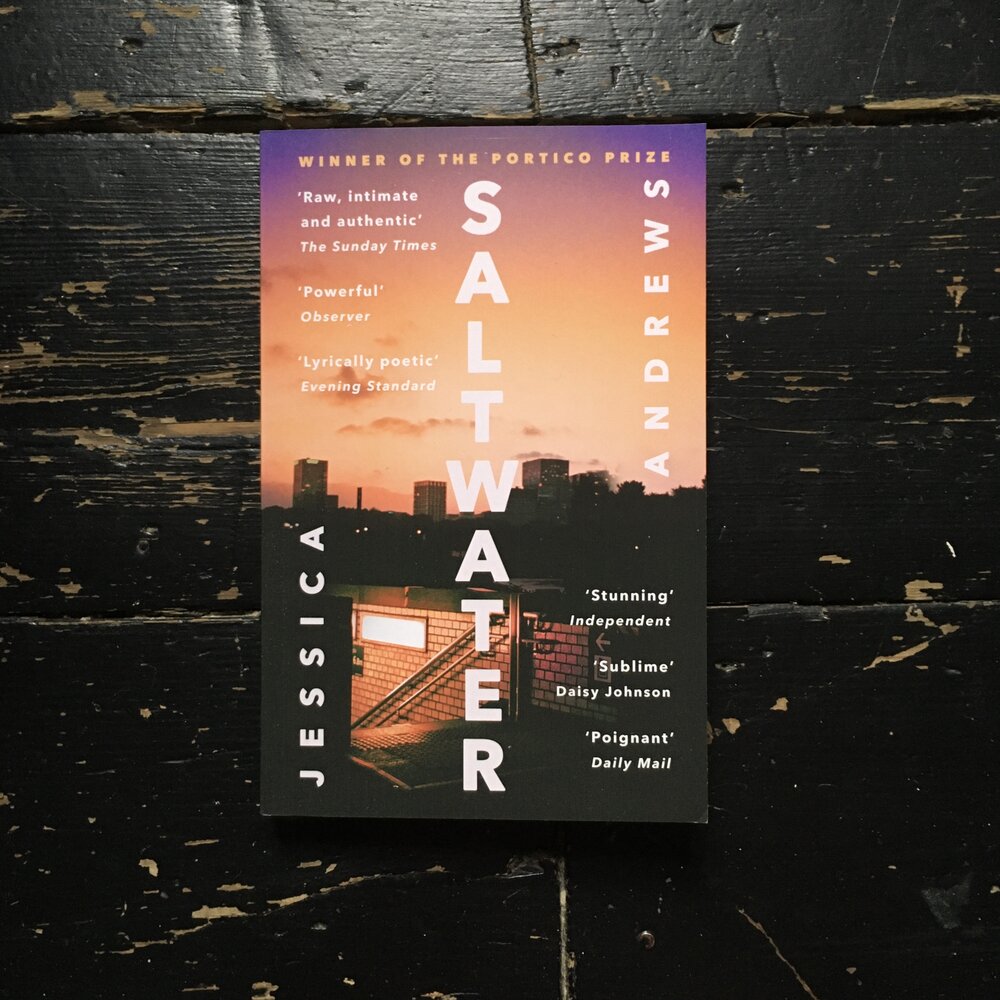
Saltwater – Jessica Andrews

This debut novel by Sunderland writer Jessica Andrews won the Portico Prize for fiction in 2020, an award explicitly about representations of The North. As an exiled Northerner, and a North -Easterner like her at that, the idea has a lot of traction for me. The North is a different country, even in these days of the crumbling Red Wall, and is generally either underrepresented or misunderstood. The other pull of the novel is that it is about a working-class woman’s experience of university education, of moving away from her Sunderland home to live and study in London, and her struggles to adapt to a very different set of people, with different assumptions, beliefs and values.

Even in 2021, literary representations of working-class life are as rare as hen’s teeth (Shuggie Bain a notable recent exception), so a new one like this is to be welcomed. What makes it even more special is that it’s so good. So very good. The novel is structured to tell the story of Lucy in three distinct parts: her upbringing in the North East, with family connections in Ireland, her experiences in London as a student, and her flight back to Ireland, undertaken as an escape when the contradictions of her two worlds become too difficult to handle. It’s a first person narrative, but unlike so many examples of that most fashionable of styles, it is expertly done. The first person voice is authentically that of the character, not of a literate and well-educated author, and it takes us to the heart of the matter. That is what it is usually intended to do, but so often it fails miserably.

The three separate story strands are intertwined, and the reader has to do a lot of work to untangle them. In the same way, there is the usual obliqueness that is de rigeur in contemporary literary fiction. (Heaven forbid that anyone should ever just tell a linear story any more. Now that would be truly shocking) Sometimes that technique is tiresome and serves only to make rather dull material (characters, relationships, settings, themes, incidents) a little bit more interesting because as a reader you are transformed into something of a detective. An absence of anything as old fashioned as a plot is replaced by the efforts of the reader to discover a story for themselves.  Very often the effort of textual sleuthing isn’t worth the effort for what is eventually uncovered, but here, nothing could be further from the truth. The melange of techniques works beautifully, and embellishes the story, makes it more vivid and meaningful. There’s a poetic sensibility at work in Andrews’ exquisite prose which is by turns spare, rich and luminous. It gives the material, clearly rooted in autobiography, a sparkle such that at times it sings off the page. The technique of intertwining the stories is interesting as well, with a little touch of Kerouac in it. Apparently, Andrews wrote three entirely separate stories, printed them off and then cut them up and spread them around the floor of her house before experimenting with the sequence. Who needs a word processor?

The end result is a debut novel that is a shimmering triumph. Working class alienation via education is an old theme of the post war years, but here it is transformed into a thing of beauty. Andrews is clearly someone we will be hearing more of in the future. Personally, I can’t wait for her next one.

The Interview

We do hope you haven’t got anything original to say..

I had a lot of interviews over the course of my career. There was the one that still makes me go slightly pink and hot, when I think about it. After not getting the job, my car broke down as I was about to drive away from outside the school, tail between my legs. My humiliation was completed by being spotted by the Head of English and the Local Authority English inspector, who had conducted their forensic dissection of me a little earlier in a hot, and airless room. I had not performed well. They waved at me and got some kids to give me a push so I could jump start the car. It was difficult to be appropriately grateful while simultaneously wanting the ground to open up and swallow me.

Another one was a three-day marathon for a Deputy Headship. At the end of the second day those who had made the final cut had to have drinks and canapes with the Governors in the evening. They turned out to be most of the Conservative party in Surrey, and it was an awkward hour of showing that I could hold a plate of Marks and Spencer sausage rolls, a glass of Chardonnay and talk convincingly about golf and skiing holidays. I could not.

But in preparing for every interview that I had, the key task that was drummed into me by senior colleagues, was the importance of having questions to ask at the end of the interview. This was not, of course, to actually find anything out. It was more to signal that I had researched the school and had prepared my questions accordingly. The real no-no, the professional crime committed only by rank amateurs was, when asked if there were any questions, to give the answer “No.”

Of course, all the real questions, the ones that demanded answers, could never be asked.

Here’s a short story about one such interview. It’s called “Asking the Questions”

Asking the Questions

The Peter Principle in action…..

“So, David, do you have any questions for us?”

He looked up, uncertain as to what had been said. The Headteacher fixed him with a laser-like stare. He felt like a rabbit caught in a set of particularly unforgiving headlights.

“Err..,” he stammered, looking around each member of the panel in turn. “Well, I ….”

*

Several hours earlier it had all started so well. He had driven into the school car park, under a huge polythene banner proclaiming it to be a “Good School”, with OFSTED vouching for its “Outstanding Behaviour”. A couple of scrubbed and gleaming older pupils were on duty, ready to direct the candidates to their saved parking spaces, and one waited as he clambered out of the car to escort him to reception. It was impressively smooth. There had been six of them assembled in the room which was their base for the day. One person had dropped out, already appointed to the plum job that had interviewed at the end of the week before. Looking around those that were left, it was obvious that they had all applied for that one as well. One of them he recognised from the circuit – Charlie, who he had met in a series of Deputy Head interviews over the previous couple of years – and that made the awkward small talk over coffee and pastries a little easier to manage.

A glance at the programme for the day revealed the usual menu of activities: teaching a lesson, a student council panel, some in tray exercises and a round of panel interviews. All of this to be achieved by 4pm before being given the dread news about who had made the cut for the grand finals of the next day, and who were officially Not Good Enough. It was at once depressingly formulaic and reassuringly familiar. His heart sank, though, when he saw it. How many times would he have to go through this pantomime to move on up the greasy pole? Was this really the best way of selecting somebody to be a Deputy Head? Most of the time it seemed that it served only to arrive at those who had the stamina put themselves through the process, while weeding out the non-conformists, those who either had not bothered to mug up on the latest educational buzz words, or, even worse, didn’t believe in them. Increasingly, he felt that he was one of the latter.

The conversation on the other side of the muffins ploughed on relentlessly. Two candidates he had not come across before, were vying to be the alpha male in the room, spraying pheromones relentlessly around the room. “Direct Instruction, bah, blah, blah.” “Yes, Knowledge Rich, blah, blah, blah” “Really? Because I……Katherine Birbalsingh…silent corridors…blah, blah, blah” “No! Outrageous! VAK?! Really?”

The braying, trumpeting laughter snapped him out of his reverie, and he noticed that throughout the conversation, the eyes of the two stags flicked continually around the room to see who was listening to their easy tour around the latest educational fads. His eye was caught by Charlie, who if anything, was even more jaundiced than him. Charlie habitually loitered on the fringes of opinionated groups and listened, only just controlling the smirk on his lips. When he saw that David was watching, he rolled his eyes theatrically, and took another massive bite out of his pain au chocolat. They didn’t get a chance, however, to chat about the performance they had just been watching, as the door swung open and a tall white man strode purposefully into the room, followed by a scurrying young woman with an armful of buff card folders.

“Morning everyone,” he boomed, beginning a relentless round of hand shaking, introductions and piercing eye contact. The braying chatter stopped immediately as the alpha males switched their attention to the entrance of this demigod, weighing up the correct blend of deference, intelligence and easy charm to deploy. He was immaculately groomed and trailed a cloud of subtle cologne in his wake. David looked down at his shoes, and thought, not for the last time that day, that he really should have given them a bit more of a polish. Instinctively, he tucked his feet far under his chair, and continued to smile.

David didn’t even catch his name as he leant over and fixed him with a steely glare and a crunching handshake. “Morning. David Marshall,” he said evenly, desperately hoping his winning smile would not crumble under the crippling pain the Head’s handshake was inflicting on him. His interview preparation over the previous three years had told him that, when push came to shove, the research showed that most interviews were decided, informally, in the first couple of minutes. An evidence-based approach to that old chestnut, “did they like the cut of your jib?” presumably. At this rate, his chances of success were hanging by a thread.

After the introductions and wrist pummelling, the Head gave a potted version of the school’s recent history, which seemed designed simply to make everyone in the room aware that it had been single-handedly rescued from degradation and despair by his own determination and genius. The Alpha males in the room, at least two of them women, through supreme self-control and an effort of will, were content to merely nod knowingly. Then, having established his messianic status, the Head went through the programme of activities for the day.

The Head was clearly someone who valued action. His opening pep talk reached its final sentence as he swept out of the room, followed gamely by the young woman, who had not spoken since her entrance a minute earlier. She had simply distributed the folders and melted into the background. In the silence that was left by the Head’s departure, there was only time for a collective exhalation, some raised eyebrows and half smiles of approval and admiration of the performance they had just witnessed. Before anyone had a chance to speak, a student, squeaky clean and scrubbed in immaculate uniform, appeared in the doorway.

“Good morning everyone. My name’s Oscar and we’re here to give you all a tour of the school. If you’d like to follow us, we’ll show you around. And please, don’t hesitate to ask any questions of any of us as we make our way around the school.”

Behind him were two other specimens of the student body, who beamed as all of the candidates made their way into the corridor. They introduced themselves as Uzma and Farha, and they seemed to have graduated from the same finishing school as Oscar, exuding charm and confidence in equal measures. As they progressed around the school, David and Charlie gravitated to the back of the group. When an opportune moment presented itself, Charlie leaned towards David and said quietly, “Well, this is all very impressive, isn’t it?”

David agreed, “Yeah, though I suppose these are the best three kids in the school. Let’s see what the rest of them are like.”

They didn’t have long to wait. The bell interrupted their guides’ explanations and Oscar brought the procession to a halt in the main ground floor corridor.

“This is the start of period 1, so there’ll be a lot of movement in the corridor,” Oscar explained.

The candidates visibly flinched, but were secretly pleased. Kids moving in corridors were harder to stage manage than the rest of the process, and could be relied on to give a more accurate representation of the school. All along the length of the corridor, the classroom doors opened, like flowers blossoming, and at each doorway a teacher positioned themselves, as their class silently filed out into the thoroughfare. Soon, the entire corridor was filled with lines of students, all silent, all observing the one-way system. Occasionally, one of the teachers on guard barked an instruction as the kids passed them.

“Eyes front.”

“Hands to yourself”

“Nothing to discuss.”

Charlie and David exchanged a look. Neither of them had ever seen anything like this before. After a couple of minutes, the corridor was empty again, and the doors closed. It was as if no-one had ever been there.

One of the other candidates, a bristling, serious young woman, could contain herself no longer. She turned to one of the girls escorting them.

“Goodness me, that was very impressive. Is it always like that at change of lessons?”

“Oh yes,” Uzma replied earnestly, “Always.”

“It wasn’t always like this, though,” chipped in Farha. “It used to be really rowdy, before Mr Bennet came.” The three of them exchanged a little look and a smile before moving on with the tour.

While the other candidates engaged the guides in conversation at the front of the crocodile, Charlie and David brought up the rear, conferring in low voices.

“These three guides are doing their job, aren’t they? They’re word perfect,” muttered Charlie.

“I can’t tell whether it’s incredibly impressive, or a little sinister,“ said David. “It all seems a little… unnatural to me.”

“Come on,“ chided Charlie, “No need to be quite so cynical about it. Maybe, they’ve got it right. Maybe they have cracked the ethos of the school.”

“Cynical? No, just human. A silent corridor is a deeply worrying sign, if schools are meant to prepare normal kids to take their place in the outside world.” David shook his head. “A calm corridor, an orderly corridor, yes that’s one thing, but a silent one? No. No, thank you.”

Charlie shrugged and they moved on, past silent rooms of Maths students, English students, French students. They were taken in to some of these rooms at intervals, to be greeted by a smiling teacher who would explain the lesson and invite them to have a look at books and chat to the students. Even David was impressed with the neatness of the books, the volume of writing in them, the attentiveness of the class to the teacher’s instructions. He began to wonder whether he was going to have to revise his initial scepticism.

He checked his watch. The tour would be winding down now and soon they would all be taken back to their base for the real business to begin. Oscar and his two lieutenants hastily conferred, and then picked up the pace, ignoring the remaining classrooms, intently solely, it seemed, on not being late getting them back. The faster pace strung out the gaggle of candidates, like tiring runners in the Grand National, and Charlie and David found themselves adrift at the back of the pack. By the time they walked past the Science labs, they were the only ones in the corridor, the others having established a lengthening lead in the dash towards the finishing line.

“Crikey!” David exclaimed. “Do you think this is part of the selection process? See who has a heart attack running back to base?”

He never found out Charlie’s answer, as the door of the nearest lab suddenly burst open, and a grey-haired man in a stained lab coat popped his head into the corridor.

“Psst!” he whispered hoarsely, looking both ways down the corridor and back again.

“Are you the candidates for Deputy Head?”

He had wild, staring eyes, and his head continually flicked back and forth, surveying both ends of the corridor.

Charlie and David looked at each other, bemused. David turned back to the man in the lab and said, “Well, yes, we’re two of them. The others are up ahead. Who are you?”

“That’s not important. But listen. I really must talk to you. In private. There are things you need to know. Things the staff want you to know.”

“Well, yes, I think there’s a meeting scheduled on the programme for the day.” Charlie fumbled with his sheet of paper and scanned it quickly.

“Yes, here it is. 12.45 a working lunch with some Heads of Faculty. That’s when we get to meet the staff.”

The man looked aghast. “Let me have a look at that,“ he whispered urgently, and grabbed the sheet out of Charlie’s hand. He studied it and laughed.

“Oh, yes. These people. Quislings and Yes men. They’ll give you the correct line alright. Oh yes.” He shook his head fiercely, and then, with another quick look down the corridor, backed into his lab.

“They won’t tell you the truth, but I will. And so will the others. Come here at lunchtime. 1.15. Tell no-one else…”

He was interrupted by the appearance of Oscar at the far end of the corridor, who called out

“Ah, there you are! I thought you’d got lost. We do need to get back so we don’t delay the programme.”

The mysterious stranger, tapped the side of his nose, and hissed, “1.15. Tell no-one”.

He backed into his lab and closed the door.

*

That was the last time David saw Charlie that day. They were hurtled through a series of activities that seemed to have been designed with the sole purpose of removing any chance of the candidates being together unsupervised, or of meeting any free-range members of staff. Their student minders had shown them, with great pride, a large room that was rammed with students, all in individual booths, so that they could not see anyone else. There were about thirty of them writing in silence while four members of staff patrolled, occasionally barking, “Sit up straight. Another day for anyone who with their head down or not writing.”

“This is the Behaviour Correction Centre, sir,“ explained Oscar quietly.

“There’s a lot of people in here, isn’t there? Is it always like this?” David had asked.

“Oh yes, sir,” replied Oscar, “But it’s alright, it’s always the same people.”

He had also been shown, with the same pride, the long queues of students that lined up in the playground at the end of break.

“Is this a fire drill?” he had asked, naively. “I didn’t hear the alarm.”

“No sir,“ Farha replied, “We do this at the end of every  break and lunchtime. We have to queue up in register order, and our teacher takes the register, checks equipment and takes us to class.”

David frowned. “Why?” he asked simply.

His three guides looked baffled.

“What do you mean, sir?” Uzma finally asked.

“Well, doesn’t it waste a lot of time? Why don’t you just get straight to class? And what if it’s raining?”

They looked at each other, uncertain how to respond, until Oscar pronounced, “It’s just the way we do things here. It’s good, it’s quieter. But we need to go back to your base now. It’s time for your next activity.”

David bit his tongue and allowed himself to be escorted back.

He had tried to escape at lunchtime, to keep his assignation with the mysterious Mad Scientist, but he was expertly herded this way and that to each new activity so that he had barely a moment to himself. And so, he worked his way through the usual in-tray exercise, did a data analysis of results and underperforming departments, was carouselled through four panel interviews, and had to teach a Year 7 English class a lesson on grammar. The sour expression on the face of the observer when he began the lesson by rearranging the rows of chairs into table groups of four told its own story. She began furiously taking notes, and then gave up after ten minutes. She had clearly already seen enough to make up her mind.

And so had David. The same raised eyebrow and scribbled notes followed his answers about dialogic teaching and collaboration, about restorative justice to accompany strict rules and sanctions, about student voice and student engagement and promoting investigation and experiment, about coaching being non-directive and about empowering staff and students alike. By the end, the interviewers were only just managing to avoid being sarcastic, and he was becoming ever more monosyllabic. What had happened to all the things he believed in? Why had making teaching engaging become such a joke? Why was there this endless emphasis on teachers droning on and checking for retention of facts? When did the ideal English classroom begin to resemble a pub quiz? Why did everyone seem to have such a simplistic attitude to evidence-based practice, a phrase that seemed to be the equivalent of a membership card to the cool kids club? Were there any schools left whose Senior Leadership entertained alternative ideas and were up for the discussion? There were so many questions buzzing around in his head, so much doubt about whether there was any point in staying in this profession that he used to love. So many questions.

*

“David? Your questions?”

His smile had begun to crack as the pause had grown. The rest of the panel reached for their papers and shifted in their seats.

Questions? Oh yes, there were plenty of questions.

He looked again at the panel. Two of them had already gathered their papers together, one was intent on the last of the thick chocolate biscuits and the man closest to him, a governor of some sort, continued to write. He could just about make out, upside down, the beginnings of a shopping list.

“No”, he said wearily, “no questions.”

If you prefer, you can listen to a podcast of this story here: https://anchor.fm/old-greyowl/episodes/Asking-the-Questions-eve5cf

New Podcast -The Chains he Forged – a Ghost Story for Christmas

Lockdown is the mother of invention, or so it seems. In the long, idle hours generated by Covid and Retirement, there has been ample opportunity to hone a new set of skills. The main insight I have gained after being out of the English classroom for the first time since 1982, is that the thing that I miss the most, the essence of English teaching is reading a great book or a poem aloud to a classroom full of kids. And so, I present the results, via my two new ventures, The View from the Great North Wood Youtube channel, and the Telling Stories Podcast. Indulge me, and think of this as therapy for someone still grieving.

Both ventures are straight out of the “Sniffin’ Glue” school of publishing, that is, rough and ready, with an unmistakeable aroma of punk. In those days, we were all just encouraged to get it down while it was hot. To pick up a guitar and learn two chords (who needed more? Patti Smith famously used just one, brilliantly) and start to thrash. To type, cut and paste (with scissors!) and xerox it.

So with that in mind, dive in. But be kind. And, don’t hold back from subscribing and spreading the word.

Chapter 12 Distant Voices Telling Stories

Tom and Dan meet the other inhabitants of The Rectory and, using the magic of The Sounding Stone, eavesdrop on Oliver and Jacobs plans to depose Queen Matilda
  1. Chapter 12 Distant Voices
  2. Chapter 11 Ghosts
  3. Chapter 10 A Visit in the Night
  4. Chapter 9 Shadows from the Past
  5. Chapter 8. Many Questions, and some Answers

September

Anna had always looked forward to September. Even as a child, the prospect of the new school year, with its pristine uniform, books and equipment, promised the chance of a new start, when anything was possible. The same feeling still buoyed her now as a teacher, even though the new start always turned sour all too quickly, and she knew that disappointment was never too far away.

This year, it felt to her that the promise of a clean page was even more important than usual. As she busied herself with her new pens and stationery, and began to lay out her clothes for the first day back the next day, she struggled to hold down her rising feelings of anxiety. Although the return to class was daunting after six weeks away, it did at least mean that she would get out of the flat and away from Tom for a time. He needed some time and space and six weeks cooped up together in a small flat had pushed him towards the edge. She knew it was her fault and she needed to loosen up a little, but she was sure work would help.

Her anxiety was divided equally between Tom and Anthony Gordon. She had heard the horror stories in the staffroom about Anthony’s attitude and behaviour. Seemingly continually on the verge of furious, violent eruptions, he was particularly bad, apparently, with female members of staff. Ever since she had discovered that he was going to be in her Year 9 class, back in July, a seed of worry had lodged itself in her mind. By the time she arrived at the night before the first teaching day of the Autumn term, it had grown to the size of a Giant Redwood. She had managed the two evenings before the first INSET days, but now before the first real day with children and timetables and teaching lessons and duties, its branches twisted everywhere in her head and she could not get to sleep for worry. Tom hadn’t helped. As she tossed and turned in bed, she thought back to earlier in the evening, when Tom had lingered at the doorway of her study, fiddling with his watch. Anna did not look up from her desk.

“Anna, come on. We’ve got to be there in 15 minutes. I’ve been telling you for the past hour.”

She glanced up, distracted.

“What? Oh, sorry Tom. I don’t think I can come, I’ve got to finish all of this off, and I’ve still got hours to go.”

Tom’s face was thunderous.

“You are joking, I presume. I can’t just show up on my own. Just leave it, you need to get out anyway. It’ll be good for you.”

She shook her head. “No, I’m sorry Tom, I’m worried about tomorrow. You go on your own. You’ll have a better time without me.”

“It’s just a job, for God’s sake.  The kids you teach are all no-hopers anyway It doesn’t make any difference what you do. You’re wasting your time.”

She looked as if he had slapped her across the face.

“Tom, I..”

He cut across her. “Is it always going to be like this? Christ Anna, don’t be such a martyr and have some fun, while you still can.”

She tried again. “But..”

“Oh, forget it. Don’t wait up.”

He turned and slammed the door.

She could still feel the vibration echoing through the flat as she recalled the scene, lying in bed unable to sleep. She reached across for her phone. No messages. 2 am. Where was he?

*

Anthony, on the other side of town, could also not get to sleep. He was not used to sleeping in a proper bed with a duvet that covered him for one thing. And for another, he was excited about going back to school. It was the first time in his life he could remember having new uniform and equipment. Unable to bear it a moment longer, he swung his legs out from underneath the thick covers that were swamping him, and went over to his desk. His desk! Another novelty that made him constantly look over at it, as if to check that it was still there and someone had not discovered a mistake and had come to take it away. He handled his pencil case and calculator, and flicked through his new dictionary, trying out some of the new words for size.

His finger traced down the edge of the page as he sounded the words one at a time.

“ Stab – pierce, wound with pointed weapon. Hmm. Stability – firmly fixed or established. Not easily moved or changed or destroyed. Stamina – endurance, staying power. Status – social position, rank, relation to others.”

He stopped and looked around the room, picking out objects from the deep shadows that cloaked them. Bed. Wardrobe. Computer. Games. Posters on the wall. Maybe it would be different this time. Maybe his Dad had really changed and they could all stay together in this flat and everything would be alright. Maybe his Mum would be proud of him and school would ring home with good news for a change. Maybe…

*

Thirty yellow buds blossomed cream as 9C opened their exercise books to the first page.

“OK Year 9. Can you put today’s date and the title please, and underline both of those things neatly?”

“What’s the title, Miss?” came a shout from the middle of the room, closely followed by, “What date is it today, Miss?”

“Date and title are on the Whiteboard. I’m not expecting you to be mind readers, you know.”

A couple of the sharper kids raised their heads and smiled up at her, a few looked puzzled and looked around, while the silent majority ploughed on, oblivious to the joke that had just sailed over their heads. Anna surveyed the class, judging when to move on.

“Ok, everyone let’s just get the rules clear from day one. If you all know what’s expected, no-one will get into trouble, and your work will improve. Or that’s the intention, at any rate. So, rule number one..”

She clicked the powerpoint and began to talk through the first rule as it appeared on the screen. The class copied it down in silence. The clock ticked and Anna covered the room, her heels clicking on the hard lino floor. A cloud of concentration gathered above their heads. She already felt the first day of term nerves drain away, the minute she had started to project her voice to this first class. It was the same every year and she laughed at herself inwardly over the time she had wasted in the last few days, worrying about the starting the new year.

After twenty minutes the task was done and Anna could move on to her first real task.

“OK, everyone, pens down please and look this way. Now, I’ve never taught this class before so we don’t know each other. The first thing we are going to do is to think about how English and school in general has been for each of us since we started a couple of years ago, and what we would like to achieve this year and by the time we leave school for good..”

She was off. Instructions came easily and the lesson plan, the product of agonised hours, dissolved as instinct took over. A brief explanation and setting up, some questions fielded and a five minute group discussion with feedback to the whole class (that had caused a deep breath before launching in to it) had come and gone, expertly managed, and almost before she knew it, the writing task had been set up and the entire class were back working individually, writing their letters of introduction to her, their new teacher.

Ten minutes in, she stood back and surveyed the room. The concentration was almost painful. She had patrolled the room, reading over shoulders, fielding questions, making suggestions, correcting mistakes, and now she wallowed in the pleasure of watching the class visibly get cleverer in front of her eyes. Where was the performance management observer when you needed them? Or the OFSTED inspector?

“Miss?”

She looked in the direction of the question and just controlled her frown in time. Anthony Gordon had his hand up. He had been surprisingly perfect up to that point: immaculate uniform, immediately following instructions without question, responsible participation in the group discussion. It was almost as if he had been taking the piss. But now, the honeymoon was over. He’d done well, but it was too much to expect him to keep this up right to the end of the lesson. She flashed a smile at him as she moved over to his side of the room.

“Yes, Anthony?” she asked.

“Miss, can you read this to see if it’s alright?”

She hesitated, expecting this to be the first line of an elaborate setup, with her as the butt of the joke. Her eyes flicked around the room. No, there were no supressed sniggers, no furtive glances, nothing. The whole class had heads bent to their work, absorbed. She looked back to Anthony who was waiting patiently.

“Miss?”

“Sorry Anthony, just coming”

She navigated the tables and reached out to pick up his book. She scanned it quickly, already rehearsing the bland, standard reply of encouragement she would give before moving off, before she stopped, a frown creasing her face. She read it again. She looked again at Anthony, who shifted uncomfortably in his seat. His face fell.

“It’s crap, innit, Miss?” he mumbled, and reached out to grab the book back from her.

“Anthony, it’s great. This is the best piece of writing you’ve done. You’ve got the tone just right. And some of your expression is just beautiful.”

He looked a little confused. “Really, Miss, it’s alright? You sure?”

“Anthony, it’s more than alright, its excellent. Well done.”

A smile spread across his face and he seemed to blossom in front of her.

“How are you going to carry on?”

“I’m not sure, Miss. I’m a bit stuck.”

“Well, you need to go on to, give some examples of the things you’ve mentioned. Anecdotes. And maybe you could use a few rhetorical questions in the next section.”

She bent down over his table, placing the exercise book back in place and on a separate sheet of paper began to write.

“Something like this,” she said, as she wrote out a few sentences. “Have a go, see how you get on.”

She straightened up. He smiled at her.

“Thanks, Miss” he said before bending back down towards his book.

Anna threaded her way back through the grid of tables to the front of the class, and surveyed the group. Perfect, humming concentration pulsed in the room. It was all she could do not to laugh out loud. A girl at the front looked up at that moment.

“What’s up, Miss? What’s funny? You look very happy.”

“Nothing, Kirsty. Let’s get back to work please. Another five minutes”

She began to circulate around the tables, looking over shoulders at their writing, scanning the room for issues. She approached Anthony’s table and found herself just behind him when the quiet in the room was disturbed by his hissed exclamation.

“Oh, shit..”

All heads looked up and searched the room for the culprit and there was the beginnings of a group giggle rolling across the room.

“Anthony! There’s really no need for that kind of language.”

“Huh? Oh sorry Miss, it just came out. I’ve messed it all up.”

He lifted his book half up and grabbed the corner of the page with his right hand.

Anna reached out and grabbed the book away from him.

“No, no, no. Don’t tear the page out, Anthony, you’ll ruin all that work.”

“It’s already ruined, Miss. Look at it.”

She lowered her voice, and softened her tone.

“It’s not ruined, Anthony, you just made a mistake, that’s all.”

“I always make mistakes, though Miss.”

She laughed. “So does everyone. Mistakes are nothing to be worried about Anthony. Just cross it out with a single line and correct it. Then you can carry on and add to what you’ve already done.”

“But it’ll look crap, Miss. I don’t want crossings out all over it. I always muck it up.”

“I’ll tell you a secret Anthony. Examiners love crossing out. It’s a sign of an intelligent student. Someone who knows they’ve got something wrong and who has tried to do something about it. If you ripped out the page every time you made a mistake, you would never, ever finish.”

He looked puzzled as he tried to process this information. Anna gently laid the book back down on his table. Keeping one hand on it so he couldn’t snatch it again, she pointed at the mistake.

“Look, it’s easy. You just draw a single line through what you got wrong, like this..” She modelled the crossing out, her red pen neatly scoring through a misspelling. “Don’t scribble it, that will look messy. Just a single line and then put your correction next to it. See.”

Anthony’s face moved from puzzled through disgruntled and ended in reluctant acceptance. He bent his head back down to his work and the final minutes of the lesson passed in silent concentration.

*

“Yeah, it was amazing, he just kept on writing. I was, like, expecting him to kick off all lesson, but there wasn’t a flicker. It was like teaching a different kid, honestly…”

She paused and glanced over at Tom, who was intently scrolling on his phone.

“Are you even listening to me Tom? Jesus, you’re so rude. You don’t take any interest in my work. You could at least pretend.”

There was a delay as he finished and then he looked up.

“I was listening for the first fifteen minutes. And then I wasn’t.”

“You really don’t care, do you?”

“For god’s sake, it’s just a job. Do you even know what I do? When do you have to listen to me going on about my job. You’re so fucking boring these days. You didn’t used to be like this.”

“But..”

He stood up abruptly.

“Never mind. I’m going out for some peace.”

“Tom, ..”

He lunged at her and grabbed her throat, pinning her to the high-backed chair.

“Shut up!” he screamed, “Just shut the fuck up.”

He pushed her back against the chair and stormed out, slamming the door violently behind him. Anna slumped back on her chair, her hand to her neck, stunned. And then the tears came.

*

 Anthony crouched at his desk, rigid, his pen gripped tightly above his exercise book. Another shout, another crash of something heavy against the wall, another strangled whimper from his mother. He flinched at each sound, slumping lower towards the desk top beaten down by every noise. He remained frozen, breath caught in fear, waiting for the noise he knew was coming next. The sound  that always signalled respite, a brief passage of calm before the next time. The door duly slammed, after a final volley of abuse, and as the vibration settled slowly into stillness, his shoulders came down and a weary peace descended on the room.

He sat frozen, not daring to go out of his room for fear of what he might find. His ears strained for some sign to cut through the noise of distant traffic and an intermittent gusting wind. And then he heard his mother moving around and the sound of cupboards opening and closing. She was alright and he could stay where he was, safe and quiet.

He looked down at his book, at the sentence he had stared at for the previous fifteen minutes while mayhem had swirled around in the room outside.

“In the future, I’d like to work as a professional gamer, and have a nice house and family, where my mum and dad can come and visit.”

He thought for a second and was just about to add a last sentence when the door burst open and his mother stared him, wild-eyed. The bruise around her eye and cheek bone was ripening as she spoke

“Anthony. Come on. Pack up what you need. We’ve got to leave.”

She tossed a battered blue IKEA bag onto the floor in front of him.

“Where?”

“Back to the Refuge. Come on, we need to be quick.”

She went back out to collect her stuff. Anthony automatically began to bundle his clothes and a few books into the bag. He had done it several times before and it barely registered with him, thinking he would probably have to do it again some time in the future. He took a final look around his room, grabbed his exercise book from the desk, stuffed it into the bag, and turned out the light.

*

 Anna sat in the darkness of her flat, scrolling through the messages on her phone. The dim blue glare sparkled in the tear tracks on her cheeks and softened the red rims and smudged mascara. He wasn’t coming back, that much was clear. He wasn’t picking up and had left no indication where he might be staying. Another woman, obviously, she thought bitterly. Someone who had the dinner on the table and didn’t have the audacity to talk about her own life and feelings and worries.

When she had got back from school that Monday she knew as soon as she walked through the door that he had gone. The gaps on their shelves confirmed it. He had come back when she had been at work, gathered up his stuff and removed it all, so no trace was left, without even telling her.

She slumped down at the kitchen table, and swung her school bag, stuffed with marking, with a heave on top of the table in front of her. It thudded down and spilled the first few books, spreading like a hand of cards. She looked fondly at them, so new, so clean, so full of hope. She had been convinced that this September everything was going to be different. A new start, a new her. She would manage everything and be the woman that she knew she could be. Having it all. Juggling competing demands. In control. But it only takes one ball to veer slightly off course and a chain reaction starts, that no matter how frantically you tried to keep it going, inevitably ends with everything crashing.

She wiped her eyes and blew her nose, collecting her resolve to keep on going. Reaching out to the books that had fanned out in front of her, she chose the one that was a little grubbier than the rest. Dog-eared and stained, the name on the front provoked a ghost of a smile. Anthony Gordon. At least he had made a fresh start, if only until the end of the first week. He hadn’t been seen since then and rumours had flown around the staffroom about the police and social services being involved. But now his book had magically appeared in her pile.

She switched on the side lamp, and opened the book, illuminated in a warm, yellow cone of light. As she read, flicking through the pages, her smile froze and then disappeared altogether. He had written three pages, the most he had ever achieved. There were careful crossings out and corrections made but the pages had all been crossed out, each line like an angry slash, almost penetrating the surface of the paper. The last page hung where it had been partially ripped out. Anthony had scrawled a new title, “My Future”, complete with a parody of underlining, free hand, red and jagged. Underneath, in capital letters, he had scratched simply, “I AINT GOT ONE”.

A cold wind moaned outside her kitchen window. She shivered. September was already halfway through and soon October would be here. Winter was coming.

Casting Spells

This is for all those teachers, of whatever stripe, that have ever held a class spellbound, and more particularly, for those English teachers who have ever read fiction aloud to a class of students. My very last thoughts on retirement, honest.

Casting Spells

I have loved casting spells
In the gathering gloom of wet November Friday afternoons
As yellow lights held us all in a web of careful, bold words.
Thirty pairs of eyes wide and gleaming in the dusky, chalk-dusted corners.
Thirty breaths held in a cloud of concentration above our heads.
Yes, that was worth the whole shebang.
But I did not like
The Marking, that squatted on my life like a Toad.
There will come a time, on a wet November afternoon, when a pile of bruised and scribbled purple books might be the object of my wildest dreams.
But not yet.
Not for a long, long time.
And come September, when Summer’s warmth begins to fail and blistered leaves turn yellow,
I will watch the lines of scrubbed children laden with heavy bags,
Proceed to school with first day nerves, and think, with sadness and relief, that no bell summons me,
To cast the old spells
 Afresh for them.


Mr Stringer’s Snow Day

A new short story by The Old Grey Owl

The sky was still dark, with flurries of snow carried in fitful gusts of the wind that knifed through him. He crunched his way along the footpath to the main road.

Sam Stringer was on the verge of something, that much was obvious to everyone. It wasn’t clear to anyone who came across him  whether it would be  a nervous breakdown or greatness, but it was definitely something.

At first glance he had it all. He was good looking, with a generous covering of hair on his head and he dressed as if he vaguely knew what he was doing. At work he was amicable, witty and warm. Someone who the rest of the staff had an instinctively good feeling about, though they would be hard pressed to say exactly why. He was effortlessly impressive in the classroom. The kids loved his enthusiasm and knowledge and care and lightness of touch. The staff loved his self-deprecating comments, the fact that he was the go-to-guy on SLT who never let anyone down, his ability to switch from seriousness to sarcasm without anyone ever mistaking that as a sign that what they all did, every day, for the kids, didn’t matter.

And yet there was an unmistakeable air of detachment about him, a coldness and a sadness that seemed the essence of him, unreachable and alone. He was not in a relationship and most of the staff could not remember a time when he had been. He had friends, but they were more like acquaintances, like those university groups that allowed for companionship without intimacy, conversation without revealing. No one knew a thing about his family, and in idle conversation in the pub after work, or in the staffroom over lunch, no one would have been able to answer the questions, “So, where is Sam Stringer from? What does he do with himself? What happens to him at Christmas?” The fundamental question that these more trivial queries masked was, of course, “Who is Sam Stringer?” And to that unasked question there was no ready answer.

And so, people stopped asking, stopped wondering. And his life at work went on, in the flurry of frenzied activities that characterised life in a busy, inner city Secondary school, where one reached the shores of the next weekend, the next holiday, in an exhausted daze, never quite being able to remember how, exactly, one had made it through. This unexamined life went on apace, until one day, Sam Stringer found that he had reached the dizzy heights of Deputy Head, almost without realizing it. It had not been the next step in some carefully considered Machiavellian plan, nor the logical outcome of ruthless careerism, it was simply the place and time and position the conveyor belt of his life had taken him to. At the age of thirty-eight he had earned the respect of his colleagues, the affection of his pupils, a significant and welcome pay rise, and a rather nice, spacious office, with his name on an acrylic door sign: Mr Stringer, Deputy Headteacher.

One of his many responsibilities was Snow. It wasn’t mentioned in his job description and it did not figure at his interview, but as far as the staff were concerned, it was, by a country mile, the most important. The closure of the school because of snow was officially his call. This was partly because he lived ten minutes walk away from the school, so he was the only member of Senior Team who could make an informed judgement based on local weather conditions early enough to set in motion the text and telephone tree, announcing the closure. The real, unstated reason was that Elizabeth, the Headteacher, could trust him to make the correct decision, resisting all pressures from the staff to close at the fall of the first snow flake. She knew that Sam had so little else in his life apart from his job, that a day off was something to be avoided at all costs. He had only ever had to do it once, in his first year as a Deputy, and he had resolutely kept the school open, notwithstanding the traffic chaos and misery that staff and students had to endure. This had garnered Elizabeth valuable brownie points with the local authority, and took her to the top of the league for local headteachers’ macho posturing. It had cost Sam some of his popularity, but he did not seem to notice and carried on as before, charming and effective in equal measure.

And so it was, one Tuesday evening early in December, the Senior Leadership meeting closed with a discussion on meteorology.

“So, are we all clear about the procedure?” Elizabeth scanned the members of her team around the table with her familiar, raking glare. “Sam, as usual it’s your call, but the earlier the decision, the better. We don’t want any complaints about people getting stuck in traffic only to find the school is closed after all. When do you think you’ll be able to get it on the website?”

“Definitely before six. The weather forecast seems pretty certain. The beast from the east is back, with ten feet of snow and freezing temperatures, or that’s what is said when I looked before we started tonight.”

Elizabeth frowned. “Hmm, whatever you do, any of you that is, don’t give the rest of the staff the impression it’s already decided. Weather forecasts have been wrong before and no doubt they’ll be wrong again. I want everyone going to bed tonight thinking that they are coming to school  tomorrow as normal.”

The assembled team were suitably poker faced, controlling the sense of disappointment they all felt. All except Sam who, deep down, knew he would find a snow day at home rather dull in comparison with a day managing the fall out of a snow day at school.

Hesitantly, a voice broke in.

“Do the staff just have to look at the website then? Sorry, this hasn’t happened since I’ve been here and..” Caroline, the newest member of the team, trailed off, feeling more than a little silly.

Elizabeth forced a smile. “Of course, Caroline, forgive me. I forgot, this is your first time.” She looked over at Sam. “Sam, could you?”

“Yes, of course. It was actually in the email I sent out to everyone. There’s a mobile telephone tree and an automatic text message cascade, with some back up calls to key members of staff, so they can ensure everyone in their section of the tree is informed. I thought that everyone would have read that, but…”

The minute he said it, he felt it had come out wrongly, as if he were annoyed at having to explain something he had already dealt with. As someone who loved getting more emails, and felt a little cheated and out of the loop if there was nothing new to deal with, he was genuinely baffled whenever he came across someone who hadn’t checked their own inbox. The expression on Caroline’s face, a mixture of annoyance, embarrassment and incredulity, just confirmed it.

She glowered at him, her eyes stinging. “Sorry,“ she said, “I haven’t been in my office. Teaching all day.”

An awkward silence spread over the meeting and people were left shuffling their papers and looking down at their notes. Thankfully, it had been the last item and the meeting broke up, the various members of the team drifting off in different directions to offices spread strategically in all four corners of the school. Sam hung back to make sure that he and Caroline were the last to leave.

She sensed that that was what was happening and at the last minute she tried to scuttle ahead. Sam called out to her. “Caroline, sorry, can I have a word?”

She turned and forced a thin smile. “Yes, sure,” she said, “What is it?”

He looked around to check everyone else had left. “Sorry, I didn’t mean it to sound critical at the end there. I was just surprised you hadn’t seen the message. It just came out a bit wrong.”

“You should have said that in the meeting, “ she replied curtly and turned tail and left before he could reply. As she walked down the corridor towards her office she wondered if she had been a bit rude. “At least he apologised,” she thought, “Not many men would have done that.”

Back in the meeting room, Sam was left alone, mouth open. He felt a little crushed. Was it him? He went over what had happened in his mind, knowing that he would do the same thing over and over again before the end of the day. Despite appearances to the contrary, Sam was a worrier. He hated for people not to like him and to give them any reason for doing so. Even worse, he always thought the other person was right, and that he had behaved badly, regardless of the situation. It was made even worse by the fact that it was so unusual. Most people warmed to Sam. But that just served to make Caroline’s obvious dislike of him so grating.  She, a newly appointed Assistant Head, had only been in post since September, and no matter how hard Sam tried, he couldn’t seem to hit it off with her. There had been a series of awkward encounters, of misunderstandings and, at times, open arguments. They always ended with Sam apologising, vowing to himself to be more careful next time. But, apparently, he never was.

In the midst of these repeated bouts of self-recrimination lurked something even more disturbing. A feeling so unfamiliar to him that he struggled to keep it buried and whenever it surfaced, which was far too often for his liking, it left him feeling even worse. From the first moment he had seen her, when she had arrived in the school foyer for her interview in the summer term, he was overwhelmed with the strangest, strongest feeling that he had ever had for anyone. She wasn’t stereotypically attractive, but she had something. A warmth, a spark, something indefinable but definitely there. There was no doubt about that. Short, glossy dark hair, green eyes, lovely golden skin and long, long legs. And she dressed well. He wasn’t sure about that last thing. He didn’t really notice people and certainly not their clothes. He would not have been able to describe anything that anyone at the Senior Team meeting that had just finished had been wearing, but he knew, with a painful and insistent certainty, that Caroline Taylor looked just right in whatever it was she had chosen to wear.

He also knew, with equal certainty, that Caroline thought that he was a bit of a joke. Whatever he had managed to do to fool everybody else, Caroline wasn’t falling for it. She could see right through him and obviously recognised him for what he was. An imposter. A charlatan. A phoney.  And for Sam, that merely served to increase her charm. Judgement as well as Beauty.

 With these thoughts churning around his brain, he collected his stuff, locked up his office, and made his way down to the car park. He sighed as he opened his car door. He knew he couldn’t go on like this and had made a sort of decision to look at Headships in other schools, ready to start applying next Summer. He shivered as the car fired into life, a blast of cold air shaking him from his thoughts back to the here and now. He looked up into the sky through the side window. Dark and cloudless, the stars glittered with an intensity unusual in the city sky. He could feel the gathering hard frost, but as yet there was no sign of snow. Maybe the clouds would roll in later, direct from the Siberian plains, with their gift of plump, feathery snowflakes.

Caroline had lingered in her tiny office for longer than usual, just to make sure she didn’t encounter Sam in the car park. She couldn’t bear another awkward conversation. God, what was wrong with her? Why did she always snap at him? He was perfectly OK as a Deputy Head. Better than most actually. He didn’t pull rank and didn’t mansplain. He was sensitive and respectful, without seeming horribly pleased with himself for being so right-on, so PC. It was just that everyone liked him. He was so popular with the staff, foot soldiers and the powers that be, that there must be something wrong with him. No-one could be that perfect. And, even worse, he was breathtakingly good looking. Men like that are always insufferable bastards in the end, she told herself, remembering an unfortunate dalliance with an equally chiselled and toned master of the universe type who had been big in the city. His sensitivity, worn like an Armani suit at the beginning of their fling, was soon cast aside to reveal the sixteen carat bastard lurking underneath, as she was unceremoniously dumped for someone creative at the BBC at the beginning of the summer holidays. Six weeks of self-pity had not repaired the damage caused by her innate suspicion of handsome men.

The worst occasion with Sam, the one that made her feel hot and uncomfortable whenever she recalled it, was back in September, just a couple of weeks after she had started work. She had popped to the local shop on Sunday morning, looking an absolute fright in tracksuit bottoms and no makeup. When she could make herself face the truth of it, she remembered that she had been in such a rush that there was a breakfast stain on her top. Oh God, how embarrassing. Because out of the blue, Sam saw her across the road and waved at her. Mortified, she had turned away hurriedly, and had blanked him. She had marched away down the road, not stopping until she had shut the door of her flat firmly behind her. Blanked him. Oh My God, she thought. How uncool is that?

It had never been referred to since, and Caroline had discovered in conversation in the ladies’ staff toilet, that Sam had a flat round the corner from her, in Mountcastle road.

“Do you know Mountcastle road?” Samira had asked her. “You know that big posh road with all of those massive Victorian villas in them. The ones that back on to the woods. He’s got a lovely flat there. Got a massive garden.” She lowered her voice. “Beautifully decorated, actually”

Like many of the conversations she had so far had in the staff toilet, this one was not making her feel any better about the worst social gaffe she had ever committed. She had put two and two together and had come up with a number nearer infinity than four. “So,” she thought, “Mr Stringer is a bit of player as far as the female members of staff are concerned. Well not me, oh no.”

She looked at the pile of marking on her desk.  She had dug it out purposely so that she could work through it on her snow day at home. It was an ideal opportunity to catch up, from the depths of her duvet, but, somehow, she couldn’t bring herself to put it in her bag. At the doorway, as she turned to switch the light off, it stared back at her, until it disappeared as the darkness flooded the room and she closed the door, relieved, with a click. Tomorrow, the duvet would be enough to sustain her.

*

The alarm jolted him awake. He scrambled in the heavy darkness, pawing at the table for his phone, and finally managed to turn it off, jabbing frantically at the illuminated screen. Five forty-five am. A thick silence flooded the room and he lay back, enjoying the quiet stillness. After a minute or so, the silence began to weigh heavily on him and he swung his feet around and out of the bed. Jesus, it was cold. He inched his way over to the radiator to check and was puzzled to find that it was on full blast, pulsing heat into the air, yet it seemed to have made little impression on the room. There was a strange silence, as if he had cotton wool stuffed in his ears. He continued to the window and opened the curtains a crack. The window looked out onto the back garden, and beyond the fence at the back, the beginning of the woods. He gave a sharp intake of breath. The sky in front of him was full of swirling heavy flakes of snow and the garden was blanketed in a thick covering, blurring all of the familiar shapes. Already, the perfect layer was marked with animal tracks, criss-crossing the lawn.

His heart leaped. Even at this hour, in this cold, with his breath steaming in front of him, it was a beautiful, strange, otherworldly sight. Clearly, this was one occasion when the snow closure would not be controversial. Nobody would be making much progress in the world in that, not, by the look of it, for a couple of days at least.

Fifteen minutes later it was all done: notice of closure on the website, texts sent via the telephone tree, a message left for the Head, local media contacted and the Local Authority alerts system triggered. He spent the next hour on a leisurely breakfast, enjoying the film of snow Armageddon on breakfast news, before rousing himself to get dressed and ready to brave the world outside. The woolly hat, thick scarf, gloves and padded coat seemed to dissolve into gossamer threads as he made his first tentative footsteps down the path from his front door. The sky was still dark, with flurries of snow carried in fitful gusts of the wind that knifed through him. He crunched his way along the footpath to the main road.

The road was eerily deserted, and the yellow cones of light from the street lamps bathed everything in a mysterious wash of amber. He passed a couple of abandoned cars, left at crazy angles to the kerb, buried and undetectable under the volume of settled snow. There were just a few other people out and about, their breath steaming into the dark skies as they laboured through the snow, preparing for their stories of heroic attempts to get to work that would dominate the news for the next few days.

It took him an hour to do what normally would have been a twenty minute walk. The school was suffocated under a thick blanket of snow, and as he struggled with the lock to the car park entrance, he could see the thickly mufflered figure of Ray, the site manager, his breath steaming outside the main entrance. Sam crunched his way towards him through the untouched snow.

Ray looked up and flashed a broad smile, enjoying the camaraderie of pioneers. “Mornin’,” he called from a distance, “Nice day for it.”

“Good morning, Raymond. What’s it like inside?”

“Boiler’s buggered. It’s freezing in there.”

“What do you reckon?”

“A couple of days at least. Maybe more. Weather forecast after that is a bit hazy. And even when the snow clears, there’s no guarantee of when the boiler’ll be fixed. If ours has gone, you can bet your life they’ll be swamped with callouts from loads of others.”

“Oh well, at least it’s a clear call. I’ll put it on the website after I’ve spoken to Elizabeth.”

“She’ll be tucked up warm in deepest Surrey somewhere no doubt.”

“The privileges of high office, Raymond, my good man. The privileges of high office. Not for the likes of you and me.”

Ray snorted. “You’ll be there soon, sunshine, you’re not fooling me. Another couple of years and you’ll be El Presidente, ordering everyone around from under the duvet.”

Sam was momentarily taken aback. Was that what everyone thought, that he’d be a Head somewhere? And soon, from Ray’s tone. He roused himself and the flicker was gone.

“Listen Ray, I wouldn’t bother with clearing the grounds, not yet anyway. Give it a day or so and keep an eye on the forecast. There’s no point shovelling it all up if there’s a ton more snow on the way. If we keep in touch, then we can manage it from this end. You concentrate on the boiler. I’m just going to do a bit of work while I’m here. I can lock up if you want.”

Ray didn’t need telling twice and strolled away whistling. His snow day had just started to look up.

It was about ten o’clock when Sam finally called it a day. He locked the gates behind him and leant into the knifing wind that had sprung up, whipping thick, fat snowflakes into his face. He gasped in pain and shock. The journey back was clearly going to be harder than the voyage out in the quiet darkness of early morning.

An hour later when he finally turned the corner onto the home straight, he had lost all feeling in his feet, his cheeks were red and numb, and all thoughts of the charm, beauty and romance of the snowy landscape had disappeared. For the previous fifteen minutes he had sustained his spirits by fantasising about the bacon sandwich he had promised himself, with coffee and the paper. This was the thought in his head, as he peered through the swirling snow over the road to the blocks of flats on the other side. He did it every time he walked past, and the extreme conditions of the morning made no difference. Caroline’s flat.

He was about to press on, head down into the wind, when his eye was caught by a huddled figure in the entrance hammering on the door. Defeated, the figure slumped to the ground and sat, head in hands and began weeping. He stopped and stared, shielding his eyes from the driving snow. He took a step towards the kerb, almost indistinguishable now from the road surface and kept on going, picking his way gingerly over the compacted snow on the road surface. Halfway across he called out.

“Caroline? Is that you, Caroline?”

The figure leaped up as if stung, or caught guiltily in the middle of some heinous act. She wiped her hand across her face. When she recognised who had called out to her, her face fell.

“Caroline, what the hell are you doing out here? Are you alright?”

“Sam, er ..Hi, yes, yes , I’m fine. I’m just…”

She hesitated, as if deciding what to say next. Her face was red and blotchy and streaked with tears.

“No, you’re not,” Sam insisted, “You’ve been crying. What’s the matter? You look terrible.”

A wry smile creased her features and she started again.

“Yes, terrible, I can imagine. It’s just that my boiler’s broken down, and I came down to go to the shop and I…er..well, I got locked out. And I haven’t got my phone with me, or my keys and there’s no-one else in the building and I, er.. I didn’t know what to do and I..”

The sentence collapsed into a further outbreak of sobbing. Sam reached out instinctively and took her hand.

“God, Caroline, you’re freezing. How long have you been out here? You need to get inside.”

“Oh, I dunno, half an hour maybe. It’s just that I don’t know what to do and why did you have to come along again and I’m looking a state and being pathetic and, oh, I don’t know, I..”

The words tumbled out in an incoherent torrent until the heaving sobs came again and she wrenched her hand away.

“Look, come on, come round to mine. It’s only five minutes away. You can get warmed up and sort yourself out and we’ll work out a way through this.”

She hesitated. The use of the word “We” was suddenly hypnotically alluring, the idea that someone could help her manage this. But not him. Of all people, not him.

He reached out and took her hand again.

“You can’t stay out her, you’ll freeze to death. Come on.”

Gently, he pulled her hand and she took her first step, and annoyance was gradually replaced by relief as she allowed herself to be led towards a solution. The two figures, hunched against the wind, melted into the blizzard as they made their way slowly down the road.

*

By the time she woke up, the grey light outside had begun to fade. After they had arrived at Sam’s flat, he had made her eat and drink and then insisted she get some sleep in the spare room. Her blank, red-eyed silence, as she methodically chewed her toast and drank the coffee he had handed to her, had convinced him that she had been exhausted and had been outside for longer than she had said.

She got dressed and tentatively made her way out of the room and into the hall way.

“Hello?” she called out, “Anyone here?”

The nearest door opened.

“Aha, Caroline. You feeling any better? That was one hell of a sleep. You obviously needed it.”

Sam smiled at her and ushered her into the room.

“Come in, come in. Come and have a seat.”

The room was not what she had been expecting. It was beautifully proportioned. Elegant, with high ceilings, polished floor boards and Persian rugs. She almost gasped when she walked in, her eyes wide and bright. There were three sofas arranged around an open fireplace, which had a gently flickering log fire. She stopped herself from telling him what an amazing place it was. She suspected that many people had told him that over the years.

“No, I won’t thanks. I really had better be getting back. Thanks, though, you’ve been very kind.”

“Getting back? Getting back where? Have you found your keys then? Or your mobile?”

“Well, no obviously, but..” She trailed off unconvincingly.

“Come on Caroline, I know you don’t really like me and you feel a bit uncomfortable here, but  there’s not much else you can do, is there?  Just give in to it and stay. You’ve already sampled the spare room. You can spend most of the time in there if you prefer. I’ve got loads of work to be getting on with anyway and so have you, I imagine. I’ll even lend you my laptop, how’s that?”

He couldn’t work out whether he was more annoyed or disappointed at her evident eagerness to leave, so he straddled the two. He thought himself rather bold for naming the fact that he clearly made her feel a little awkward, but there was little point in being overly polite. At least it was out in the open now. And she couldn’t go anywhere else, that was undoubtedly true. The weather was getting worse, if anything. Even if there were hordes of friends or family in the area, it would be impossible to get to them, unless they lived next door. Public transport, as is the custom in Britain in the bad winter weather, had closed down, and the country had returned to somewhere in the nineteenth century. Like it or lump it, they were stuck together for the foreseeable future.

Caroline submitted to the inevitable and perched on the end of the sofa furthest from Sam. She felt that she had to make some kind of attempt at conversation, at least for a while before she could take up his offer and retreat to a separate room with a laptop. She looked again around the grand living room, and took the least line of resistance.

“This is an amazing flat. It’s like a stately home.”

Sam gave an embarrassed laugh.

“Hardly. It’s the ground floor of the building.”

He saw the expression in her face and admitted, “It is very nice obviously. I’m very lucky.”

“Are you rich then? People who say that they are very lucky usually mean they were privately educated and daddy is something in the city”

“Rich? God, no. I, ..er.. we bought it a long time ago when it was a dump and we did it up, a bit at a time. So, yeah, lucky.”

“’We’? Are you divorced then? Didn’t you have to divvy it up after you split up?”

A pained look flashed across Sam’s face and he stumbled over his words.

“Well, no, not exactly. Umm, I , er..”

Caroline immediately interjected. “Sorry, none of my business. Just putting my foot in it as usual. Ignore me.”

“No, no. It’s me. It’s just that…” He stopped, as if uncertain about how to go on.

“What? What’s the matter? Can’t be that terrible, can it?”

“I was married, but I’m not divorced. My wife died. Yes. She died.” He pronounced the words, awkwardly,  as if it were the first time he had ever said them out loud.

Caroline looked horror-struck.

“Oh God, I’m so sorry. I didn’t know. I would never have asked if I’d known. Sorry, that was a terrible thing to say.”

Sam’s blank face shivered into a near smile. “It’s alright. It was a long time ago. A very long time ago. So, yes, not rich, just lucky.”

A silence hovered and settled on the room. The thick snow had dampened down what little noise there was in the streets outside. There was virtually no traffic, just the occasional gust of wind that whined through the window frames and rattled the panes. Caroline looked up in the direction of the noise, grateful for any distraction. At the far end of the room, a pair of French windows looked out onto a long back garden that disappeared from view in the gathering darkness. The garden melted into the thick trees of the adjoining woodland.

“Goodness!” she exclaimed, a little too eagerly, “What a great garden.”

She sprang up, went over to the windows and peered outside. Sam followed her and looked over her shoulder. There were a few flakes of snow drifting down form the grey skies. This was probably the mildest the weather had been all day. Soon, when the sun completely sank beneath the horizon and darkness settled, the temperatures would plummet again. Outside the blanket of snow across the lawn was untouched, thick and even. Only a few lines of bird and animal tracks criss-crossed the canvas.

“Look at that,“ she breathed, “It’s perfect. When I was a kid and our garden was like this, we’d spend hours in it building snowmen.”

She looked back at him, over her shoulder, and smiled. The memory was real and alive for her. Their eyes met. And then Sam, gestured out into the garden with his eyes and back again.

“Well, shall we?” he asked, grateful for the distraction.

“What, go outside? Really?”

She stopped and thought for a moment. “Yeah, come on. Why not?”

The next hour and a half flew by, as they constructed a family of snow people with accessories, stopping occasionally to discuss tactics and take part in an ongoing snowball fight. When they finally came back inside, it was it was velvet black in the garden, the icy darkness shrouding the mysterious group of snow people who were huddled together as if posing for a family photograph at the back by the woods. Their fingers were numb and wet, their cheeks red, their breath steaming into the night air.

He thought of that moment, many times later over the years that followed, as the moment his second life began again. By what a slender thread our lives hang. Choices made, corners turned, things unsaid. Even in the later contemplation of it, its randomness, its chance, its serendipity, brought fear as much as joy. For who knew when similar happenstance would unravel all that had been tightly woven?

Much later that evening, in front of the dying embers of the fire, when two bottles of wine had softened their defences, they sat on the floor side by side wrapped in a filmy gauze of wonder and disbelief. They had talked for hours, discovering on the way, a shared love of The Strokes, The Arctic Monkeys, The Wire, The Sopranos (with a guilty pleasure of The Gilmore Girls admitted under pressure), William Blake, Patti Smith, lower league football, The World Cup, roses and clematis. At one point in the evening, when it seemed to both of them that this had all been supernaturally prearranged, they discovered that they had both taught English as a Foreign Language in Spain at the same time, Sam in Madrid and Caroline in Barcelona.

Before they knew it, it was 1.30am, the last bottle was empty and the embers had ceased to glow in the grate. A sudden awkwardness descended from nowhere.

“Well,” said Sam finally springing up to gather the glasses and bottles, “That was nice, but it’s probably way past bed time.”

“Oh“, stammered Caroline, taken aback, “Yes, of course. Will you have to do the snow thing again tomorrow?”

“No, thank God. The message this morning made it clear that we’d be shut for at least two days, so at least I’m spared a 5 am start. Might be different the day after though. Forecast is for a big thaw.”

“Nothing good ever lasts, does it?” she asked, looking directly at him.

He looked away. “No. No, it doesn’t.” he muttered and busied himself with clearing up. When Caroline followed him into the kitchen with some token clearing, he said, “Oh thanks for that. I’ll do the rest. You know where everything is, don’t you?”

She looked puzzled. “What do you mean?”

“Oh, you know, toilet and bathroom. You can use the room you were in this morning.” He stole a glance at her. “It was alright, was it?”

“What was?”

“The room. This morning,“ he explained patiently. “The room was alright?”

“Yes,“ she said finally, “The room was just right. Like the three bears.”

She turned to go, so he couldn’t see the look of absolute humiliation on her face. The three bears? What was she like?  “Ok, good night then,” she said to the wall and carried on walking. Sam stacked the dishwasher.

Later, in the strange snow -dampened silence of his room, Sam lay rigid under the duvet, eyes wide open, mind racing. There was a full moon outside, and it silvered the far end of the room through a crack in the curtains. Why had he mentioned Donna? Why hadn’t he made a move or done anything about it? Anything at all. She was wonderful, there was no doubt about that. And she quite liked him, or was she just a great actress? Liked him? Not any more, he thought bitterly. What is wrong with me? Why can’t I just reach out to someone? Will it always be like this, for years and years and years? The questions raced through his mind, over and over again, and not for the first time, his eyes were wet when he finally slipped into sleep.

When the knock came at his door, gently, he woke up, instantly alert. The door opened a crack and there was a rustle, as a soft breath of wind passed through. The kiss, when it finally came, was everything he had been waiting for, for such a very long time.

The next day, whenever it started, was centred on that room. It was for hours and moments the centre of their universe, with the outside world a memory or a distant rumour, a story told by children but not believed. Occasionally throughout the day, noises came from the other world: a distant train, children playing a few doors down, and when the sun fell, the hoot of an owl and the bark of a fox, but they paid little attention to anything other than the adventure of discovery in front of their eyes.

In the silvery moonlight of the next night she turned to him. “Will we have to go in to school tomorrow?“

It felt warmer and the noises outside their window had included a steady dripping of the promised thaw.

“I don’t know,” he replied, “I think maybe it’s going to freeze over again before morning. Sleep now. I’ll sort it out.”

They both knew he was lying.

*

He lay back under the plump clouds of duvet, her arm across his chest, and looked at the clock. 5am.

He thought of marking 11C’s Mock exams.

He thought of planning the INSET day for the first day back in January

He thought of how he could link performance management with teaching repertoire.

He thought of her arm, its downy golden hairs individually picked out against her warm brown skin.

He thought of how he could encourage teachers to observe each other

He thought of the end of term reports he had to write for the trainee teachers and how he could make them sound a little more positive.

He thought of her smell, like vanilla and caramel.

He thought of the paper he had to finish, to present to SLT, on coaching for development.

He thought of her eyes, strangely green with little grey flecks. And white, white, white, like her sparkling teeth.

He thought of the way she wiped away the crumbs of her toast from the sides of her mouth, moist with tea.

He thought of her lips…..

He swung his legs out from under the duvet, perched on the edge of the bed and reached for his phone.

Sam Stringer was on the verge of something. It was not a nervous breakdown. It was not greatness. He stood on the edge and peered over the sides, dizzy and breathless. Finally, he scrolled down, hit the send button, and slipped back under the creamy warmth of the duvet.  The school would be closed again that day.

Sam Stringer was on the verge of falling in Love.

If you liked this story, try my first novel, Zero Tolerance, available from the following links:

www.growl.blog

https://www.troubador.co.uk/bookshop/contemporary/zero-tolerance/