Regular readers of this blog will know that, if nothing else, it is eclectic, covering the highways and byways, the nooks and crannies of human interest. Fiction, Politics, Football, Writing, Theatre, Film, Music, original short stories – all human life is here. So you will forgive me, I’m sure, if this latest blog is unashamedly devoted to self-promotion. After a hiatus of a couple of years, my podcast Telling Stories has returned. When the kids move back out, the old recording studio moves back in. I’ve used it to contribute to Librivox, which in essence is an audio book version of The Gutenberg project. Anyone who passes the technical recording test can volunteer to read books that are out of copyright, and there is a vast library of free audio books, produced by said volunteers.
If you like listening to audiobooks, give this a go. It’s barely publicised, and the quality of the readers is varied, but with a bit of trial and error, you’ll be able to find something to your taste, that doesn’t offend your rigorous standards of fiction, technical specs and reading voice. It’s a really worthy project and deserves more support. Check it out at Librivox
Another project even more worthy of support is my Podcast. I’ve resumed the momentous task of turning my YA book, The Watcher and The Friend into an audio book, via regular recordings on my podcast, Telling Stories. I’m trying to post a weekly chapter. Have a look at the ones I’ve done since the new studio arrived. The links are here. Try it and pass it on if you like it. Or even if you don’t.
Make Sure you listen to the episodes in the right order! If you havent started yet, follow the links to the beginning and click follow on the Spotify Podcast page
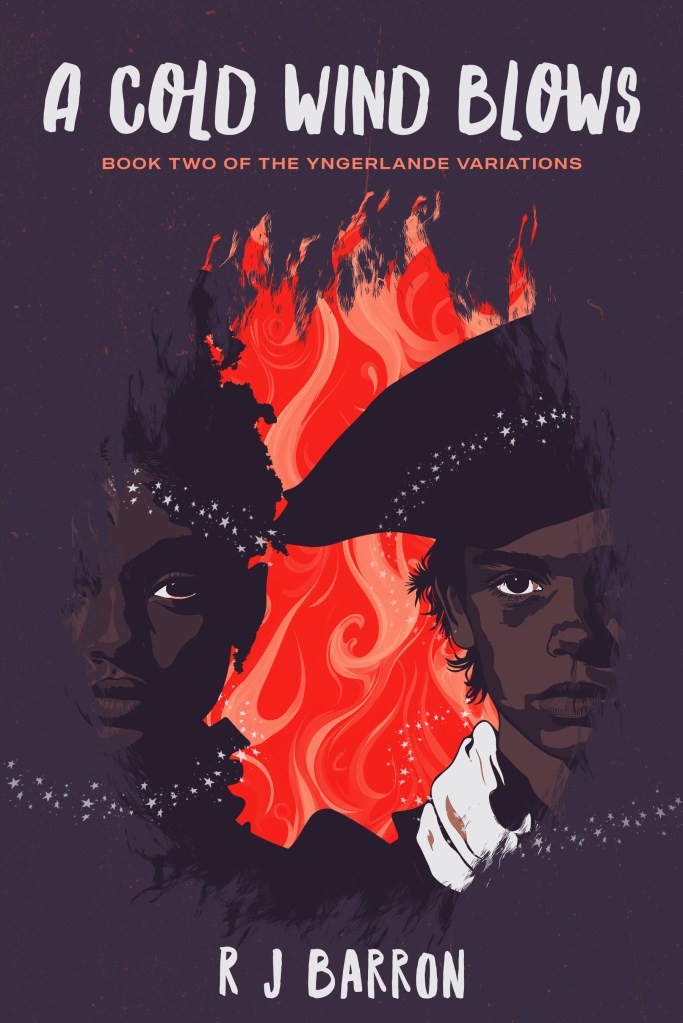
A Cold Wind Blows – Book 2 of The Yngerlande Variations
Finally, some exciting news. The sequel to the book is scheduled to be published later this year. It’s called A Cold Wind Blows, and I’m very pleased to be able to give you a sneak preview of the new cover – designed by me and produced by the very talented Youness Elh. More on this later!
O’Hagan triumphs with that rare beast – a State of the Nation novel with heart.
The latest novel from Andrew O’Hagan, Caledonian Road, is a big beast, in every sense of the term. Physically, it’s got some heft. 640 pages of hard back book makes demands on the wrists. It’s also dealing with weighty, contemporary issues, so all told, the experience of reading it provides a holistic mind and body workout. Sounds like a week at a Spartan health farm, where the motto is no pain, no gain, but fear not dear readers, this novel also provides pure pleasure.
O’Hagan handles the intermingling of the personal and political with real skill and delicacy. A lesser novelist would have eschewed ideology and party politics for fear of committing the ultimate sin in the eyes of the serious, sensitive, superior and above-the-fray Literature Critics, that is the sin of taking sides. Ideology is both vulgar and limiting in this fragrant, lofty world. Evenhandedness is much more mature, much more subtle, much more human, darling. Perhaps. It’s certainly much more boring, in my opinion.
O’Hagan says a hearty bollocks to that and has dived in headfirst to this dissection of contemporary London society, and the power structures that both drive it and destroy it. He does it primarily through great storytelling. The novel succeeds first and foremost on that fundamental, primary level. The characters, their relationships, triumphs and disasters are memorable and compelling, even the utterly ghastly ones. Maybe especially the ghastly ones.
For the protagonist, Campbell Flynn, O’Hagan treads well-travelled paths. Working class lad done good, from the grim dereliction of 1970s Glasgow, Flynn at the time of the novel’s start is an academic, a cultural commentator, and a media darling down in that there London. Not a million miles away, obviously, from O’hagan’s own background, material previously plundered in his exquisite Mayflies. And not just London, but very specifically Kings Cross, an area recently reinvented by money and gentrification, but one which has pungent resonance for any refugee from the North. As a first entry point for East Coast Scots and Northerners, its streets, legends, and institutions retain a powerful grip on those arriving wide eyed from the sticks. Judd Street, the Eight till Late, the Scala, Peabody housing, Squats and Short Life flats, ULU, one hour rooms in lines of seedy hotels, kicking used syringes and condoms to one side leaving one’s flat in the morning – they are all part of the memory kaleidoscope conjured by the name Kings Cross.
As a big beast, the novel is teeming with characters, so much so that O’Hagan thoughtfully provides a cast list of two fully crammed pages. It’s essential if you want smooth passage through this behemoth, and a trick that Dickens himself could have profitably employed. The plot is multi-stranded and brilliantly handled, so that by the time the book has reached the halfway point, every time a new section of the book begins, there’s a sense of excitement at the resumption of that particular plot thread. That happens for all of the separate threads. That’s a real achievement. Usually, there’s always at least one thread that the reader has less engagement with, where you feel you’re treading water and sticking with, out of a sense of obligation. Here, all of them sing.
It’s a novel with laudable ambition, tackling big, serious issues. Any analysis of the current, woeful state of the UK would examine these topics in some depth, and O’Hagan looks them straight in the eye and explores them with both a pitiless forensic gaze and nuance, which allows him to eschew simplistic judgements and portray the issues and the characters with multilayered complexity. These are not the scribblings of a naive schoolboy marxist. He manages to cover
People trafficking
Cancel culture
British exceptionalism
The aristocracy
Public Schools
Russian money laundering
Social Media
Celebrity Culture
Gentrification
Housing
All of this produces an excoriating picture of the malign influence of the British establishment, their sense of entitlement and superiority, and the devastating impact they have had on destroying Civil Society for everyone except the super rich. The “freedom” this class espouses becomes simply freedom for millionaires to become billionaires without the state interfering.
There will be readers at this point who are thinking, “Bloody hell, this sounds far too political for me. I don’t understand this stuff and/or I just want a story about people and relationships” Keep the faith, you apoliticals! O’Hagan delivers on that front as well, with a huge range of individuals and families, all of whom, even the nasty Tories, are portrayed sympathetically. It’s Dickensian in that sense, and similar in many ways to Zadie Smith’s White Teeth. An energetic, densely populated romp set in multicultural, class-riven contemporary London, it is, like Dickens, a serious work masquerading as an entertainment. Or the other way round.
There was one dud note for me at the beginning. His portraits of Media stars, the establishment, and the political classes all rang true and had the hallmark of authenticity. I found, at first, his depiction of knife wielding, estate dwelling, drug dealers less successful. It felt as if he had spent some time eavesdropping on an unfamiliar underclass and had produced a two dimensional portrayal. By the end, however, I was convinced and O’Hagan had totally won me over. This is A Great Novel, and I can’t wait for the adaptation, film or TV. Already commissioned, apparently.
Something weird is happening to films. It’s crept up slowly, revealing itself bit by bit, until now there’s so much evidence that it’s irrefutable. We are living through the Golden Age of Cinema, after the Wasteland of Pandemic Lockdowns and their aftermath. What’s driving this? Lockdown. Streaming. The unstoppable proliferation of narrative outlets and the demand for stories that will satisfy the gamut of tastes and preferences. The thirst for longer narratives with space to develop character, relationships, themes. The usual stuff.
It seemed, when we were in the middle of it, that Lockdowns were going to destroy cinema, as everyone got used to staying in and subscribing to a range of streaming services. The content was good and it was cheap. But by the end, we were all thirsty for the experience of going out again. In the same way that Zoom, at first a lifeline, became an annoyance, when it became obvious that the experience it provided was thin gruel compared to the Michelin-starred flavour of talking to real people in the same room, with eye contact, nuance and body language. You know, like properly being alive.
At first, it was hard, going to the cinema again. An act of faith, even. We went to see countless films in cinemas, to find that there were only six or seven other people dotted around the auditorium. It was only a matter of time, we agreed, that there would be a wave of closures to match the decimation of retail units in High Streets across the country. But, somehow they clung on.
And then, probably about a year or so ago, I began to notice something else, when watching the trailers. For at least ten years before Lockdowns, sitting through the trailers was usually a deeply depressing experience. I had become innured to the naked cynicism of the adverts. Corporations were desperately, unsubtly trying to sell me stuff. Millions of pounds of production costs, undercut by appallingly, clankingly obvious scripts, overlaid with equally grim music tracks. The combination of visuals (admittedly, often very beautifully shot visuals), terrible scripts, and obvious music overlays characterised all cinema adverts. Having to sit through them, always left me feeling vaguely unclean before getting ready to watch a film, usually with some kind of moral message.
During this period, it was difficult to distinguish between the ads and the trailers for films that were coming our way. They too, were just an extension of this appeal to the basest instincts of Homo Sapiens: Marvel adaptations, Fantasy CGI fests, endless, mindless, explosions, car chases (or spacecraft chases, Dinosaur chases, orc chases etc) It was like watching human evolution going backwards and I did despair of the celebration of stupidity it all seemed to represent. Don’t get me wrong. There’s a place for escapist/adventure/action type films. But a) do them well, and present a story with a plot that makes sense and respects your audience and b) make them as part of a wider, more diverse offering.
So the first time it happened, it was a bit of a shock. After the film, on the walk from the cinema to the car, the conversation was less about the film, and more about the trailers. Puzzled expressions and lines like, “There’s some really interesting looking films coming up”, were delivered hesitantly, as if it was just a scam to get us back, but really we would find that nothing had changed.
But it has. Every month there are great films and , on leaving the cinema, I think, “That’s the best film I’ve seen this year.” Over and Over again. I may be wearing rose tinted spectacles, but I can’t remember this happening before. They are long (sometimes too long), have stories, have interesting characters and believable relationships, are beautifully filmed in interesting locations, have significant human dilemmas to be resolved. I don’t know how long this is going to go on for. I’m just determined to enjoy it while it lasts. Because when it all blows over, and we are forced to trawl through mediocre shit on Netflix, recreating that Friday night visit to Blockbuster, where everything in the shop, could be pulped without adversely impacting the stock of human happiness, we’ll be forced to reminisce sadly about the time when going to the movies was great.
And what have been the films that have inspired this analysis? Well, since you asked so nicely, in no particular order…
Oppenheimer
Barbie
Saltburn
Poor Things
Zone of Interest
Killers of the Flower Moon
All of us Strangers
Anatomy of a Fall
Past Lives
The Holdovers
I can just about narrow this down to a top five:
5. Saltburn
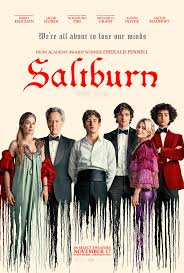
Saltburn
I’m amazed that this film divides opinion. It’s a funny, stylish Brideshead pisstake that turns the usual working-class-oik-adopted-by-the-bastard-Upper-Classes-at-Oxbridge-before- being-humiliated trope on its head. People who don’t like this are the same as those who didn’t get Don’t Look Up a couple of years ago – sadly very wrong.
4. Killers of The Flower Moon
Lots of moaning from the older cinema-goer ( my very own tribe) about toilet breaks needed because of its excessive length. Not for me. It flew by and I loved it. Fascinating, unknown (to me) story from American Twentieth Century history, with fabulous performances from De Niro, Gladstone (who really should have changed her name to De Gladstone) and the ever underappreciated Leonardo De Caprio. And if bladder control is increasingly a problem for you, there’s a range of remarkably effective, discreet products you can now buy. Next to the Maltesers in the cinema shop.
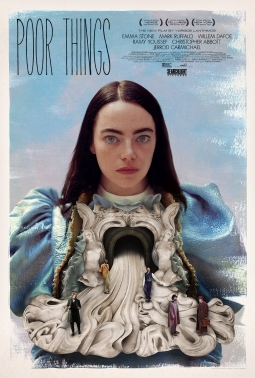
3. Poor Things
Wow! What a treat this film is. Visually stunning, steam punky Glasgow vibe, moving through Europe to Paris and back. Amazing performances from Emma Stone and Mark Ruffalo, who is hilarious all the way through and who should have won an Oscar, if that particular travesty of an award ceremony had anything to do with quality rather than promotion and virtue signalling. Is it a feminist epic? What a dim question – of course it is. How to learn to become a woman in a patriarchal society is a great premise and it’s delivered in an un-hectoring way. The scenes in the Parisian brothel are notable for the collection of highly unprepossessing men who make up their client list. In any other year, this would have been the best film of the year by a mile.
This brings us to the top two, and we move into a completely different league of experience. In Joint First Place are:
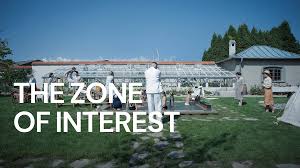
Zone Of Interest
This is an amazing film. The Second World War and the holocaust are strange subjects. In one sense, how can you go wrong? They naturally carry their own drama, their own horror so they’re a gift as subjects for people who are making stories. The downside, of course, is the fact that they’ve been done to death. How could you possibly find anything new or compelling to say, when confronted by the ultimate, still barely believable, example of the worst of humanity? But Zone of Interest pulls it off.
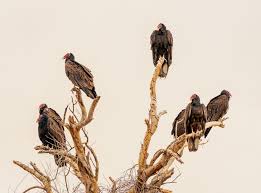
It’s a great premise. The mundane domestic arrangements of the Auschwitz commander whose family home abuts the death camp are an obvious way of exploring how absolute evil becomes commonplace. Generations of GCSE English students will also be familiar with the poem Vultures by Chinua Achebe on the same theme:
Thus the Commandant at Belsen Camp going home for the day with fumes of human roast clinging rebelliously to his hairy nostrils will stop at the wayside sweet-shop and pick up a chocolate for his tender offspring waiting at home for Daddy’s return…
Praise bounteous providence if you will that grants even an ogre a tiny glow-worm tenderness encapsulated in icy caverns of a cruel heart or else despair for in the very germ of that kindred love is lodged the perpetuity of evil.
Vultures. Chinua Achebe
Everything positive that has been said about this film is true. The soundscape is extraordinary and a compelling reason to watch it on the big screen. There are some wonderful scenes: the commandant hurriedly getting his kids out of the nearby river, running through idyllic woodland next door, when he realises that the water is carrying some horrific evidence from the camp next door. This is followed by frantic scrubbing of the kids in the bath. The commandant’s wife casually sorting through booty left behind after prisoners had been exterminated: fur coats, gold teeth, jewellery. The negative night scenes, of a young girl from the village visiting the outside work areas hiding food for the inmates, are both beautiful and haunting. It’s a film that will never leave you, once seen.
All of Us Strangers
This is the film that sums up, for me, the new approach of adult serious films, for adult serious people. Please note: Adult and Serious does not mean Boring. Far from it. The four central performances are luminous: Andrew Scott, Paul Mescal, Clare Foy and Jamie Bell are all brilliant. It’s so good, you want a new category of Oscar: the ensemble acting award. People talk to each other. They struggle with their feelings, they show what it is to be alive as an individual in an alienating society. There’s a hint of lockdown isolation, but that is suggested rather than laid on with a trowel. It’s enlivened by some, beautiful, subtle magic realism, in the form of the Scott character going back to visit his childhood home as part of his research for a new film he’s working on and finding his parents, unaged, still living there. It uses this device to explore memories of childhood and regrets for all of the things that were not said. Tears are shed in the audience. Beautiful.
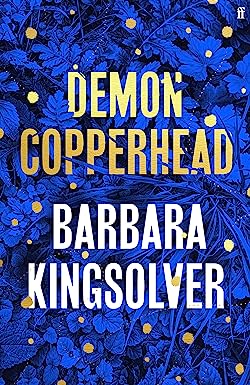
A Review of “Demon Copperhead” by Barbara Kingsolver
Ok so let’s cut to the chase. The only real question about this book is, how on earth did it win the Women’s Prize for Fiction? It’s not that it’s bad, it’s just that it’s not good enough. And in a reversal of the old Jewish joke, there’s just far too much of it. It comes in at about 540 pages, and were it to be trimmed to around 400, it would still be baggy, saggy and flabby.
There is a second, supplementary question. Why is it impossible to find a negative review in the whole of cyber space? Or even a luke warm one? After I didn’t finish the book, I trawled the internet for the reviews to see what the literary establishment thought about. And well whadda ya know? They all loved it. Of course they did. I am wearily used to lying firmly outside the mainstream when it comes to opinions about cultural products. The lonely furrow is the one I seem to plough repeatedly. And there is always the problem of reviews done by other writers where an institutional phenomenon of “You scratch my back, I’ll scratch yours” is in rude health. It’s not that I want to be negative about anyone’s work. Writing a novel is a major undertaking and all kudos to anyone who achieves it, but really, let’s not suspend our critical judgement. It’s not a hanging offence to publish something that’s not absolutely wonderful. Let’s actually read the book, and then be truthful about it.
The other possibility, of course, is that I’m just wrong, and that it is, in fact, a major piece of work.
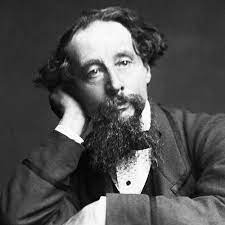
The problem here, the elephant in the room, is Mr Charles Dickens. Kingsolver is on the record professing her deep love and admiration for the Great Man and his works, and her determination to do a modern day version of David Copperfield. All well and good so far. The trouble is she seems to be so intent on her updated homage to her hero that it has elbowed out of the way all other considerations. You know, things like writing a novel that works on its own terms. One that engages, entertains and enlightens. One that leaves you moved by the plight of the protagonist and gives you some insight and empathy into a pressing social issue of the day. Set against that, pulling off a trick of adoring imitation seems a little shallow and pointless.
It’s not as if she didn’t have promising material. Setting the book in rust belt Virginia, looking at Blue Collar poverty and neglect, exploring the opioid addiction crisis of these left behind communities and exposing the seemingly scandalous mess of foster care and adoption in the US – all of these issues are worthy of a big novel. Unfortunately, I have to report that this is a big novel only in the sense of the number of pages it amasses. On all other available measures, it falls short.
To be scrupulously fair, there’s a lot of good writing here. KIngsolver has been around the block a bit and knows how to put together a sequence of well tuned sentences. And there are times in the first half of the novel when it seemed that it was on the verge of lift off, but each time proved to be a false alarm. Hope and expectation, time and time again, are throttled at birth by repetition, relentless accumulation of peripheral characters and scenarios, and an overall sense of meandering.
I wondered whether this was Kingsolver deliberately attempting to be Dickensian, trying to ape his characteristic gallery of grotesques and eccentrics in order to create a world where all human life is here. The trouble is, Dickens does it with great verve and style. Each diversion, when the reader is inducted into the lives of yet another group of oddballs and ne’erdowells, re-energises the novel as a whole. The prose sparks and fizzes, the subplots entertain, the narrative drive of the main plot is undiminished, Maybe it’s his skill at the episodic nature of monthly installments, where cliffhangers and structure drags the reader forward on a basic mission to find out what happens next. In this case, there is no sense of forward propulsion. Each diversion causes the book to sag. Each set of grim circumstances and terrible characters seem indistinguishable from the previous lot, until the reader starts to actively not give a toss about the fate of our hero. Or, at any rate, this reader didn’t.
It’s not helped by Kingsolver’s use of the first person. The voice of Demon Copperhead, the eponymous hero, (David Copperfield. Come on – keep up) is used throughout the novel. It’s his story, told by him. And it’s brilliantly done. There is an authenticity to it and it adds to the sense of place that Kingsolver achieves. But after a while, I found it rather relentless and rather limited. I wanted to see this world from some different perspectives, to hear another voice.
In the end, you can’t escape Mr Dickens, who is always there, looking over your shoulder as you read. Like Kingsolver, I love Dickens. I’ve read all of the novels and some of his stories. I love the plotting and the prose style and the characters. I love the vastness of them and the pleasure of the language. I love the fact that they are as much about a society at a particular time in history as they are about particular characters and relationships, and that Dickens’ voice and views are never far away. But they are from a very different time, and novels, and people and cultural consumption have changed utterly since Charlie’s heyday. What worked for him and his readership doesn’t really work for us in quite the same way. Dickensian is an adjective often used to describe modern narratives and it’s never used pejoratively, always as a quality kite mark of approval. It’s a go to for reviewers to “place the product”. Zadie Smith’s debut, White Teeth, gets the tag, partly for its London setting I suspect, partly for its teeming cast of characters, partly for its exuberance. My own novel, “Zero Tolerance” saw me dubbed as the “Edu Dickens of his generation” in one memorable review. I always feared that was a nod to the fact that it was too long, a little boring in parts and full of improbable coincidences. But enough of me, as no novelist ever said, ever.
Really, when you get down to it, the only person who does “Dickensian” well is, er , the man himself. But I do think this explains the prize winning. Just like any moderately famous actor who does a film playing someone with autism, or a mental health condition, or impersonates someone famous in a biopic becomes a shoo in for an Oscar, so a writer who tries to parallel a famous Dickens novel is aiming for the glittering prizes. Every parallel, every witty updating, every character name spotted by the discerning reader, each of these things generates more brownie points in the pot. We do love a writer who can help us feel a bit cleverer than we usually are.
Personally, I prefer a writer who writes a novel that grips and intrigues and excites and enlightens. A novel that I can’t put down, to take refuge in a familiar cliche.
“Demon Copperhead”, unfortunately, was a novel that I couldn’t stop putting down.
Bonnie Garmus’ debut novel in “surprisingly good” shock
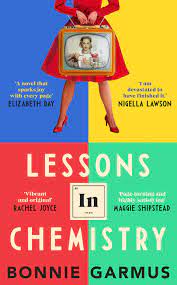
When I was thinking about this review, I searched for something from the professionals, and came across this, from Stephanie Merrit in The Guardian. Merrit is the real name of the very fabulous S J Parris, writer of the Bruno Giordano historical detective thrillers. And just like in those books, she is right on the money regarding this new novel from Bonnie Garmus. This is how she starts her review:
“Every now and again, a first novel appears in a flurry of hype and big-name TV deals, and before the end of the first chapter you do a little air-punch because for once it’s all completely justified. Lessons in Chemistry, by former copywriter Bonnie Garmus, is that rare beast; a polished, funny, thought-provoking story, wearing its research lightly but confidently, and with sentences so stylishly turned it’s hard to believe it’s a debut.”
She’s exactly right. I started the book, primed and ready to savour its shortcomings. Not, I hasten to add, because I’m that kind of sour, narrow minded, mean spirited kind of person, you understand. No, simply because it’s an experience so common that it becomes an expectation. A couple of times a year, at least, a book rockets into the Literary Heavens, seemingly out of nowhere, and becomes the “Next Big Thing”. It’s endlessly tweeted about, suddenly all the weekend papers are splashing interviews with the author, and, in a sure fire sign that this is a genuine publishing phenomenon, it gets traction in mass market publications. The writer appears on the One Show, it’s featured in Hello! Magazine, and lo and behold, Reece Witherspoon has bought the rights and is making a 5 part mini series that can only be seen via some new streaming platform that requires you to take out yet another £9.99 monthly subscription.
I often read these literary meteors while they are still burning brightly. This is partly out of an interest in the Literary world in general, partly in an attempt to discern what the secret is to writing a best seller (though to be honest, I’d be happy with finding what the secret is to writing anything that other people – that’s people I don’t know, personally or professionally- might quite like. Maybe even read to the end of, one day. Well, one can dream.) And almost always, the result is the same. The book stinks.
OK, that’s a little harsh. Stinks is maybe pushing it. How about, the book is a little dull. A little obvious. A little lowest common denominator. A little, a book written for people who don’t really like books, in the same way that Ed Sheeran writes music for people who don’t really like music. Stop it. I’m just being deliberately waspish now. It is a weakness of mine. I often give into it and write damning reviews of these meretricious page turners, sarcastic and withering, condescending and judgemental by turns.
This has become so common, I was beginning to fear it was indicative, not of falling standards in the literary world, but of a propensity to clever cleverness on my part. Not wanting to be perceived as being a part of the common herd, who fall for any old rubbish as long as it’s being featured in the media. These lumpen members of the herd are incapable of forming an independent opinion of their own, having such atrophied powers of analysis and comparison that they can never step out from the pack and say what they think before checking it against the approved opinion. Was I just signalling my own credibility as a cultural consumer by automatically damning the latest literary blockbuster without even reading it?
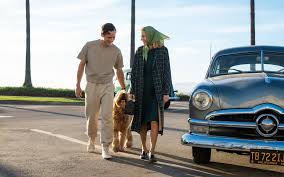
Still from forthcoming Apple TV adaptation, above right
With all of this in mind, it’s a relief and a pleasure to report that I can fear no more. It’s official – this is A Good Book. By the end, admittedly, it’s flaws have become more obvious, but the opening is so convincing, so welcoming, so right, that one forgives even the most jarring of errors that emerge as the story unfolds. Set in the dark ages of the early sixties, when the USA, outside of New York and San Francisco, was a stultifying, homogenous sludge of conformity. The promised land if you were male, white and Christian. A treadmill of lowered expectations and domestic thraldom if not. Particularly for women. And it’s that group who the book is primarily concerned with, via a series of likeable characters who the reader is rooting for right from the get go. The obstacles faced by the protagonist, the intelligent, resourceful, attractive career woman, Elizabeth Zott, are petty, ubiquitous and insuperable. It seems barely credible to our twenty first century eyes that such talent was so routinely and unthinkingly suppressed. Of course, we know the story. We know the progress that has been made. But it still has the power to shock and disturb when we see it dramatically presented through the operations of a woman we instinctively warm to.
So the setting, characters, relationships, plot and themes all tick boxes. This is a book that, from the beginning, enlists our sympathy and support. But often, even such a list of positives is not enough. The clincher in Lessons in Chemistry is the prose style. It’s gorgeous. Immaculate sentence after immaculate sentence aggregate into a steadily growing mound of pleasure: precise, economical, engaging. This is not firework prose. It’s not meretricious. It doesn’t show off, or shout its own virtues to the heavens. Instead, it’s quiet, unassuming and effective. It’s the sort of writing that sneaks up on you. You pick up the book because you fancy a bit of reading, and then, before you know it, you’ve read 90 pages in a flash. It’s like a long cold glass of water when you’re thirsty – just exactly what is required. And, miraculously, all of this occurs in her debut novel.
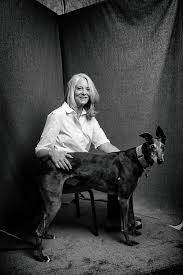
Bonnie Garmus, above left
And ultimately, it’s that that immunises the reader against the novel’s weaknesses. The characters, although engaging, sometimes strain the reader’s credulity. I simply cannot believe that Elizabeth’s neighbour, even though she is locked in a loveless marriage, would get up at 4 am to mind Maddy, Elizabeth’s daughter, to allow Elizabeth to go rowing with her husband. The bloody minded intransigence of Zott, in the face of the nonsensical demands of 1960s American daytime TV, aimed at the only female viewer the executives recognised, the housewife, doesn’t really ring true. Nobody, except perhaps someone a fair way along the spectrum, would continue not to recognise the commercial realities of both the university research world and the daytime TV world.
The other weakness is that the plot depends on more bare faced coincidences than even old Charlie Dickens himself tried to get away with. Again, the fund of good will the book has built up with the reader by the time we reach the home strait, generates a willingness to suspend disbelief, but the rope is a little too tight by the closing scenes.
Still from upcoming Apple TV adaptation (above right)
Then we come to the thorny matter of the dog. Yes, the dog. Not the one that didn’t bark, but the one that, apparently, as the arch rationalist Gormus tells us, has a vocabulary of nearly a thousand words. The same one that comments on the predicaments of Elizabeth, Calvin, Maddie and Harriet with more wisdom, insight and emotional intelligence than any human appearing on reality TV. I love a bit of Magic Realism as much as the next Joe, but this was a bridge too far for me. And yet, it does work, no matter how ridiculous it makes you feel as a supposedly discerning adult reader. The dispassionate observer role that the dog, Six Thirty, performs does bring something significant to the table. I just don’t know what, how or why.
Garmus with her dog above left. The dog is, strangely, important
Maybe a little mystery about the mechanics of an engaging novel is a good thing every now and again. As an antidote to over analysing, perhaps one should simply experience a book, and take pleasure from it. After all, you can’t do a post mortem without killing the subject, so, just for once, let’s trust our reactions and let the book live and breathe without trying to find out why. Try it, and see whether you agree.
After the showing of the two part adaptation of Mayflies on BBC over Christmas, I thought it was a good time to revisit my original review of the book (first published on my other website, www.rjbarron.co.uk last year). It’s a great example, I think, of a TV adaptation being better than the book, although the book has a lot to like and admire. Here’s what I wrote, back in June 2021:
This book looked right up my street – an affectionate memoir of a group of seventeen-year old friends in Glasgow, forever bonded by their shared experience of growing up together as a band of brothers with their love of music holding them together. Then add to the mix a fast forward to contemporary Britain to see how they have fared in the intervening thirty-five years. It’s structured in two halves -then and now- and it’s almost brilliant. Almost, but not quite.
The first half, an evocative portrait of a group of friends on a mythical weekender to Manchester for a festival, with the obsession of the possibility of catching a glimpse of Morrisey in a club, is beautifully done. Anyone who experienced the salvation provided by a like-minded group of anti-establishment friends at that age, with the same passions, the same obsessions, the same devotions, will read this with a tear in their eye and a smile, as your own memories flicker in and out of focus. The power and significance of the music you listened to when you were seventeen – what pain, joy and agony it can conjure, even when catching a few bars of an obscure track in the gang’s playlist.
The main protagonist, destined to escape working class Glasgow life through his intelligence and determination (and, classically, the devotion of the ubiquitous English teacher who encouraged him and pushed him on his path) is a sympathetic character who is transformed into a very successful writer, critically acclaimed and living in a hipster’s paradise in a beautiful and expensive part of London. He has still remained connected to his roots, however, and to one friend in particular who stayed in Glasgow and who turned his talents to English teaching in a “Challenging “ school where he has spent his entire career, inspiring generations of abandoned Glaswegians through his teaching and his humanity.
The second part reveals very early on that Tully, the Head of English back in Glasgow, has been diagnosed with terminal cancer. From then on the remainder of the novel charts how James (“Noodle”) deals with this devastating news and helps Tully end his days at Dignitas. I hope that’s not a spoiler, but the publicity surrounding the novel made the story very clear. There is tremendous sadness and grief and nostalgia, as you would expect, and the novel does not shy away from the anger and unreasonableness people show in these testing situations.
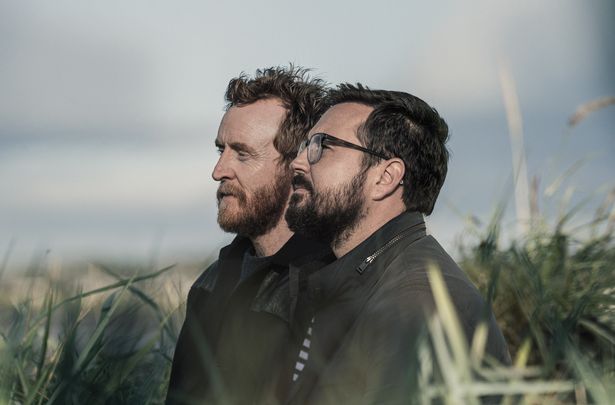
Pic: Andrew O’Hagan
But. And it’s a big but. The second half goes on and on and on, seemingly without the watchful eye of an editor. And then I realised. This was autobiographical. This was O’Hagan’s story. And the novel had become a therapeutic exercise for him, whereby every detail was included because the memory of his part of the second half was too significant to leave anything else out. I googled it, and it was true. This was O’Hagan’s story, almost word for word, and just a year or so earlier. And Tully was, in fact, Keith Martin, his boyhood friend. So O’Hagan deals with grief so recent, it’s still raw and it completely clouds his judgement.
It’s a familiar problem for a novelist, when you are casting around in your own autobiography for material for a novel and the first draft includes a load of stuff that is oh so significant to you, but which means diddly squat to your readers. And the editor was too sensitive to point it out. Or O’Hagan was too blinkered and determined to listen. It’s a pity. I reckon that if O’Hagan had waited a for a few years, he would have written a masterpiece, with the benefit of some perspective.
Pic: O’Hagan with Keith Martin in 2018 (right)
But then, sometimes, what the reader needs is irrelevant. The writer’s human too. And if Andrew O’Hagan needed to write this book to work through his grief, who am I to carp, because it wasted half a day of my time. The friendship he delightfully and brilliantly portrays , a friendship we can probably all replicate in our own back story, deserves the epitaph O’Hagan decides to give it, in his own way and in his own terms. Narrative arc can sometimes take a back seat.
Post script:
The distance between the events portrayed and the writing of the TV script, with the urgent, autobiographical recording of the novel in between, has done the trick, I reckon. And I don’t think it’s insignificant that the adaptation was written by Andrea Gibb, not O’Hagan himself. Mediating traumatic events through a third person has brought much needed perspective, while retaining the raw emotion of the story.
It’s a great piece of work. And the first half of the novel, with its portrait of the obsessive, bonding passions of the gang of seventeen year old friends, remains a beautiful, luminous, evocative piece of writing.
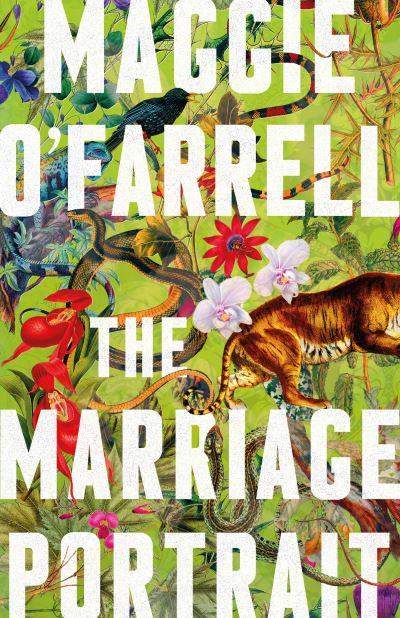
“Hamnet” was in my top five novels of the year in 2021, and many other people’s as well, if Twitter is anything to go by, so the announcement of her follow up, “The Marriage Portrait”, earlier this year caused great excitement. English teachers who have taught GCSE Literature in the last fifteen years will be very familiar with the source material: My Last Duchess by Robert Browning.
The poem, written in 1842, is a wonderful thing. It’s a long poem, a dramatic monologue, in the voice of an Italian Duke, Alfonso of Ferrara. The Duke is escorting a servant of a visiting nobleman around his palatial aristocratic pile. The visitor is there to negotiate a marriage between the Duke and his daughter. They stop at a portrait, hidden behind a curtain, of the Duke’s late wife. Browning brilliantly conveys, from his own lips, the cruelty and snobbery of the Duke.
By the end of the poem, the reader is left with an uneasy near certainty that Alfonso has engineered the murder of his young wife, seemingly because she was open hearted and friendly with people other than himself, specifically, people from a lower social class than himself. It’s master class of innuendo and suggestion. Without saying anything incriminating, the case against the Duke and the world he represents seems watertight.
It’s also a marvellous poem for GCSE students. It’s a great example of a poem that at first sight, and after first reading, seems impenetrable: obscure, dull, irrelevant. With a bit of reassurance, and a bit of skillful handholding, students can learn the fact that poetry, with its supercharged language, can be made to yield its secrets, like a tightly folded bud opening its petals one by one. Repeated reading reveals new insights, new possibilities, new pleasures. Once experienced, the joys of poetry seem just a little bit more real, a little bit more accessible, and students seem a little bit more willing to try another difficult one.
And so, given the magic wrought by O’Farrell in Hamnet, it seemed like a rich seam of material to mine. I started, with eager anticipation, a useful store of knowledge, and a fund of goodwill towards the writer. And there is a lot here to admire. I read it quickly, carried along by the narrative and the language. But…..
By the end, I was racing to finish for a different reason. How can I put this politely? It’s a little…..dull. The period and place are beautifully evoked. The language shimmers and sparkles. But the plot, which is the spine of any novel in my opinion, disappoints. The fact that, because of the original poem, the plot is so well known isn’t really the issue here. After all, O’Farrell starts the novel with Lucrezia, the Duchess of the marriage, realising she has been brought to an isolated rural loggia to be murdered. The rest of it is a procession of inevitability.
O’Farrell tries to use structure to shake things up a little, switching between the scenes at the end of her life, “imprisoned” in her husband’s country retreat, and incidents from her childhood in Florence. The scenes in Florence are more engaging somehow. The portrait of a privileged, but loving family, makes a sharp contrast with the Ferrara scenes. There’s a charm and an interest in the depiction of Lucrezia’s childhood, the eccentric younger child of the family. One luminous early section concerns the encounter between Lucrezia and the tiger her father commissions on a whim, to add to his menagerie of exotic creatures, kept down deep in the dungeons below the family home. Her determination to leave her bedroom and travel in the dark to encounter this magnificent beast radiates with poetry and significance. The idea that the Tiger allows her to stroke it through the bars without savaging her, imbues our protagonist with qualities that mark her out as a rare character of substance.
There’s also a pleasing attempt to use the plot to give the Duchess an escape route. No spoilers here, but it is plausible and the idea is satisfying. Ultimately, though, it is rather thrown away, as if O’Farrell herself felt a little uncomfortable about changing history.
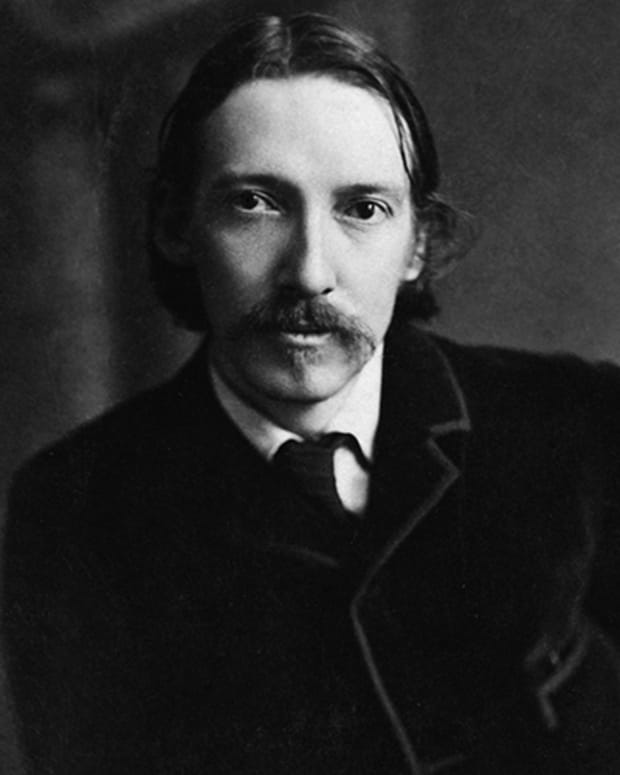
In the end, the problem is that O’Farrell, gifted novelist though she is, cannot compete with Robert Browning’s original. (Picture of Browning , right) The subtlety and nuance of his version of events requires readers to work hard to unpick its story. He pays them the ultimate compliment of trusting their intelligence to pick up the thread he has carefully woven through the verse. Somehow, it makes for a more satisfying read than O’Farrell’s four hundred plus pages of prose, no matter how beautiful much of it is.
I was left with a feeling of disappointment and let down. What promised much delivered very little. I’m hoping her next novel will abandon a reworking of our literary heritage and strike out with something new. It’s a difficult habit to kick though, once you’re in the grip of addiction. And there’s so much to choose from:
Goblin Market by Christina Rossetti (All that suppressed sex and oozing juice of ripe fruit. It could certainly stand a Game of Thrones mash up)
London by William Blake. (who was that mysterious man wandering around those “Chartered streets”?)
Dickens’ affairs with Ellen Ternan and Georgina Hogarth. (With the added Gothic bonus of the Great Man’s attempts to have his wife locked up in an asylum)
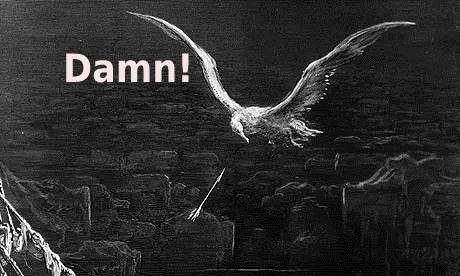
And, of course, that old favourite, beloved of English teachers of a certain vintage, from the days of 100% coursework and “creative responses”, a retelling of The Ancient Mariner from the point of view of the Albatross. That would be a challenge. It was certainly beyond the grasp of most of the Year 11 kids who attempted it in the Eighties.
On second thoughts, I have some advice for Ms O’Farrell. Just step away from your laptop, Maggie, take some time out, and come up with a contemporary tale set in the here and now. Now that would be worth waiting for.
Rick, Deputy Head at Fairfield High School, is the senior member of staff on duty at the annual leavers’ Prom. It’s a hot summer’s evening and resentment runs high over the Zero Tolerance regime instituted by the new Head, Camilla Everson. Meanwhile, a gaggle of Year 11 students, led by the notorious George Mason, who have been formally banned from attending for a variety of crimes and misdemeanours, have plucked up the courage to invade the event
Rick checked his watch again, and took a drag from his cigarette. He had slipped out of the house, weary of the thumping bass and flashing lights, and had made his way to the terrace at the back of the mansion. It was strictly out of bounds for the students as part of the licensing agreement, but it was understood that staff could use it for temporary respite throughout the evening.
He sat at a table on the terrace in the darkness, looking out onto manicured lawns, grateful for the cool quiet out there. Kevin had been there when he arrived, enjoying a solitary cigarette on his break, so he took the opportunity to ponce a cigarette from him, a treat all the more delicious for its rarity.
“Jo would kill me if she saw me with this,” he confided to Kevin, savouring the grey blue smoke whisping away into the night sky.
“Well, your secret’s safe with me Rick,” he replied.
“Another half an hour and that’s our lot, I think,” said Rick. “Music off, lights on and the wait for the parents to pick ‘em all up.”
“Yeah,” agreed Kevin, “All over for another year, eh?”
“It’s gone pretty well, actually. Better than I expected.”
“Yeah, it could have been much worse in the circumstances. At one point I thought we’d only have twenty kids here. Nothing like it used to be, in our heyday.”
“No. There’ve been a lot of changes.”
Kevin hesitated for a moment and then plunged in.
“I’m surprised you’ve stuck around, actually Rick. I thought you would have got a Headship somewhere else. It must be soul destroying, working under this regime.”
It was Rick’s turn to hesitate. He was normally very discreet when it came to talking about the leadership of the school, and had an instinctive professional loyalty, regardless of his own opinion. He had resisted the temptation to spend the last year slagging off Camilla and Pugh to anyone who would listen, and he would have had an eager and receptive audience, but it hadn’t seemed right to him to turn into that kind of Senior Leader.
But now, his resolve weakened by a long year of humiliations, and lulled into conspiratorial mood by the shared cigarette in the darkness, he cracked.
“Yeah, it is Kevin. It has been. And who knows? I might jump ship early next year if things don’t change. I’ve just tried to do my best and head off some of the madder innovations she wanted to introduce, but looking back, I’ve failed dismally at that. I might as well have gone to be honest.”
He kept quiet about his pact with the devil that was Alastair Goodall, but he was feeling increasingly tainted by it, and for what? There was no sign he was going to get any benefit from it, apart from his enhanced salary for the last year. It sat uncomfortably with him anyway. Maybe he should knock that on the head as well. The whirl of conflicting thoughts left him unable to say more.
He stood up, looking at his watch once again.
“Come on, no point moping around here. It’s time to wind this down, while we’re still ahead.”
“Yep, we’ll get no thanks for worrying about it. Let’s go, I think we’ve all done enough for one night.”
They walked back in. As they turned the corner, there, framed in the light spilling from the entrance, was one of the teachers peering into the dimly lit terrace.
“Rick? Rick, is that you?”
“Yeah, who’s that? Mary, is that you? What’s up?”
He screwed his eyes up at the figure obscured by the light behind her. He had correctly identified Mary, the Head of Art.
“I think you’d better get in here, quick. We’ve been invaded.”
She disappeared back in to the building. Rick and Kevin looked at each other, baffled.
“Invaded?” said Kevin, “What on earth does she mean?”
When they got back in the building the first thing that told them something might be amiss was the unmistakeable smell of marijuana.
Kevin wrinkled his nose.
“Is that what I think it is?” he asked.
“Who the hell is stupid enough to come to the Prom and smoke weed?”
Then one of the Promgoers burst from the disco room and ran towards them.
It was Jason.
“It’s George, Sir, George Mason. He’s gone mad.”
They ran to the door way and looked in. There in front of them, in the middle of the dance floor amidst a crowd of teenagers, was George, can of lager in one hand and enormous spliff in the other, swaying and dancing to the music.
“What the bloody hell..”
Kevin grabbed Rick’s elbow.
“It’s not just George, look,” he said.
Around the room, the rest of George’s crew were similarly engaged, smoking, drinking and dancing. Their dancing was not quite as hypnotic and dreamy as George’s. Instead, they were taking great pleasure in bumping into each other and anyone else who came within range. As Kevin and Rick watched in horror, this transformed itself into synchronised barging of other innocent dancers, who were sent flying across the dance floor, crashing into other. At the far side of the dance floor, the DJ, who ten minutes earlier had been looking forward to winding it down with couple of slow numbers, looked on at first bemused and then increasingly concerned. A series of teachers who had been supervising the dance floor had tried to intervene with the interlopers. They were at first ignored and then threatened by their former pupils, who were emboldened by their success so far.
Rick had seen enough.
“You stay here on the door, Kevin, I’ll only be a minute.”
He dashed out of the room and spoke first to the security man on the main entrance who had returned from his fag break and was blissfully unaware that anything was amiss.
“Hey, where the hell have you been? We’ve been invaded and you didn’t see a thing.”
“What? What do you mean, ‘invaded’? No-one has got past me without a ticket.”
“Never mind,” said Rick, “radio your mate on the front gate and get him up here, pronto and then both of you get yourselves to the dance floor. We need you to earn your money.”
“What about the police? Shall we ring for them?”
Rick thought for a moment.
“No, not yet. We don’t need them yet. Go on, man, hurry.”
Back on the dance floor the carnage continued. Then, like a bucket of cold water thrown over rutting dogs, the mood was broken. The music stopped immediately at the same time that the flashing strobe lights were replaced by the harsh overhead neon strips. The dancers stumbled and stood still, blinking in the unforgiving glare of the illumination.
A strange silence filled the room and the dancers and teachers looked round at the newly exposed hooligans, left like flopping fish gasping for breath out of the water. It was filled by a commanding voice from the doorway. All eyes were drawn in that direction.
“Alright everyone, listen up. The party’s over, I’m afraid. A little bit early, but I’m sure you’ll understand why? All students here with Prom tickets, you need to head next door with all of your stuff and get yourself ready. Parents and cars will be arriving in the next five minutes. Let’s make sure we don’t give them anything to worry about, especially on a night like this.”
There was an outbreak of grumbling abut the turn the evening had taken.
Rick held up his hands and started again.
“Yes, yes, we all know you’re disappointed, but we were nearly at the end anyway. There might even be a few keen parents already here waiting outside. So, let’s start to make our way through, please. And if I could ask a couple of members of staff to go through as well, just to make sure all is well?”
Three or four of the staff stepped forward and began to usher students out of the room. As they went, the invaders, looking round at each other began to put up their hoodies and fiddle with their bandanas.
“Oi, you lot. There’s no point hiding your faces, we’ve all seen you and we all know who you are. “
They stopped, embarrassed.
“Now listen. You’ve made a big mistake coming here tonight. You really shouldn’t have done it.”
One boy was bold enough to air his simmering sense of grievance.
“We should have been here anyway Sir. That old cow shouldn’t have banned us, she’s mental, you know she is Sir.”
“Eh, that’s enough of that. Whether you think you should have been banned or not, you were, and that’s all that matters.”
Two or three others joined in, adding their voices to the argument.
“It’s not fair, we get the blame for everything. Fucking teachers always think they’re right. We’ve had enough”
Rick hesitated. He had counted them. There were fifteen of them and about eight members of staff. They were drunk and stoned and very angry. He knew that it wouldn’t take much for this to turn ugly. Soon the two security guards would arrive, and they as a rule, did not do subtlety or negotiation. He knew that he would have to arrive at an agreed resolution in the next couple of minutes or risk disaster. He started again, hoping that his anxiety about the gravity of the situation did not bleed into his voice.
“No, no. no. that’s not going to get you anywhere. You need to start thinking sensibly about this, so that you don’t get yourself into any more trouble. The police are on their way. The security guards will be along in a moment. If I were you, I’d want to be leaving here as quickly as I could, without drawing attention to yourself.”
A familiar voice broke in, interrupting him. It was George.
“What’s the point of doing that, ‘cos you’ll just give all of our names to the police anyway? You’ve already said you know who we are. You must think we’re fucking stupid.”
This intervention stirred the pot again, and there was more rumbling from the mob.
“Language George, please. And, no, I don’t think you’re stupid and I never have done. For a start, I have no idea why you’re here anyway. This is not even your year group and not even your Prom. But let’s not go into that now. The point is this. I give you my word that if you all leave quietly now, taking all of your stuff with you, and there is no trouble with the parents or on your way home, then we’ll say no more about it.”
“See,” snorted George, looking round at the others, “He obviously does think we’re stupid. Don’t fall for this lads, he’s obviously gonna grass us up.”
“George, as far as I know, all you’ve done so far is gate crash a party and smoke a bit of weed and drink too much lager. You shouldn’t have done any of those things, but they’re not hanging offences. Or are you worried about something you’re not telling me?”
“No, course not,” George snapped back.
He turned his frustration on his colleagues. “See what he’s doing? Typical bloody teacher, he’s twisting everything. He’ll dob us in it alright, you see if he don’t.”
It hung on a knife edge. One voice from the mob piped up, “Nah, I don’t think so George. Mr Westfield aint like that, he aint like the others. He always does what he says.”
There was silence as they considered this idea and in that silence it was over. The first of them walked towards the door, followed by a couple more. Then, the rest of them followed. As they passed him to get through the doorway Rick said, “You could probably get a lift home with some of your mates, if you ask nicely.”
Finally, only George remained, standing in the middle of the dance floor. Rick said to the last few members of staff, “Do you guys want to go and help outside, while George and I have a chat?”
They slipped quietly out of the open door through to the hubbub beyond.
George clutched his lager and stared with a set face at Rick.
“So, George” Rick began “Are you going to go along with this and leave quietly? I meant what I said about not taking it any further.”
“Nah man,” George sneered, “don’t come it with the concerned, caring chat routine. Why should I listen to you? You’re the one that got me excluded. You and that Syrian cunt.”
“No, George, you got yourself excluded, you know that as well as anyone.”
“You got an answer for everything, aint you? If my Dad were here, he’d batter you for what you did.”
“Yes George, you’re right, he would. And he’d do a pretty good job of it as well. He’s good at battering people. But who would he go on to batter after he’d finished with me George, eh? And then what would happen? Because there comes a point where using your fists just isn’t enough. But you already know that, don’t you?”
George’s grip on his can of lager had been steadily increasing as he had listened to Rick, his knuckles whitening as he squeezed in rising anger. Without warning, hurled the half empty can with all his strength at Rick’s head with a roar of rage. Rick ducked and the can thudded into the wall behind him, spray spuming everywhere with an angry fizzing. George started forward and grabbed Rick by the lapels.
One of the qualities that had served Rick well as a teacher in a tough urban school was his unflappability. He had ice running through his veins and the capacity to exude calm when all around him were panicking. He knew that George was a very big, powerful lad who didn’t need the amount of alcohol he had consumed to make him dangerous and unpredictable. But Rick himself was tall and well-built. Years of sport and the gym had left him with a confidence that he could look after himself.
He put his arms through George’s and laid his hands on his chest, firmly exerting pressure on him.
“George, man, calm down. Don’t make things any worse than they are.”
George, still incensed, tried to wrench Rick towards him by the lapels, but found that Rick was too strong for him.
Rick’s voice was quiet and even and he looked George directly in the eyes
“George, come on. You’re your own worst enemy. Give yourself a break. Let go and calm down.”
There was one final attempt to overpower him. When that failed, with Rick looking steadily at him throughout, he gave up and with a howl of frustration and despair he pushed Rick to one side and stormed out of the room, barging past students and teachers alike, some sent flying like skittles as he turned the air blue with an extended volley of industrial language. He snatched up his carrier bag of lager from behind the desk and charged through the ground floor until he found the doorway to the terrace. He crashed past the two security guards who were skulking around, desperately trying to avoid being called into action, and disappeared into the cool darkness of the gardens.
Sign up to the blog to get an email alert every time a new post is issued. You can buy a copy of the novel, Zero Tolerance, using the links below:
An extract from “Zero Tolerance” by The Old Grey Owl
Rick, Deputy Head at Fairfield High School, is the senior member of staff on duty at the annual leavers’ Prom. It’s a hot summer’s evening and resentment runs high over the Zero Tolerance regime instituted by the new Head, Camilla Everson.
Rick looked at his watch again. It was seven thirty, the official start time and still there was no sign of any guests approaching. There were a few knots of teachers standing outside, all in their finest party outfits, apart from those, like Rick, who had had to go there straight from school. Kevin, had, as usual been assigned official photographer status, and his tuxedo and Dickie-bow combination, was completed by a camera with a huge zoom lens. It was a serious bit of kit and Kevin spent his time in between chatting to some of the other teachers, fiddling with knobs and dials. He also took the opportunity, every year, to limber up by taking photos of the staff, singly and in groups, wearing their glad rags in front of the shabbily impressive Longdon Park, an eighteenth century mansion in acres of countryside that had been used as the venue for the Prom for as long as anyone could remember.
Rick paced to the bend in the drive, his shoes crunching pleasingly on the gravel, so that he could get an extended view of the long sweep to the main road. Nothing. He turned and retraced his steps, checking his watch again as he went. It was a beautiful early July evening, warm and sultry, with the scent of honeysuckle heavy on the air. Everything was set for a fitting send off for the Year 11 students, but the nervous shifting from foot to foot, the glances down the drive, and the stilted conversations spoke of anxiety. This was not like any of the other Prom celebrations any of them had ever attended.
In the previous week the school had been alive with rumours: Camilla had cancelled it. Only forty tickets had been sold. Social Media was facilitating a planned storming of the Bastille by the disaffected and dispossessed. In Camilla’s new Fairfield there were many members of both groups. There was even a rumour that had surfaced only the day before, that those students who had bought tickets, were planning on boycotting at the last moment and had hired a club in town, where alcohol and other stimulants could be ingested.
Rick had considered that the boycott was a realistic proposition and that it had been avoided by the final rumour that had sprung up on Thursday, that Camilla, breaking over thirty years of tradition, was not going to attend. As he himself knew, that rumour was firmly rooted in the truth, and he had made a good job of ensuring the news got around the students.
He thought back to Monday of that week and his surprise at being summoned to Camilla’s office. Was she finally going to spring a trumped up disciplinary on him? Alastair’s protection could only last so long. He steeled himself, knocked on her door and went in.
“You wanted to see me?” he began. She was sitting at her desk, hand on mouse, and he just caught a glimpse of the familiar orange of the EasyJet site before she minimised it.
She looked up. “Ah yes, Rick. Come in.”
Rick hovered just inside the door. She rarely invited him to sit down.
“I won’t keep you long.”
That was the phrase she used when she meant “Don’t sit down”
He stood in front of her desk, like a naughty student about to be told off.
“I assume that you are going to the Prom on Friday?”
“Yes,” he replied, “I always do.”
“Good, I thought so. I just wanted to make sure that you know I’m expecting you to stay for the duration and make sure that everyone has left the site.”
“So, you won’t be there, I take it?” Rick asked the question in his most innocent voice.
Her eyes flicked left and right. “No, I have another meeting that night.”
“Bollocks you have,” thought Rick, “A meeting with a bottle of red in an expensive restaurant more like.”
He smiled at her. “I suppose you’ve heard the rumours that there is going to be trouble? Students you excluded and banned coming en-masse to gate crash?”
She bristled. “Oh, I’m sure that’s all just talk. But just in case, I need you to be there for the whole event please. You have a, ….er.., good relationship with the students, even the feral ones, and it’s about time it actually came in useful.”
“Will O’Malley be there?”
“Patrick? Yes Patrick will be there. Well, at least at the beginning.”
“Yes,” thought Rick, “someone else who is wetting himself at the prospect of meeting a group of kids he’s bullied and brutalised all year.”
He contented himself with a thin smile. “Fine. So, was there anything else?”
She thought for a moment and then finally took the plunge.
“Have you heard anything about this Rick? What do you think are the chances of there being trouble? We must avoid any bad press in the Advertiser. Alastair is still exercised about the last front page.”
He considered the question. He knew the answer, he just wanted to make her sweat a little.
“I think it’s highly likely. There are a lot of students, past and present, who hate your guts. Lot of staff too, but at least you can be fairly confident that they won’t burn the building down. Well, most of them. Just saying.”
A look of pure hatred tinged with fury took possession of her face.
“How dare you? Don’t you think I deserve some support from my Deputy?”
“Calm down Camilla. I’m not saying that’s what I think, I’m simply reporting what other people think.”
“And what do you think?”
“Oh,” he said, making for the door, “I couldn’t possibly comment on that. I’ll be there Friday.”
He closed the door behind him and walked down the corridors to his office with a spring in his step. He had rather enjoyed that.
And so here he was, spending a precious Friday night on duty, expecting trouble. He sidled over to Kevin, who had taken as many photographs as he could of the staff and was now standing in the shade so he could flick through the thumbnails to check them out.
“So, Kev, do you think anyone’s coming tonight?” he asked.
Kevin looked up from his camera. “Yeah, I do actually.”
“How come you’re so confident? They’re leaving it a bit late, aren’t they?”
“Look,” he said, jerking his head in the direction of the road.
Rick turned around. There, sweeping round the bend, was the first stretch limo of the evening. Kevin got himself into position with the camera and the car crunched to a halt outside the entrance. The doors opened and eight young people, four girls and four boys, self-consciously unfolded themselves from the limo. They were in strict regulation prom outfits. The girls tottered on high heels, in tight satiny dresses that showcased cleavages of all sizes. They had extraordinary bouffant hairstyles, that had to be slightly repaired or adjusted after removing themselves from the car and encountering the slight summer breeze that drifted across the gardens. There were a variety of shades of spray tan on display, and as they negotiated the treacherous gravel in their heels, they left a trail of glitter behind them.
The boys seemed to have all got their prom suit from the same shop and this year’s look was the ever popular, very shiny, skin-tight suit, winkle pickers, gold bling jewellery and an assortment of silk ties and waistcoats. The more daring young men had taken a chance on either a floral shirt or a dickie bow.
Their procession into the venue followed a set of unchanging rules that, although not written down anywhere, seemed to be known by all. There was a spontaneous round of applause from the gathered staff, followed by five minutes of photographs, and squeals from the female staff, approving every dress and accessory. The male staff confined themselves to comments about football and mercilessly took the piss out of the rather awkward looking boys, in an oddly affectionate and good-natured manner.
Then, after a few minutes of this small talk, they made their way into the main building. Their slightly unsteady progress was down to more than the combination of stillettos and gravel. Like all fifteen year old prom-goers all over the country, they had dealt with the alcohol ban that was always strictly enforced, by getting drunk at home or in the pub, beforehand.
After this first arrival there was a steady stream of students in a variety of modes of transport. Some long -suffering parents had drawn the short straw and had driven groups there. There were several more limos, a couple of horse drawn carriages and one girl, resplendent in leather and Doc Martens who roared along the gravel and round the turning circle, riding pillion on her Dad’s Harley Davison. She was shortly followed by her soul mate, similarly attired, on the back of her father’s moped. They embraced, had their photograph taken and disappeared into the bowels of the Palladian mansion.
In the middle of all this, one of the cars that drove in didn’t stop in front of the house but carried on around the side to the car park. Rick peered against the sun that was getting quite low in the sky, and made out the figure of Patrick O’Malley, a set line of a mouth and a furrowed brow, behind the wheel. He did not look as if this was where he wanted to be sending his Friday night.
“Oh great,” he muttered to Kevin, “Torquemada’s here.”
“I’ll leave him to you Mr Westfield,” Kevin smirked, “I’ll go in and you can do small talk. That is way above my pay grade” And then he sloped off, whistling.
A minute later O’Malley came round the corner, remembering at the last minute to fix a smile on his face. He seemed to have been practising it on the way from the car park. Rick was the only person left out front now, bar the burly, taciturn security guard. Everyone had gone into the venue and the disco had started.
“Rick,” he said, drawing up next to him.
“Patrick,” he replied.
“This was going to be a good conversation,” he thought. “I’m not going to make it easy for him. He needs me more than I need him.”
O’Malley’s smile was beginning to fray at the edges.
“So, are there many here?”
“Not bad. About fifty or sixty. They’re all inside. You should go in. I don’t think there’ll be any more arriving now.”
“What do you make of the rumours that some of the banned kids are going to try and get in later?”
He said this with a smile and in a light, airy tone as if he were idly speculating about something unlikely, like an extra-terrestrial invasion, but Rick could see he was petrified and was probably already calculating a respectable time of departure.
“Well, it’s possible, I suppose. It’s happened before, but we’ve got security on the gate at the main road and on the door here, so I don’t think there’ll be a real problem.”
O’Malley glanced down at his watch.
“You’ll be able to go soon Patrick, don’t worry. But you do have to make an appearance inside before you can leave. Come on, I’ll hold your hand.”
He led the way to the entrance and the security guard stepped aside grudgingly to let them in. Rick was loving this. For the first time for months, he had O’Malley exactly where he wanted him. On his territory.
Part 2 will follow in a day or two. Sign up to the blog to get an email alert every time a new post is issued. You can buy a copy of the novel, Zero Tolerance, using the links below:
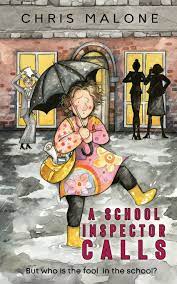
Chris Malone’s novella will be familiar – and infuriating- to anyone who has endured an OFSTED inspection
Chris Malone brings all of her considerable experience of school leadership and inspection to bear in her latest novella, “A School Inspector Calls”. The book deals with two very different primary schools that sit on opposite sides of the river in town. The first, St Drogo’s, is the archetypal glossy academy: new buildings, well-resourced, well-connected, high achieving, but with no room for “challenging students”. One such student, Ayiesha Medosa, has escaped from her hellish experience at St Drogo’s and found refuge in its shabby neighbour, Marsh Street Primary. She observes the unannounced OFSTED inspection of Marsh Street from her unofficial bolt hole, the little room where she does most of her school work when the noise and hard-to -understand dynamics of a busy classroom get too much for her.
While there, she observes the malpractice of the inspection, pre-designed to fail a school that is too child-centred to fit the current model of excellence, through a spy hole in the wall. Does her testimony overturn the inspection outcome? I’ll leave that for you to discover.
For anyone familiar with the current landscape of English education, this book will either be a reassurance or a provocation, depending on where you sit in the array of characters the book presents. If you’re open to different points of view, then this little book will be a delightful amuse bouche. It’s brevity is part of its charm, adding to its impact, rather than detracting. Malone skilfully lays out the oppositions, using the surprise inspection as the catalyst to a drama that will be all too familiar to anyone who has undergone the ridiculous palaver of OFSTED. To her credit, she does not simply present the inspectors as pantomime villains, but explores the institutional pressures that are brought to bear on Margaret, the lead inspector, who like the teachers she is scrutinising, has a family and a mortgage to support and has to make some difficult choices between her career and doing the right thing.
The portrayal of the impossibility of the job, leading a school with limited and further shrinking budgets, staffing gaps, crumbling buildings, needy children and relentless, myopic accountability pressures, is both authentic and sympathetic. This is not a job for the faint-hearted. The miracle is that, in such a context, there are any headteachers like the saintly Jill Grimly left at all, notwithstanding her naivety and muddle. The fear is that the oily, superficial charm of corporate yes man, Dominic Major, head of St Drogo’s, (surely destined for life as a government appointee to some ghastly hybrid quango/private sector “think tank” before assuming his place in the Lords with the other authoritarian populists) will become the de rigeur model of effective school leadership and the Jill Grimlys of this world will be set for early retirement and disparagement as beached dinosaurs, left by the tides of history. What am I saying? It’s already happened.
Regardless of where you stand, this little book is definitely worth a read for anyone interested in education and those that believe that all children, the challenged and the capable, deserve the best chance in life to succeed. It’s available from the excellent Burton Mayers books.
If you enjoy Chris’ book, you may want to have a go at my satire on the current insanities of the English education system, Zero Tolerance, available from the link below. It’s also of interest to anyone with any concern for the treatment of Syrian refugees in this country.
















 The Old Grey Owl