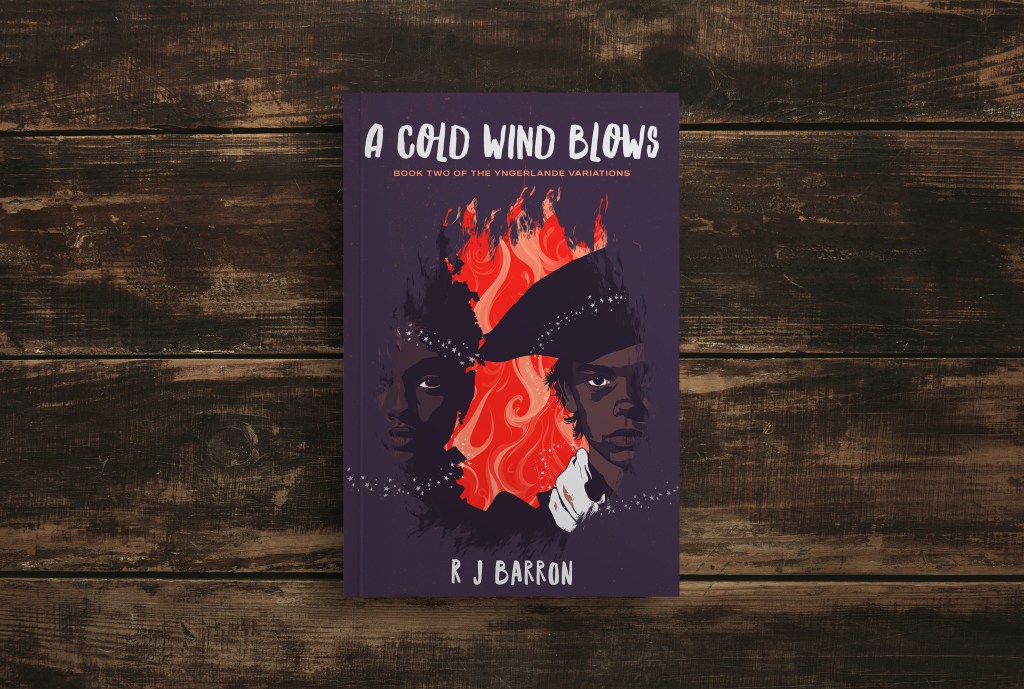
It’s always lovely when positive reviews keep coming in for a new book. This one is from Rebecca De Figueiredo from the Online Book Club. There are also some great reviews on Amazon too. You can buy the book and see the reviews here:
Following is an official OnlineBookClub.org review of “A Cold Wind Blows” by R J Barron.]
5 out of 5 stars
Title: A Cold Wind Blows Author: R J Barron
How captivating and otherworldly this book is! The reader will soon find out how apt the title is. It was well balanced between reality, shape-shifting, and magic. There were people and places that are actually real, such as King James’ Palace and the River Ouse, included in a deep and mesmerising story. I don’t usually enjoy this sort of genre, preferring more adult drama, but there was something innocent and entertaining about this one. In my experience, books of this genre have a tendency to be all over the place, with far too many characters and words that are difficult to pronounce; some even have a glossary (which child is going to refer to a glossary every five minutes?!). The only word that took a bit of time to get used to was ‘Yngerland’, which is the kingdom in question. The characters were likable, with the usual malevolent dark characters and holier-than-thou good ones. There is also a character who is neither on one side nor the other: the reader will find out.
At just the right length, with an inviting introduction, chunky middle, and mysterious ending, this book takes the reader on a magical adventure. The magic is fairly subtle.
I would have loved some illustrations: pictures of the steedwings, or huge mansions, or a character or two, but perhaps it’s better for the young mind to create its own images.
I found the editing to be perfect and did not notice any typos. The prose was cleverly written in that most older children will be able to read it, and it would be a marvellous book to read out loud. I will award it five out of five stars.
“In an era where young adults face increasingly complex social and political realities, Barron has written a book that offers both an absorbing escape and a compelling message.“
The first reviews are beginning to come in. This one is from Maria Ashford of Bookshelfie
The middle volume of a fantasy trilogy faces a particular challenge: it must advance the story without feeling like mere connective tissue between a promising beginning and a climactic end. This is the case in retired English teacher R.J. Barron’s “A Cold Wind Blows”, the second installment in his Thomas Trelawney series. Though we haven’t read the first book, it feels like Barron largely succeeds in this difficult task, deepening both the mythology of his dual-world book while maintaining the accessible warmth that makes the series appealing to middle-grade readers.
To start off, readers should probably read the first book before this one, though a brief summary is helpfully provided for those who haven’t. The plot picks up when several months have passed since the events of The Watcher and The Friend, and thirteen-year-old Thomas has returned to the mundane challenges of school life in England. Meanwhile, in the parallel realm of Yngerlande, the political tensions that simmer beneath Queen Matilda’s rule are beginning to boil over. Princess Gaia—formerly Clara, a London orphan—undergoes intensive magical training under the guidance of Silas Cummerbund, developing abilities that grow more impressive by the day. As the spy Shrike observes with alarm, “She can move objects from afar without touching them. She can be in two places at once.”
In the same vein of C.S. Lewis, Barron’s greatest strength lies in his ability to ground fantastical elements in the recognizable experiences and emotions of young people. Princess Gaia’s magical education can be read as an extended metaphor for adolescent development—the awkward acquisition of maturity and the growing awareness of one’s place in a larger world. When Silas reassures her after a setback, saying “It’s much better than it was last week and ’twill be twice as good again next week,” we hear the voice of every patient teacher helping a student through difficulty.
The novel’s political dimension adds unexpected sophistication for adults to what might otherwise seem like standard fantasy fare. Queen Matilda’s egalitarian society—where “people of colour, women, people who go where their love takes them” enjoy full citizenship—faces threats from reactionary forces led by Oliver and Jacob, grandsons of the deposed king. Clara articulates the stakes plainly: “They want to turn back the clock.” This isn’t subtle allegory, but it doesn’t need to be. Barron writes with the moral clarity that young readers deserve, presenting complex social issues in terms they can understand and apply to their own world.
The book’s structure alternates between character moments and mounting suspense, and this gentle pacing largely works against dramatic momentum. Some of the most affecting passages involve Grace, Thomas’s sister, who now lives contentedly in Yngerlande but still carries the burden of separation from her family. “Of course, Silas. I am with the best of people here,” she says, “but still, I remember the life I had.” Where the novel occasionally stumbles is in its adherence to familiar fantasy tropes. These elements, while competently handled, may feel predictable to readers well-versed in the genre. Barron’s villains, particularly Oliver and Jacob, remain somewhat one-dimensional, their motivations never deeply explored beyond generic power-hunger and bigotry.
Yet these weaknesses don’t significantly diminish the book’s considerable pleasures, and young adult readers are unlikely to notice anyway. Barron writes with genuine affection for his characters, and their relationships feel relatable and fun to read despite the magical circumstances. The friendship between Grace, Gaia, Della, and Amelia provides moments of real warmth and humour, while the mentor-student dynamic between Silas and Gaia anchors the more fantastical elements. The novel builds to a cliffhanger that effectively sets up the trilogy’s conclusion.
To conclude, “A Cold Wind Blows” is a gripping read that succeeds as both fantasy adventure and coming-of-age story, offering young readers and older children heroes who face their challenges with courage. While it may not surprise experienced fantasy readers, it provides exactly what its intended audience needs. In an era where young adults face increasingly complex social and political realities, Barron has written a book that offers both an absorbing escape and a compelling message.
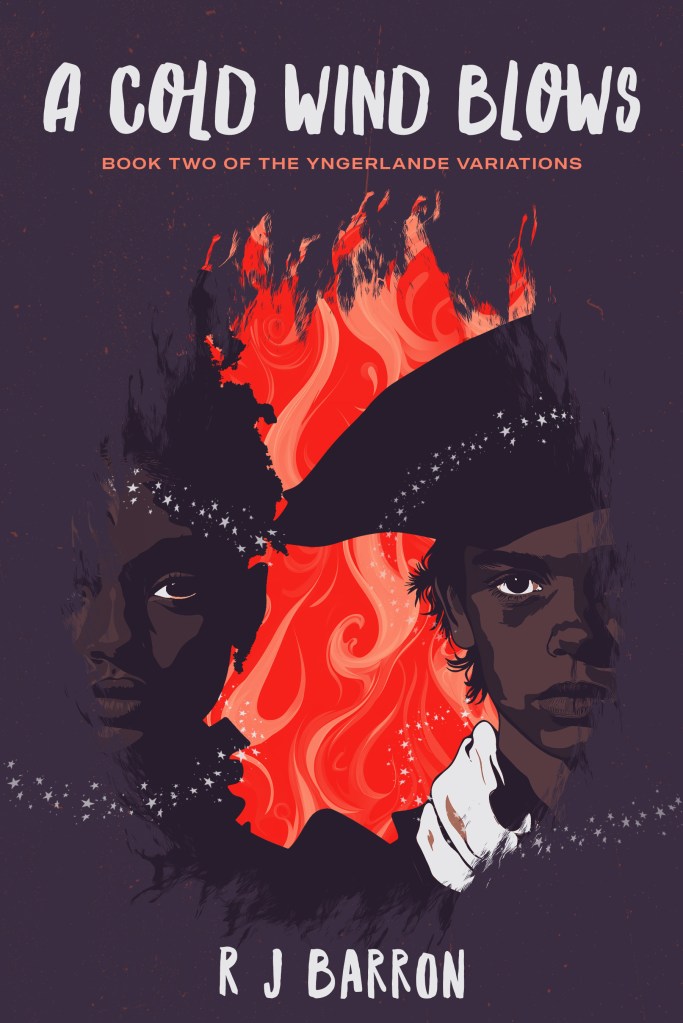
Book 2 in the Yngerlande Variations trilogy published by Burton Mayers books
The long awaited sequel to “The Watcher and The Friend” by R J Barron is published this Friday by Burton Mayers Books. “A Cold Wind Blows” is the second book in the trilogy, The Yngerlande Variations, set in the parallel world of Yngerlande in 1796. Here is the synopsis of the story so far. Warning! Spoiler Alert! Don’t read the summary if you have not yet read the first book and want to do so.
Tom has been summoned to help Silas and his allies defeat the relatives of the old King, Oliver and Jacob, who want to overthrow Queen Matilda and take the country back to a time when racism and discrimination were ever present. His task is made more complicated by the fact that he discovers that his sister, Grace, is alive and well in Yngerlande and is living there as a reward for her service when she was the Friend of Yngerlande. After many adventures and dangerous scrapes, they succeed, and Queen Matilda maintains her rule of peace, love and equality.
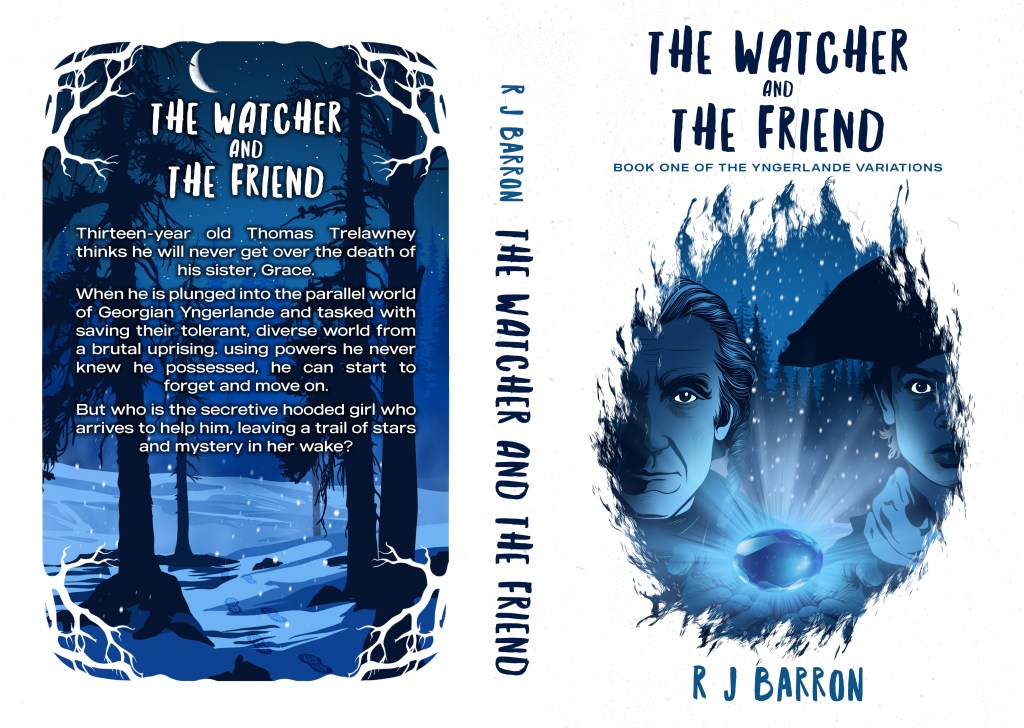
In “The Watcher and The Friend”, the first book in the trilogy, thirteen-year-old Thomas Trelawney is spending Christmas at an old Rectory on the North Yorkshire coast. It is the family’s first holiday since the death of Tom’s sister Grace. Here, Tom discovers a portal to another world and travels through it to Yngerlande, in 1795, with his cousin, Dan. Yngerlande is a parallel world to England, but is a much more diverse, equal society.
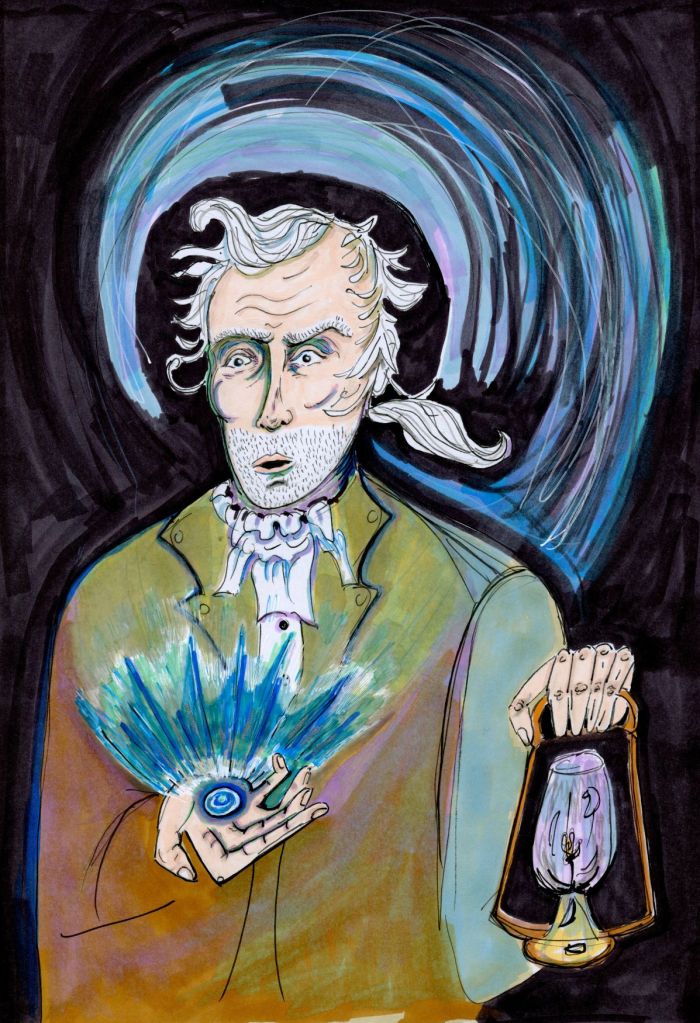
He meets Silas Cummerbund, who is The Watcher, the mysterious character who guards the portal between the two worlds. He tells Tom that he is the new Friend, the person whose role is to act as the link between the two worlds. This second book continues the story, as Oliver and Jacob return with another attempt to take back the crown of Yngerlande, only this time they are more dangerous and better prepared.
Silas has spent the summer training Princess Gaia, aka Clara to use her magic powers to their full extent, to be ready for any further threats to Yngerlande, but they are taken by surprise by the boldness of Oliver and Jacob’s new plan. A mysterious new character, Shrike, is introduced. He is by turns charming, dangerous, and duplicitous. Whose side is he really on? Even by the end of the book, that question is not clearly answered. One thing is certain, however. Thomas Trelawney is recalled from England to Yngerlande when everything looks lost. He does not trust Shrike, not least because Grace has fallen in love with him. Does Shrike have feelings for her, or is he just playing a clever game for his own ends?
“A Cold Wind Blows” begins eight months later.
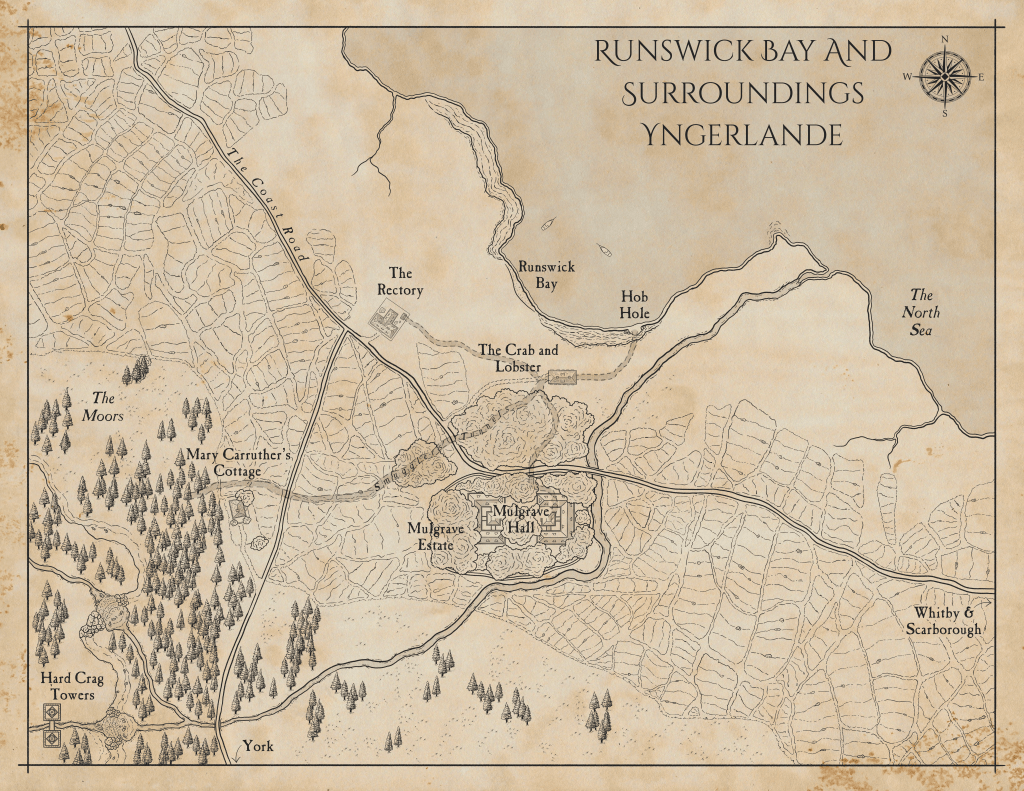
The story takes in the wild North York Moors, Runswick Bay, Mulgrave Hall, the crumbling ruins of Hard Crag Towers, with its menagerie of bats, steedwings and owls, and the ancient city of York. It’s full of adventure, peppered with cross dressing, betrayal, vengeance, disguise and murder, with a liberal sprinkling of romance, friendship and love.
This is a must-read YA adventure, that is aimed at everyone from 9 to 90 who loves Fantasy novels. It’s available from the following links:


 The Old Grey Owl