The Rose Field by Philip Pullman – a Review.

A major disappointment as the metaphors run out of road.

Spoiler Alert! Unhelpful plot revelations ahead!

A new book by Philip Pullman is usually something of a treat. A literary event in fact. This one has particular significance – it’s the concluding volume of the Book of Dust trilogy, and as he gets older (he’s 78 now) there is always the fear that it is the last he will ever write. Before I go any further, it’s only right that I reveal myself to be a massive fan. Pullman is one of my literary heroes and an inspiration as far as my own writing is concerned. The Northern Lights trilogy is fully deserving of all the plaudits heaped upon it, not least for the fact that, by the end, it has become one of the all time great love stories.

So it’s with some sadness that I have to report that The Rose Field is a major disappointment. It’s full of lovely writing, and Pullman’s imagination (a key consideration in the light of one of the book’s themes) is in full working order, but as a coherent piece of story telling, it fails to land.

It comes in at a baggy 620 pages long, and I got the impression it could have just as well have finished after 1,620 pages, and we still wouldn’t have been anywhere near a satisfactory conclusion. Pullman, as a Great Man of Letters, has now achieved the status of “He Who Cannot Be Edited”. Pity the poor editor assigned to the task: “Phillip, do you really need all those bits with the characters discussing Dust?” is a question only a very brave soul, with no aspirations to a long term career in publishing, would ask. But it is the question that shouts out of almost every page. By the time we get to page 554 and Lyra and Malcolm start discussing Binary Absolutism, it’s screaming.

Equally unfortunately, lots of other things emerge, trade winds that blow the good ship Narrative off course, time and time again. Crucial developments occur completely out of the blue – the fact that the loathsome Olivier Bonneville is the half brother of Lyra is revealed towards the end, seemingly as another device to keep the pot boiling. Minor characters emerge and then disappear. Supposedly important characters do exactly the same. (I’m thinking of Leila Pervani here). Two thirds of the way through the book, the narrative drive of the book appears to suddenly come from a “battle” against a character who has sprung out of nowhere, the sorcerer, Sorush, involving armies of various creatures. There doesn’t appear to be any plausible reason for this development in terms of characters, relationships, or previous events, and is there simply to add a bit of action to keep the reader engaged. It seems Pullmann has taken a leaf out of Tolkien’s book, and emphasised the “quest” aspect of the story with this out-of-kilter battle. Oh the irony, after Pullman’s much discussed dismissal of Tolkien as being “thin” and not being about much. This is what he says about The Rose Field himself: “I think of The Rose Field as partly a thriller and partly a bildungsroman: a story of psychological, moral and emotional growth. But it’s also a vision. Lyra’s world is changing, just as ours is. The power over people’s lives once held by old institutions and governments is seeping away and reappearing in another form: that of money, capital, development, commerce, exchange.”

That’s one of Pullman’s greatest difficulties here. He makes the key mistake of thinking he is writing about something and Something Very Important at that, so the story takes a back seat. Tolkien could teach him a thing or two about telling a compelling tale. 
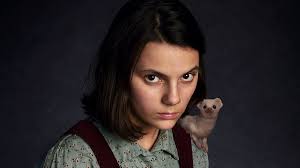
Just a reminder of the greatness that is Lyra Silvertongue and Pan

All of this adds to the impression that Pullman is desperately trying to write himself out of several of the corners that the first two (five?) volumes have backed him into. One of these is the growing relationship between Lyra and Malcolm Poulstead. The awakening of friendship into love is something Pullman has form on. The changing of the relationship between Lyra and Will in the Northern Lights trilogy was beautifully done, and forms the backbone of the books. He attempts the same thing here, using the daemons of these two characters to add depth and subtlety to the development. Once again, it’s really well done (apart from the nagging suspicion he’s re-treading old ground), but then, right at the end, he pulls the rug from underneath his readers. It’s as if he’s just realised that the relationship between two characters who are eleven years apart in ages, where Malcolm used to be Lyra’s teacher, could be deemed a little problematic, a little too groomy. In one conversation, right at the end of the book, he trashes all of the careful build up, by having Pan tell Lyra that Malcolm was in love with Alice and that they (Pan and Lyra) “will have to put the idea in his head”. Job done. One more loose end tied up as if by magic.
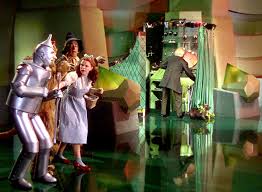
There’s similar botching when it comes to explaining Dust, “Alkahest”, Rose oil and Pan’s  decision to leave Lyra at the end of The Secret Commonwealth to go in search of Lyra’s missing “Imagination”. It’s bound to fail, because they are ideas born of beautiful, powerful,vague metaphors. Their power and beauty comes from their very vagueness – that’s how metaphors work –  through association and connotation. The minute you try to rationalise them, their power and beauty drain away and they are left like the Wizard of Oz after the curtain is ripped aside – small and a little pathetic.

By the end of the book I was torn. I couldn’t make up my mind whether Pullman should have stopped after finishing Northern Lights and turned to something completely new, or whether I should be grateful he started The Book Of Dust for the pleasures it produced. The trouble is that once you have set the bar so high, it’s a very long way to fall when you don’t quite get it right the second time around. Maybe it’s time to write another Ruby in The Smoke – short and punchy, and not a binary absolute in sight.
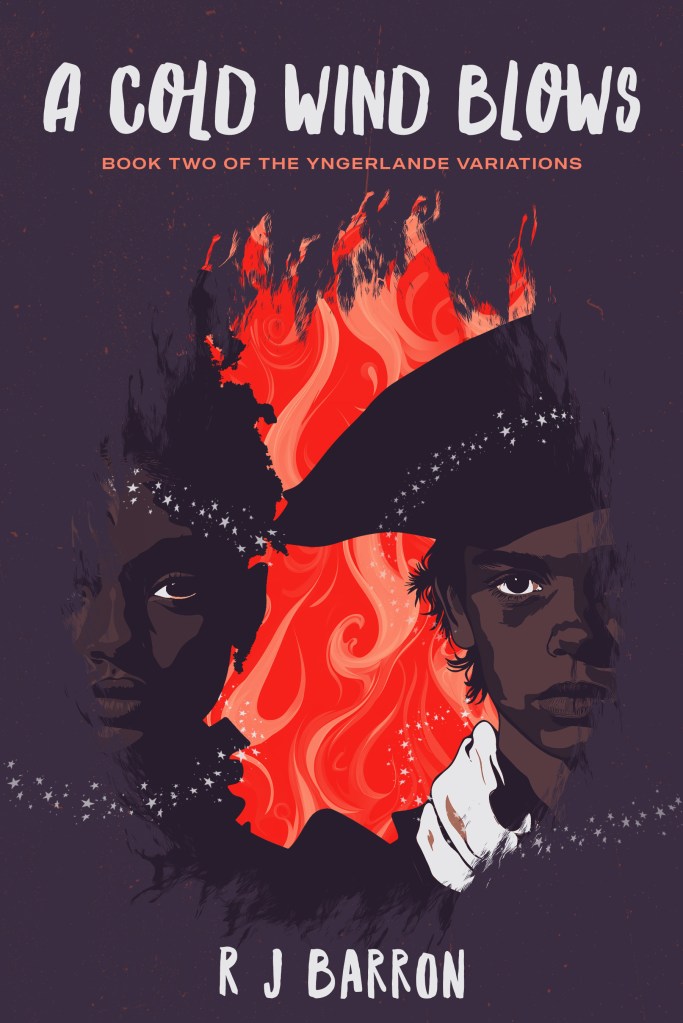
Another Great Review for A Cold Wind Blows

“A slice of fantasy brilliance”

Always great to get reviews out of the blue from someone who so clearly gets it. This one from AndrewSarahBookReviewer. Yes, that’s their mysterious handle. Have a read and see if you agree by reading it yourself. Links to Amazon at the end of this blogpost.

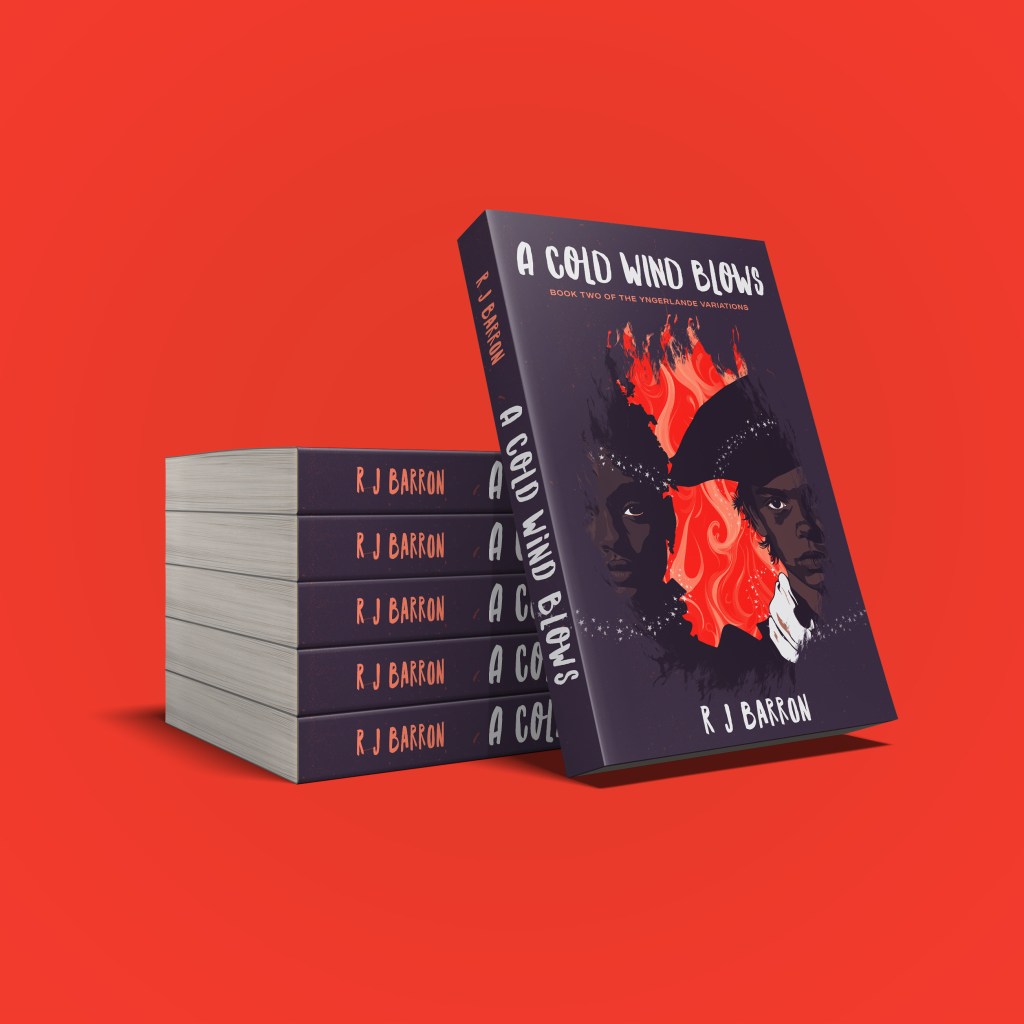
A Cold Wind Blows doesn’t read like something written by a man testing his first dip into children’s fantasy. It reads like someone who knows how to pull history, myth, and magic into one big imaginative storm, and then quietly pretend it’s all casual. But here’s the catch, it’s almost criminal that a story this rich, this layered, and this cinematically British isn’t stirring up more noise online.

Let’s start from the top.
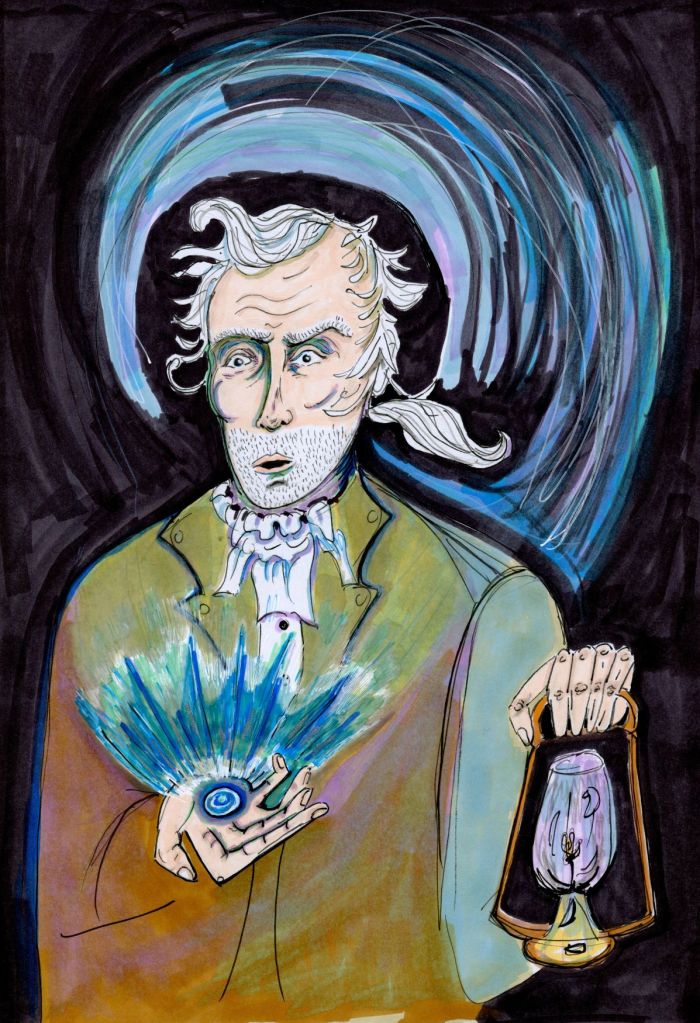
You’ve got Silas Cummerbund, a name that sounds like it belongs in both a Dickens novel and a secret magical agency. The man’s half mentor, half mystery, and fully fascinating. Then there’s Princess Gaia, trained to harness her hidden powers, facing danger, betrayal, and probably more character development than most fantasy heroines get in a trilogy.

The world of Yngerlande isn’t just imagined; it’s constructed, with history breathing beneath the soil, loyalty and treachery doing a slow, deadly waltz, and danger watching from the kitchen (because, of course, there’s a suspicious kitchen boy named Shrike ). You’ve got everything, a sharp mind for structure, a love of lore, a solid moral compass, and that old-school narrative warmth modern fantasy often lacks.

It’s classic fantasy craftsmanship, the kind that brings back that old-school sense of wonder and storytelling gravitas. You can feel the teacher in you on every page, that precise attention to pacing, that clean sentence rhythm, the moral backbone hiding beneath the adventure. There’s something deeply nostalgic about your writing, it’s the kind of story that whispers “just one more chapter” until the reader realizes it’s 3 a.m. and they’ve stopped pretending to be an adult.”

Many thanks to Sarah for such a wonderful Review!

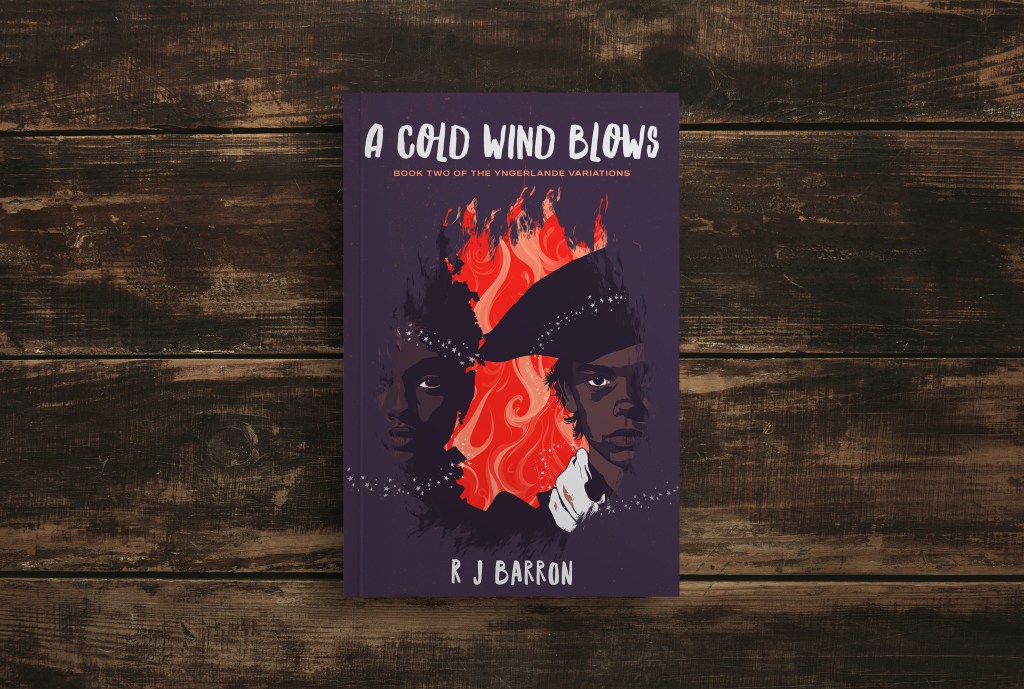
See for yourself – click here to buy: https://shorturl.at/HYY27

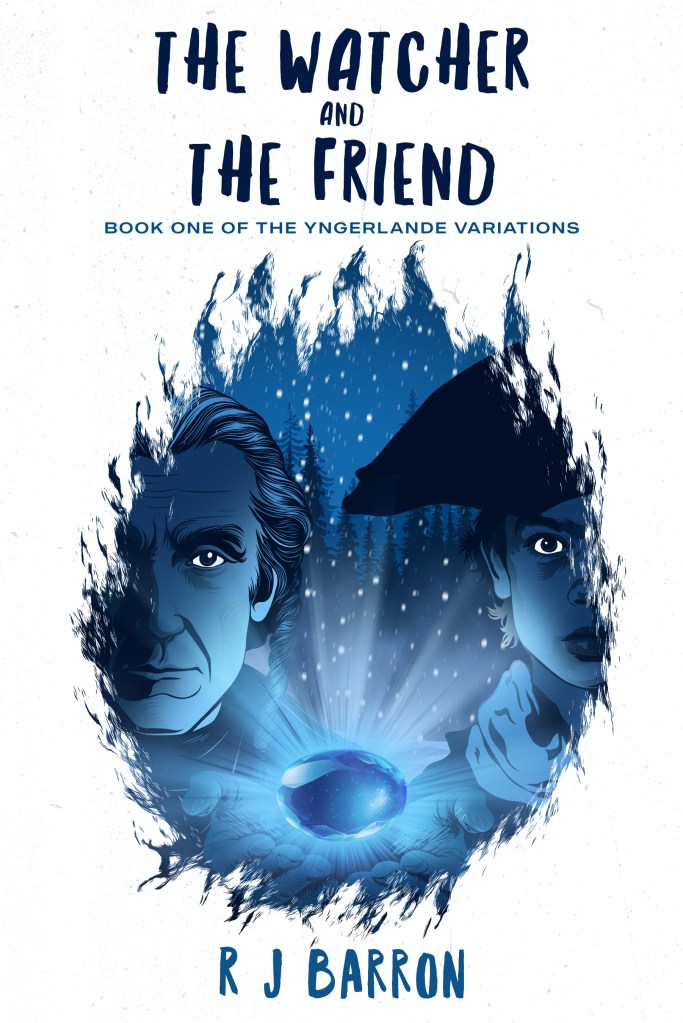
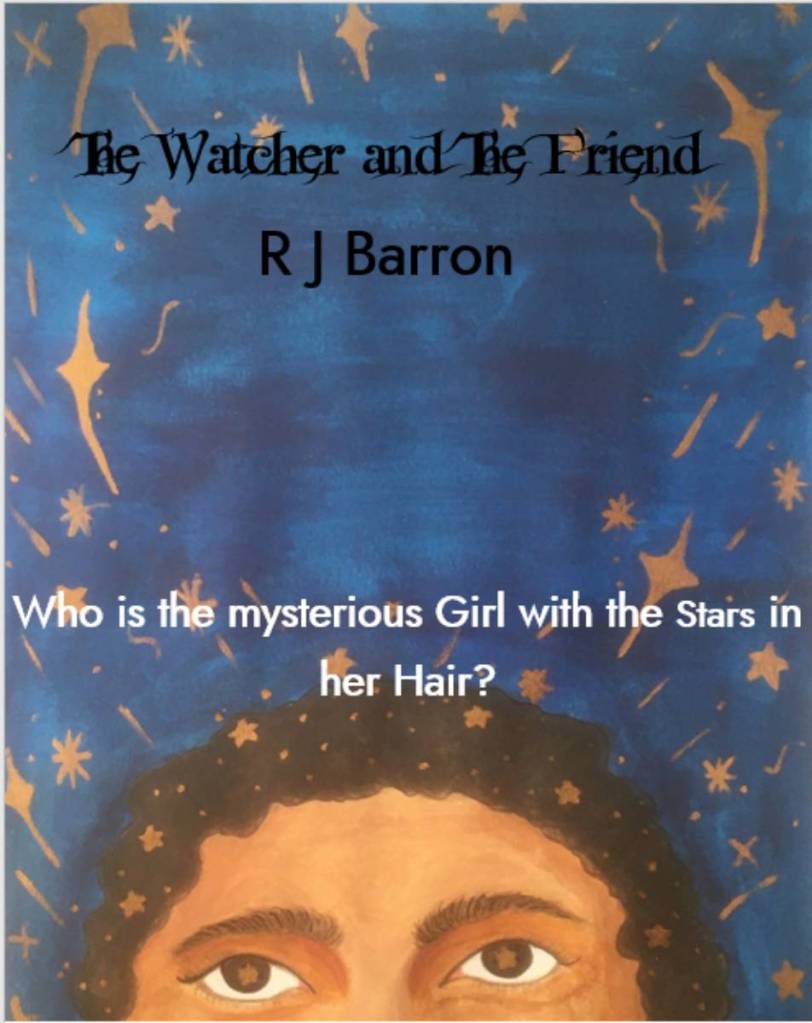
Book 1 in the trilogy, The Yngerlande Variations, is available here. The Watcher and The Friend: https://shorturl.at/4OAZK

Review of A Cold Wind Blows

In an era where young adults face increasingly complex social and political realities, Barron has written a book that offers both an absorbing escape and a compelling message.

The first reviews are beginning to come in. This one is from Maria Ashford of Bookshelfie

The middle volume of a fantasy trilogy faces a particular challenge: it must advance the story without feeling like mere connective tissue between a promising beginning and a climactic end. This is the case in retired English teacher R.J. Barron’s “A Cold Wind Blows”, the second installment in his Thomas Trelawney series. Though we haven’t read the first book, it feels like Barron largely succeeds in this difficult task, deepening both the mythology of his dual-world book while maintaining the accessible warmth that makes the series appealing to middle-grade readers.

To start off, readers should probably read the first book before this one, though a brief summary is helpfully provided for those who haven’t. The plot picks up when several months have passed since the events of The Watcher and The Friend, and thirteen-year-old Thomas has returned to the mundane challenges of school life in England. Meanwhile, in the parallel realm of Yngerlande, the political tensions that simmer beneath Queen Matilda’s rule are beginning to boil over. Princess Gaia—formerly Clara, a London orphan—undergoes intensive magical training under the guidance of Silas Cummerbund, developing abilities that grow more impressive by the day. As the spy Shrike observes with alarm, “She can move objects from afar without touching them. She can be in two places at once.”

In the same vein of C.S. Lewis, Barron’s greatest strength lies in his ability to ground fantastical elements in the recognizable experiences and emotions of young people. Princess Gaia’s magical education can be read as an extended metaphor for adolescent development—the awkward acquisition of maturity and the growing awareness of one’s place in a larger world. When Silas reassures her after a setback, saying “It’s much better than it was last week and ’twill be twice as good again next week,” we hear the voice of every patient teacher helping a student through difficulty.

The novel’s political dimension adds unexpected sophistication for adults to what might otherwise seem like standard fantasy fare. Queen Matilda’s egalitarian society—where “people of colour, women, people who go where their love takes them” enjoy full citizenship—faces threats from reactionary forces led by Oliver and Jacob, grandsons of the deposed king. Clara articulates the stakes plainly: “They want to turn back the clock.” This isn’t subtle allegory, but it doesn’t need to be. Barron writes with the moral clarity that young readers deserve, presenting complex social issues in terms they can understand and apply to their own world.

The book’s structure alternates between character moments and mounting suspense, and this gentle pacing largely works against dramatic momentum. Some of the most affecting passages involve Grace, Thomas’s sister, who now lives contentedly in Yngerlande but still carries the burden of separation from her family. “Of course, Silas. I am with the best of people here,” she says, “but still, I remember the life I had.” Where the novel occasionally stumbles is in its adherence to familiar fantasy tropes. These elements, while competently handled, may feel predictable to readers well-versed in the genre. Barron’s villains, particularly Oliver and Jacob, remain somewhat one-dimensional, their motivations never deeply explored beyond generic power-hunger and bigotry.

Yet these weaknesses don’t significantly diminish the book’s considerable pleasures, and young adult readers are unlikely to notice anyway. Barron writes with genuine affection for his characters, and their relationships feel relatable and fun to read despite the magical circumstances. The friendship between Grace, Gaia, Della, and Amelia provides moments of real warmth and humour, while the mentor-student dynamic between Silas and Gaia anchors the more fantastical elements. The novel builds to a cliffhanger that effectively sets up the trilogy’s conclusion.

To conclude, “A Cold Wind Blows” is a gripping read that succeeds as both fantasy adventure and coming-of-age story, offering young readers and older children heroes who face their challenges with courage. While it may not surprise experienced fantasy readers, it provides exactly what its intended audience needs. In an era where young adults face increasingly complex social and political realities, Barron has written a book that offers both an absorbing escape and a compelling message.

See if you agree with her. Buy A Cold Wind Blows here: https://t.co/n8wew492re

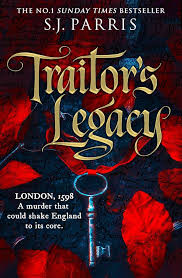
Traitor’s Legacy by S J Parris

An ARC review for NetGalley

A new SJ Parris novel is always an event to celebrate, particularly for someone like me,  with an incurable weakness for historical crime. I’ve read and loved all of Parris’ Giordano Bruno novels, set mainly in Elizabethan England, with the occasional foray into Europe. Parris has established Bruno as an attractive and  sympathetic hero. An ex catholic monk, philosopher, and possible heretic,  he ticks all the boxes: Good looking, intelligent, brave and a respecter of strong women.

So it was with some trepidation that I began her latest novel, when I found out that Parris had ditched Bruno for a new protagonist, Lady Sophia de Wolfe. It’s a bold move, when the Bruno novels have been so successful.

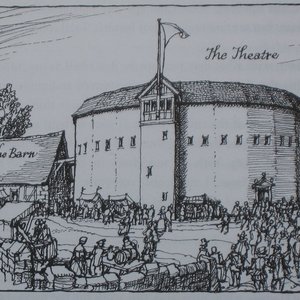
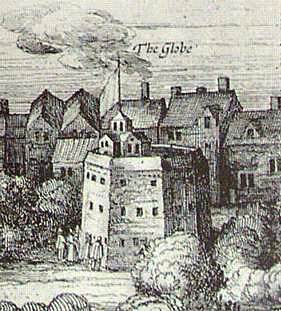
By and large, it works, with some caveats. The depiction of Elizabethan London is convincing. The plot is handled with Parris’ usual aplomb, requiring the merest hint of goodwill on the part of the reader (usually in connection with De Wolfe’s protection of her child – there’s no way this would pass with so little comment, but I’m just splitting hairs here) There’s a delightful rendering of the transportation of The Theatre in Shoreditch to The Globe, Bankside in the opening chapter and a knowing, touching scene focusing on a conversation between Shakespeare and the protagonist, about love and the loss of a child, towards the end. De Wolfe, a character who has already appeared in several of the Bruno novels, partly as a love interest, finds herself recently widowed (and therefore available for all kinds of adventures). By the end, her daring romps across London convince Robert Cecil to reemploy her as a spy working for Elizabeth’s government, thus setting us up for a new series. Good. I for one look forward to seeing her in more. But please, Stephanie, don’t completely abandon Bruno. There’s life  in the old dog yet.

If a new series of De Wolf adventures emerges, I would just make these pleas to S J Parris, as a huge fan.

  1. Do something about Anthony Munday, a playwright attached to the same company as De Wolf’s son Toby, and a second division rival to Shakespeare. He’s potentially an excellent character but his devoted lapdog impersonation in this novel began to grate after a while. GIven De Wolfe’s lack of romantic interest in him, this relationship promises more irritation than interest.
  2. Please abandon the use of the present tense. I know it’s what younger audiences are meant to like and it’s what Creative writing tutors and Boutique consultancies tell writers to adopt for more “Immediacy”, but really that’s nonsense. (See Jonathan Coe on this in his latest, “The Proof of My Innocence.”). To me it feels affected and inauthentic. You didn’t need it in the Bruno novels and you don’t need it here.

But they are just nitpicks in the grand scheme of things. What a potential reader needs to know is this: S J Parris/Stephanie Merritt has come up with another winner. Fans of historical crime should settle in and enjoy the ride.

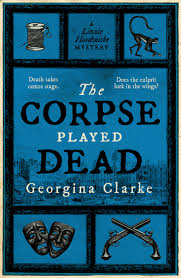
The Corpse Played Dead by Georgina Clarke

Poldark meets Bridgerton meets Strike.

An ARC review for NetGalley

This is the second book in the series reissued by Verve books and it confirms the promise that was suggested by the first, Death and the Harlot. It’s set six months after that, in 1759, and picks up the tale of nineteen year old Lizzie Hardwick, a prostitute in Soho who is not all that she appears.

An educated daughter of a respectable gentleman, she was thrown out and disowned after a rich family friend had sexually abused her. Changing her name, she arrived in London, finding a position at Ma Farleys, a high class, relatively safe brothel. In book one she gets entangled in the murder investigation of one of her clients, forging a relationship with Davenport, a detective with the Bow Street runners. Her skill leads him to offer her paid work for the runners as a source of intelligence about the goings on in Soho, while keeping the security of her job in the brothel.

In this second book, Davenport installs her as a seamstress in the theatre of David Garrick, where Lord Hawbridge is found brutally murdered, hanging upside down over the stage. She comes across a series of suspicious characters, from every section of society, before the culprit is unmasked, in a breathless finale. It’s an excellent historical murder mystery.

Clarke’s knowledge of the period and its theatre world is impressive and she uses it with a light touch to create a convincing sense of time and place. She provides a range of suspicious characters with a range of motives so the reader has enough to fuel the speculation that is at the root of much of the pleasure of this kind of fiction, and the story is well paced, with twists and turns and end of chapter cliff hangers. 

It’s not all fabulous though, which is why I gave it 4 stars rather than 5. Some of the plot twists, or breakthroughs in Lizzie’s understanding of the mystery are a little far fetched to say the least. I’m all for suspending my disbelief when I’m invested in the story and the characters, but my eyebrows jerked upwards on more than one occasion, accompanied by a knowing smirk and a thinks bubble above my head bearing the single word, “Really?”. Although the portrayal of the eighteenth century theatre world was very seductive, I did miss Ma Farley’s genteel brothel and Lizzie’s coworkers, which added an extra dimension to the first book. And, a minor point I know, but try as I might , I couldn’t work out how the title works. Which corpse is playing dead?

But this is splitting hairs. The books work because of Lizzie Hardwick. She’s a fabulous, attractive creation and her growing relationship with Davenport is a beautifully understated driver in the narrative. It will certainly make me look out for the third in the series, also due to come out in 2025. I think it’s only a matter of time before the series is adapted for TV – it would be a very welcome addition to historical drama – Poldark meets Bridgerton meets Strike.

New YA Children’s Author – first novel available to pre-order.

Find out more about this exciting new YA writer by clicking the link below.

http://rjbarron.co.uk

The Culture wars that are so current today (think Black Lives Matter, the furore over statues, Gender and Sexuality issues) remind us that the liberalisation of social attutudes to discrimination and privilege can not be taken for granted. Battles that seem to have been won have to be constantly refought as the Right and Hard Right appear to be ever more emboldened to turn back the clock and erode hard won gains.

Just at the right time comes a YA novel that addresses these issues through depicting the same battles being fought in a parallel world to ours.

Anyone with a passion (or even a mild interest) for children’s literature, especially YA novels, should have a look at this exciting new writer, R J Barron.

His first YA novel, “The Watcher and The Friend” is due to be published on June 11th and is currently available now for pre-order.

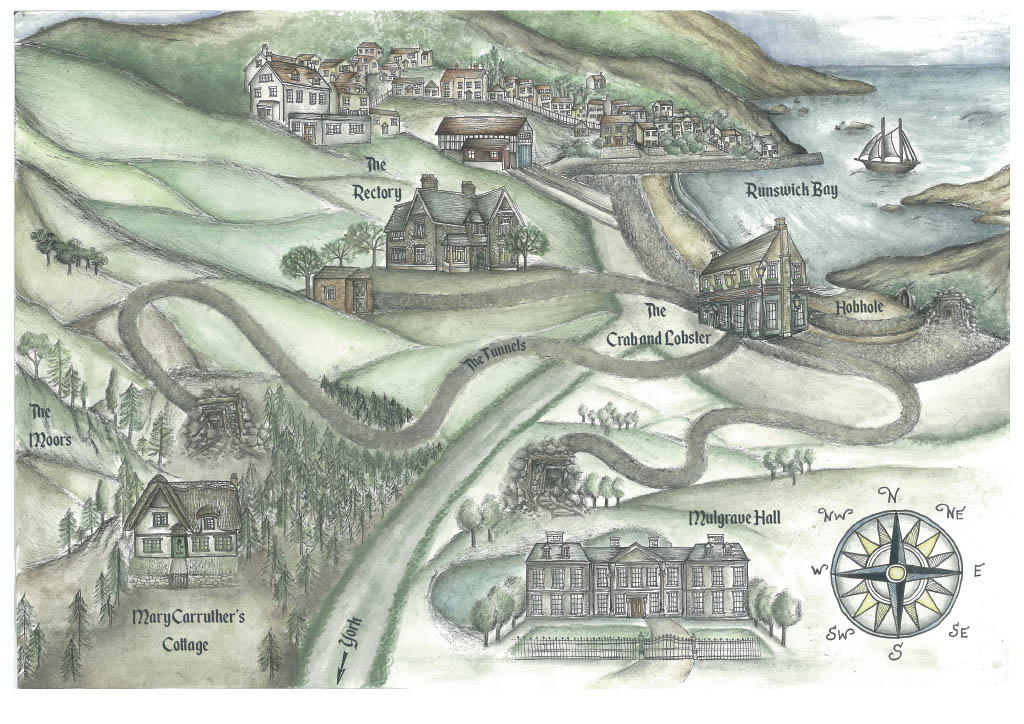
The book tells the story of Thomas Trelawney, a thirteen-year old boy on a Christmas holiday in an old rectory on the North Yorkshire coast. It is the family’s first holiday since the death of Thomas’ older sister, Grace. On his first night there, Tom finds himself mysteriously lured through the Grandfather clock in his room, to the parallel land of Yngerlande, an eighteenth century version of a land nearly, but not quite, like England. He meets the Reverend Silas Cummerbund, the Watcher, whose responsibility it is to guard the passage between the two lands, and discovers that he is the new Friend, the person in England with the power to travel between the two worlds.

Yngerlande is a land of diversity and tolerance. There is a black queen on the throne, Queen Matilda, and women and races of all kinds are in positions of power and influence. Silas has discovered a plot by the grandson of the old mad King, Oliver, to violently depose Matilda and restore the old ways: racist, elitist, sexist. He needs Thomas to help him thwart the plot, because of the strange powers he possesses, including his ability to use the mysterious and powerful Sounding Stones.

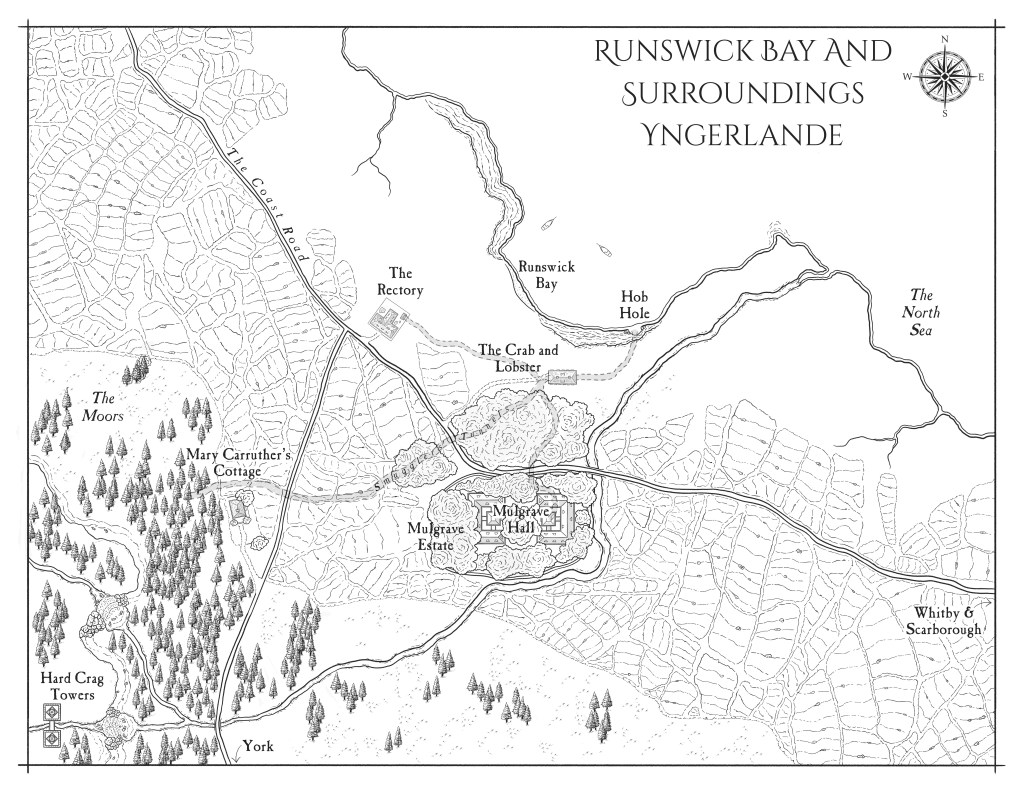
Runswick Bay, North Yorkshire

At the end of every night he returns to his bedroom in the rectory in England, before going back through the clock. He visits on five nights, ending on Christmas Eve. Tom discovers as much about himself as he does about this strange new world, particularly when he meets the mysterious girl with stars in her hair. Who is she and what explains the powerful connection they have from the moment they meet?