It’s that time of year again. A couple of months to go to
GCSE exams, the last round of data collection is in, and Senior Leaders are in
full panic mode. 4Matrix has well and truly pulverised the figures and a list
of students and teachers has popped out of the end. SIMs has generated data
cards on every Year 11 student, cross-referenced against pupil premium, target
grades and subgroup and the War room wall display is dutifully constructed, so
that everyone, can see the current state of play. The more gung-ho schools and
the most desperate schools will run at least one other data trawl and one more
set of mock exams to generate maximum panic as they reveal you are miles away
from your targets. As the weeks roll by, the pressure ratchets up and further
strategies, each one more extreme, more perverse, more hyperventilating than
the last, are rolled onto the battlefield, the modern educational equivalent of
the Trebuchet or the Battering Ram.
Pixl time.
That’s what it is in London and the North East. I believe
there was a Pixl toehold developing Bristol way a few years ago, but that might
have changed now. It’s been some time since I was involved in the exam frenzy
that is Pixl, but the techniques they pioneered, the general approach they
represented is widespread now, regardless of whether your school is a member of
the organisation or not. And it really is time for a rethink.
I first got involved with Pixl as a Deputy Head of a school
in challenging circumstances with several years of GCSE results that were
unremittingly crap, over ten years ago now. I know that data gurus will wince
at the imprecision of the descriptor “Crap”, but as a “words not numbers” kind
of guy, I feel it’s more accurate than a spreadsheet in giving you a full
picture of the situation. Crap from top to bottom. I had just joined and like
many schools they had had some kind of woolly mentoring scheme for Year 11 that
had failed dismally despite an enormous amount of hard work from many people at
the school. Except the Year 11s, obviously. No-one knew why it had failed so
comprehensively, so Pixl’s arrival on the scene, (or London Challenge as it was
known then), came just at the right time because it was providing much needed
answers
We met with the Pixl head honcho and signed up on the back
of his assurance that paying £3K a year was chicken feed because it guaranteed
that your headline 5 A*-C figures would go up by at least 10%. It was a
no-brainer. We had been on the verge of following some scheme called “Assertive
Mentoring”, but went for London Challenge instead because there were several
other local schools that had done so successfully, and because there was a
network of support, an infrastructure to help each school through.
It was a stunning success.
Our results went up by 20%. Simply by doing our job properly, in a coordinated way, joining the dots and going the extra mile. The next couple of years confirmed it. This was an approach that worked. And it turned me into a much better Senior Leader and a much better classroom teacher. It showed me what was possible. It reminded me who were the adults in the room. It taught me to think out of the box and not to just accept how things had been done in the past. To analyse a problem and arrive at solutions, regardless of structural or institutional barriers.
Every London Challenge meeting (or PIXL meeting after the
Government disbanded London Challenge) was productive. There were always new
ideas, and intensely practical suggestions about strategies and approaches.
Back at school, staff were receptive and eager to try these new ways of doing
things because they were passionate about serving their community and their
students, who frankly, had been given a raw deal by society. All was well.
And then….
As the government began to move the goal posts, PIXL
responded. Each change designed to make some of the strategies unfeasible was
met with ingenious new ways of delivering results. And then there would be
another change and so on. Until the King was backed into a corner of the board,
one move closer to checkmate. Gaming the system became the new Government
catchphrase. We all thought we were just doing our jobs properly, trying to
deliver for our students, but apparently not.
But even from the beginning, there were doubts. Remember the
ALAN tests? Numeracy and Literacy tests that were worth half a GCCSE each, they
were a useful qualification for a small cohort of Year 11 and they had the added
bonus of getting them over the line of the magic five. I remember being at one
meeting and some new convert to Pixl stood up and proudly told everyone how the
entire year11 cohort had been got through both ALAN tests, adding x percent to
their results. He received rapturous applause. What a guy!
But, what about the kids? Did they all need it? Of course not. But they were dragged through
it, sacrificial victims to the headline figures. Aren’t they under enough
pressure as it is? And what about the staff who had to haul them through? I
doubt they had much say in the matter.
And then there was the consultant who told us that it was
imperative that our GCSE English key marginals had to achieve at least two
grades above their target grade for the written coursework to maximise their
chances of getting a C or above. As someone who had done coursework for the
previous twenty years, working for the exam board as a senior moderator, I knew
that there was only one way to achieve that, and it wasn’t by inspiring the students.
It was to cheat.
At the same time the London meetings took on the air of an
evangelical religious meeting. Fervour was in the air. People speaking in
tongues. Tambourines banged. Individuals singled out by the saintly head of the
organisation to stand and bask in the frenzied approbation of the congregation.
Dissent was out of the question. It was simply not possible to question
anything suggested from the front of the auditorium.
Very early on, it had been suggested that D grade (back in
the day, younger readers, a C was the magic bench mark and anything below that
was worthless in terms of league tables) was just not good enough and that to
accept that was to fail one’s students. The suggestion that, for some students,
a D grade represented a real achievement, massive progress after much hard
work, was treated with disdain. You were either laughed at for your naivety, or
castigated for your lack of “moral purpose”.
Ah yes, moral purpose. Smug, sanctimonious PIXL apparatchiks
used this vile phrase to make it clear that anyone in the Pixl universe who did
not sign up to every last madcap scheme the organisation sponsored, was in some
way, a lesser human being. You were letting down your students. You were being
selfish. On judgement day, there would be no way you would pass through into
the promised land, because you had comprehensively demonstrated that you were
not worthy.
And so, towards the end of my time under the PIXL jackboot,
we had moved on from Twilight training sessions, after 6pm, walking talking
mocks, constantly using the PIXL library of mock exams to drill our year 11s
endlessly after school. The latest thing was to do a last -minute revision
session at about 7am the morning of the real exam. The idea was that you could
somehow subliminally plant key information in the minds of the students,
sitting in their proper exam seats in the proper exam hall, in the last few
hours before the exam was due to start. It was a brave Head of Department or
Senior Leader who stuck their head above the parapet to venture the opinion
that this was just voodoo exam prep, a busy activity to be done for the sake of
doing something, anything, without any evidence that it worked. And heaven
protect the teacher who suggested that staff had already done more than enough
to support their Year 11 students and that to ask more was to risk burn out.
It got to the point where these additional activities were
expected, not just by Senior Leaders, but by parents and students. Complaints
were made by parents about a Department that were not willing to lay on a pre -exam
session at 7 am, or an Easter revision session, or a twilight slot. You were
accused directly of letting down little Johnny. A culture developed amongst
students that said that attendance at extra sessions should be enough to
guarantee success, even for those students who messed around with their friends
when they did attend and who didn’t show up for mainstream lessons, or did show
up and were involved in constant low -level disruption.
And what, ultimately, was the result of all of this
“support”?
A generation of kids who developed the attitude that it did
not matter what they did, in terms of class work or homework, there would
always be some mug teacher who would give yet more time to them, even when they
had thrown it back in their face during normal lessons. Because the kids, being
very wise, had clocked that the whole thing mattered much more to their
teachers than it did to them. The ultimate in spoon feeding. This, of course,
was going on at the same time as Senior Leaders were launching yet another
initiative to encourage independent learning, when the whole structure of Year
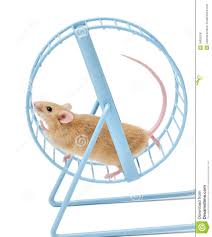
11 GCSE preparation rested upon an enormous, tottering edifice of dependency.
If I were the Secretary of State for Education, I would bring the whole tottering edifice crashing down. I would ban after school lessons, holiday revision schemes, the whole works. Teachers would deliver high quality lessons. Students who did not get the grades they needed would resit the year. This would incentivise students to take responsibility for their own learning. Over time there would be a revolution of attitude and students would inevitably, become independent learners, doing what they needed to do to get the grades they needed to enter the next chapter of their lives. And it would only work with an accompanying revolution in school accountability measures, which have so blighted and distorted the educational process.
Or, as has been recently suggested, get rid of GCSEs altogether, and get back to Teaching and Learning.
I hope that Year 11 teachers everywhere, and Senior Leaders and even senior members of PIXL don’t take too much offence at this. I know it’s not as simple as bad guys and good guys, bullies and victims. I know that the overwhelming majority of people involved with PIXL are well-meaning, good people who want the best for the students. And if some of them are building careers, as are some of the Year 11 teachers who are burning themselves out delivering all of this stuff, as well as trying to give their students a leg up, well there are worst things to be guilty of than that. I just wish we questioned it more and campaigned for alternative approaches. Because if there is one thing I’m sure of it’s this. The annual, exhausting scramble for GCSE results that are good enough to placate OFSTED and Performance Managers is inevitably self-defeating. And it’s not education. That is something much bigger, finer, more valuable, more important, more precious. Something, in short, worth fighting for.
The Isolation Room in StalagLuft III runs out of A4 lined paper again
I’ve followed the recent debate on the use of isolation
rooms in schools with some interest. It seems to have divided opinion, with a
vociferous group condemning their use matched by an equally passionate
opposition who take the view that staff and students need to be protected from
the disruption to teaching and learning that poor behaviour usually brings. I
wonder if the two sides are as implacably opposed as they appear.
At the last school I worked in as a Deputy Head, a school
that could reasonably be labelled “challenging”, the isolation room was an
essential component of our behaviour management strategy. We called it
“Inclusion” to try and signal that students were placed there as an alternative
to exclusion. We were actively trying to keep them in school. When I first
arrived at the school the room exhibited all the very worst characteristics of
an isolation room. It was staffed by a motley collection of odds and sods, who
just happened to be free at that time (including NQTs!). It was in a tiny room
with a handful of graffiti -covered desks, no window, no computer and, most of
the time no books, paper or equipment. Some students were placed there for days
at a time. Some students placed themselves there, to escape lessons and to meet
their mates for a bit of R and R.
We appointed a behaviour specialist to run it, moved it to a
large, airy, well stocked room and linked it to the SEN department. Over the
years it was staffed by outstanding individuals, most of them not teachers,
whose skill and dedication brought about genuine and positive changes for many
damaged students. We had exciting plans for its development. We intended to
link it to SEN formally and have two distinct wings: a temporary short- term
penal institution with strictly enforced rules and a work programme that
mirrored the classes they had been removed from. The second wing was for an
alternative curriculum provision for groups of up to fifteen students. This
could be for a month. It had specialist subject teachers attached to it as part
of their timetable and we devised therapeutic programmes with counsellors and
specialists to help these students address and confront some of their issues. The aim was for them to be readmitted to the
mainstream at the end of their programme. It took a lot of negotiating and
planning to set it up, but finally we were ready to implement the new system.
And then, after dodging the austerity bullet for several
years, we couldn’t avoid it any longer and we had to cut. We could not afford
to set it up as we had planned. It stayed as it was, still doing stirling work.
And then we had to cut again. And again. And make the brilliant, skilful staff
redundant, or move them out of behaviour provision and into delivering
mainstream classes. By the time I left, it was just about functioning as a
sinbin. And it could have been so much more than that.
Looking back, it seems clear to me that isolation rooms, or whatever
you choose to call them, only work if they are properly staffed and resourced
and if there is a commitment to work with the students in there, rather than
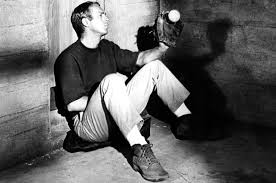
simply getting them to copy in silence, the educational equivalent of solitary
confinement. Even Steve McQueen had a baseball and a glove. That was the
trouble with those Prisoner of War camps. They just weren’t tough enough. Students
should not be left in there for days on end, and neither should staff, unless
that is their interest in terms of their career development. The trouble is, I
suspect this controversy stems from the fact that the tough, zero tolerance
devotees amongst headteachers will not see a problem with solitary confinement.
There are very few educational ideas that are intrinsically good or bad in themselves. A rubbish Senior Leadership, that hasn’t read the “How to be an emotionally intelligent human” manual, can poison the most enlightened, liberal initiative. Just as an example, I used to work in a school that completely ruined Charity MUFTI days. The kids were asked to donate a pound for the privilege of wearing their own clothes for the day, with all proceeds going to the charity they had chosen. Pretty standard practice, huh? And this, believe it or not, turned into smiling, happy kids being confronted by stern faced suits at the school entrance, making them wait silently in line while they handed over their “donation”. And, of course, some of them were from families that didn’t have two pennies to rub together, never mind a pound. At a stroke, charitable engagement turned into a Sheriff of Nottingham type tax grab and the day started with a sour confrontation.
If they can’t even get that right, I certainly wouldn’t trust them to run an isolation room.


 The Old Grey Owl