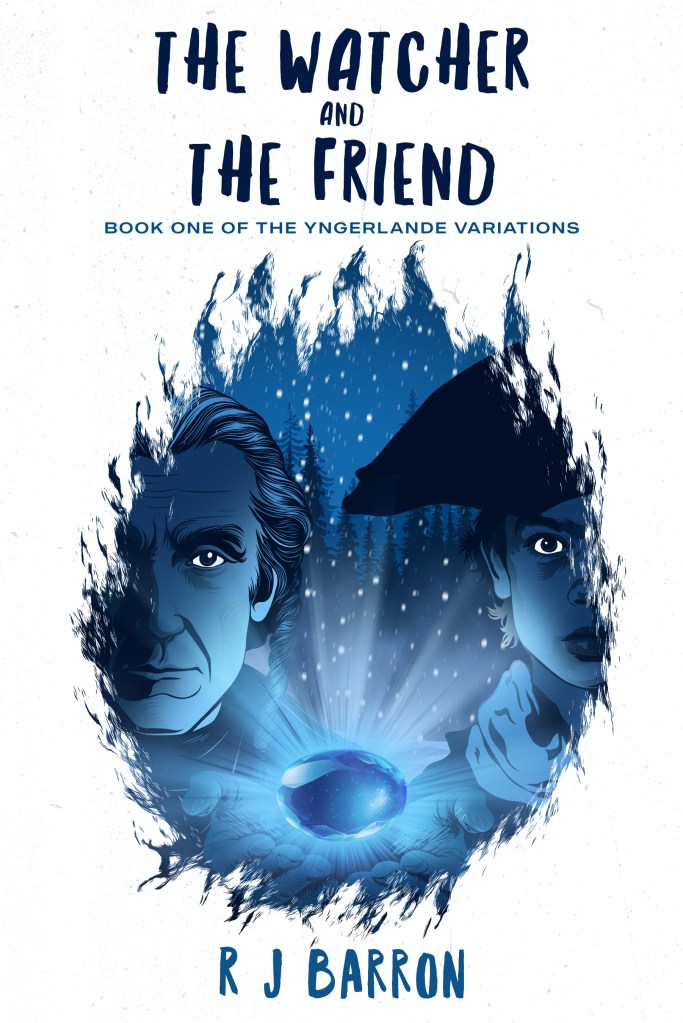
Ok, so it’s not the Booker Prize, and I’m not the only winner. But after thinking of myself at times as a Wooden Charlatan (Yes, Imposter Syndrome stalks the land of writers), it’s nice to be declared a Golden Wizard. Have a look at the review below, by the CEO of The Golden Wizard Book Prize, Louise Jane. By the way, Book 1 of the trilogy, The Watcher and The Friend, was also awarded the prize!
Review
After finishing ‘A Cold Wind Blows’ by R.J. Barron, I find it still echoing in my mind; it is such a captivating and reflective read that stays with you. Like the first installment in the series, this book presents an exceptional combination of young adult fantasy and historical components, offering a distinctive and unparalleled reading journey that you won’t encounter anywhere else. Consequently, the plot is ingenious; it is not only fascinating but also rich in depth, brimming with thrill and drama that holds your attention from beginning to end. It is a narrative superbly suited for the young minds of our time, who typically thrive on continuous action and ongoing mental stimulation. Barron’s talent as an author shines through in the detailed writing and magnificent use of language throughout the novel. The vivid descriptions and intricate details lend a sense of verisimilitude to the story, allowing readers to fully lose themselves in the atmospheric setting. Similar to its predecessor, this installment captures the essence of its world, drawing readers into a realm where every scene feels alive and palpable. The author’s ability to create such an immersive environment enhances the overall reading experience, making it difficult to put the book down. I am cautious about sharing too much regarding the plot, since the story is brimming with unforeseen twists and thrilling moments that maintain your intrigue, and I wouldn’t want to ruin any surprises. Nonetheless, I can say that the narrative explores deep questions of loyalty and trust, leaving you in suspense, eager to discover what unfolds next. This air of uncertainty pushes the story onward, motivating you to keep turning the pages. I finished the book feeling an insatiable desire for the next installment, and I highly recommend it, especially to teens who may be reluctant readers. The excitement and tension woven throughout the pages are sure to captivate even the most hesitant of audiences, making it a must-read, and a series that is absolutely worth exploring!
Louise Jane, CEO Golden Wizard Book Prize
After such a glowing endorsement, it would be foolish of you to ignore it. The only reasonable response would be to buy as many copies of this book as you can, gift copies to your nearest and dearest, and use your mighty social media clout to spread the news far and wide. It would be sensible to be in on it from the beginning….
It’s that time of year again. Journalists in every publication are boshing together a Christmas present guide for all of the literati out there. So here’s mine. Please note – these suggestions spring only from the books that I have read myself. This is not an attempt to cast a definitive verdict on the books published this year. I’m lucky to be able to read a huge number of books in my retirement, but I’m sure there are many contenders that I haven’t got round to yet. Some on the list, as the reviews make clear, are there because they are interesting in some way, rather than brilliant. With those caveats, here we go…
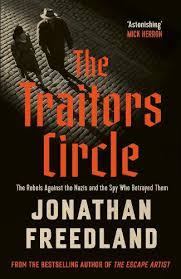
The Traitors’ Circle – Jonathan Freedland
My Book of The Year – and it’s not even a novel!
Freedland explores the lives of nine influential people in Nazi Germany who have severe misgivings about Hitler, the war and the whole Nazi project. They are loosely interconnected, their paths criss-crossing throughout the period, and all in some way, try to work against the regime. It’s clearly a dangerous path to choose, as anyone not fully signed up to Nazism is picked off in one way or another. Lack of preferment, prison, concentration camps, disappearances and murder in plain sight are all visited upon anyone who speaks out. It’s brilliantly constructed, with short chapters scrolling through the roster of characters Freedland establishes from the beginning, each one ending in a teaser or cliffhanger. The overall effect is one of a tightly plotted detective novel. An enthralling, thrilling read.
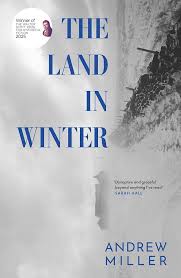
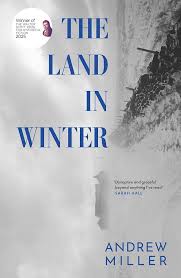
The Land in Winter – Andrew Miller
Listed for the Booker Prize, this is a glorious piece of historical fiction, set during the Big Freeze of 1962/63. Subtle and satisfying, this is an enormously enjoyable novel of relationships. A book for adults, as Woolf famously said of Middlemarch. If Flesh is better than this, It’ll be a great novel. But the Booker judges are nothing if not unreliable in their judgement
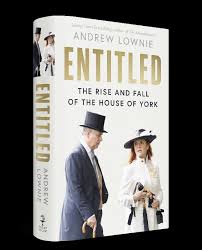
Entitled – the rise and fall of the House of York – Andrew Lownie
This book would have been unthinkable even a few years ago, such is the iron grip the Royal family have on the British establishment. But now, open season has been declared on the ghastly Royals. They have presented a juicy target ever since the Queen died, and the tabloids have been plugging away at their pet targets: Harry and Meghan, Camilla, and Andrew and Fergie. The Mail and the Telegraph have been twisting in agonised indecision over this as performative hatred of paedophilia has vied with slavish arse licking of anything Royal. For normal people, it’s the whole corrupt lot of them. For previously arch royal sycophants, it’s worth sacrificing two embarrassing Minor Royals in the belief that the Body of Royalty as a whole might be saved by the judicious amputation of some corrupt and rotting limb.
The book is basically gossip, but it’s enjoyable reading about just how appalling these two were (and are). If it has a fault it’s that it’s just a little dull and not shocking enough. Some of the more shocking revelations Lownie treats us to are:
Andrew routinely leaving his semen stained tissue paper scattered on the floor for staff to collect and dispose of
Reports of forty prostitutes being shipped to his hotel room on some Trade Envoy Jolly over the course of a four day stay.
On being told by a young woman at his table for some dinner that she was a Secretary, Andrew, horrified, replying, “How uninteresting. Is that the best thing you could find to do?”
Nice Guy. Between their divorce and The Epstein scandal, the book is reduced to a litany of descriptions of their serial affairs, financial mismanagement, and corruption. It establishes behind any reasonable doubt that Andrew is dim, privileged, entitled, boorish and utterly boring, while Sarah is a sex machine spendaholic space cadet. Still, worthwhile to have one’s prejudices so well researched and confirmed.
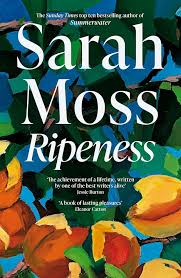
Ripeness – Sarah Moss
What a lovely novel this is, from someone writing at the top of their game. Structurally and stylistically, it’s a treat, with alternating sections telling the stories of the same character, Edith, fifty years apart. The younger Edith tells her own story, in the first person, through the device of a lengthy letter to a child, to be read in the future, explaining the circumstances of the child’s birth and subsequent life. The sections dealing with the older Edith are set in rural Ireland and are told in the third person. Beautiful descriptions of both the countryside around Como and small town/village life in the Republic are subtly blended with Edith’s reflections on first growing up and then getting old. Honestly, this is a must read book. Beautiful and thought provoking. Longer Review here: https://growl.blog/2025/06/05/ripeness-by-sarah-moss/
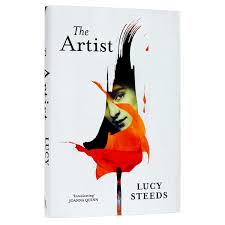
The Artist – Lucy Steed
Reading this in the depths of winter, this historical novel set in the sundrenched summer of a village in Provence is a therapeutic treat, like a session in a natural light booth for SAD sufferers. A young journalist, Joseph, suffering from the traumas of the first world war, travels to the remote home of celebrated artist, Eduard Tartuffe, to undertake a profile of him for the art journal he works for. He finds the great man sour and difficult, and living alone except for his niece Ettie. As he wins Eduard’s trust and gets closer to Ettie, secrets are revealed. A lovely book.
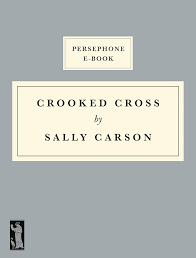
Crooked Cross – Sally Carson
This year’s long forgotten rediscovery, Crooked Cross was written in 1933 by an English woman Sally Carson based on her experiences on holiday in Bavaria. It tells the story of the slow build up of nazism and the way it overwhelms everyone’s lives, even in the backwaters of a Bavarian village, explaining how, in an incremental way, ordinary tolerant people can be drawn into the most despicable acts.
A timely text in the light of the current wave of racist populism that is sweeping across Europe and America. Oh no, I forgot. We’re not allowed to make any Nazi/Fascist comparisons between today’s political titans and those of the 1930s. Actually, it’s impossible not to, if you have any regard to historical facts. It’s a worthy revival, if only to publicise the parallels between then and now and between them and us, but it shows its age. Despite the subject matter, it lacks real drama and/or tension and didnt quite live up to its reputation.
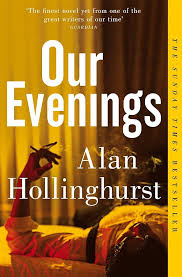
Our evenings- Alan Hollinghurst
I must confess, I’ve started several of Hollinghurst’s novels, and have never liked, much less finished, one of them. It’s just one of those things – he’s lionised by the literary establishment, but for some reason, he just doesn’t do it for me. This latest got rave reviews and it starts brilliantly. There was a moment when I thought this was going to be the Hollinghurst novel where I finally got it, but unfortunately, by the end I was a little underwhelmed. But reader, I finished it! And that’s a first.
It’s a whole life story novel that follows Dave Win’s progress as a gay, half English, half Burmese actor, navigating public school, the disapproval of his family and the casual racism and homophobia he encounters. The relationship with his mother is beautifully observed, but another relationship, with the bully at school who goes on to achieve high office in a Tory government, promises much, but ultimately fizzles out without delivering. If you don’t share my antipathy towards Hollinghurst, it’s definitely worth a punt
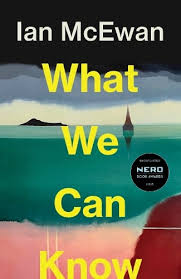
What We Can Know – Ian Mcewan
The latest from McEwan shows his powers are undiminished, after a career at the very top of English fiction. The book is framed as an academic literary investigation, in a Britain clinging on after a series of ecological disasters in 2125, into a celebrated poet and climate change denier from the Britain of 2020. It’s a strange mixture, at times compelling, often fascinating, and at other times annoying.
The good stuff is the unrolling of the climate disaster and the unforeseen impacts that has had (Nigeria is the preeminent power, and America has disintegrated into a ferret sack of competing warlords and clans.) The bad stuff is the suffocating superiority of the middle class literary types, with their casual snobbery, all, seemingly, having affairs with anyone and everyone. I’d like to think McEwan is trying to skewer them and their ghastly attitudes, but I fear that he may actually share many of them. That’s harsh – it’s beautifully written, as ever, and worth a read.
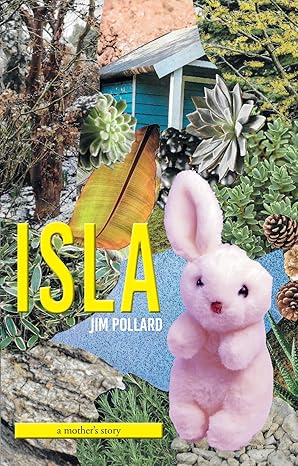
Isla – Jim Pollard.
One of the pleasures of exploring the work of independent writers is that you come across things that deserve much greater exposure. This one’s a gem. Pollard, an ex-teacher and journalist, has specialised in books about men’s health, accumulating an impressive back catalogue, irregularly punctuated by his novels. His latest, Isla, is inspired by the Madeleine McCann case, and explores the aftermath over a lifetime of such a traumatic event. It’s set in Paris and London, and beautifully evokes both cities. There are no easy answers to the questions the novel poses and no obvious ones either. This is a great read.
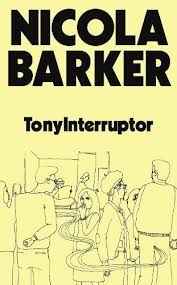
Barker is consistently one of the most interesting of British novelists, who deserves a much higher profile. Her books are often odd, awkward little things, and this one is no exception. It would be a delightful stocking-filler.
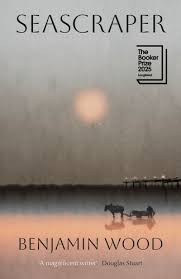
Seascraper – Benjamin Wood
An excellent story of a young man who lives with his mother on the grim and exposed coastline of Morecambe Bay. He scrapes a living, continuing the work learned alongside his late father, pillaging the cockle beds in the shallows of the Irish Sea. It’s hard work, alone save for his horse in all weathers. He keeps his sanity by writing and playing songs on a second hand guitar, ( all concealed from his mother) working towards playing the folk night of a local pub. His world is suddenly turned upside down by the appearance of an American film man who descends on the community researching the beach as a location for his next film. It’s a small and perfectly formed gem.
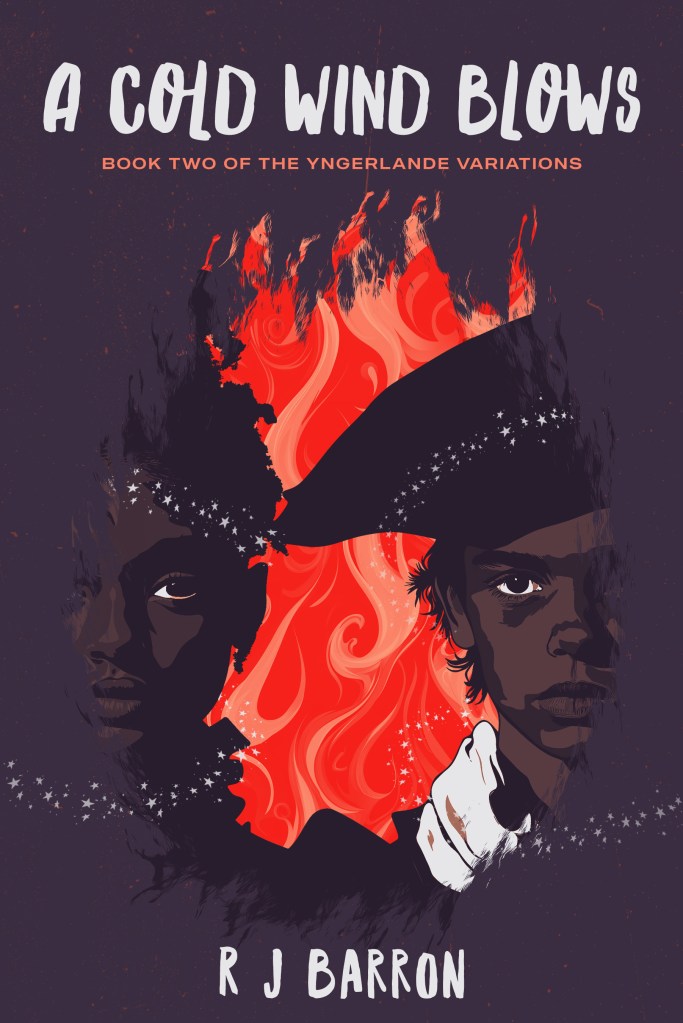
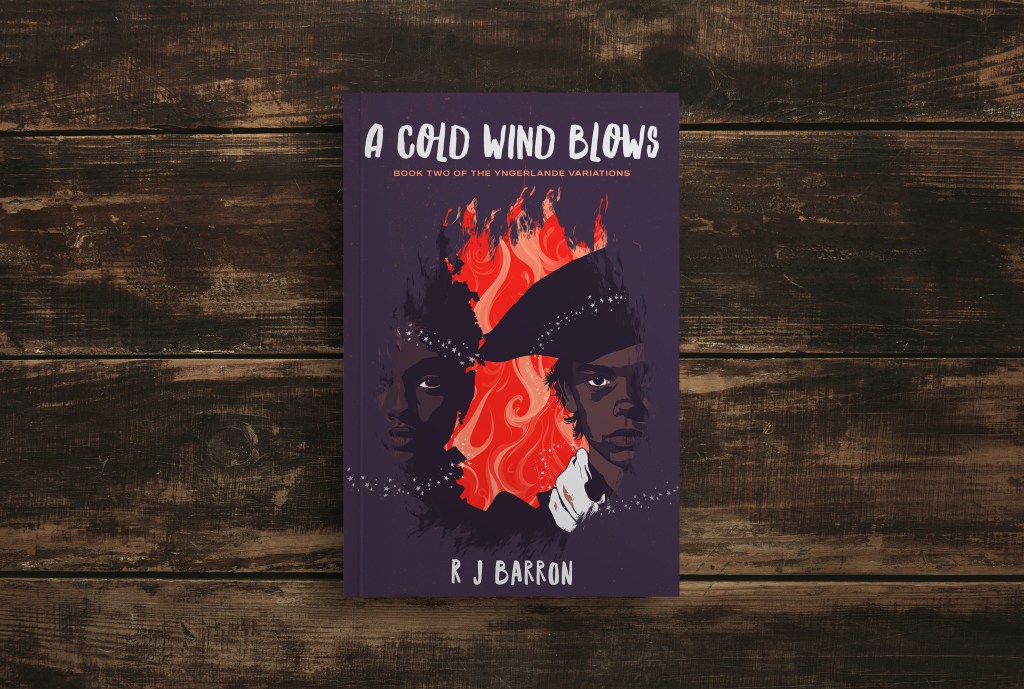
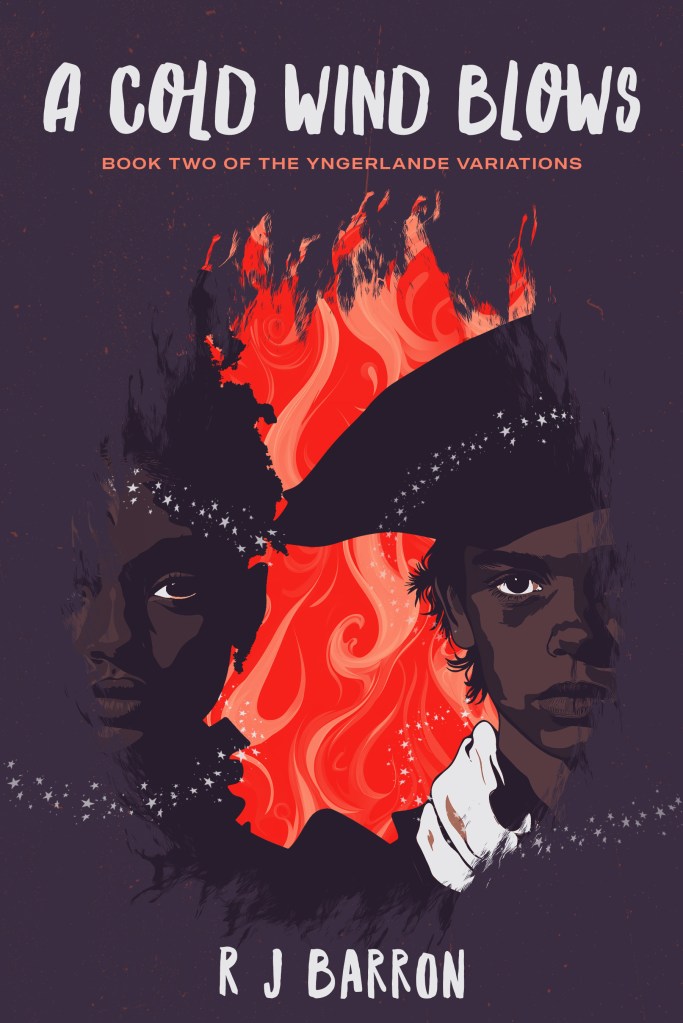
Obviously, the real book of the year is my very own, A Cold Wind Blows. The book is part 2 of a fantasy trilogy, set in Yngerlande, a parallel world to England in 1795. Yngerlande is a place of absolute and perfect equality, but their tolerance and liberalism is put at risk by an attempted counter revolution from the surviving relatives of the Old Mad King from generations before. They want to overturn all of the social advances made and establish a patriarchal, white supremacist regime. Thomas Trelawney, a thirteen year old boy from modern day England, finds himself the possessor of previously unknown powers, when he is summoned to help protect the Realm from the forces of Darkness. Think of it as Harry Potter meets Lyra Silvertongue meets Outlander. “A slice of Fantasy brilliance” said one reviewer. And they were right! You can buy it here: https://shorturl.at/UcRWb
Those that didn’t quite make it…
This could be for a number of reasons: Only just come out, I’ve heard about and intend to read, waiting for it to arrive. That sort of thing. Here they are:
It’s always lovely when positive reviews keep coming in for a new book. This one is from Rebecca De Figueiredo from the Online Book Club. There are also some great reviews on Amazon too. You can buy the book and see the reviews here:
Following is an official OnlineBookClub.org review of “A Cold Wind Blows” by R J Barron.]
5 out of 5 stars
Title: A Cold Wind Blows Author: R J Barron
How captivating and otherworldly this book is! The reader will soon find out how apt the title is. It was well balanced between reality, shape-shifting, and magic. There were people and places that are actually real, such as King James’ Palace and the River Ouse, included in a deep and mesmerising story. I don’t usually enjoy this sort of genre, preferring more adult drama, but there was something innocent and entertaining about this one. In my experience, books of this genre have a tendency to be all over the place, with far too many characters and words that are difficult to pronounce; some even have a glossary (which child is going to refer to a glossary every five minutes?!). The only word that took a bit of time to get used to was ‘Yngerland’, which is the kingdom in question. The characters were likable, with the usual malevolent dark characters and holier-than-thou good ones. There is also a character who is neither on one side nor the other: the reader will find out.
At just the right length, with an inviting introduction, chunky middle, and mysterious ending, this book takes the reader on a magical adventure. The magic is fairly subtle.
I would have loved some illustrations: pictures of the steedwings, or huge mansions, or a character or two, but perhaps it’s better for the young mind to create its own images.
I found the editing to be perfect and did not notice any typos. The prose was cleverly written in that most older children will be able to read it, and it would be a marvellous book to read out loud. I will award it five out of five stars.
I’ve always believed the hierarchy of fictional respectability is just another manifestation of keeping the oiks in their place. Like the concept of a fine palate when it comes to food, having good literary taste is a device to be able to confidently feel and express your own superiority over the lumpen masses. At the top of this pyramid of worth, sits Literary Fiction, smoking a fat cigar, and flicking the ash at the lower classes s/he straddles: reading group fiction, detective novels, romance, horror, sci fi, through an ever-multiplying collection of genres and subgenres, ending in the sludge of graphic novels and comics.
You just need to give your head a shake to see that literary fiction is just another genre, with its own conventions and expectations. Language is privileged over plot, obscurity is King (or Queen), ideas rub shoulders amiably, sides are resolutely not taken, and difficulty is wholeheartedly embraced. If you can make the reader feel they are missing the point, that they just don’t get it, you’re on your way to the shortlist of some prestigious literary competition or other.
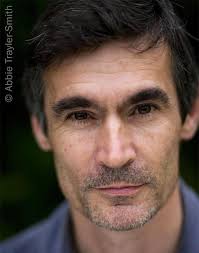
But then, every now and again, a literary novel comes along that stops me in my tracks and gives pause for thought, as previously unshakeable theories begin to teeter and the cracks spread. This one is the latest offering from Andrew Miller, The Land in Winter. He’s carved a niche for himself as a writer of historical fiction, comfortably sitting at the literary end of the spectrum, rather than the Brother Cadfael end. Novels such as Pure, and Now We Shall Be Entirely Free showcase his undoubted talent as far as establishing interesting characters and subtly drawn relationships in an entirely authentic and credible historical setting.
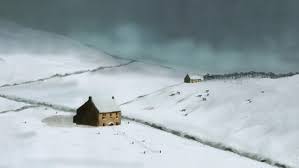
He’s done it again in The Land in Winter, but this time he has chosen an era still within living memory: the early 60s. To be more precise, his novel is located in the winter of 1962/63, a period that has entered the myth of our island story as the hardest winter since the frost fairs of the early 19th century.
This was a time when the whole nation was cut off under Impossibly deep snow drifts for months on end, from December until March/April. I was about six years old at the time and have vivid memories of walking to school through trenches dug in the snow on the pavements that went above my head.
It was a time before the swinging sixties. Pre-Beatles too, at least as far as their impact on broader society. Miller captures the grim, narrow atmosphere perfectly. This was a black and white England, before technicolor, still uncomfortably close to rationing, still in the grip of deference, hypocrisy and snobbery.
The book starts obliquely, in the grand tradition of literary fiction, with one patient at a residential psychiatric hospital, unable to sleep in the middle of the night, discovering the body of another, a patient who has committed suicide. Then they disappear from the novel completely. They do reappear, much later, after four other characters have claimed centre stage for themselves. By the time they do come back, the book has turned into something rich, deep and powerful via Miller’s quiet, subtle prose.
They are two recently married couples, Eric and Irene Parry, and Bill and Rita Simmons living in the middle of the countryside in the west country. Eric is the village doctor, Irene a middle-class Londoner more used to a life of art galleries and literary discussions. Bill Simmons is a farmer, trying to make a go of his recently acquired smallholding with his recently acquired wife. His father is an Eastern European immigrant, vaguely connected to London gangland, who has tried to remove all traces of his origins, while Bill is trying to cut himself off from his family and set out on his own. His wife, Rita, a working-class girl who met Bill when working as an escort in a dodgy bar in Bristol is troubled by the voices she hears, left alone on the farm all day as Bill works all hours to try and make a success of what is likely to be a doomed venture. The two women, bored and lonely, become unlikely friends.
The stresses that Miller has rippling beneath the surface become heightened as the snow falls and an isolated community is even more cut off than before. everyone is confined to their own homes and the stifling conformity and boredom reaches a pitch.
Everything is set up for a drama centred on women being oppressed by conventional men, but one of the novels great strengths is its subtlety. There’s a lot more going on here than that. Each of the four characters is given equal weight – there are no victims, no baddies and goodies here. Miller manages to create sympathy for each of them.
It’s also, for all of its quiet understated subtlety, a book that, by the end, has been full of action. The difference here, though, is that in Miller’s hands, there’s not a whiff of melodrama over twists and turns that wouldn’t be out of place in a soap opera. The plot developments are all the stronger, and more impactful, because he turns the volume down. It’s an object lesson in getting the balance right: plot, character, ideas and language are complementary threads in a pleasing whole, producing a novel that continues to resonate long after the last page is turned. So, yes, there’s life in the old dog yet. Literary fiction can still prove its worth and relevance – just don’t diss the rest while you’re enjoying it.
“In an era where young adults face increasingly complex social and political realities, Barron has written a book that offers both an absorbing escape and a compelling message.“
The first reviews are beginning to come in. This one is from Maria Ashford of Bookshelfie
The middle volume of a fantasy trilogy faces a particular challenge: it must advance the story without feeling like mere connective tissue between a promising beginning and a climactic end. This is the case in retired English teacher R.J. Barron’s “A Cold Wind Blows”, the second installment in his Thomas Trelawney series. Though we haven’t read the first book, it feels like Barron largely succeeds in this difficult task, deepening both the mythology of his dual-world book while maintaining the accessible warmth that makes the series appealing to middle-grade readers.
To start off, readers should probably read the first book before this one, though a brief summary is helpfully provided for those who haven’t. The plot picks up when several months have passed since the events of The Watcher and The Friend, and thirteen-year-old Thomas has returned to the mundane challenges of school life in England. Meanwhile, in the parallel realm of Yngerlande, the political tensions that simmer beneath Queen Matilda’s rule are beginning to boil over. Princess Gaia—formerly Clara, a London orphan—undergoes intensive magical training under the guidance of Silas Cummerbund, developing abilities that grow more impressive by the day. As the spy Shrike observes with alarm, “She can move objects from afar without touching them. She can be in two places at once.”
In the same vein of C.S. Lewis, Barron’s greatest strength lies in his ability to ground fantastical elements in the recognizable experiences and emotions of young people. Princess Gaia’s magical education can be read as an extended metaphor for adolescent development—the awkward acquisition of maturity and the growing awareness of one’s place in a larger world. When Silas reassures her after a setback, saying “It’s much better than it was last week and ’twill be twice as good again next week,” we hear the voice of every patient teacher helping a student through difficulty.
The novel’s political dimension adds unexpected sophistication for adults to what might otherwise seem like standard fantasy fare. Queen Matilda’s egalitarian society—where “people of colour, women, people who go where their love takes them” enjoy full citizenship—faces threats from reactionary forces led by Oliver and Jacob, grandsons of the deposed king. Clara articulates the stakes plainly: “They want to turn back the clock.” This isn’t subtle allegory, but it doesn’t need to be. Barron writes with the moral clarity that young readers deserve, presenting complex social issues in terms they can understand and apply to their own world.
The book’s structure alternates between character moments and mounting suspense, and this gentle pacing largely works against dramatic momentum. Some of the most affecting passages involve Grace, Thomas’s sister, who now lives contentedly in Yngerlande but still carries the burden of separation from her family. “Of course, Silas. I am with the best of people here,” she says, “but still, I remember the life I had.” Where the novel occasionally stumbles is in its adherence to familiar fantasy tropes. These elements, while competently handled, may feel predictable to readers well-versed in the genre. Barron’s villains, particularly Oliver and Jacob, remain somewhat one-dimensional, their motivations never deeply explored beyond generic power-hunger and bigotry.
Yet these weaknesses don’t significantly diminish the book’s considerable pleasures, and young adult readers are unlikely to notice anyway. Barron writes with genuine affection for his characters, and their relationships feel relatable and fun to read despite the magical circumstances. The friendship between Grace, Gaia, Della, and Amelia provides moments of real warmth and humour, while the mentor-student dynamic between Silas and Gaia anchors the more fantastical elements. The novel builds to a cliffhanger that effectively sets up the trilogy’s conclusion.
To conclude, “A Cold Wind Blows” is a gripping read that succeeds as both fantasy adventure and coming-of-age story, offering young readers and older children heroes who face their challenges with courage. While it may not surprise experienced fantasy readers, it provides exactly what its intended audience needs. In an era where young adults face increasingly complex social and political realities, Barron has written a book that offers both an absorbing escape and a compelling message.
Book 2 in the Yngerlande Variations trilogy published by Burton Mayers books
The long awaited sequel to “The Watcher and The Friend” by R J Barron is published this Friday by Burton Mayers Books. “A Cold Wind Blows” is the second book in the trilogy, The Yngerlande Variations, set in the parallel world of Yngerlande in 1796. Here is the synopsis of the story so far. Warning! Spoiler Alert! Don’t read the summary if you have not yet read the first book and want to do so.
Tom has been summoned to help Silas and his allies defeat the relatives of the old King, Oliver and Jacob, who want to overthrow Queen Matilda and take the country back to a time when racism and discrimination were ever present. His task is made more complicated by the fact that he discovers that his sister, Grace, is alive and well in Yngerlande and is living there as a reward for her service when she was the Friend of Yngerlande. After many adventures and dangerous scrapes, they succeed, and Queen Matilda maintains her rule of peace, love and equality.
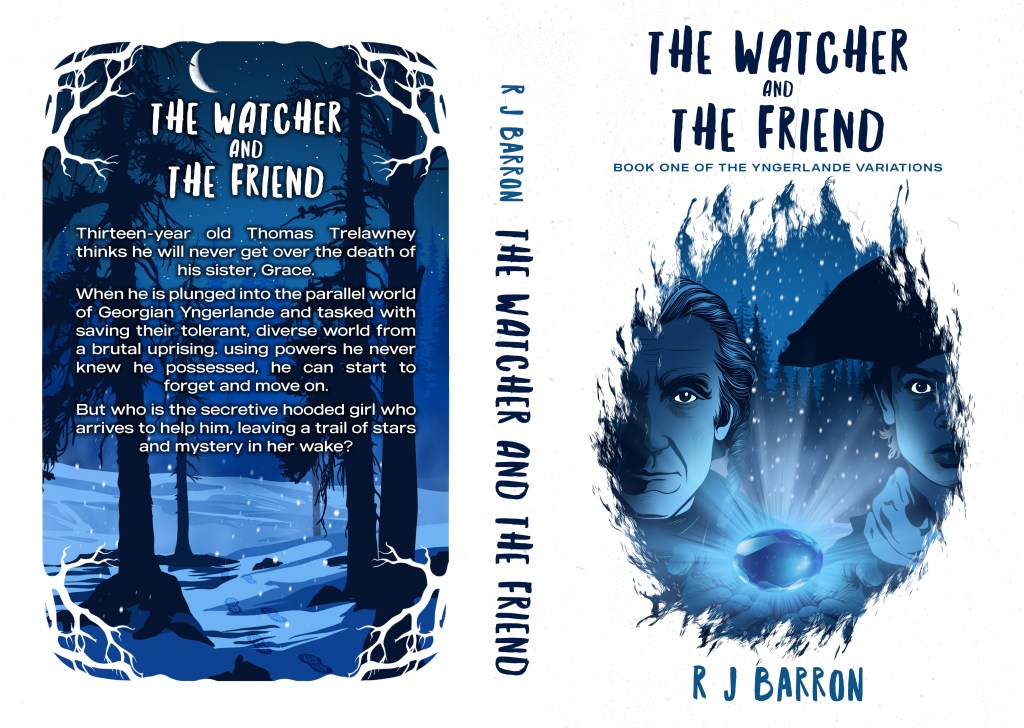
In “The Watcher and The Friend”, the first book in the trilogy, thirteen-year-old Thomas Trelawney is spending Christmas at an old Rectory on the North Yorkshire coast. It is the family’s first holiday since the death of Tom’s sister Grace. Here, Tom discovers a portal to another world and travels through it to Yngerlande, in 1795, with his cousin, Dan. Yngerlande is a parallel world to England, but is a much more diverse, equal society.
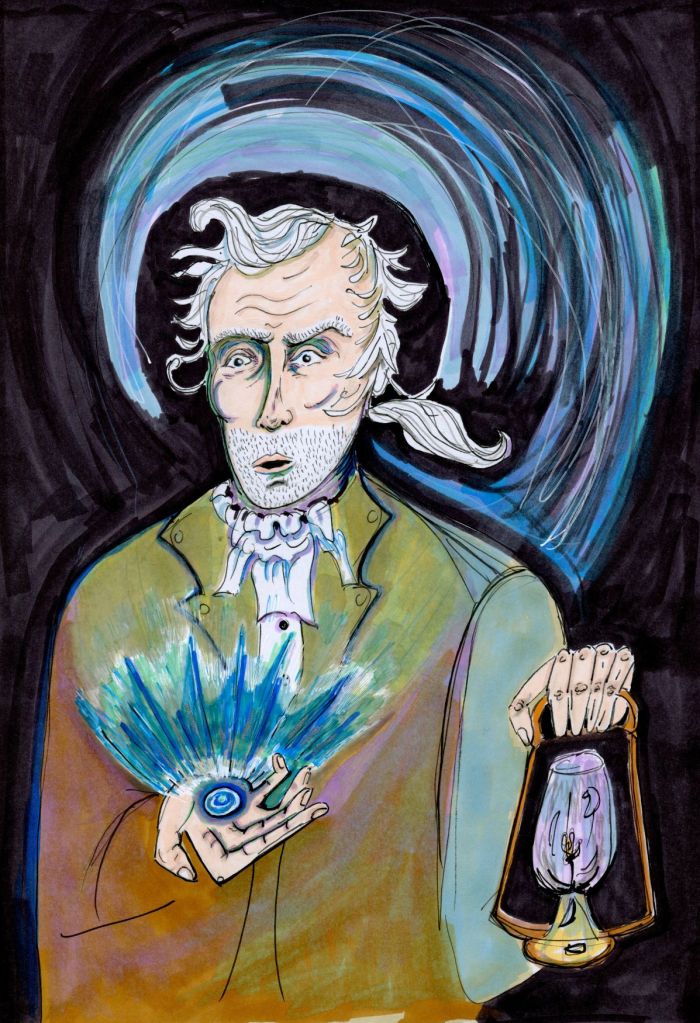
He meets Silas Cummerbund, who is The Watcher, the mysterious character who guards the portal between the two worlds. He tells Tom that he is the new Friend, the person whose role is to act as the link between the two worlds. This second book continues the story, as Oliver and Jacob return with another attempt to take back the crown of Yngerlande, only this time they are more dangerous and better prepared.
Silas has spent the summer training Princess Gaia, aka Clara to use her magic powers to their full extent, to be ready for any further threats to Yngerlande, but they are taken by surprise by the boldness of Oliver and Jacob’s new plan. A mysterious new character, Shrike, is introduced. He is by turns charming, dangerous, and duplicitous. Whose side is he really on? Even by the end of the book, that question is not clearly answered. One thing is certain, however. Thomas Trelawney is recalled from England to Yngerlande when everything looks lost. He does not trust Shrike, not least because Grace has fallen in love with him. Does Shrike have feelings for her, or is he just playing a clever game for his own ends?
“A Cold Wind Blows” begins eight months later.
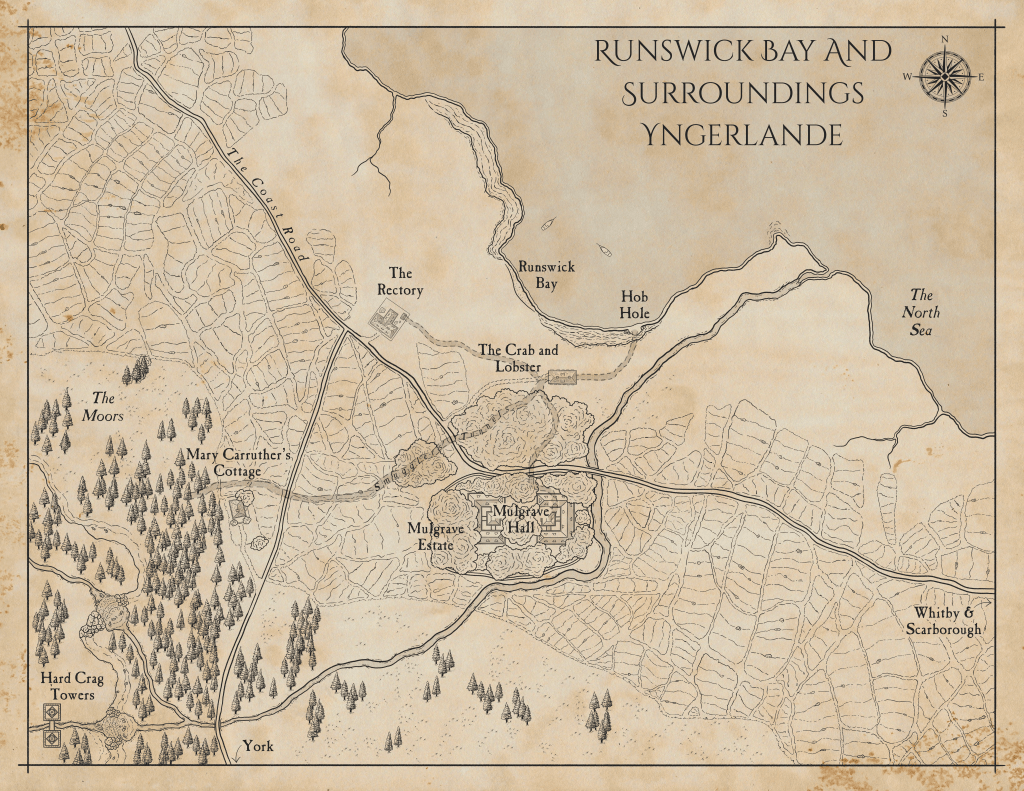
The story takes in the wild North York Moors, Runswick Bay, Mulgrave Hall, the crumbling ruins of Hard Crag Towers, with its menagerie of bats, steedwings and owls, and the ancient city of York. It’s full of adventure, peppered with cross dressing, betrayal, vengeance, disguise and murder, with a liberal sprinkling of romance, friendship and love.
This is a must-read YA adventure, that is aimed at everyone from 9 to 90 who loves Fantasy novels. It’s available from the following links:
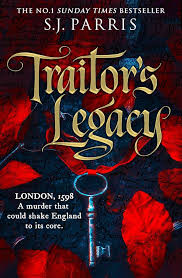
A new SJ Parris novel is always an event to celebrate, particularly for someone like me, with an incurable weakness for historical crime. I’ve read and loved all of Parris’ Giordano Bruno novels, set mainly in Elizabethan England, with the occasional foray into Europe. Parris has established Bruno as an attractive and sympathetic hero. An ex catholic monk, philosopher, and possible heretic, he ticks all the boxes: Good looking, intelligent, brave and a respecter of strong women.
So it was with some trepidation that I began her latest novel, when I found out that Parris had ditched Bruno for a new protagonist, Lady Sophia de Wolfe. It’s a bold move, when the Bruno novels have been so successful.
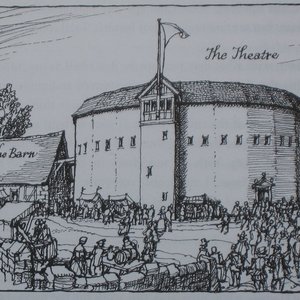
By and large, it works, with some caveats. The depiction of Elizabethan London is convincing. The plot is handled with Parris’ usual aplomb, requiring the merest hint of goodwill on the part of the reader (usually in connection with De Wolfe’s protection of her child – there’s no way this would pass with so little comment, but I’m just splitting hairs here) There’s a delightful rendering of the transportation of The Theatre in Shoreditch to The Globe, Bankside in the opening chapter and a knowing, touching scene focusing on a conversation between Shakespeare and the protagonist, about love and the loss of a child, towards the end. De Wolfe, a character who has already appeared in several of the Bruno novels, partly as a love interest, finds herself recently widowed (and therefore available for all kinds of adventures). By the end, her daring romps across London convince Robert Cecil to reemploy her as a spy working for Elizabeth’s government, thus setting us up for a new series. Good. I for one look forward to seeing her in more. But please, Stephanie, don’t completely abandon Bruno. There’s life in the old dog yet.
If a new series of De Wolf adventures emerges, I would just make these pleas to S J Parris, as a huge fan.
Do something about Anthony Munday, a playwright attached to the same company as De Wolf’s son Toby, and a second division rival to Shakespeare. He’s potentially an excellent character but his devoted lapdog impersonation in this novel began to grate after a while. GIven De Wolfe’s lack of romantic interest in him, this relationship promises more irritation than interest.
Please abandon the use of the present tense. I know it’s what younger audiences are meant to like and it’s what Creative writing tutors and Boutique consultancies tell writers to adopt for more “Immediacy”, but really that’s nonsense. (See Jonathan Coe on this in his latest, “The Proof of My Innocence.”). To me it feels affected and inauthentic. You didn’t need it in the Bruno novels and you don’t need it here.
But they are just nitpicks in the grand scheme of things. What a potential reader needs to know is this: S J Parris/Stephanie Merritt has come up with another winner. Fans of historical crime should settle in and enjoy the ride.
The new album by Fontaines DC is alive and kicking
More than five years worth of water has disappeared under the bridge since Dublin’s finest, Fontaines DC, released their debut album, Dogrel. There have been two more since then – A Hero’s Death and Skinty Fia, but neither of them generated the same excitement as their first, with its originality and verve.
They arrived heralded as nouveau punk and although those comparisons are always inevitably flawed and misleading, there was something in that characterisation. That album was many things but, like the original punks, one thing it was not, was polite. There was an authenticity and a couldn’t-care-less attack to it. This is us, it seemed to declare, and we don’t care what you say about it. This was my review of it at the time:
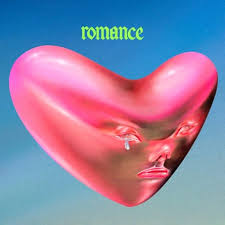
But now comes their fourth studio album, Romance, and it’s a game changer. Old heads with old hands now and they have produced something of rare beauty that triumphantly confirms what that first album promised: They’re gonna be Big. The start of the album generates fear of disappointment, with the title track, Romance. Moody, doomy synth washes with dark, dark lyrics:
Into the darkness again,
In with the pigs in the pen
Don’t worry! It’s a deliberately misleading start. It’s not doom and gloom that await you in this album, it’s joy and beauty. This is not a band trying to curry favour with its potential new audience, playing it safe. It would have been so easy to start the album with Favourite for some uplifting poppy melody, but that is a trap they sidestep, preferring instead to make demands on their fan base. And they are demands that are worth responding to. After three listens, the subtle pleasures of vocals, lyrics and atmospheric layers lodge themselves in your brain, and you’ll wonder why you doubted them in the first place.
The album goes from strength to strength. The single, Starburst, is the perfect antidote to the slow gloom of Romance. First, strange mellotron is studded by liquid arpeggio piano notes that ooze a grave, poignant portent. Then the uptempo beat and word heavy, almost rapping rhythmic vocals – this will be the standout track on first listen. But that won’t last, as the subtle pleasures of all the other tracks begin to elbow you for attention.
The melodies are gorgeous, the lyrics subtle and clever, the vocals sweet, particularly the unexpected harmonies that punctuate many of the songs. It’s a repeat of the Black Keys scenario, back in 2011. After releasing three well respected hard electric blues rock albums, that clocked up mega critical approval but few sales, the Black Keys suddenly discovered how to write classic pop songs with killer hooks and choruses and came up with El Camino. Still quintessentially Black Keys, with their DNA pulsing through it, it was a compulsively fabulous commercial record. So it is with Fontaines and this album. It retains its Dublin accent, but uses it to tell better stories that will pull in a bigger audience. They look a little different as well. But then, don’t we all….
Fontaines now…
Fontaines then…
The two standout tracks for me at the moment have that unmistakable classic quality of great songs: they sound like they’ve been discovered, excavated in an archaeological dig rather than having been newly created. It’s as if they’ve always been here. Have a listen, first to the sublime “Bug”.
Then the closing song of the album, “Favourite”. In a pre-streaming age, this would have been the opener to pull the audience in, on vinyl or CD. Lovely shiny guitar riff and cleverly worked chorus, this is classic pop.
Do yourself a favour and follow these instructions.
Regular readers of this blog will know that, if nothing else, it is eclectic, covering the highways and byways, the nooks and crannies of human interest. Fiction, Politics, Football, Writing, Theatre, Film, Music, original short stories – all human life is here. So you will forgive me, I’m sure, if this latest blog is unashamedly devoted to self-promotion. After a hiatus of a couple of years, my podcast Telling Stories has returned. When the kids move back out, the old recording studio moves back in. I’ve used it to contribute to Librivox, which in essence is an audio book version of The Gutenberg project. Anyone who passes the technical recording test can volunteer to read books that are out of copyright, and there is a vast library of free audio books, produced by said volunteers.
If you like listening to audiobooks, give this a go. It’s barely publicised, and the quality of the readers is varied, but with a bit of trial and error, you’ll be able to find something to your taste, that doesn’t offend your rigorous standards of fiction, technical specs and reading voice. It’s a really worthy project and deserves more support. Check it out at Librivox
Another project even more worthy of support is my Podcast. I’ve resumed the momentous task of turning my YA book, The Watcher and The Friend into an audio book, via regular recordings on my podcast, Telling Stories. I’m trying to post a weekly chapter. Have a look at the ones I’ve done since the new studio arrived. The links are here. Try it and pass it on if you like it. Or even if you don’t.
Make Sure you listen to the episodes in the right order! If you havent started yet, follow the links to the beginning and click follow on the Spotify Podcast page
A Cold Wind Blows – Book 2 of The Yngerlande Variations
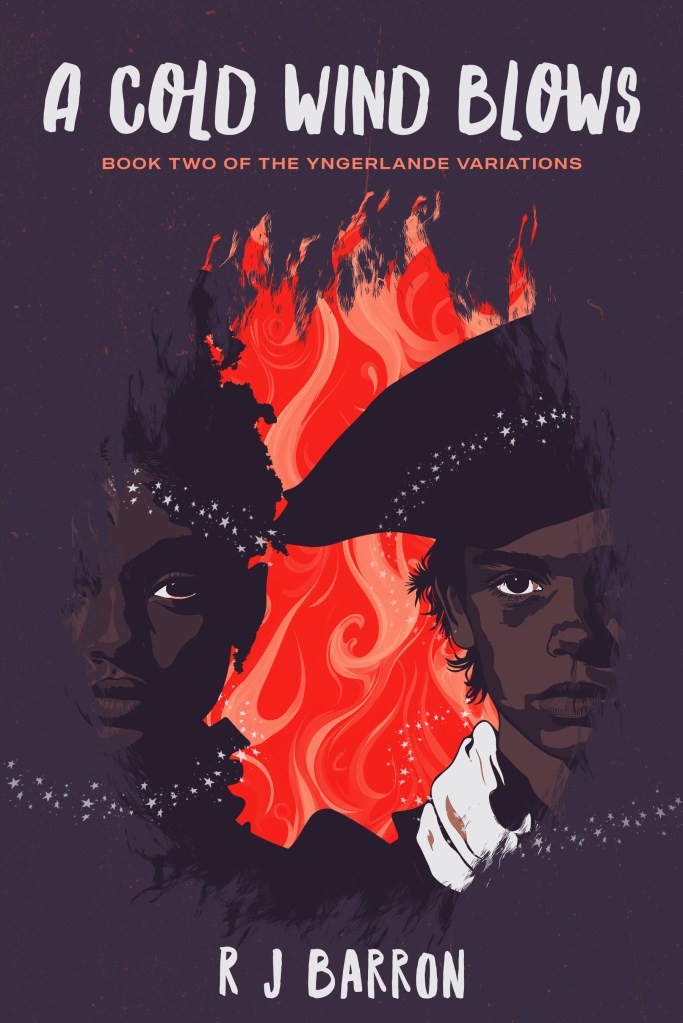
Finally, some exciting news. The sequel to the book is scheduled to be published later this year. It’s called A Cold Wind Blows, and I’m very pleased to be able to give you a sneak preview of the new cover – designed by me and produced by the very talented Youness Elh. More on this later!
Something weird is happening to films. It’s crept up slowly, revealing itself bit by bit, until now there’s so much evidence that it’s irrefutable. We are living through the Golden Age of Cinema, after the Wasteland of Pandemic Lockdowns and their aftermath. What’s driving this? Lockdown. Streaming. The unstoppable proliferation of narrative outlets and the demand for stories that will satisfy the gamut of tastes and preferences. The thirst for longer narratives with space to develop character, relationships, themes. The usual stuff.
It seemed, when we were in the middle of it, that Lockdowns were going to destroy cinema, as everyone got used to staying in and subscribing to a range of streaming services. The content was good and it was cheap. But by the end, we were all thirsty for the experience of going out again. In the same way that Zoom, at first a lifeline, became an annoyance, when it became obvious that the experience it provided was thin gruel compared to the Michelin-starred flavour of talking to real people in the same room, with eye contact, nuance and body language. You know, like properly being alive.
At first, it was hard, going to the cinema again. An act of faith, even. We went to see countless films in cinemas, to find that there were only six or seven other people dotted around the auditorium. It was only a matter of time, we agreed, that there would be a wave of closures to match the decimation of retail units in High Streets across the country. But, somehow they clung on.
And then, probably about a year or so ago, I began to notice something else, when watching the trailers. For at least ten years before Lockdowns, sitting through the trailers was usually a deeply depressing experience. I had become innured to the naked cynicism of the adverts. Corporations were desperately, unsubtly trying to sell me stuff. Millions of pounds of production costs, undercut by appallingly, clankingly obvious scripts, overlaid with equally grim music tracks. The combination of visuals (admittedly, often very beautifully shot visuals), terrible scripts, and obvious music overlays characterised all cinema adverts. Having to sit through them, always left me feeling vaguely unclean before getting ready to watch a film, usually with some kind of moral message.
During this period, it was difficult to distinguish between the ads and the trailers for films that were coming our way. They too, were just an extension of this appeal to the basest instincts of Homo Sapiens: Marvel adaptations, Fantasy CGI fests, endless, mindless, explosions, car chases (or spacecraft chases, Dinosaur chases, orc chases etc) It was like watching human evolution going backwards and I did despair of the celebration of stupidity it all seemed to represent. Don’t get me wrong. There’s a place for escapist/adventure/action type films. But a) do them well, and present a story with a plot that makes sense and respects your audience and b) make them as part of a wider, more diverse offering.
So the first time it happened, it was a bit of a shock. After the film, on the walk from the cinema to the car, the conversation was less about the film, and more about the trailers. Puzzled expressions and lines like, “There’s some really interesting looking films coming up”, were delivered hesitantly, as if it was just a scam to get us back, but really we would find that nothing had changed.
But it has. Every month there are great films and , on leaving the cinema, I think, “That’s the best film I’ve seen this year.” Over and Over again. I may be wearing rose tinted spectacles, but I can’t remember this happening before. They are long (sometimes too long), have stories, have interesting characters and believable relationships, are beautifully filmed in interesting locations, have significant human dilemmas to be resolved. I don’t know how long this is going to go on for. I’m just determined to enjoy it while it lasts. Because when it all blows over, and we are forced to trawl through mediocre shit on Netflix, recreating that Friday night visit to Blockbuster, where everything in the shop, could be pulped without adversely impacting the stock of human happiness, we’ll be forced to reminisce sadly about the time when going to the movies was great.
And what have been the films that have inspired this analysis? Well, since you asked so nicely, in no particular order…
Oppenheimer
Barbie
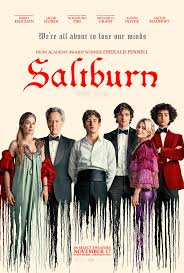
Saltburn
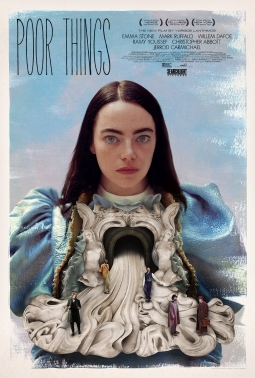
Poor Things
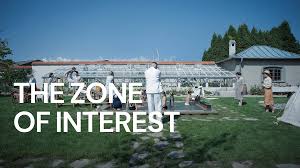
Zone of Interest
Killers of the Flower Moon
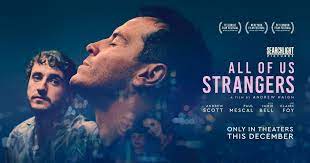
All of us Strangers
Anatomy of a Fall
Past Lives
The Holdovers
I can just about narrow this down to a top five:
5. Saltburn
Saltburn
I’m amazed that this film divides opinion. It’s a funny, stylish Brideshead pisstake that turns the usual working-class-oik-adopted-by-the-bastard-Upper-Classes-at-Oxbridge-before- being-humiliated trope on its head. People who don’t like this are the same as those who didn’t get Don’t Look Up a couple of years ago – sadly very wrong.
4. Killers of The Flower Moon
Lots of moaning from the older cinema-goer ( my very own tribe) about toilet breaks needed because of its excessive length. Not for me. It flew by and I loved it. Fascinating, unknown (to me) story from American Twentieth Century history, with fabulous performances from De Niro, Gladstone (who really should have changed her name to De Gladstone) and the ever underappreciated Leonardo De Caprio. And if bladder control is increasingly a problem for you, there’s a range of remarkably effective, discreet products you can now buy. Next to the Maltesers in the cinema shop.
3. Poor Things
Wow! What a treat this film is. Visually stunning, steam punky Glasgow vibe, moving through Europe to Paris and back. Amazing performances from Emma Stone and Mark Ruffalo, who is hilarious all the way through and who should have won an Oscar, if that particular travesty of an award ceremony had anything to do with quality rather than promotion and virtue signalling. Is it a feminist epic? What a dim question – of course it is. How to learn to become a woman in a patriarchal society is a great premise and it’s delivered in an un-hectoring way. The scenes in the Parisian brothel are notable for the collection of highly unprepossessing men who make up their client list. In any other year, this would have been the best film of the year by a mile.
This brings us to the top two, and we move into a completely different league of experience. In Joint First Place are:
Zone Of Interest
This is an amazing film. The Second World War and the holocaust are strange subjects. In one sense, how can you go wrong? They naturally carry their own drama, their own horror so they’re a gift as subjects for people who are making stories. The downside, of course, is the fact that they’ve been done to death. How could you possibly find anything new or compelling to say, when confronted by the ultimate, still barely believable, example of the worst of humanity? But Zone of Interest pulls it off.
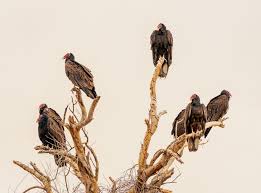
It’s a great premise. The mundane domestic arrangements of the Auschwitz commander whose family home abuts the death camp are an obvious way of exploring how absolute evil becomes commonplace. Generations of GCSE English students will also be familiar with the poem Vultures by Chinua Achebe on the same theme:
Thus the Commandant at Belsen Camp going home for the day with fumes of human roast clinging rebelliously to his hairy nostrils will stop at the wayside sweet-shop and pick up a chocolate for his tender offspring waiting at home for Daddy’s return…
Praise bounteous providence if you will that grants even an ogre a tiny glow-worm tenderness encapsulated in icy caverns of a cruel heart or else despair for in the very germ of that kindred love is lodged the perpetuity of evil.
Vultures. Chinua Achebe
Everything positive that has been said about this film is true. The soundscape is extraordinary and a compelling reason to watch it on the big screen. There are some wonderful scenes: the commandant hurriedly getting his kids out of the nearby river, running through idyllic woodland next door, when he realises that the water is carrying some horrific evidence from the camp next door. This is followed by frantic scrubbing of the kids in the bath. The commandant’s wife casually sorting through booty left behind after prisoners had been exterminated: fur coats, gold teeth, jewellery. The negative night scenes, of a young girl from the village visiting the outside work areas hiding food for the inmates, are both beautiful and haunting. It’s a film that will never leave you, once seen.
All of Us Strangers
This is the film that sums up, for me, the new approach of adult serious films, for adult serious people. Please note: Adult and Serious does not mean Boring. Far from it. The four central performances are luminous: Andrew Scott, Paul Mescal, Clare Foy and Jamie Bell are all brilliant. It’s so good, you want a new category of Oscar: the ensemble acting award. People talk to each other. They struggle with their feelings, they show what it is to be alive as an individual in an alienating society. There’s a hint of lockdown isolation, but that is suggested rather than laid on with a trowel. It’s enlivened by some, beautiful, subtle magic realism, in the form of the Scott character going back to visit his childhood home as part of his research for a new film he’s working on and finding his parents, unaged, still living there. It uses this device to explore memories of childhood and regrets for all of the things that were not said. Tears are shed in the audience. Beautiful.











 The Old Grey Owl