Baggy, Saggy and Flabby

A Review of “Demon Copperhead” by Barbara Kingsolver
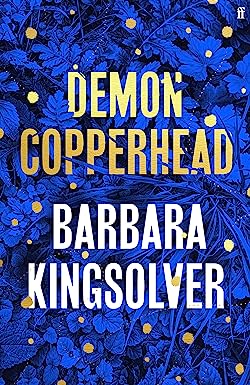
Ok so let’s cut to the chase. The only real question about this book is, how on earth did it win the Women’s Prize for Fiction? It’s not that it’s bad, it’s just that it’s not good enough. And in a reversal of the old Jewish joke, there’s just far too much of it. It comes in at about 540 pages, and were it to be trimmed to around 400, it would still be baggy, saggy and flabby.

There is a second, supplementary question. Why is it impossible to find a negative review in the whole of cyber space? Or even a luke warm one? After I didn’t finish the book, I trawled the internet for the reviews to see what the literary establishment thought about. And well whadda ya know? They all loved it. Of course they did. I am wearily used to lying firmly outside the mainstream when it comes to opinions about cultural products. The lonely furrow is the one I seem to plough repeatedly. And there is always the problem of reviews done by other writers where an institutional phenomenon of “You scratch my back, I’ll scratch yours” is in rude health. It’s not that I want to be negative about anyone’s work. Writing a novel is a major undertaking and all kudos to anyone who achieves it, but really, let’s not suspend our critical judgement. It’s not a hanging offence to publish something that’s not absolutely wonderful. Let’s actually read the book, and then be truthful about it.

The other possibility, of course, is that I’m just wrong, and that it is, in fact, a major piece of work.

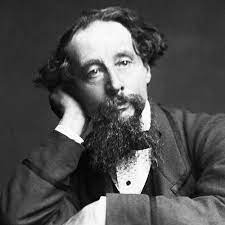
The problem here, the elephant in the room, is Mr Charles Dickens. Kingsolver is on the record professing her deep love and admiration for the Great Man and his works, and her determination to do a modern day version of David Copperfield. All well and good so far. The trouble is she seems to be so intent on her updated homage to her hero that it has elbowed out of the way all other considerations. You know, things like writing a novel that works on its own terms. One that engages, entertains and enlightens. One that leaves you moved by the plight of the protagonist and gives you some insight and empathy into a pressing social issue of the day. Set against that, pulling off a trick of adoring imitation seems a little shallow and pointless.
It’s not as if she didn’t have promising material. Setting the book in rust belt Virginia, looking at Blue Collar poverty and neglect, exploring the opioid addiction crisis of these left behind communities and exposing the seemingly scandalous mess of foster care and adoption in the US – all of these issues are worthy of a big novel. Unfortunately, I have to report that this is a big novel only in the sense of the number of pages it amasses. On all other available measures, it falls short.

To be scrupulously fair, there’s a lot of good writing here. KIngsolver has been around the block a bit and knows how to put together a sequence of well tuned sentences. And there are times in the first half of the novel when it seemed that it was on the verge of lift off, but each time proved to be a false alarm. Hope and expectation, time and time again, are throttled at birth by repetition, relentless accumulation of peripheral characters and scenarios, and an overall sense of meandering.

I wondered whether this was Kingsolver deliberately attempting to be Dickensian, trying to ape his characteristic gallery of grotesques and eccentrics in order to create a world where all human life is here. The trouble is, Dickens does it with great verve and style. Each diversion, when the reader is inducted into the lives of yet another group of oddballs and ne’erdowells, re-energises the novel as a whole. The prose sparks and fizzes, the subplots entertain, the narrative drive of the main plot is undiminished, Maybe it’s his skill at the episodic nature of monthly installments, where cliffhangers and structure drags the reader forward on a basic mission to find out what happens next. In this case, there is no sense of forward propulsion. Each diversion causes the book to sag. Each set of grim circumstances and terrible characters seem indistinguishable from the previous lot, until the reader starts to actively not give a toss about the fate of our hero. Or, at any rate, this reader didn’t.

It’s not helped by Kingsolver’s use of the first person. The voice of Demon Copperhead, the eponymous hero, (David Copperfield. Come on – keep up) is used throughout the novel. It’s his story, told by him. And it’s brilliantly done. There is an authenticity to it and it adds to the sense of place that Kingsolver achieves. But after a while, I found it rather relentless and rather limited. I wanted to see this world from some different perspectives, to hear another voice.

In the end, you can’t escape Mr Dickens, who is always there, looking over your shoulder as you read. Like Kingsolver, I love Dickens. I’ve read all of the novels and some of his stories. I love the plotting and the prose style and the characters. I love the vastness of them and the pleasure of the language. I love the fact that they are as much about a society at a particular time in history as they are about particular characters and relationships, and that Dickens’ voice and views are never far away. But they are from a very different time, and novels, and people and cultural consumption have changed utterly since Charlie’s heyday. What worked for him and his readership doesn’t really work for us in quite the same way. Dickensian is an adjective often used to describe modern narratives and it’s never used pejoratively, always as a quality kite mark of approval. It’s a go to for reviewers to “place the product”. Zadie Smith’s debut, White Teeth, gets the tag, partly for its London setting I suspect, partly for its teeming cast of characters, partly for its exuberance. My own novel, “Zero Tolerance” saw me dubbed as the “Edu Dickens of his generation” in one memorable review. I always feared that was a nod to the fact that it was too long, a little boring in parts and full of improbable coincidences. But enough of me, as no novelist ever said, ever.

Really, when you get down to it, the only person who does “Dickensian” well is, er , the man himself. But I do think this explains the prize winning. Just like any moderately famous actor who does a film playing someone with autism, or a mental health condition, or impersonates someone famous in a biopic becomes a shoo in for an Oscar, so a writer who tries to parallel a famous Dickens novel is aiming for the glittering prizes. Every parallel, every witty updating, every character name spotted by the discerning reader, each of these things generates more brownie points in the pot. We do love a writer who can help us feel a bit cleverer than we usually are. 

Personally, I prefer a writer who writes a novel that grips and intrigues and excites and enlightens. A novel that I can’t put down, to take refuge in a familiar cliche. 

“Demon Copperhead”, unfortunately, was a novel that I couldn’t  stop putting down.

Cloud Cuckoo Land by Anthony Doerr

A review

Doerr’s latest novel is his first since the Pulitzer Prize winning All the Light We Cannot See. That book was a particularly happy accident for me. I found it lying around the house, and knew nothing about it, so began it with no expectations. After about thirty pages or so, I knew I was dealing with something special. I browsed this new one in Waterstones in the run up to Christmas and rejected it. It just didn’t sound like my cup of tea: three separate stories spanning several hundred years, including a sci fi section, all linked together by a fictional fragment of a Ancient Greek text. No, thank you very much, I’ll pass on that.

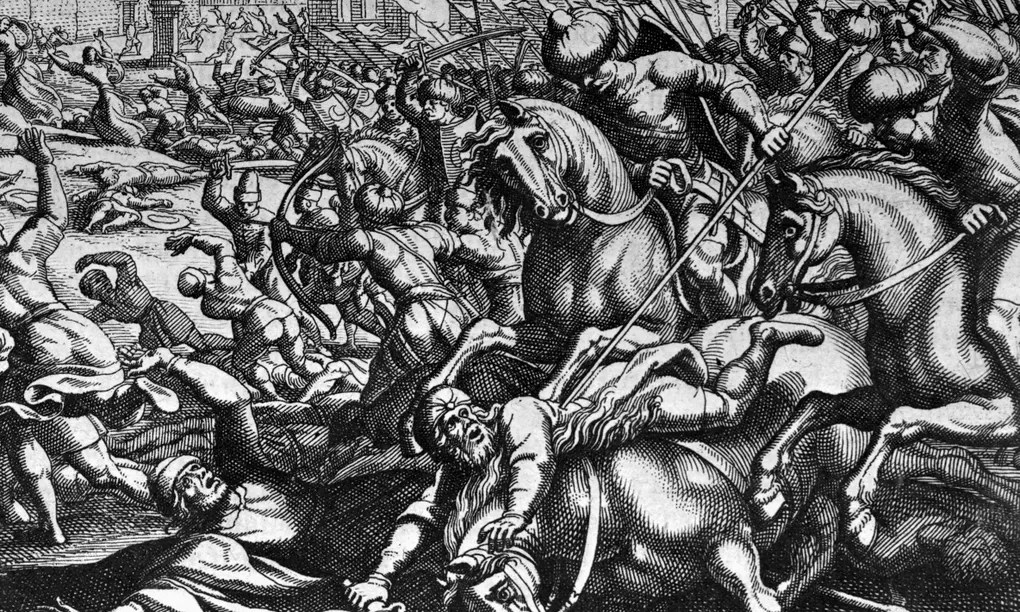
How wrong I was. This is a singularly brilliant novel, one of the best I’ve read for years. Each section is perfectly realised: the stories of two of the little people on opposite sides of the siege of Constantinople in 1453 (pictured right) , Omeir and Anna is beautifully done in luminous prose. I’ve read some criticisms about the sentimentality and implausibility of this story, but you would have to have a heart of stone not to be moved by the outcome, after years of hardship and personal tragedy. 

The contemporary section, which tells the story of a teenage eco-terrorist bomber, who is “radicalised” by a shadowy online presence that exploits his vulnerability and his disbelief at what we are doing to our planet, is the starting point for the whole novel. Each section as it is threaded through the bigger narrative, slowly ratchets up the tension of the unexploded bomb in his rucksack at the local library. The library is empty except for a group of young teenagers who are rehearsing a theatre production of the Ancient Greek text, Cloud Cuckoo Land, that  holds the whole thing together.

The links extend to the sci-fi section that is set in a spaceship of humans escaping a world destroyed by global warming. You might think that such a variety of settings would jar, and that the author would naturally display a weakness in the realisation of at least one of the stories, but the reverse is true. There is no sense that, in fact, these are three entirely sparate stories that have been clumsily welded together. The whole thing feels seamless, with each section being part of an organic whole. The plotting, linking all of these disparate parts is exquisitely done. Improbable, but done with authority, credibility and artistic integrity. Each section enhances the others, and the sequencing and pacing of the sections turns a heavy weight literary novel of ideas into a page-turner of real dramatic power.

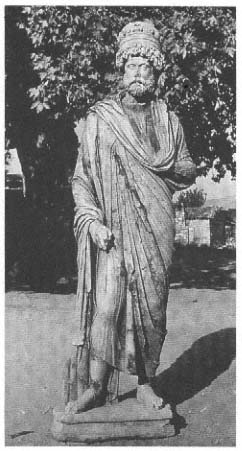
A further structural embellishment is the regular punctuation of the text with extracts from the fictitious Ancient Greek “novel” by the classical writer, Antonius Diogenes. (pictured left) Each extract is short, with the gaps in the text, supposedly  produced by the passage of time,  represented by missing words, scholarly guesses and question marks. For a while, these sections work well. They are strangely poetic and they are a welcome pause for the reader, providing an opportunity to digest the main sections of the overall narrative. After a while, however, I must admit that I began to skim read these bits, but that was because I was so invested in the main story, I really wanted to press on to get to the resolution of the whole thing. So even the weakest aspect of the book is actually an indication of its great strength.

Doerr himself describes the book as “my attempt at a literary-sci-fi-young-adult-historical-morality novel”. Guess what? He succeeds. It reaffirms the value and power of literature as a cultural endeavour that is capable of producing  great beauty and great insight. Immersive, big stories like this that tell us something about ourselves and our world continue to be important. In many ways,  the book is very explicit about that. It is a celebration of the significance of stories, of texts, (like the imaginary Cloud Cuckoo Land of Diogenes) and their ability to endure over the centuries so that they  continue to speak to people in the future. 

Literature, and story-telling in general, does a lot of cultural heavy lifting in our society, whether it’s a comic, a novel, a movie or the latest Netflix series. It can soothe, entertain, reassure, divert, excite. At its best, it can illuminate and make you see the world afresh, while doing all of the above as well. 

Cloud Cuckoo Land is literature at its best.

Saltwater – Jessica Andrews

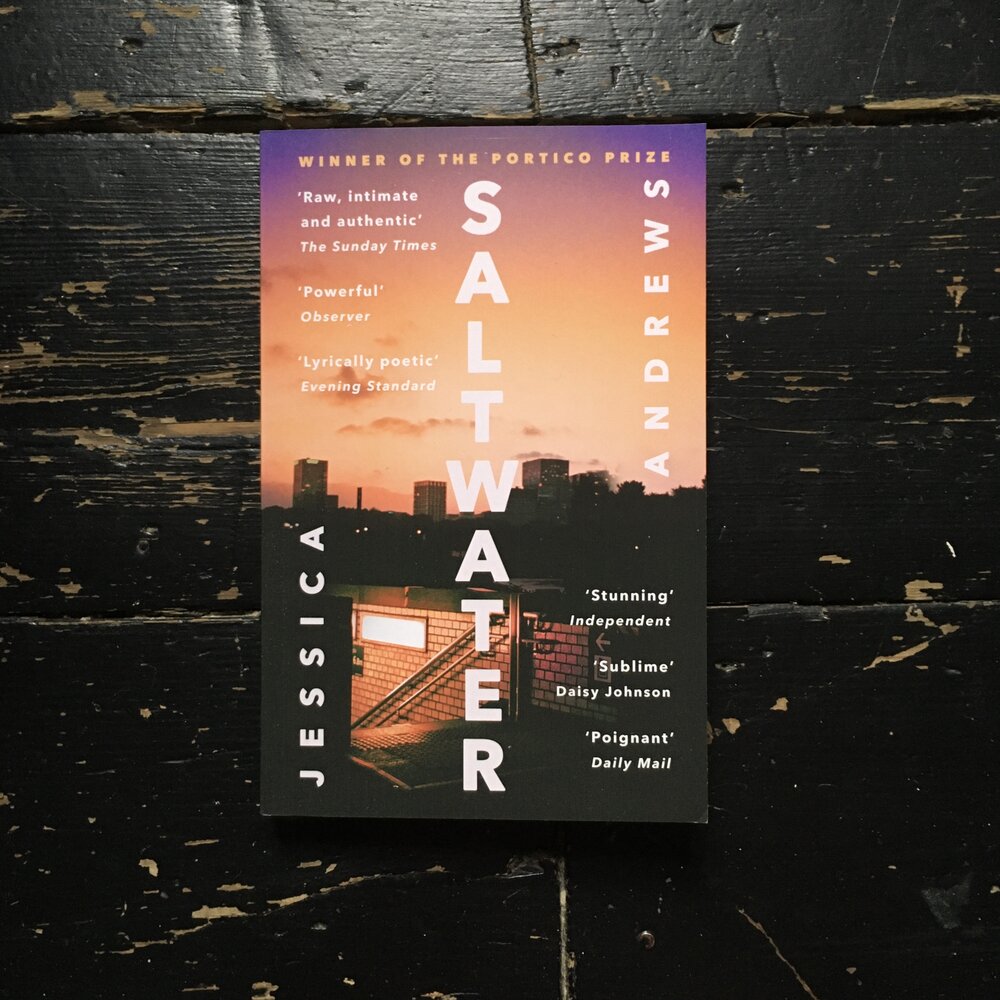
This debut novel by Sunderland writer Jessica Andrews won the Portico Prize for fiction in 2020, an award explicitly about representations of The North. As an exiled Northerner, and a North -Easterner like her at that, the idea has a lot of traction for me. The North is a different country, even in these days of the crumbling Red Wall, and is generally either underrepresented or misunderstood. The other pull of the novel is that it is about a working-class woman’s experience of university education, of moving away from her Sunderland home to live and study in London, and her struggles to adapt to a very different set of people, with different assumptions, beliefs and values.

Even in 2021, literary representations of working-class life are as rare as hen’s teeth (Shuggie Bain a notable recent exception), so a new one like this is to be welcomed. What makes it even more special is that it’s so good. So very good. The novel is structured to tell the story of Lucy in three distinct parts: her upbringing in the North East, with family connections in Ireland, her experiences in London as a student, and her flight back to Ireland, undertaken as an escape when the contradictions of her two worlds become too difficult to handle. It’s a first person narrative, but unlike so many examples of that most fashionable of styles, it is expertly done. The first person voice is authentically that of the character, not of a literate and well-educated author, and it takes us to the heart of the matter. That is what it is usually intended to do, but so often it fails miserably.

The three separate story strands are intertwined, and the reader has to do a lot of work to untangle them. In the same way, there is the usual obliqueness that is de rigeur in contemporary literary fiction. (Heaven forbid that anyone should ever just tell a linear story any more. Now that would be truly shocking) Sometimes that technique is tiresome and serves only to make rather dull material (characters, relationships, settings, themes, incidents) a little bit more interesting because as a reader you are transformed into something of a detective. An absence of anything as old fashioned as a plot is replaced by the efforts of the reader to discover a story for themselves.  Very often the effort of textual sleuthing isn’t worth the effort for what is eventually uncovered, but here, nothing could be further from the truth. The melange of techniques works beautifully, and embellishes the story, makes it more vivid and meaningful. There’s a poetic sensibility at work in Andrews’ exquisite prose which is by turns spare, rich and luminous. It gives the material, clearly rooted in autobiography, a sparkle such that at times it sings off the page. The technique of intertwining the stories is interesting as well, with a little touch of Kerouac in it. Apparently, Andrews wrote three entirely separate stories, printed them off and then cut them up and spread them around the floor of her house before experimenting with the sequence. Who needs a word processor?

The end result is a debut novel that is a shimmering triumph. Working class alienation via education is an old theme of the post war years, but here it is transformed into a thing of beauty. Andrews is clearly someone we will be hearing more of in the future. Personally, I can’t wait for her next one.

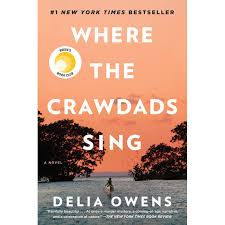
Where The Crawdads Sing

This summer’s literary sensation is just a Netfix mini-series in waiting.

Shock as Human Being is underwhelmed by book

Twitter has been agog all year, or so it seems, about this book from first time novelist, Delia Owens. It firmly established itself as the book to read this year, and in normal summers, it would have furnished many a beach bag as the go-to holiday read. I was intrigued. Could it really be that good? Or was it just the latest example of marketing triumphing over substance? There was only one way to settle it and, firmly behind the curve, I bought it and settled down with a raised eyebrow, waiting to be convinced.

Unfortunately, dear reader, I was not. Convinced that is.

There is a lot to admire and enjoy about it. I finished it in three days, for a start. So, yes, it’s a page turner, and in my book, that is a powerful attraction. It’s an often under-appreciated skill to load a narrative with so much forward momentum that it’s easy to read seventy pages without really noticing it. Normally, even with books that I end up loving, I can be persuaded to break for a cup of coffee and a biscuit after twenty pages or so. It’s hard work reading and one needs to keep one’s strength up. But here the scenario, setting and characters are so well set up, structurally, that I found myself engrossed in wanting to know what actually happened.

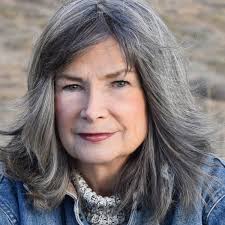
Probably the most admirable thing about it is the fact that the author is a Seventy year old Biologist, whose only other foray into publishing has been Biology text books. A first novel becoming an international best seller is something that the rest of us mere mortals can only dream about. As an aspiring novelist of a certain age, depressingly familiar with the Publisher’s/Agent’s rejection email, this is a phenomenal achievement. So, notwithstanding the criticisms about to follow, I take my hat off to her.

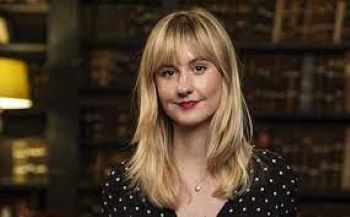
Delia Owens

Her intimate knowledge of Biology furnishes the book with its greatest strength. It’s a beautiful portrait of a wild eco system. There is a fabulous sense of place in the book. The coastal strip of North Carolina marsh land is vividly evoked by someone who clearly knows what they are talking about. This is, refreshingly, not the product of painstaking research, but the result of a lifetime of work and study. She knows her stuff and that sense of authority is absolutely convincing and compelling.

The Whodunnit, Crime element of the book is also very well done, (at least until the end) and she handles the switching back and forth from the past to the present very skilfully, creating tension and adding layers of detail to characters and relationships. There is some sense of satisfaction from the court room scene at the end, with the orderly presentation of prosecution and defence questions and their answers providing some welcome kind of resolution and clarification. The court room scene, of course, has haunting echoes of “To Kill A Mockingbird”, even down to the presence of the marginalised black families in the courtroom. I expected Scout and Jem to pop up at any moment. Kya Clark, the main protagonist, though white, is the victim of prejudice and suspicion by the mainstream community, and her main support and friends throughout her isolation were the elderly black couple, Jumpin’ and his wife Mabel. This Maycomb County type atmosphere resonates throughout the novel. For the most part, it’s another of the pleasures of the book, but like so many things, it’s not an unqualified triumph. There is a straining for this effect, a trying too hard. There are only so many times you can describe the eating and making of Grits, for example, before it becomes faintly ludicrous.

The court room scene, despite its satisfactions, is an opportunity missed. Too plain, too straightforward, with nothing on the same scale as Atticus’ forensic reveal of Tom Robinson’s left-handedness. I got the strong sense, that, like many first-time novelists, by the end Owens had run out of steam, and was just going through the motions. The “twist” right at the end is the least dramatic denouement in the history of murder mysteries. Not because of what is revealed, but the way in which Owens chooses to do it. It’s baldly described, with no character interplay, and the result is deflation. For me, a big “So what?” I’m afraid.

A few other gripes from the grinch. The notion of the main character, Kya, pulling herself out of her poverty stricken, school-refusing, backwoods abandonment, to become a highly literate published writer just wasn’t credible to me. I was willing to suspend my disbelief a little, to give myself to the novel, but I couldn’t sustain it I’m afraid. The two emblematic boys in Kya’s life, Nice Boy and Bad Boy, were similarly two dimensional and also had me running my disbelief down from the flagpole in annoyance.

And then there’s the poetry. Give me strength. It’s not that the poetry is so dreadful, it’s just that there’s far too much of it, and, again, it strains credibility that anyone one in the known universe would recite poems in response to things that happen to them as they mosey their way through the Mangrove to the beach.

As I was reading it, even in my enjoyment, I could imagine Reece Witherspoon rubbing her hands together with glee, cackling, “I wonder if we could get Gwyneth in this and maybe Bobbie May Brown to play Kya.” It’s absolutely set up to be the next “Big Little Lies” or “Little Fires Burning”. And it will probably be a much better Netflix mini-series than book.

So, there you have it. For all of you that read it, devoured it, enjoyed it and eulogised about it on Twitter, I’m sorry. Please don’t take this the wrong way. I’m not saying that you’re wrong or stupid. It just didn’t speak to me. That’s my Bad. There’s precious little enough pleasure in these COVID Neo Fascist times, so I’m glad you found some in this and wish that I had too. Now, let me just get back down to writing an international best seller. How hard can it be?

Zero Tolerance – Out Now!

“This is a novel that should be read by anyone who works in education or cares about our schools..”

Please use the link below to buy the book:

Buy Zero Tolerance now!

Please note: Readers outside the UK should use the Amazon link and save themselves some money on postage. Overseas Readers

My first published novel, “Zero Tolerance” is out now and available from Matador books. I have no idea how good it is, I’m far too close to it for that. Previous experience teaches me that I’m an unreliable witness as far as that kind of judgement is concerned. One thing I am certain of, though, is this. The book deliberately takes a particular view of recent developments in school leadership and management practices, accompanied by changing fashions in pedagogy and curriculum. Readers will either agree enthusiastically or they will be enraged that the new orthodoxy (Zero Tolerance behaviour management approaches, Direct Instruction, Knowledge Rich Curricula, Academies and Free schools) is being called in to question. But being outraged can be very entertaining and it is deliberately intended to provoke debate. Some things in the book, however, are not open to debate and just need to be called out: the corruption, bullying and unethical behaviour that continue to spread through our schools. There is no ideology that can justify that. Much of this behaviour is located in the Academies programme and the Free Schools movement, a monumental waste of resources chasing ideology over evidence to my mind. Having said that, there are good academies, staffed by genuine, talented people, and I don’t mean to offend anyone trying to do the right thing by our pupils.

All human life is here. And some not quite so human……

Goodness, it sounds terribly dull, doesn’t it? But all of that stuff above lurks under the surface of the book. It is, primarily, a good story, I hope. A funny story with engaging characters and situations that anyone who has been in a school in the last ten years will recognise. A story that will make you laugh and cry and think. I’ve spent a long time working on it and a not inconsiderable sum of money to self-publish it, and it would be nice to cover my costs at least.

So, with that in mind, let me make this appeal to you. Please

  1. Buy the book, and, if you like it:
  2. Leave a review
  3. Share the link with friends and colleagues
  4. If you’re in a book club suggest that this is your next read
  5. If you’re a teacher, do a whole staff email in your school with links to the book
  6. Follow my blog and Twitter feed
  7. Retweet your enthusiasm for it, with a link of course

If you don’t like it, just miss out step 2 above!

I would be interested in constructive criticism, as long as you remember this is the first novel I’ve published, so be gentle. I’ve put this out there, not for world domination or ego-massage, but out of a commitment to ethical practices in schools for the benefit of pupils and staff. It’s self-published under my pseudonym, on the advice of my union, because I am currently labouring under a non-disclosure agreement – another piece of malpractice that is spreading insidiously through the Academies programme.

Finally, let me just say, I am more than a little nervous. I really do hope that you enjoy the book.