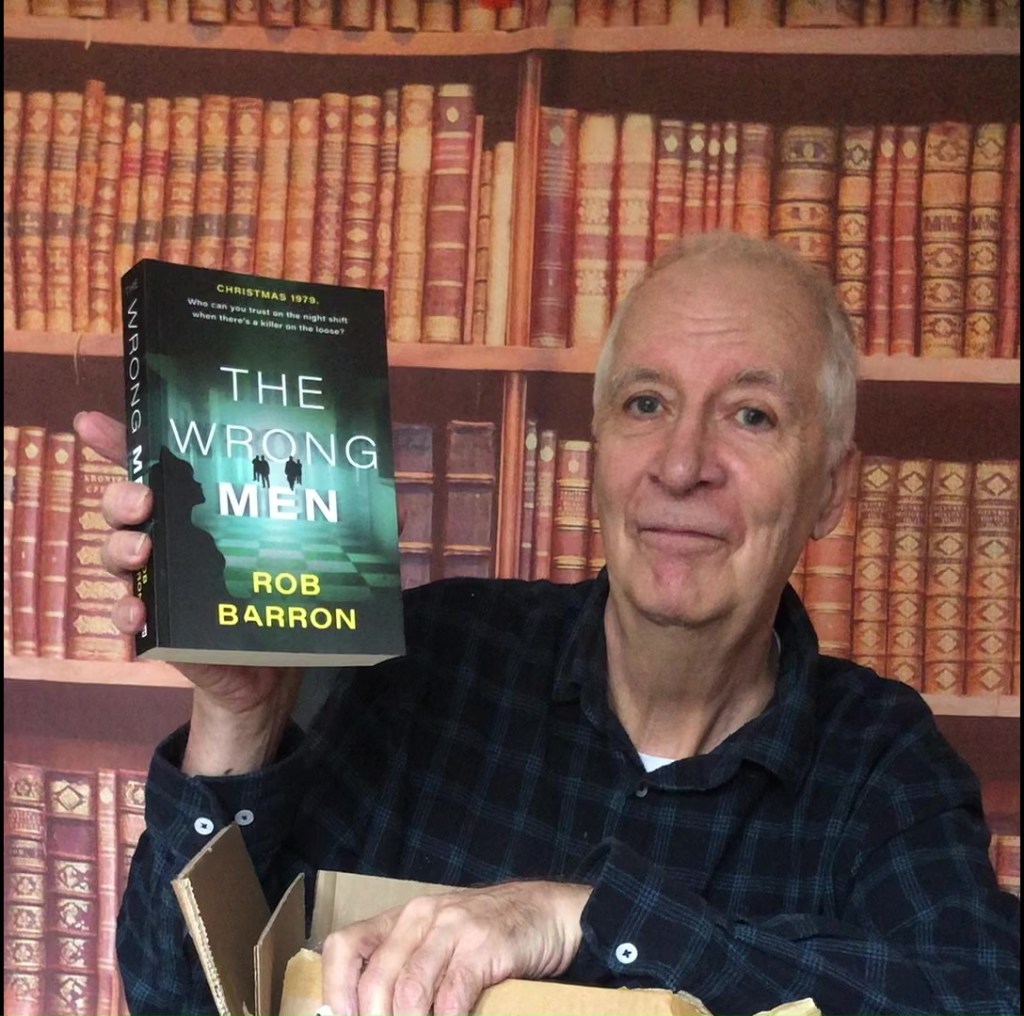
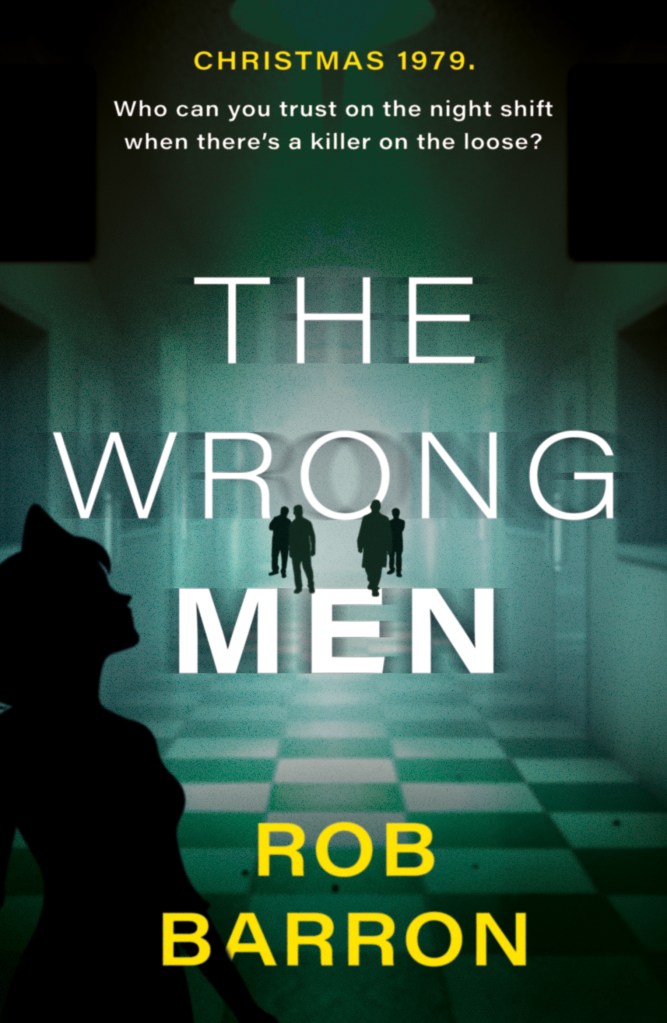
My twisty 1979 murder mystery, The Wrong Men, is published by The Book Guild on March 28th 2026 – link to buy here: https://shorturl.at/JoiAh. You can also buy it, and all of my other books, at my bookshop, here: https://www.rjbarron.co.uk/bookshop/
If you read the book and like it, I’d be very grateful if you could leave a review on Amazon and spread the word amongst all of your reader friends. Reviews and word of mouth make a big difference.While you’re waiting, have a look at this interview with me about the book by The Creative Writing Programme in Brighton. I am a graduate of their two year programme of study. You can read the transcript below or visit their website here: https://www.creativewritingprogramme.org.uk/inspiration
New Novel From Alumnus Rob Barron
17 Mar
Rob Barron took the Creative Writing Programme from 2022 to 2024. His novel The Wrong Men is published on 28th March 2026. Here he talks about his writing life.
Your novel The Wrong Men is out this month. It is about a hospital porter who discovers a murdered consultant in the mortuary. Could you tell us about the inspiration behind this story? It’s a story I’ve wanted to tell for over forty years, ever since I had a job as a porter in York District Hospital after leaving University. It was a fascinating experience – porters are the only staff members who go everywhere in the hospital and routinely interact with everyone, and hospitals are extraordinary places – this one in particular was full of larger than life characters. I also wanted to use my memory of living in York at the time when the Yorkshire Ripper was still at large, and the pervasive sense of unease this generated among many of the female students I knew at the time. It was an opportunity to write something in the guise of a murder mystery that is really about growing up as a man at a time of institutionalised misogyny.
It is a detective story, could you tell us about your planning process and how you keep track of all the seeds you have to sow along the way when writing crime fiction? I decided to scatter lots of seeds, knowing that in the editing process some would be pulled up and thrown away. It requires meticulous rewriting and tracking the separate threads. I’m guilty of using a colour coded spreadsheet to double check that there were no loose ends and that the whole thing was coherent. Crime fiction seemed to need a very different process than that used in other genres. The first draft was about revealing the story to myself and all the other drafts were trying to conceal the story from the reader.
You grew up in the north of England and both your YA novels and The Wrong Men are all set in Yorkshire, could you tell us about the importance of setting in your writing? The first novel I self-published. Zero Tolerance is a contemporary satire set in south London, so I’m not wedded to the north, but, generally, setting is a crucial aspect of my writing. I love to create an authentic sense of place and time. For me it underpins the notion that fiction is a way of transporting someone from their current reality to somewhere else. The somewhere else in this instance is York, a beautiful historic northern city and a busy hospital at night. The sense of the end of the Seventies is also important.
Did you start writing this novel while doing the Creative Writing Programme? Yes. I was just about to finish my YA novel but I was excited about the idea for The Wrong Men so I started that as well. For a while I was writing them in tandem.
How did you finish The Wrong Men and what was your journey to publication? The workshop part of the Creative Writing Programme was very helpful. It imposed a certain discipline because of the regular submissions and feedback. By the second year the book really had its teeth in me and I raced to the end. The feedback from tutors and fellow students was incredibly helpful and lots of changes were made to the original piece. Even after I had started to send it off to agents and publishers, I made significant changes based on reader feedback that eventually convinced me that I’d been wrong about certain choices I’d made in the earlier drafts. I sent if off to lots of different people and had the usual number of rejections, with about half a dozen people who requested the whole manuscript. In the end I had a couple of offers that were for partnership publishing, and I eventually accepted the one from The Book Guild. A couple of weeks after signing the contract I got an email out of the blue from a publisher who I’d sent the whole manuscript to a year before. They had “found” it again, loved it and offered me a three book deal on the strength of it. Sod’s Law! I felt I had to honour the contract I’d already signed. It was a good lesson though, not to give up. Somebody somewhere will understand what you were trying to do and will want to publish.
You have previously published two YA novels – The Watcher and the Friend and When The Cold Wind Blows, but this is your first adult novel – could you tell us whether your writing process differs when writing YA and adult fiction? In some ways I don’t think the idea of target audience is very helpful. The two YA novels are aimed as much at adults who like fantasy fiction as children. So, no, my writing process was exactly the same, apart from the specifics of editing to hide the story from the reader mentioned above.
What are you working on now? I’m writing sequels for both of them. The final part of the YA trilogy (working title When Stars Collide) and the follow up to The Wrong Men. Unfortunately, all of the work you have to do to promote and market a new book takes up a lot of time – it doesn’t leave much room for new writing. This is a good reminder to get on with it!
What are your top tips for someone starting out on their writing career?
Write a story you want to tell.
Ignore trends
Generate words
Put characters together and watch the magic happen
Edit ruthlessly. If you’re not sure, get rid of it
Listen to advice and then ignore it if doesn’t strike a chord with you
In December 1979, Johnny Jewell was 22 years old. He had three main passions in life: Football, Music and Reading. This is what he and his friends were listening to.
My new book, The Wrong Men, published by The Book Guild on March 28th, is a murder mystery set over Christmas 1979, and features Johnny Jewell, a 22 year old English graduate who is working as a porter in York District Hospital. To give readers a flavour of that time, I’ve included a link to a Spotify Playlist of the key tracks that Johnny and his friends were all listening to then. It’s an eclectic mix: some of the songs are mentioned in the novel, some relate directly to the themes of the book, and some are there just to give texture and atmosphere. They are what he was listening to in that period of his life.
Some younger people might look at the list and jump to an obvious criticism, bolstered by some rudimentary research. “Big mistake – that song wasn’t released in 1979, it was from 1971. Shoddy work!” It’s true, there are many tracks from earlier times, but there are none from after January 1980. I was sorely tempted to include Happy House by Siouxie and The Banshees, notable for their live performance on Top of the Pops, (where Siouxie conclusively demonstrates the superiority of two pockets full of glitter over a panoply of computerised special effects). Eventually, integrity persuaded me to leave it out, comforted by the fact that it will appear in the sequel to the story.
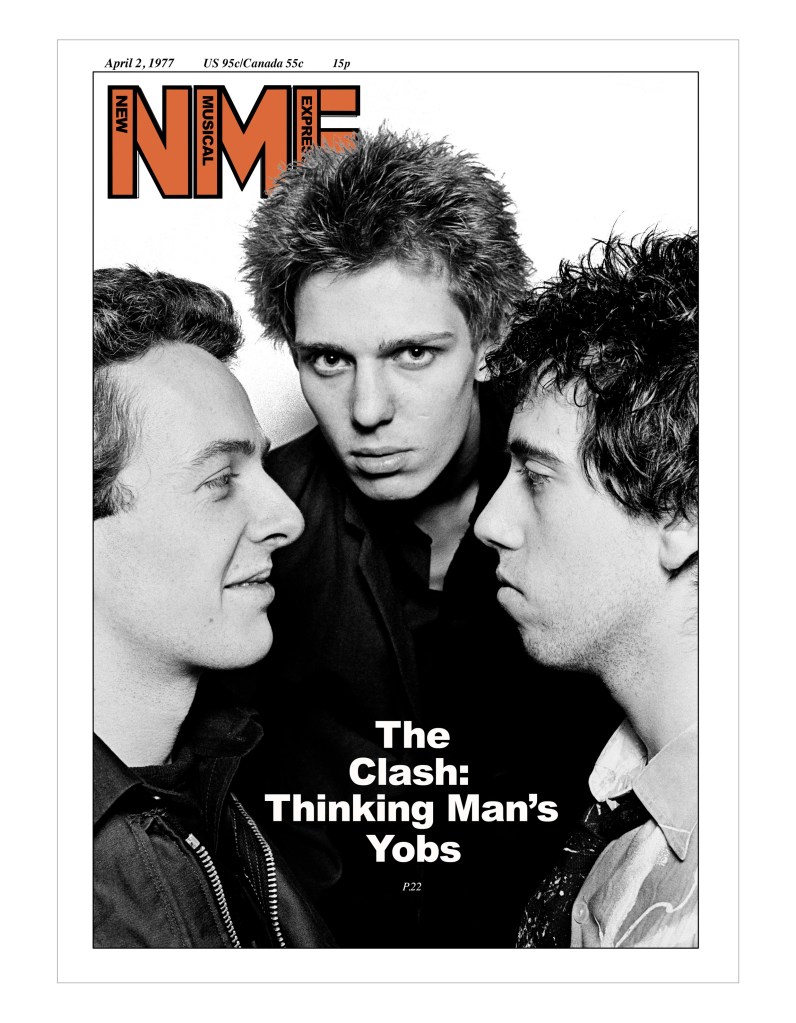
So there is some rigour to the choices, and they reflect the reality for a young music aficionado with little disposable cash to hand. The truth is, back in those pre -internet, pre- Spotify, steam -powered days, finding out about new music and buying new music was a very different thing to its equivalent today. We listened to the radio (mainly John Peel after the pub, but also Alan Freeman on a Saturday afternoon) We read the music press. The Thursday purchase of The New Musical Express was a thrill that its hard to fully explain to today’s kids. It was The Bible for Leftie music fans– funny, authoritative, alternative, well-written and informative. Sounds and Melody Maker would be tolerated, but they were a pale, thin replacement for the real thing.
Once you had triangulated a list of potential new purchases from the radio and the NME and gossip, you could begin to edge towards doing the deed. But back then, an album cost about £4.99. Just to give you a marker, at the same time a pint of beer was about 40 pence – more than ten times the cost. Just do the basic maths, using the average price for a pint today, and you begin to get some idea of the scale of the investment.
This alone explains why the average student’s record collection would only contain a handful of new releases, and their listening experience would inevitably involve recycling their back catalogue. A stack of LPs would be regularly out of their sleeves for a play. The second factor to bear in mind was the iconoclastic effect of having experienced the punk revolution, which turned everything on its head. What were you supposed to do with your lovingly curated collection of Prog rock albums? Could you still retain any street cred and play Yes, for example? Many of us did that kind of listening in a solitary and secretive fashion, saving the latest music for communal experiences. Some old stuff, deemed “classic” managed to straddle the divide and in some ways were an even greater indicator of your superior music taste – hence the inclusion in the list of Van Morrison, John Martyn etc.
The tracks that made it on to Johnny Jewell’s playlist all have a back story. Here are just a few of them.
The List kicks off with “London Calling” by The Clash. It had only just been released when the book starts on December 21st, 1979, but this is an example of another kind of purchase. The Clash were firm favourites for Johnny and his chums and no research was needed. London Calling was confidently bought on the first day of its release.
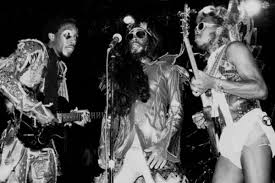
2. There’s a middle dance section in the playlist, to mirror the Party episode in the middle of the novel. Much time was spent by Johnny and his chums compiling mix tapes for parties. In such tapes, Funk was held in high esteem: James Brown, Funkadelic, Parliament and Stevie Wonder were key players, and The Jacksons, criminally underrated, never failed to make the cut.
3. Solid Air, Hard Nose the Highway and Take Me to The River are moody, late night, after the party listens. Chilling, chatting and winding down. Stuff happened between people when these were playing.
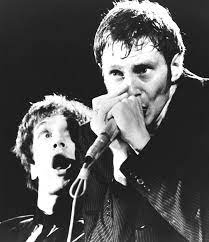
4. A word of clarification about the Dr Feelgood track, Because You’re Mine. The Feelgoods were a big thing in the mid – late Seventies, and acted as a bridge between Pub Rock and Punk. Live, they were thrilling, particularly the manic attack of Wilco Johnson’s extraordinary guitar sound and style. They crackled with tension, live and on record. Sonically , they were supreme. Lyrically, well, that’s a different story. They fully reflected the sexist world of the Seventies. Their gigs were a very male affair – it was rare to spot women there, and Because You’re Mine is a classic representation of the attitudes that prevailed at the time.
It’s included because of that – this was the world that Johnny inhabited and was trying to navigate. We thought for a long time that most of those battles had been fought and won, but nothing can be taken for granted in these dark days of populism, when Neanderthals like Andrew Tate, inexplicably hold sway with young men. The just released statistic that 33% of Gen Z men believe that wives should obey their husbands is a chilling reflection of this sliding back to the Dark Ages. Listen to the Feelgoods, read the book and fight back!
For the rest, many of them have lyrics or ideas that directly relate to the story of The Wrong Men. How many can you find? What would be on your own playlist from when you were twenty two years old?
In which The Owl breaks the Law, but feels Morally
Justified
I am 62 years old. The general election called for December
12th is, by a long way, the most important of my lifetime. There
have been other significant elections, elections that I thought were critically
important. The first Blair victory in 1997 springs to mind. After the crushing
disappointment of 1992, when John Major snatched victory from the jaws of
defeat, partly because of the inability of Neill Kinnock to speak simple, clear
English, it felt as if that election was our last hope. But even that pales
into insignificance when compared to what is at stake now. The only thing that
comes close is the election of 1979, and given the recent media obsession with
a return to the seventies that both parties spending plans are supposed to
represent (more of that later), it seems appropriate to take a little trip down
memory lane and recount the events leading up to my flagrant breaking of
electoral law over forty years ago.
Thatcher v Callaghan 1979
1979. It is very difficult to accurately paint a picture of
the 1970s for people who did not experience that decade as adults. So much has
been obscured, wilfully, by the rewriting of the history of that time, that one
can almost forgive youngsters for thinking that the seventies was a time of
unbridled union power, of reckless public spending, of rampant nationalisation
sending the British economy into near terminal decline, rescued only by the
intervention of the IMF and the Blessed Margaret. This is the established
version of our history. And, having lived through it, one is left wondering how
much more of our history is similarly falsified. Indeed, “History is written by
the victors” as Winston Churchill famously didn’t say. The only thing that
representations of the decade have got right is that it was, indeed, a very
brown and orange period, in terms of clothing and home décor.
Up until 1979, there had existed what came to be known as
“The Post-War Consensus”. That is, both the major parties accepted that a
modern economy and society ran most effectively on a judicious mix of Private
and Public sector endeavour. The mixed economy balanced freedoms, rights and
responsibilities and a strong state sector was essential, not just for social
justice and equity, but for economic efficiency as well. It was accepted by
both sides that spending about 40-42% of GDP on the state was necessary to
ensure a smooth running, fair society. One effect of this consensus was that a
period of Government by one’s opponents wasn’t too disastrous. The Tories had a
slightly meaner approach to public spending, but that was about the only
difference.
But then came Thatcher and the monetarist experiment. In
opposition, when The Labour Party began to be known as the natural party of
government, or as more efficient managers of capitalism, the Tories began to
think. The pragmatists dabbled with ideology with catastrophic long term results.
The ideology they espoused was embraced with the fervour of converting
catholics and they developed a toxic combination of ideological certainty,
limited intellect, and the common touch, aided and abetted by a command of
rhetoric. It was the first signs of populism and it ran riot through the Labour
party’s complacency.
At the time of the election, I was living in York, extending
my student years after graduation via a series of crummy jobs and even crummier
accommodation, until I could settle on what to do with the rest of my life. I’m
still working on that last one by the way, but at the time, it felt like I would
come up with an answer in the following year or so. One crummy job finished
(was it the Great York and Surroundings Bus Census, a job that involved me and
my partner in crime keeping ourselves warm as the snow fell, abandoned at some
remote village green, by setting fire to our leaflets in the litter bin? Or
perhaps it was the job at York bus garage where I was tasked with cleaning the
garage floor with some watery detergent and a very small brush? There is
probably some hapless youth still cleaning the same floor, with the same tools
today, with the same chances of success) and I took a trip to the job centre to
find another Crummy Job.
I picked a card from the display boards and took it to the
lady at the desk. She peered at the card and read aloud, “Ah, yes, a stock clerk
at Raylor’s Plant Hire, Thomas street, York.” She smiled and looked over the
top of her horn-rimmed glasses at me. Her smile scurried away, back under its
customary stone. She stared appraisingly at me. “Hmm. Are you sure this is the
job for you?” It was a question that in later years as an English teacher I
would recognise as one that expected the answer “No”. After a further
hesitation she made up her mind and I was duly despatched to their offices just
outside the city walls, starting at 9am the next day.
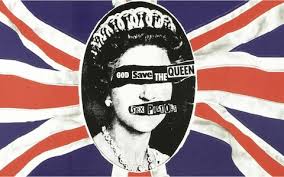
After my previous jobs, the prospect of sitting at a desk in a warm office ten minutes away from my flat was appealing. I scrubbed up and wore a respectable jacket and tie to look the part of the keen white-collar worker. This was a job I needed to keep hold of. The first clue that that might be a little more difficult than I had anticipated came when I walked into the huge, open plan office on that first morning. The boss was a dapper little chap called Derek. For devotees of seventies sitcoms, think John Inman in “Are you being served?” Tight suit and waistcoat combo with fetching floral kipper tie, he was the epitome of camp, at a time when no-one really knew what camp was. His desk, a stately mahogany monstrosity with the surface area of an aircraft carrier, dominated the far end of the office. From this vantage point he could surveill the whole team and keep them under his baleful eye. The clue was in the middle of his desk and on the wall behind him. Two enormous full colour pictures: one of Her Majesty, Queen Liz, the other of The Blessed Margaret Thatcher. In the middle of his desk, two plastic union jacks hung as limply as the unwatered Swiss Cheese plant in the corner. My heart sank. My boss was mad Thatcherite. And a monarchist to boot. And this was ’79, the time of The Pistols and Punk. I was shown to my desk, virtually two planks of wood tucked away in the corner furthest away from the mighty Derek. I slunk back there and vowed to myself to keep my head down and my mouth shut.
It was a fine plan, or as fine a plan as twenty-two year old
wasters’ plans tended to be. Predictably, it did not survive for long. At 9.15,
when the full complement of Derek’s crack team had assembled, each person to
their own desk, a strange ritual began that was repeated every morning of the
general election campaign.
Derek tapped on a glass on his desk with a spoon, like the
best man at a wedding.
“Good morning campers. All ready for another day of free
enterprise and wealth creation? Before we begin, let’s just do our daily roll
call, shall we?”
His voice was a strange combination of flat Yorkshire vowels
and a working man’s club version of a female impersonator. He turned to the
woman sitting at the desk on the far end of the front row. “Good morning Joyce.
And have you been following the events in the general election campaign?”
“Yes, Derek, I have.”
“And will you be voting Conservative on Thursday May 3rd,
Joyce.”
“Yes, Derek, I certainly will.”
“Good girl Joyce.”
Derek moved on to the occupant of the next desk. The same
interrogation took place, word for word, with the same responses. There were
about 12 -14 people in the office, and each one in turn played their part.
Sitting at the back, I watched the whole bizarre spectacle unfold, my heart
sinking ever further towards my boots as the focus shifted inexorably towards
me. Finally, the moment of truth arrived. The occupants of the other desks
turned in their seats towards me. Derek beamed in my direction. “Ah, of course,
we have a new member of our happy team. Christopher, isn’t it?” (Please note:
all names have been changed to protect the innocent. And the guilty.)
“Yes, that’s right,” I managed to mumble, relieved that he
had started with an easy question.
“Well, Good morning Christopher. Have you been following the
events of the general election campaign?”
“Yes. Yes, I have actually Derek.”
“And will you be voting Conservative on Thursday May 3rd?”
There was a pause. I swallowed and licked my lips nervously.
The silence grew in the room. The fixed, casual smile on Derek’s face began to
flicker.
“Well, actually, Derek,“ I began and paused again.
“Yes?” he enquired, disturbed at this unprecedented break
with routine.
“Well, I’ll be voting for The Labour Party Derek, actually.”
Everyone froze. The smile fled from Derek’s face and his
brow furrowed. His eyes ranged around the massed ranks of his acolytes, as if
to spread his disbelief amongst them. Satisfied, he stopped, raised an eyebrow
and proclaimed, “We’ve got a bloody …. Socialist in the office. What the hell
happened to my arrangement with the lass at the job centre to weed out the
lefty students?” The word “socialist” was intoned in a voice dripping with
contempt and a lip so curled that it was almost touching his nose.
I somehow survived the rest of that first day. I returned
the next day to find my desk relocated to the corridor outside the office. Once
a day I was called in for the ritual humiliation of Derek singing the praises
of the forthcoming Thatcherite Free Market Utopia, followed by his withering
condemnation of the failures and moral bankruptcy of Socialism. Dangerously, I
challenged him and argued back. Part of the reason I survived was that Derek
enjoyed the argument and he was unused to someone disagreeing with him. But
mainly it was an exercise in power relationships. He enjoyed this daily
affirmation of his own power and the rightness of his cause. It was like a Lion
playing with a bruised and bloodied Wildebeest. And a really small and skinny
wildebeest at that. And when the fun stopped, I was summarily banished to the
corridor for the rest of the day.
Finally, Thursday May 3rd arrived. The polls had
made gloomy reading for Labour supporters, and Derek’s steadily increasing
sense certain victory made work ever more unbearable. That evening, my chums
and I settled down in front of the telly in my tiny flat, with a few drinks prepared
for the worst. I lived in two rooms of a huge Victorian three storey terrace
just outside the city walls. Once grand, the house was then positively
Dickensian in its squalor, and provided accommodation only marginally more
comfortable than rough sleeping. The Landlord was a benevolent Christian from
Hull who tolerated the casual and perpetual non-payment of the tiny rent that he
charged and turned a blind eye to the recycling of the sole fifty pence piece
through the gas meter to heat the fire. He would arrive at the house about once
every two months, making pathetic, hand-wringing attempts to get his tenants to pay at least
some of their arrears and would depart some time later having lent most of his
debtors a fiver each.
Various ex-university ne’er-do-wells and chancers had passed
through this crumbling pile over the years and the net result was, by the time
of election night, a stack of neatly arranged polling cards, about fifty in
total, was placed just inside the front door. Their rightful owners were
scattered to the four corners of the globe by this stage. I was registered to
vote in North Yorkshire at that time, after a “Withnail and I” type spell
living in a farmhouse near Easingwold. It was the biggest Tory majority in the
country, a place where the working classes, horny-handed sons of toil and
agricultural labourers, were transported to the polling station in one of the
Lord Snooty’s tractors so that they could tug their forelock and vote
Conservative because they knew their place.
I had resigned myself to not voting, partly because my vote
would not dent the majority, partly because it was a round trip of about forty
miles after work. Any remaining flicker of wanting to do the right thing and
exercise my democratic rights, won at great cost by the struggle of my
forebears, was totally extinguished by three pints of Sam Smiths and a bottle
of cheap red. It was the beginning of a long career of armchair socialism.
And then, at about 9.30pm, there was a hammering on the
front door. With much grumbling, I prised myself out of the cosy, warm sofa and
went down see who it was. I swung open the door, expecting to find someone else
come to join the post result wake, only to find three labour party workers,
their faces furrowed and serious. They were all in identikit socialist worker
outfits of Donkey Jackets, Rock against Racism badges, three-day stubble and
John Lennon glasses.
Their leader did not waste time on any social niceties.
“Alex is in trouble. You’ve got to come out and vote.”
Alex was Alex Lyon, the sitting MP for York at that time, a well-respected,
popular and principled constituency MP in an area that was reliably Labour. If
he was in trouble, the political tectonic plates were truly shifting.
“I can’t,” I stammered, “I’m not registered here. I haven’t
got a polling card.”
The storm troopers of the revolution exchanged weary glances
and shook their heads. Che Guevara leaned in through the doorway and picked up
the pile of voting cards. He fanned out the cards in two hands and proffered
them to me.
“Pick a card, any card,” he said. “As long as it’s got a
man’s name on it.”
I hesitated. Breaking the law came hard to a well brought up
lad from the North. My scruples crumbled, however, on the rocks of their scorn.
“Jesus wept,“ one said, “It’s not a hanging offence.
Exercise your democratic rights, man. People have died for this, y’know.”
That did it. I marched to the polling station burning with
democratic fervour. Wat Tyler, The Levellers, Oliver Cromwell, Emily Davidson,
Keir Hardie – I was standing on the shoulders of giants. Songs would be sung in
my honour, municipal closes of social housing would be named after me, I would
feature in a film made by Ken Loach. Immortality was mine. The man who bravely
defied the forces of reaction to cast his vote freely, without fear or favour.
Well, there was quite a lot of fear, actually. I slunk into the polling
station, collar turned up, mumbling at the teller, hyperventilating and
sweating profusely and then scurried out, expecting to be wrestled to the
ground by the police.
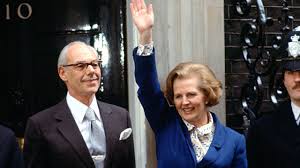
It made not a jot of difference, of course. The Blessed
Margaret stormed to victory with a fairly modest majority of 44 seats. I slunk
back into to work on Friday morning, hung over and depressed. I arrived to find
that my desk had been moved from the corridor and now occupied pole position in
the front row, right next to Derek’s desk. He greeted me that day with a
sickeningly broad, beaming smile, and proceeded to lecture me on the onward
march of history and progress under the benevolent wisdom of Mrs T. That day
and every succeeding day for the rest of my tenure there. It was a horrible,
horrible first day of the new Reich, one that left me squirming with
disappointment and dread.
What my twenty-two year old self could not have realised
back then, was that this was just the start. Over the following forty years, it
was all going to get much, much worse.




 The Old Grey Owl