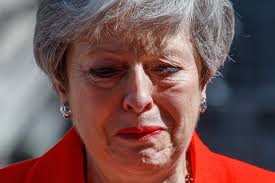
So, farewell then, Theresa May. Theresa May. A strange name for a Prime Minister. So Conditional, so Tentative, so Hesitant, so Equivocal, so Subjunctive, so Uncertain. She has gone, But Nothing Has Changed.
Theresa may decide. Theresa may waver. Theresa may resign. Theresa may run through sunlit fields of wheat, Under blue skies and high, wispy clouds, Naked and abandoned. She has gone, But Nothing Has Changed.
Theresa will dissemble. Theresa will obfuscate. Theresa will not answer the question. Theresa will be frightened and alone in a crowded room of dangerous foreigners. Theresa will cry hot tears in the street, angry and confused. She has gone, But Nothing Has Changed.
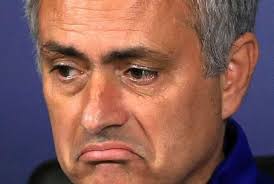
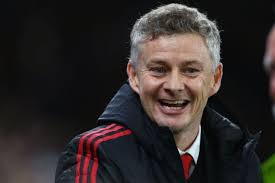
This was, originally, going to start with the question, “Do you want to be led in your school by Jose Mourinho or Ole Gunar Solskjaer?” Imagine a situation where the interview process for the new Headship at your school has got through to the last stage and there are only two candidates chosen for final interview. The two surprise candidates, disillusioned with the world of top flight football management, have decided it’s time to “give something back” and devote themselves to State school leadership. Mourinho and Solskjaer have polished their Powerpoints, rehearsed their assembly and have mugged up on everything there is to know about Knowledge-Rich curricula, Zero Tolerance behaviour approaches and direct instruction. The staff room waits with bated breath. Which one would you rather have as your leader?
Or, smiley softie Ole?
Bloody Ole Gunnar Solskjaer. Everything was going so well
after he took over the reins at Manchester United from Jose Mourinho in
December last year. The scowling, miserable, sour faced bad loser Mourinho was
finally despatched, though not, disappointingly, on Christmas Eve. It would
have been fitting to have seen him trudge homeward through the snowy streets of
Manchester, in time to spend a grudging Christmas with his nearest and dearest,
complaining about the inadequate presents he had been bought. (“What? A pair of
socks? Don’t you know my record? Three Premier League titles. Three. Respect.
Respect.”)
Mourinho had turned Manchester United into the Theresa May
of English football: cautious, wooden, frightened, ineffective. For May, that
was no great tragedy. There was no fall from a great height, no previous
evidence of charisma or invention or audacity. She had always been
distinguished by her mediocrity. But United had flair and panache in their DNA.
The team of Edwards, Charlton, Best, Law, Giggs and Cantona had been reduced to
shuffling, shabby incompetence. It was embarrassing.
And then the Roundhead was replaced by the Cavalier.
Mercifully released from Mourinho’s stifling safety first approach, where
players operated under a culture of fear, they responded to Solskjaer’s reign
like cattle let out of the winter sheds into Spring pasture. They gambolled.
They leaped. They ran friskily. They
played games with a sense of joy rediscovered. Pogba once again was the
midfield colossus from the French World Cup winning side. Lukaku looked like a
forward who knew how to terrorise defences and score goals. Rashford tore into teams
with direct running and close control.
And they won.
And for the blogger always on the lookout for the easy
metaphor, it was a gift from heaven. The parallel with the current two tribes
approach to School Leadership was uncanny. You could either have the New
Brutalism, in the form of Mourinho, or the person-centered,
relationship-nurturer of Solskjaer. And with Mourinho, and the Zero Tolerance
advocates, you got systems, functionalism, fear and compliance. But no love. No
passion. No commitment. And, as a direct result of that, no long term
performance. No personal growth. No sustainability. The Roundhead Mourinho was
yesterday’s man, old fashioned virtues repackaged for the modern age. You blame
everyone else when things go wrong. Demonise the previous regime for sloppy,
muddle headed progressivism. Blame the players, or the kids. Or the teachers.
How wonderful when it didn’t work and it seemed that Mourinho had been
comprehensively found out.
And at first, the human face that was Solskjaer worked
brilliantly. They began to win again. Words of confidence worked their magic
and players began to express themselves and their innate talent blossomed
again. Trust the players, treat them like adults, listen to them and all will be
well. Just like in schools. Fear will never produce anything more than
compliance. Love and loyalty, on the other hand, move mountains.
And then they gave him a full time contract and the wheels
fell off again.
Damn, damn, damn, damn, damn. My beautiful school leadership
metaphor shrivelling up on the vine with every passing game. The players, like
the naughty kids, started taking the piss again, presumably because they knew
that nice Ole wouldn’t do anything about it. Not even give them a bollocking.
There seemed to be no consequence for their actions, so why not mess around
until the end of the season, picking up a huge pay check and knowing that you’d
be off to better club in the summer. So what if Alan Shearer calls you out on
Match of the Day on Saturday night for not working hard enough? Big deal. You
could buy Alan Shearer ten times over.
And I recalled an incident from my time as a Deputy Head,
watching a crowd of naughty Year 10 kids summoned to the head’s office,
exclusions pending. With my adjacent office door ajar, I listened, fascinated,
to their conversation. It was like the scene from “Kes” with the smokers
outside the head’s door, except this time without the sweet, innocent lad who
gets the cane for nothing and without the swivel eyed psychopathic headteacher
wielding his cane like a light sabre.
As the Head breezed into his office past them, inviting them
in as he passed, one lad turned to his mates and said, sotto voce, “Watch me
get out of this.” And he did. Ten minutes later he walked out, having given an
Oscar winning performance as the contrite sinner who had seen the error of his
ways, the head’s chummy words of encouragement ringing in his ears. As he
turned to go down the corridor, I caught, through the crack in my office door,
the smirk the lad gave his fellow ne’er-do-wells. It was chilling.
The Head went home that day feeling good about himself. He’d
shown his human side. He’d connected with a difficult child in difficult
circumstances. He’d established a relationship and saved the child from another
exclusion. But actually, he’d let the child and the family down and the rest of
the school who had to field the consequences of his maximum tolerance everyday
in the corridors and the classrooms.
Most of the time the guy was a great head. He did a very
good job at a difficult school. He emphasised relationships at the same time as
cracking down on behaviour issues and he definitely improved the school. If you
had to categorise him according to the metaphor, he would definitely be a
Solskjaer rather than a Mourinho.
You remember that wonderful piece of research about school
leaders from a couple of years ago that categorised Heads as Architects,
Surgeons, Philosophers, Soldiers and Accountants? The one that disappeared
without trace because the coming wave of movers and shakers didn’t like the
conclusions? All classroom teachers would have been able to recognise the
categories. Many headteachers would have raised a sceptical eyebrow because
they like to think of themselves as visionaries or missionaries or messiahs.
Sorry Heads – gross and cheap stereotyping there. I know many of you are
fabulous human beings, particularly those of you who are reading this blog.
Follow the link below. It deserves to be resurrected and followed up because
it’s never been more important than now, when Surgeons bestride the Education
Stage, lionised, rewarded. Mourinhos all of them, at the height of his powers,
before he got found out.
There is another way to do it. Not Mourinho or Solskjaer.
Not iron discipline or trendy, progressive
chaos. There is no need to polarise in this way. Let’s have ethical
leadership that consults, engages, trusts staff, listens to students. That
establishes and maintains good behaviour without treating children like
convicts. That takes learning seriously without being enslaved by examination
outcomes. That has a curriculum that serves the children, not the floor
targets.
And, to finally flog my football metaphor to death, the
beautiful game has, as it always does, the answers. Or some of them at least.
There are four English teams in the two major European finals this year. And
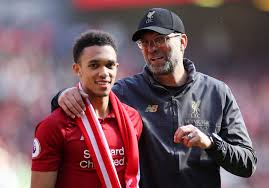
guess what? Three of them are managed by outstanding leaders: Guardiola, Klopp,
and Pochettino. (Sorry Sarri – that chainsmoking hiding your tab from the
cameras is just too Andy Capp and 1970s for you to be a serious candidate).
All lead by example, know their players, treat them like
adults, give them responsibility, insist on the highest standards, allow people
the space to make a mistake, turn them into better players. So no, my original
question was wrong. Do you want to be led in your school by Mourinho or
Solskjaer? Neither. Give us a version of Guardiola, Klopp or Pochettino
instead. And watch everybody fly.
The pause in Brexit proceedings ushers in a period of reflection, before we all take a deep breath and go again. Although, I have to confess to being one of those Brexit nerds for whom the pause is agony, like the gaps in between Game of Thrones seasons. Just before the Easter holiday, I found myself getting annoyed when not only did Brexit not occupy the first twenty minutes of the main news bulletins, but that, horror of horrors, it wasn’t even first item. I’m afraid my habit has got an iron grip of me. The six o’clock followed by Channel 4 news (a personal favourite of mine this and so refreshing after the right wing bias of the BBC. Although one does live in permanent fear of Jon Snow keeling over live on air. He does appear to be gabbling and getting a lot of his words wrong these days. Retire Jon! You’ve done your bit. Now you can sit back and just tweet like the rest of us. Obviously, the money’s not what you’re used to, but that’s getting old for you.) Then a gap that is filled by News 24, Parliament Live, Twitter, and the Internet until Newsnight and the joy that is Emily Maitliss. Since the general election I’ve watched Newsnight religiously, partly in the hope (shameful, I know) that Paul Mason and Iain Dale will actually come to blows. He’s a big lad, though, Iain Dale. Then a gentle wind down to sleep with BBC News 24 before being woken at 6 am by The Today programme.
And this obsessive consumption of news programmes has left me with few certainties, except these: 1. European politicians, when interviewed, are notable for many things, but in particular, their effortless command of English. Can you imagine David Davies back at the start of the negotiations, conducting a meeting in French or German? No wonder he only went over there for about forty minutes in total. They also appear to be thoughtful and intelligent. Adults, in short, compared to the embarrassment that are our shower. They have a detailed grasp of the issues, they are well-briefed and endlessly patient with our amateurish efforts. It’s been clear to everyone for some time, and I suspect, to them almost immediately, that there is no Plan B, and barely even a Plan A, apart from Theresa May Maybotting for England until time finally runs out. When highly educated members of the British establishment think Foreign Languages consists of speaking English louder, it’s no wonder that the vast majority of the population don’t think its worth bothering. We really must get to grips with our failure to teach Languages with any degree of success. And I don’t mean to smear the heroic MFL teachers battling against all the odds in our schools to challenge indifference and outright hostility to foreign languages and foreign cultures. This is a cultural mountain to climb, not just a schools’ problem.
2. Nearly every TV news programme
seems obliged to show its commitment to the will of the people by having some
dreadful Vox pop, which always appeared to be dominated by Brexiteers, who
don’t appear to know their arse from their elbow. And that’s a fully paid up
member of the metropolitan elite talking there, or so the conventional wisdom
goes. The vox pop is either a panel of ”ordinary folk”, often a revisit of some
group of lost souls who went through the same nonsense in the run up to the
Referendum, or it’s random punters in the street who are button-holed for their
reaction to a decontextualized question, the answer to which is clearly
engineered to be dangerously dim and populist.
These little snapshots of uninformed prejudice
never seem to bear any relation to what the polls are telling us. The rise in
people wanting a second referendum or who have changed their mind, that many
polls have indicated in the last few months, seem to have been conducted
somewhere else in the space-time continuum, if these vox pops are to be relied
upon. But then again, polls are notoriously unreliable. Or, in the case of
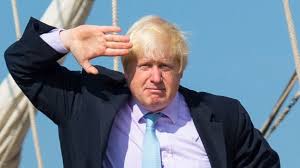
Boris Johnson, don’t actually exist. Still that story this week at least had
the merit of confirming what we’ve all suspected anyway, that The Telegraph
just makes stuff up. What’s breathtaking, even in these post -truth days, is their
casual admission that it doesn’t matter if one of their “Star” columnists lies.
According to them, Johnson was “entitled to make sweeping generalisations based
on his opinions”. Or lie,
in other words.
Just one example of a ridiculously loaded question arriving at the required result, was the recent poll where shedloads of people mysteriously said they’d like to have a “Strong leader”. That would be instead of a really weak and weedy leader, presumably. Amazing. It’s like giving people the choice of having a cup of coffee that tastes strongly of urine or a cup of really nice coffee. “Yes, I’ll have the piss coffee thanks.” No, I don’t think so.
These are just some of the nuggets of public opinion the vox
pops have treated us to in the last few months:
“I hate the French. I’ve always hated the French”
“I thought when I voted out in 2016 that we’d just be out
like the next day.”
“Why can’t they just get on with it?”
“The bloody politicians are just going against the will of
the people. They are all traitors.”
“They’re talking about the European elections now. Ordinary
people like us don’t know how any of that works. What have the European
elections got to do with us?”
“We’re British. We’ll get through it. We used to have an
Empire.”
Apologies for any inaccurate paraphrasing, but you get my
drift. In my darkest moments, stuff like this awakens my hidden, dormant
inner-fascist and I begin to think that participation in democracy should be
contingent on the possession of at least two A levels, or equivalents. Even a
BTEC would do. And then, after I’ve calmed down, that turns into a lament for
the state of political education in the UK. Why are we so ignorant about our
most basic political institutions and structures? Why don’t people know, with
any degree of certainty, what the parties stand for, who they represent, their
history? And without knowing that, is it any wonder that people vote in the
same way as many people choose their horse in the Grand National. The name
sounds good. Nice colours on the jockey’s silks. Democracy, it seems to me, is
far too important to leave to chance like this.
We must
include political education as a statutory part of the curriculum that applies
to all schools, public and private, academy and local authority. It’s had a
token presence in PSHE programmes, but that is just not good enough. And that’s
not to demean the efforts of PSHE teachers over the years, many of whom do a
great job. But too often it’s a task left to form tutors as an afterthought,
and, as a result, it carries the very clear message that this stuff doesn’t
really matter. It’s not important. But it does matter. And it’s not just
important, it’s crucial to our commitment to an informed and active citizenry.
And so, there, I’ve done it. I’ve done what every charlatan Government
minister does when there is a catastrophic failure of Government. I’ve blamed
the teachers. This Brexit mess is all their fault. But don’t worry. By blaming
the teachers, I have, brilliantly, identified the sure -fire solution, the
strategy that is always used when the whingeing teachers are at fault. More
Academies. So, how does that work, you ask? Dunno, it just does. Where’s the
evidence, you childishly persist? Errr… there isn’t any. Phew! Brexit sorted.
“It’s ten to eight and time for Thought for the Day. The
speaker from our Cambridge studio is…”
“A smug, patronising bastard,” continued Ollie
automatically, his left hand flicking out to jab the mute button on the radio.
Some days, he added his own ending to the familiar link in
his head. Other days, when he travelled to work with a tightening knot in his
stomach, he voiced it. Saying it aloud, with a mannered delivery, added to the
pleasure and invariably came accompanied by a wry smile of appreciation for his
own wit. In the last couple of months, that had become a daily event.
He talked out loud regularly in the car on his journeys to
and from work. He often thought that it was a good thing that the dashcam was a
device only configured to look out at the other traffic, not in at the driver,
but in his darker moods he thought that it was only a matter of time.
Playback of footage taken inside his car would reveal some
uncomfortable truths. A man who would randomly shout at other drivers, pressed
into action by a range of motoring misdemeanours: not indicating, driving too
fast, driving too slow, straddling lanes. The M25 was a rich source of examples
of this kind of incompetence, bad manners and stupidity.
The rest of his repertoire was not provoked by any activity outside of the car, but by the entertainment he had selected inside. Mealy-mouthed, vacuous Government Ministers, desperately straining to fill their allotted time by describing what was already known so that they could not be pressed to give a direct answer to the original question, drove him to fury. He would bang the dashboard and shout at the top of his voice, hurling foul-mouthed abuse at the blatant lies and distortions the disembodied voices were peddling. Favourite songs from the treasure trove of Spotify and Bluetooth inspired lusty singalongs, swaying and headshaking in time to the beat. Occasionally, in town streets, he would find himself intoning a Test Match Special type commentary, or shrieking a Match of the Day style soundbite as he described the antics of the people on the streets.
Outside the car, walking through a shopping centre, or
pottering aimlessly at home, solitariness was always accompanied by silence. It
was invariably a comfortable silence, a silence that fitted him snugly like a
familiar pair of old trainers. So why the change whenever he got in his car and
pulled away from the kerb?
The solid clunk of the driver door closing, the rolling pull
of the seatbelt and the ensuing metallic click as the buckle engaged, all
signified a retreat into a private, protected, invisible world. Despite the
wrap around plate glass windows, it was if he were invisible once strapped in,
in the same way that those who populated television screens were detached from
the viewer in their front room. They were there, but not there at the same
time. He imagined it was the same feeling of anonymity, of invisibility, that internet trollers wallowed in. In the
shadows, they were emboldened to spew vitriol and bile, confident that no-one
would ever know who they were.
“Oh look, there’s another one,” he thought as he had to
brake to accommodate the Nissan Micra that was serenely hogging the middle lane
at fifty miles an hour. Too scared to mix it with the articulated lorries in
the slow lane, relentlessly nose to tail from Prague to the Midlands, and
resolutely refusing to contemplate the outside lane, where people actually
broke the speed limit, the Micras of this world provoked the purest form of his
fury.
“Moron!” he muttered at the windscreen, as he swerved around
him, like a stream in flood surging around a rock in the middle of a river bed.
He glanced back in the rear mirror as he pulled away from the Micra, just to
check. Yes, there it was, another “Leave means Leave“ sticker, slightly
obscuring the driver, squat, low down in his seat, flat cap seeming to float in
the air above his head. He bellowed curses at Micraman, who just for that
moment became the target for all of his frustrations with stupid Brexiteers and
their little Englander small -mindedness. A little unfair, he knew. For all he
could tell, Micraman might have principled, reasoned objections to the Europe
that went beyond the outright xenophobic. And he would never voice this level
of anger in the staffroom, where some people went quiet the second it came up
as a topic of conversation. The only safe ground was to blame “the bloody
politicians”, which everyone seemed to agree with. Everyone except him, that
is. Blame the Government, certainly. But MPs? No, they were doing their jobs
properly. If he saw one more bloody Vox pop on the news giving air time to
someone saying, “They’re all the bloody same, that shower. I’m never going to
vote again”, well, he didn’t know what he would do.
Still, the guy in the Micra couldn’t hear him, so he
reasoned a foul -mouthed bellow at the rear-view mirror wouldn’t harm anyone
and provided a healthy release for him. And God knows, he needed some kind of
release at the moment. Particularly today. Another bloody lesson observation,
another evening spent tweaking a lesson plan and polishing his PowerPoint,
another troubled night’s sleep, worrying about whether he would get into school
early enough to do the photocopying he really should have done on Friday. And to
add yet more pressure, he’d been asked to bring in his identity documents
because his DBS clearance had run out. That had been another forty -five
minutes wasted the night before, ransacking filing cabinets in his study,
trying to remember where he usually kept his passport, birth certificate and
proof of address. Pressure, pressure, pressure.
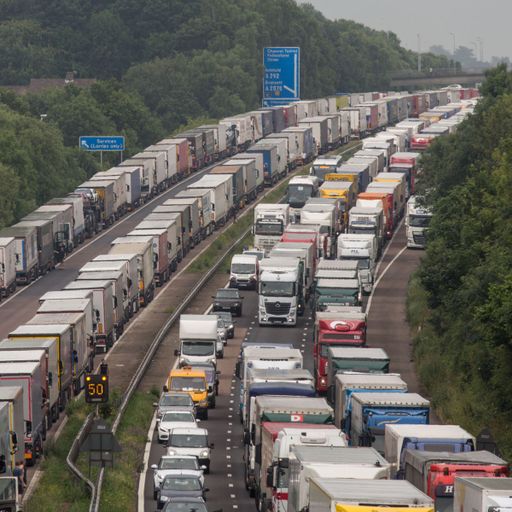
He glanced up ahead. Shit. The signals that straddled the
M25 blared their amber numbers. Just as he clocked the row of 50s, the car
crested the brow of the hill and there laid out below him, in that familiar
descent towards the Dartford crossing, was the beginnings of the banked -up
lines of traffic, the red stop lights spreading back towards him like an
incoming tide. He slowed, checked his rear-view mirror and indicated to move
into the left-hand lane, ready to leave the motorway and join the A2. There was
a grim satisfaction to be had from deftly slipping in between two gargantuan
lorries, into a space barely big enough for that Micra he’d seen moments
before. He smirked to himself. Micraman would need a space the size of three
cricket pitches before he dared to change lanes. The smirk died on his lips almost
as soon as it had formed, as the line of traffic he’d just joined slowed to
walking pace and then stopped all together. The knot in his stomach tightened.
“Come on, come on,” he shouted at the windscreen, slapping
the steering wheel and then gripping it white knuckled. He looked across at the
car to his left and just caught a glimpse of the driver, a young blonde woman
looking at him horrified, mouth agape. Their eyes met and she looked away,
embarrassed. She began talking into her phone and her eyes flicked across at
him a couple of times. His mouth set into a straight line. Now he was an object
of fear and ridicule. How much worse could things get. The last time this had
happened on the way to work, he had ended up sitting in traffic in this very
spot for about two hours
He couldn’t be late. He couldn’t walk into his lesson
without that photocopying. Maybe he could just explain and apologise and
reschedule. “Sorry, dreadful traffic on the M25 this morning” Even just trying
it out for size he knew what the response would be. Excuses were letting the
kids down. They’ve only got one shot at their time at Secondary school. If you
had any kind of moral purpose, you’d get up an hour earlier and make sure you
got in on time. It’s not as if it’s a surprise, the traffic on the M25 being
bad. His heart pounded against his chest and that familiar tightening behind
his eyes began as his head started to throb.
Deep down, he knew that it wouldn’t make any difference
anyway. He knew he was going to fail the observation. It was his third in a row
after all, and according to their Performance Management protocols, it was
three strikes and you’re out. Each one had come up with different reasons why
his lesson was unsatisfactory. The first time he’d been baffled and then
confused and then angry. It had never happened to him before. He’d always been
a Good or Outstanding. He was so used to being good at his job, being the
member of Senior Management who could hack it in the corridors and the
classroom, the expert, the person that others sought out for advice or help.
And now, suddenly, when he wasn’t that person anymore, he was adrift. He didn’t
know who he was.
Back in the day, on the rare occasions when something went
wrong, he would have talked it through with Helen. Her calm, rational
reassurance would have made everything alright again, but now, since the
divorce, he didn’t really talk to anyone, well, not about big stuff anyway. And
so, he was left with the growing understanding that he was yesterday’s man,
whose views on how to run schools and deal with “challenging” kids, were deemed
old fashioned and unfit for purpose. He had, almost overnight, turned from
being part of the solution, to being part of the problem.
And so, he knew that he could have spent all night
perfecting his lesson plan, could have photocopied the entire contents of the
schemes of work filing cabinet, could have slept overnight in his classroom to
ensure he was there in time on Monday, and they would still have found a reason
to fail him. And from there it was a matter of weeks to competency procedures,
union representation and a hush-hush deal being offered to him to resign for a
pittance.
This analysis was already there in the murky depths of his
consciousness, fully formed, but it was only now, in the strange stillness of a
choked and stationary M25, that it revealed itself to him and that he accepted
it with a calm, zen like feeling of inevitability and release. The knot in his
stomach eased slightly and the pounding behind his eyes relented. He would do
his lesson, whenever he got into school and they could say what they liked.
Just an ordinary lesson, one of those that over the years had generated
hundreds and thousands of excellent exam results, one that he could churn out
without spending hours of agonised preparation on. And then, what would be,
would be.
The sun peeked through a sudden gap in the bank of clouds
above, bathing the lines of cars in a warm, golden glow and he felt himself caressed
by a gentle wave of relief. At exactly the same time the traffic began to move.
It was not just one of those five-yard crawls that resulted in another forty
minutes of stasis, it was proper, genuine movement. All around him, in cars,
lorries and vans of all descriptions, drivers broke into smiles, tentative and
hesitant at first but then as the traffic accelerated, broad and strong. Some
even laughed out loud.
As Ollie pulled on to the A2, he couldn’t remember a time
when he had felt happier. The birth of his children, perhaps? Meeting his wife?
The surge of the traffic, blue sky above and bright sunshine all around kindled
an almost alchemical reaction. Base metal had turned to gold, somehow, and his
spirit soared. The silence in the car suddenly seemed at odds with this feeling
of euphoria and his finger automatically jabbed out at the volume button.
He knew even before the first word reached his ears.
Something in the tone, an uncomfortable agglomeration of vibrating air
patterns, a dog whistle like scream, whatever it was, it announced itself to
the world. Thought For The Fucking Day.
“…. and so, although Jesus exhorted us all to turn the other
cheek, there are times when we must make a stand, no matter how uncomfortable
that might be. We too, must be prepared to throw the money lenders out of the
Temple and be prepared to face the consequences of our actions, no matter how
daunting those consequences might be.”
His initial instinct to scream at the radio, so strongly
embedded, suddenly faded as he listened to the words. He never listened to the
words. He didn’t have to. Whatever it was, it would end up with some God or
other telling all of the sinners to be nice. Comfort for the simple -minded, he
always thought. But this morning of all mornings, the words caught somehow. The
moneylenders in the Temple. He frowned and hit the mute button again before the
pantomime of political debate started up again.
Looking up, he realised that he’d taken his eye off the ball
and his exit was fast approaching. For some reason, maybe the volume of traffic
that had build up on the M25, maybe the return to school of the Private school
kids in their massive pretend off-road vehicles, the lane of traffic to his
left was full. Full and fast. He indicated to move left and waited for a gap,
or for someone to slow a little and let him in. His eyes flicked rapidly to
rear view mirror, then side mirror and back again. Nothing.
“Come on, come on, come on. Let me in you bastards,” he
muttered.
He looked ahead, checking the road ahead. It was then he
noticed. Right in front of him, also signalling left and trying to squeeze into
the exit lane, was Micraman.
“How the hell have you got there?” he wondered aloud.
Maybe it was a different Micra, he thought. But no, there
was the “Leave means leave“ sticker, and there, bobbing up and down around it,
was the flat cap. Unless Micras were always sold to aging Brexiteers, it was
definitely him. And he was in some distress, if the behaviour of the car was
anything to go by. It veered and wobbled alarmingly in the lane in front of
him, and the flat cap was frantically moving left to right like a set of
demented windscreen wipers. Framing the picture in his own windscreen was the
traffic signal above, indicating the road options on the A2 after his exit.
Canterbury. Car ferries. Ramsgate. Dover. The Channel Tunnel.
The road was running out for him to make his manoeuvre. He
was going to have to go for it in the next couple of seconds, or he wouldn’t
make it. The nose to tail lorries closed ranks, like roman centurions forming a
shield wall. Suddenly, up in front of him, a tiny gap appeared and he prepared himself,
clenching and unclenching his knuckles around the steering wheel. Just as he
was about to dart into the gap, the Micra swerved at the last moment, and by a
miracle, managed to insert himself in the chink they had left. Micraman had
either had his eyes closed or had nerves of steel. The lorry at the back of the
gap blared his horn, the driver’s hand jabbing down at it in fury, and there
was an accompanying screech of brakes.
Ollie had watched the whole thing unfold in terrible slow
motion. He instinctively flinched as the Micra jagged across the lanes, waiting
for the impact that would surely follow, but apart from the horrible, accusing
vibrato horn screaming, there was nothing but the smooth flow of traffic. The
last thing he saw of the Micra, as it disappeared off to his left, was the sign
in the rear window, “Leave means Leave”, being swallowed up by the chasing pack
of lorries.
His own car sailed on down the A2, the signs for Dover,
Ramsgate and The Channel Tunnel now a comforting reminder of where he was
headed. He looked down at the passenger seat. The burgundy cover of his
passport peeped out from underneath a folder of his documents, its gold
lettering catching the sun pouring through the windscreen. “European Union.
United Kingdom of Great Britain and Northern Ireland”.
“Yes,” he thought, the beginnings of a smile playing across
his lips, “Leave really does mean leave.”
Well, it’s all brewing up nicely, isn’t it? The austerity chickens are coming home to roost and only the most slavish Tory ideologues can willfully avoid the obvious conclusions. Civil society in general is falling apart, but I’ll confine myself for the moment to Education, where several interesting threads are coalescing.
Britain’s finest minds tackle crisis head-on and fail. Again
First the knife crime and exclusion conundrum. It is
absolutely staggering just how totally wrong the politicians and commentators,
intelligent people all, can get this. Why can’t they be bothered to do some
proper research or get briefed by someone who knows what they are talking
about?
The general thrust of the “argument” put forward by lazy
hacks seems to be: Crisis in number of deaths and attacks involving young
people and knives. Plus surge in permanent exclusions from school. Plus
Ofsted’s belated concern about schools using “off-rolling” to manipulate their
figures. The answer is obvious. It’s the schools’ fault for excluding too many
students, who are left as vulnerable, easy prey for hardened criminals. And the
media crew fall over themselves, hugging themselves with glee, as an
opportunity presents itself for them to indulge in one of their favourite
pastimes, Teacher bashing. An easy narrative, that they can get three or four
weeks of cheap copy from.
The trouble is, it’s far too important to shrug one’s
shoulders and move on. The track record of Government in making populist policy
on the back of misleading headlines goes back a long way. Sometimes it comes
back to bite the perpetrator (See Sajid Javid wriggling in the backlash of his nakedly
populist, inhumane edict on Shamima Begum and her baby), but generally it bites
us, The British People, as we are routinely referred to these days.
Let’s separate exclusions from Off-Rolling for a start.
Off-Rolling is an indefensible practice that has only one motivator: to massage
performance table figures for the benefit of the school. If accountability
measures are so high -stakes that people’s jobs are at risk, then it’s fairly
obvious that the ever- resourceful school leadership community will come up
with allowable scams to achieve better headline figures. I don’t blame them for
this. School leadership is an incredibly stressful, pressured and difficult
job. The thing that constantly takes me by surprise is the way that the powers that
be (The DFE and Ofsted) profess surprise, shock and disappointment that schools
are behaving in ways that are a direct result of policies implemented by the DFE
and Ofsted, as if it is nothing to do with them. Rather than blame schools and
heads, change the accountability system and use a bit of imagination when you’re
about it.
Permanent exclusions are an entirely different matter. On
the Today Programme on Radio 4 last week, Justin Webb casually used the phrase “a
handful of tricky students” to describe the kids that were being permanently
excluded, as if schools couldn’t be bothered to deal with them in-house. It was
another one of those moments of banging the dashboard and screaming at the radio,
much to the surprise and amusement of other drivers on the M25.
Schools absolutely need the facility to remove students from
classroom, for the benefit of the rest of the class, and for the benefit of the
child being removed. If it has got to that point, the school is clearly not
meeting the needs of the child and another solution has to be sought. In my experience,
permanent exclusions are the front sheet of a very thick file detailing all of
the efforts that the school has made to engage with the child and the family.
It is not a decision taken lightly.
The kids who are off-rolled are much more likely to be dealt
with by a chat with the parent, usually the mother, where it is politely explained
that they might like to take their child out of school for the the last two
terms to avoid them being permanently excluded, with that forever on their record.
They become officially home schooled. The school agrees to let the kid sit the
exams at the school, usually in a separate room from the rest of Year 11. These
deals often come with offers of help with revision materials etc, which is a
sweetener. The school has effectively washed its hands of the “tricky student”
because they do not figure in the results.
The numbers are increasing in part because of Gove’s boneheaded imposition of the new exams which make the experience of many troubled and challenging children even more alienating than they were already. (see my blog from Feb5th on this: https://growl.blog/2019/02/12/english-teaching-paradise-lost ) Kids vote with their feet. If you want to do something about Los Disaparecidos sort out the curriculum so it meets the needs of the students rather than the needs of Tory politicians pandering to the ghastly conference attendees.
The issue is not with exclusion, it’s with the next step.
Exclusion to what? And this takes me back to the first point at the beginning of
this piece. It’s a question of money and austerity. You can’t do Education on
the cheap. It’s an investment, not a burden, and you get what you pay for. Pupil Referral Units need a massive injection
of money, sustained and guaranteed over years. It needs to be transformed explicitly
into a high status career track for teachers, a place where behaviour
specialists, therapists, educationalists, highly skilled subject teachers come
together and work with small numbers of excluded students. Top quality people need
to be incentivised to choose that route as a career track. I’m sure that the
top quality people who are already working in that sector, would benefit massively
from such an approach and would welcome it.
Of course, this won’t happen. History teaches us that the
same inadequate, careerist Government Ministers will make the same inadequate,
populist policy decisions, piling further responsibilities onto schools with
less money and with their hands tied behind their backs. I fully expect someone
will soon pompously announce to camera that a) they are giving the police extra
powers and b) they are banning permanent exclusions from schools. Phew, thank
goodness for that. Sorted!
It’s that time of year again. A couple of months to go to
GCSE exams, the last round of data collection is in, and Senior Leaders are in
full panic mode. 4Matrix has well and truly pulverised the figures and a list
of students and teachers has popped out of the end. SIMs has generated data
cards on every Year 11 student, cross-referenced against pupil premium, target
grades and subgroup and the War room wall display is dutifully constructed, so
that everyone, can see the current state of play. The more gung-ho schools and
the most desperate schools will run at least one other data trawl and one more
set of mock exams to generate maximum panic as they reveal you are miles away
from your targets. As the weeks roll by, the pressure ratchets up and further
strategies, each one more extreme, more perverse, more hyperventilating than
the last, are rolled onto the battlefield, the modern educational equivalent of
the Trebuchet or the Battering Ram.
Pixl time.
That’s what it is in London and the North East. I believe
there was a Pixl toehold developing Bristol way a few years ago, but that might
have changed now. It’s been some time since I was involved in the exam frenzy
that is Pixl, but the techniques they pioneered, the general approach they
represented is widespread now, regardless of whether your school is a member of
the organisation or not. And it really is time for a rethink.
I first got involved with Pixl as a Deputy Head of a school
in challenging circumstances with several years of GCSE results that were
unremittingly crap, over ten years ago now. I know that data gurus will wince
at the imprecision of the descriptor “Crap”, but as a “words not numbers” kind
of guy, I feel it’s more accurate than a spreadsheet in giving you a full
picture of the situation. Crap from top to bottom. I had just joined and like
many schools they had had some kind of woolly mentoring scheme for Year 11 that
had failed dismally despite an enormous amount of hard work from many people at
the school. Except the Year 11s, obviously. No-one knew why it had failed so
comprehensively, so Pixl’s arrival on the scene, (or London Challenge as it was
known then), came just at the right time because it was providing much needed
answers
We met with the Pixl head honcho and signed up on the back
of his assurance that paying £3K a year was chicken feed because it guaranteed
that your headline 5 A*-C figures would go up by at least 10%. It was a
no-brainer. We had been on the verge of following some scheme called “Assertive
Mentoring”, but went for London Challenge instead because there were several
other local schools that had done so successfully, and because there was a
network of support, an infrastructure to help each school through.
It was a stunning success.
Our results went up by 20%. Simply by doing our job properly, in a coordinated way, joining the dots and going the extra mile. The next couple of years confirmed it. This was an approach that worked. And it turned me into a much better Senior Leader and a much better classroom teacher. It showed me what was possible. It reminded me who were the adults in the room. It taught me to think out of the box and not to just accept how things had been done in the past. To analyse a problem and arrive at solutions, regardless of structural or institutional barriers.
Every London Challenge meeting (or PIXL meeting after the
Government disbanded London Challenge) was productive. There were always new
ideas, and intensely practical suggestions about strategies and approaches.
Back at school, staff were receptive and eager to try these new ways of doing
things because they were passionate about serving their community and their
students, who frankly, had been given a raw deal by society. All was well.
And then….
As the government began to move the goal posts, PIXL
responded. Each change designed to make some of the strategies unfeasible was
met with ingenious new ways of delivering results. And then there would be
another change and so on. Until the King was backed into a corner of the board,
one move closer to checkmate. Gaming the system became the new Government
catchphrase. We all thought we were just doing our jobs properly, trying to
deliver for our students, but apparently not.
But even from the beginning, there were doubts. Remember the
ALAN tests? Numeracy and Literacy tests that were worth half a GCCSE each, they
were a useful qualification for a small cohort of Year 11 and they had the added
bonus of getting them over the line of the magic five. I remember being at one
meeting and some new convert to Pixl stood up and proudly told everyone how the
entire year11 cohort had been got through both ALAN tests, adding x percent to
their results. He received rapturous applause. What a guy!
But, what about the kids? Did they all need it? Of course not. But they were dragged through
it, sacrificial victims to the headline figures. Aren’t they under enough
pressure as it is? And what about the staff who had to haul them through? I
doubt they had much say in the matter.
And then there was the consultant who told us that it was
imperative that our GCSE English key marginals had to achieve at least two
grades above their target grade for the written coursework to maximise their
chances of getting a C or above. As someone who had done coursework for the
previous twenty years, working for the exam board as a senior moderator, I knew
that there was only one way to achieve that, and it wasn’t by inspiring the students.
It was to cheat.
At the same time the London meetings took on the air of an
evangelical religious meeting. Fervour was in the air. People speaking in
tongues. Tambourines banged. Individuals singled out by the saintly head of the
organisation to stand and bask in the frenzied approbation of the congregation.
Dissent was out of the question. It was simply not possible to question
anything suggested from the front of the auditorium.
Very early on, it had been suggested that D grade (back in
the day, younger readers, a C was the magic bench mark and anything below that
was worthless in terms of league tables) was just not good enough and that to
accept that was to fail one’s students. The suggestion that, for some students,
a D grade represented a real achievement, massive progress after much hard
work, was treated with disdain. You were either laughed at for your naivety, or
castigated for your lack of “moral purpose”.
Ah yes, moral purpose. Smug, sanctimonious PIXL apparatchiks
used this vile phrase to make it clear that anyone in the Pixl universe who did
not sign up to every last madcap scheme the organisation sponsored, was in some
way, a lesser human being. You were letting down your students. You were being
selfish. On judgement day, there would be no way you would pass through into
the promised land, because you had comprehensively demonstrated that you were
not worthy.
And so, towards the end of my time under the PIXL jackboot,
we had moved on from Twilight training sessions, after 6pm, walking talking
mocks, constantly using the PIXL library of mock exams to drill our year 11s
endlessly after school. The latest thing was to do a last -minute revision
session at about 7am the morning of the real exam. The idea was that you could
somehow subliminally plant key information in the minds of the students,
sitting in their proper exam seats in the proper exam hall, in the last few
hours before the exam was due to start. It was a brave Head of Department or
Senior Leader who stuck their head above the parapet to venture the opinion
that this was just voodoo exam prep, a busy activity to be done for the sake of
doing something, anything, without any evidence that it worked. And heaven
protect the teacher who suggested that staff had already done more than enough
to support their Year 11 students and that to ask more was to risk burn out.
It got to the point where these additional activities were
expected, not just by Senior Leaders, but by parents and students. Complaints
were made by parents about a Department that were not willing to lay on a pre -exam
session at 7 am, or an Easter revision session, or a twilight slot. You were
accused directly of letting down little Johnny. A culture developed amongst
students that said that attendance at extra sessions should be enough to
guarantee success, even for those students who messed around with their friends
when they did attend and who didn’t show up for mainstream lessons, or did show
up and were involved in constant low -level disruption.
And what, ultimately, was the result of all of this
“support”?
A generation of kids who developed the attitude that it did
not matter what they did, in terms of class work or homework, there would
always be some mug teacher who would give yet more time to them, even when they
had thrown it back in their face during normal lessons. Because the kids, being
very wise, had clocked that the whole thing mattered much more to their
teachers than it did to them. The ultimate in spoon feeding. This, of course,
was going on at the same time as Senior Leaders were launching yet another
initiative to encourage independent learning, when the whole structure of Year
11 GCSE preparation rested upon an enormous, tottering edifice of dependency.
If I were the Secretary of State for Education, I would bring the whole tottering edifice crashing down. I would ban after school lessons, holiday revision schemes, the whole works. Teachers would deliver high quality lessons. Students who did not get the grades they needed would resit the year. This would incentivise students to take responsibility for their own learning. Over time there would be a revolution of attitude and students would inevitably, become independent learners, doing what they needed to do to get the grades they needed to enter the next chapter of their lives. And it would only work with an accompanying revolution in school accountability measures, which have so blighted and distorted the educational process.
Or, as has been recently suggested, get rid of GCSEs altogether, and get back to Teaching and Learning.
I hope that Year 11 teachers everywhere, and Senior Leaders and even senior members of PIXL don’t take too much offence at this. I know it’s not as simple as bad guys and good guys, bullies and victims. I know that the overwhelming majority of people involved with PIXL are well-meaning, good people who want the best for the students. And if some of them are building careers, as are some of the Year 11 teachers who are burning themselves out delivering all of this stuff, as well as trying to give their students a leg up, well there are worst things to be guilty of than that. I just wish we questioned it more and campaigned for alternative approaches. Because if there is one thing I’m sure of it’s this. The annual, exhausting scramble for GCSE results that are good enough to placate OFSTED and Performance Managers is inevitably self-defeating. And it’s not education. That is something much bigger, finer, more valuable, more important, more precious. Something, in short, worth fighting for.
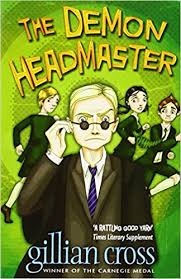
The Demon Headmaster- Satire or Instruction Manual?
Back in the 1980’s grateful English teachers seized upon
“The Demon Headmaster” as an engaging playscript for Key Stage 3 classes. It
started life as novel by Gillian Cross, but it was the script that was most in
demand. We taught it as a satire, a bit of light relief. Its shelf life was
extended by the TV version in the nineties, and its dystopian vision of the
school of the future, run by crazed, sinister and nameless aliens retained its
appeal. It was a clever, far-fetched, mad idea that teachers and school leaders
might have strange ideas of power and control over unsuspecting humans. It
allowed for the perennially attractive idea of a resistance movement, secretly
fighting against the monolithic powers of darkness and oppression. And just
like “The Handmaid’s Tale”, it’s back, with added relevance for the strange
times we are living through. Strangely, it’s set in an Academy, with a robotic
Head teacher who has weird ideas of how to treat children and staff. Where do
they get these crazy ideas from?
How we laughed at the idea of silent corridors, kids
chanting oppressive mantras in the playground, a Headteacher whose big idea was
the importance of order above all other things! Little did we know that it was
destined to be a set text on NPQH programmes, a sort of “Headteachering for
Dummies” guide. Senior leaders everywhere, who are trying to hold the line of
ethical leadership against the rising tide of the New Authoritarianism, stand
firm! You may get your feet wet, but the tide will turn.
Another great example of ideological correctness trumping
effectiveness. At a time of unprecedented austerity, His Goviness decreed that Free
Schools were The Answer, and hang the expense. If they were the answer, it must
have been a very silly question. On the back of zero credible evidence (I’m
discounting the report in Which magazine comparing the best school systems in
the world that came between the list of best small family saloons and the best
bagless cylinder vacuum cleaners) Gove pumped billions of pounds of tax payer
dosh into this madcap scheme to let anybody set up a school. You could use any
derelict building in the High Street (and, let’s face it, the supply of
derelict buildings rocketed round about this time) to put the students in and
you could get any Tom, Dick or Harry to teach them. If you remember, this was
also the time of Gove’s other stroke of genius, getting ex-service veterans
fast tracked through teacher training, to sort out local-authority -sponsored
feral student behaviour.
There didn’t even seem to be a fit and proper person test,
similar to the one that so effectively inoculates Premier League football clubs
from being taken over by dodgy Russian oligarchs, drugs barons and people with
pending court cases regarding human rights abuses. ( Oh. Hang on a minute…)
There quite clearly couldn’t have been such a test, because the poster boy for
this libertarian movement was Toby Young, a man whose brain could not cope with
the onerous task of tweeting messages
while considering , at the same time, all social norms of acceptable behaviour
with regard to women and minorities.
it was revealed that
between 2010 and 2017, the DFE spent £3.6 billion on setting up Free School. A
quarter of it was spent on Lawyers’ fees. £3.6bn! That’s nearly four bungs to
the DUP. At a time when class sizes are rising, teacher pay has been frozen for
years and class teachers are resourcing teaching materials out of their own
pockets. Value for Money, as Conservative spokespeople are wont to say. Value
for Money my arse, as Jim Royle was wont to say. You can’t put a price on
ideological purity.
The Isolation Room in StalagLuft III runs out of A4 lined paper again
I’ve followed the recent debate on the use of isolation
rooms in schools with some interest. It seems to have divided opinion, with a
vociferous group condemning their use matched by an equally passionate
opposition who take the view that staff and students need to be protected from
the disruption to teaching and learning that poor behaviour usually brings. I
wonder if the two sides are as implacably opposed as they appear.
At the last school I worked in as a Deputy Head, a school
that could reasonably be labelled “challenging”, the isolation room was an
essential component of our behaviour management strategy. We called it
“Inclusion” to try and signal that students were placed there as an alternative
to exclusion. We were actively trying to keep them in school. When I first
arrived at the school the room exhibited all the very worst characteristics of
an isolation room. It was staffed by a motley collection of odds and sods, who
just happened to be free at that time (including NQTs!). It was in a tiny room
with a handful of graffiti -covered desks, no window, no computer and, most of
the time no books, paper or equipment. Some students were placed there for days
at a time. Some students placed themselves there, to escape lessons and to meet
their mates for a bit of R and R.
We appointed a behaviour specialist to run it, moved it to a
large, airy, well stocked room and linked it to the SEN department. Over the
years it was staffed by outstanding individuals, most of them not teachers,
whose skill and dedication brought about genuine and positive changes for many
damaged students. We had exciting plans for its development. We intended to
link it to SEN formally and have two distinct wings: a temporary short- term
penal institution with strictly enforced rules and a work programme that
mirrored the classes they had been removed from. The second wing was for an
alternative curriculum provision for groups of up to fifteen students. This
could be for a month. It had specialist subject teachers attached to it as part
of their timetable and we devised therapeutic programmes with counsellors and
specialists to help these students address and confront some of their issues. The aim was for them to be readmitted to the
mainstream at the end of their programme. It took a lot of negotiating and
planning to set it up, but finally we were ready to implement the new system.
And then, after dodging the austerity bullet for several
years, we couldn’t avoid it any longer and we had to cut. We could not afford
to set it up as we had planned. It stayed as it was, still doing stirling work.
And then we had to cut again. And again. And make the brilliant, skilful staff
redundant, or move them out of behaviour provision and into delivering
mainstream classes. By the time I left, it was just about functioning as a
sinbin. And it could have been so much more than that.
Looking back, it seems clear to me that isolation rooms, or whatever
you choose to call them, only work if they are properly staffed and resourced
and if there is a commitment to work with the students in there, rather than
simply getting them to copy in silence, the educational equivalent of solitary
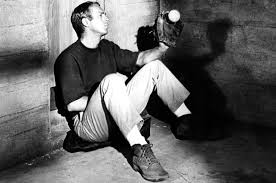
confinement. Even Steve McQueen had a baseball and a glove. That was the
trouble with those Prisoner of War camps. They just weren’t tough enough. Students
should not be left in there for days on end, and neither should staff, unless
that is their interest in terms of their career development. The trouble is, I
suspect this controversy stems from the fact that the tough, zero tolerance
devotees amongst headteachers will not see a problem with solitary confinement.
There are very few educational ideas that are intrinsically good or bad in themselves. A rubbish Senior Leadership, that hasn’t read the “How to be an emotionally intelligent human” manual, can poison the most enlightened, liberal initiative. Just as an example, I used to work in a school that completely ruined Charity MUFTI days. The kids were asked to donate a pound for the privilege of wearing their own clothes for the day, with all proceeds going to the charity they had chosen. Pretty standard practice, huh? And this, believe it or not, turned into smiling, happy kids being confronted by stern faced suits at the school entrance, making them wait silently in line while they handed over their “donation”. And, of course, some of them were from families that didn’t have two pennies to rub together, never mind a pound. At a stroke, charitable engagement turned into a Sheriff of Nottingham type tax grab and the day started with a sour confrontation.
If they can’t even get that right, I certainly wouldn’t trust them to run an isolation room.








 The Old Grey Owl