The View from the Great North Wood – The Secret Commonwealth

Cultural musings from The Old Grey Owl…

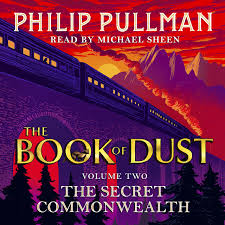
The Secret Commonwealth    

 by   

Philip Pullman

This is the long-awaited second installment of Pullman’s trilogy, The Book of Dust, a sequence that revisits the fantasy parallel England of His Dark Materials. Anyone interested in children’s literature or the fantasy genre as a whole, will have been counting down the weeks until this release, such is the power of Pullman’s fictional world, and the impact that the original trilogy had when first published in 1995. Those original fans will soon be joined by a whole new group generated by the BBC adaptation of His Dark Materials which is set to air on Sunday November 3rd. The trailer certainly suggests that it will be a much more successful rendition than the ill-fated dog’s dinner that was the 2007 blockbuster starring Nicole Kidman and Daniel Craig. Not that that would be too difficult mind you.

So Pullman is hot stuff at the moment. But what about the book? Let’s just get a few things out of the way first. Pullman is A Great Writer. His Sally Lockhart novels are glorious confections of London Victorian adventure mysteries, with pea-soupers and coal stained brick warehouses on the banks of the filthy Thames. Those alone would guarantee his reputation. But it’s the first trilogy, His Dark Materials, that moves him into the ranks of the genuinely great. Engrossing, believable, moving, challenging, Pullman creates a parallel world that is both restrained and oddly familiar. He asks big questions about belief, orthodoxy, law and punishment and democracy. But perhaps his greatest achievement is the creation of his central protagonist, Lyra Belacqua, and his invention of the notion of the Daemon, an animal- like creature that everyone in this world has as a lifelong companion, a representation of the soul, the quintessence of the individual. Lyra is one the most memorable characters in children’s fiction. In all fiction. Appearing first as an eleven year old girl in a version of Oxford University, she is resilient, loyal, brave, intelligent, and without any trace of snobbery or prejudice about race, class or gender. And she is one half of one of the greatest love stories ever told.

Dafne Keen as Lyra Belacqua in His Dark Materials

The first instalment of The Book Of Dust, La Belle Sauvage, featured Lyra as an infant, rescued from the baddies by Malcolm Polstead, an eleven year old boy. The second book moves us on twenty years. Lyra is now an undergraduate at Jordan College. Malcolm, is a University Lecturer. They both become caught up in the struggle between the CDD, the repressive state police, responsible for rigorously enforcing religious orthodoxy, and the liberal resistance. The struggle centres around the control of the source of a mysteriously powerful species of rose oil that is grown in the Levant (the equivalent of Syria/Turkey) Pullman uses this to reflect upon contemporary struggles between the West and the Islamic world, on the issues of religious wars, refugees, terrorism, populism. It dies s through the vehicle of a journey eastwards from Oxford, to the Middle East. The journey has all the elements of the classic adventure story: the main protagonists are split up and are all on separate quests to find themselves and to find solutions to their separate problems. Their journeys allow Pullman to paint a vivid picture of exotic lands, full of bazaars, train stations, cafes and markets, serially escaping dangerous situations, only to fall into more dangerous situations. It’s exciting and mostly well told. Pullman can still knock out a page turner. Mostly.

But. This is not a children’s book. It’s complex, dealing with real world issues of politics and prejudice. It is quite adult at times, in its language and depiction of relationships. It’s very sophisticated in the way it handles the growing awareness of sexuality of Lyra, following on from The Amber Spyglass. The depiction of a near gang rape is genuinely disturbing. Pullman himself would I think be quite pleased with that verdict. He has been very reluctant himself to categorise his novels as being for children. And there is a strength in that, because it allows him to break free of the constraints imposed by genre. The worst crime Pullman commits, however, is that, at times it’s a little ….dull. The political wranglings of the Pullman equivalent of The Vatican are arcane and convoluted, and I’d be surprised if they held the attention of many children. Certainly not the ones I know nor the ones I have taught. And it suffers, above all else, from the curse of the established writer. It’s far too long.

Weighing in at over 700 pages, this is a book that wouldn’t have got past the first fence had he been an unknown. That first book has to be absolutely tightly- wrought, like a finely tuned piano. Not a spare word out of place, coming in at under 300 pages tops, the draconian guidelines of publishers and agents at least produce economy and crackle. They impose discipline as much as formulaic writing. Look what happens when you’ve made it. J K Rowling’s Harry Potter books just kept getting longer and longer as no-one would dare to suggest to the behemoth, Jo, maybe you need to rein it in a bit, love. One can only be grateful that she had only planned seven of them. If she had kept going, we would have been at over the thousand page mark by now, no question. The same applies here. And this, for all its strengths and joys, is a little flabby and baggy.

I’m sounding very negative. It’s still a wonderful book and he’s still a titanic writer. The return of the Great Love, at least in Lyra’s memory and regrets, and the beginnings of a new love to replace it, is fabulous. Even so, it’s only a four star member of his astonishing list of achievements. And when you’ve set the bar as high as he has, that’s a little disappointing. If you’re an English teacher, or you just love books, you still must read this. And hopefully, you’ll love it more than I did.

Helping children to plan their writing- 35 years of getting it wrong

Blake’s Newton, measuring the Universe

For much of my career I was a moderator for one of the big exam boards for GCSE English and part of the job every October was to chair a regional meeting of schools to go through a variety of agenda items to help schools to prepare their students to successfully navigate the exams and coursework (or controlled assessments) in the coming year. They were to learn the lessons of the cohort just gone and a key weapon in the battle to teach them those lessons was the Chief Examiner’s report, which distilled the main messages from the national data. It was a hugely useful process and was largely responsible for the year on year improvement in outcomes achieved by students. (I’ll draw a tactful veil over the canny manipulation of the marking tolerances and the blancmange-like rigour of the Speaking and Listening moderation that also played a part. That is, perhaps, for another blog, when I’m feeling stronger.)

Year after year the Chief Examiner banged on about the same issues. Every year he identified what he saw as the game changer as far as English Language results were concerned. Every year I reinforced this message in the regional meeting. Every year I strove to enact this pearl of wisdom in my own classroom. What was it, this Holy Grail of GCSE English teaching, this elusive crock of gold at the end of the rainbow?

Planning writing.

They look so simple, those two little words written down in black and white. Simplistic, even, as a panacea for underachievement in GCSE English. But behind those two little words lies struggle, pain, resistance, frustration, anger, resentment, incomprehension, stretching back years. If you are an English teacher who has ever tried to prepare a class for an upcoming English Language examination, you will surely recognise the following scenarios.

Put simply, I have never, in any of the last 35 years, introduced the concept of planning writing as a step to writing better, without it being greeted by students in the same way that every group of teachers in a training session respond to the prospect of Role Play. With horror. Without fail, the following questions are asked and points raised:

  • I can’t plan. I don’t know how to.
  • I never follow the plan, Miss, so what’s the point?
  • Do you get marks for the plan?

Of course, as a fully paid up member of the liberal metropolitan elite, I have consistently delivered the standard, honest answer to this last question. That is, I have explained in painstaking detail that no, actually, no marks are awarded for the plan, but that writing that has been planned is always better than writing that has not. I’ve supplemented this with reference to the Chief Examiner’s report, sometimes going to the trouble of distributing copies of it, or in latter years, displaying the relevant section on the Whiteboard. This often leads to classic teacher sarcasm: “Of course, (insert student’s name), if you think that you know better than both myself and the actual Chief Examiner, who have been doing this stuff for over thirty years whereas you are barely out of nappies and have done the GCSE , let me see how many times is it? Oh yes, you’ve never done it have you?  Then by all means go ahead and completely ignore our professional advice and just make it up as you go along and see what happens. This produces the following response, brutal in its logic:

So, I don’t really have to plan then?

On a couple of occasions, unable to bear this ridiculous exchange another time, I just lied, and said, without skipping a beat, “Oh Yes, of course you get marks for writing a plan.” Then I would put up with the liberal guilt about ethical behaviour as a teacher before eventually going back the original approach the following year, shamefaced.

Early doors, I used to be moved by the first of the examples above, the idea that no-one had taught them to plan, so of course they would be resistant. In this scenario, I could cast myself as the hero, who could save the disadvantaged from their own lack of cultural capital by actually opening the gate to the secret garden of middle-class academic knowledge and take them through the basic steps of planning. This would inevitably furnish them with the transferable skills that allowed them to structure their thinking and their writing in English and every other academic discipline. And so, I devised over time a series of imaginative approaches to planning, which resulted in this terrible and embarrassing flowchart of the planning sequence:

  • Spider diagrams.
  • Amending
  • Deleting
  • Synthesising
  • Sequencing
  • Numbering
  • Ticking off

It was surely only a matter of time before a lucrative book contract landed on my hallway floorboards to be followed by a regular series of training events based on a whizzy powerpoint presentation and a glossy ringbinder. Fame and fortune awaited.

I would spend a few lessons on this, only to find when I received the exam papers, that out of a class of thirty students, only three had written a plan. Did I dream that sequence of lessons? Was I actually in the room? Or was I just a shit teacher?

This pantomime carried on for years, surviving a range of different approaches, none of which had any discernible impact on the students’ practice. In the end, it was one of the many things that had ossified in my teaching, into another example of stuff that could be categorised as, “Oh well, that’s just the way it is in reality.” I kept on doing the same stuff, even though I knew it didn’t work. It was a tired recognition that teaching is a difficult process of alchemy, and that sometimes we have to acknowledge the limits of our influence. The best laid plans (no pun intended) and all of that.

And then, eventually, I retired, satisfied that, all things considered, I had done a pretty good job over the previous thirty-five years. Early in my retirement, I started to dabble with creative writing: short stories, poems, novels. I reasoned that the excuse of being too busy just didn’t hold water anymore, so I did a bit of internet research (a classic delaying tactic this) and then sat in front of my laptop staring at the screen, not allowing myself to get up and walk away until I had produced some writing. A paragraph or two, at least.

What did I have in my locker that persuaded me I might be able to write creatively? I had not joined a writers’ group, I had not done any kind of creative writing course. No, I was convinced by my thirty-five years of teaching children to write, my three years of studying English Literature at University and a lifetime of reading books of every type and genre. The craft of writing? Pah! Either you’re touched by the muse, or you’re not. Ah, the arrogance! I sat, staring at the laptop for a very long time.

Then it came to me. Of course! A plan! I had to write a plan before I could come up with anything even vaguely coherent. Wasn’t that what I’d been boring young people to death with for all those years? And if it was good practice for them as writers, then surely it would be good practice for me. I had read in the weekend papers many times, interviews with authors promoting their latest book who talked about their meticulous approach to planning. Index cards. Exercise books, colour coded for plot, character, theme. Every last thread spun and tied up neatly by the end. And it was clear that their planning process must work because they were proper writers, with books on the shelves and everything. And once this intense planning had been completed, with eyes closed and chin on finger tips, Sherlock Holmes style, then the writing could begin. And now, it would be a doddle, simply a matter of splurging all those great thoughts onto the paper, ticking off each subsequent element of the plan as it was completed, just like I advised my students to do.

And then, with the wet slap across the face of epiphany, I realised.

Planning doesn’t work. At least not the kind of planning I had been teaching for years.

Obviously, it didn’t work. Leaving aside for the moment the idiocy of testing creative writing via a 45 minute slot in an exam hall, even with unlimited thinking time you couldn’t easily plan every detail of, say, a short story. Or if you did, you would be planning out the magic that is produced by the act of writing itself. Functional, sequential planning has its place in producing transactional writing, when it is simply a matter of ordering and clarifying one’s thoughts, but creative writing is a very different process and does not bend to the same rules and regulations.

I’m with Philip Pulman on this. In a recent interview in The Guardian to promote his latest book, The Secret Commonwealth, he pleasingly berates the functionalists who are currently having a moment in the sun at the expense of school children across the UK. Their niggardly focus on the naming of parts and their slavish insistence that the main function of a piece of writing is to show off the writer’s grasp of the full range of punctuation is rightly blasted. But he is also very interesting on the notion of planning. It’s right at the end of the interview (link below). Have a look.

https://www.theguardian.com/global/2019/sep/29/philip-pullman-i-am-a-citizen-and-a-writer

What I’ve discovered over the past nearly three years is that the planning process for fiction does exist, but that it is bespoke to the writer. I’ll tell you what works for me. It might work for some kids and some other adults, but there’s no guarantee.

The impulse to write comes, for me, from a very strong image of a situation. It could be anything – an atmosphere, a dilemma, a relationship, a texture. From that a story emerges. First the characters and their relationships. Then the skeleton of the plot. Then the next layer of characters. In the course of that process, the story and the subplot start to take roots, but as gardeners everywhere will know, plants are unruly beasts and go where they want. So the vivid image of the starting point, (which may not end up as the start of the story at all) is accompanied by a strong sense of the end point. As a writer, I know where the thing is headed, I’m just open to the route we take. There may be a couple of other definite waypoints (or Vias as the SATNav would have it). Other vivid scenes that have to be navigated around. And no, despite the scornful reaction of some of my friends when discussing this, this is not just a pretentious version of making it up as you go along. It’s surrendering yourself to the process. The act of writing generates ideas that are generally better than those produced by the act of thinking.

When I started the process of trying to write fiction, I read a piece by D B C Pierre, the Canadian author, on starting to write. It was extremely helpful, particularly his metaphor of compost, of all things. Just write, he advised. Enjoy the sense of your growing wordcount. At some stage you will hit a critical point where, like compost heap, you will have accumulated enough copy for it to start to react, to spontaneously breakdown in a process of decomposition, producing something entirely other than that which you started with. And then eventually, when it seems as if you have written something that you are pleased with, that means something to you, that you would like to read, you can begin the real work, the hard work of turning all of that compost into something that somebody else might conceivably want to read as well.

And so it has proved. From a strong image, a sense of the resolution, and a couple more luminous scenes en route, fiction has emerged, almost without my agency, and certainly without detailed planning. And how I wish I could go back and rethink all of those well-meaning lessons on students  planning their writing. Because, unfortunately, they are still saddled with the insanity of having to produce some piece of “Creative” writing in about 45 minutes of exam silence. And that means English teachers have a moral responsibility to prepare them to do it as well they can.

So what practical lessons do I glean from this revelation? I still teach English, as well as writing myself, and I still desperately want my students to do well. I keep it much simpler now and focus on those key elements:

  • An arresting scene, full of texture and atmosphere. Often the opening paragraph.
  • Two or three characters, their relationships and potential conflict
  • A final resolution. Even a last paragraph to work towards, a pole star to help them steer the ship
  • A balance between description and dialogue.
  • Avoid back story
  • Show not Tell

And then, the last piece of advice to be ringing in their ears as they enter the exam hall: Let the writing take you where it will, as long as you reach that last paragraph. And it’s still a nonsense, to ask children to write creatively in these conditions, as a means of ranking them. It will produce a lot of stuff that wasn’t worth their bother: formulaic, trite, cliched. Perfectly suited to an exam devised on exactly the same lines. But at least they might enjoy it a little more and not be too worried about synthesis and sequencing.

And some of them might, just might, want to keep writing.

Research, Rhetoric and The Two Tribes

When you’re a relative newcomer to Edutwitter, one of the things that first strikes you is the starkly polarised positions taken on a series of crucial issues. The second thing is the absolute sense of certainty that often accompanies these positions. Even down to the Middle Way Tribe, the natural Liberal Democrats of policy discussion, who insist, with a near religious fervour, that things are not as simple as the progressives versus the traditionalists, but that the only thing that matters is what works. For the purposes of this article (and as a handy guide to how to live your life honestly), I’m going to acknowledge only the existence of the two tribes. They are the only ones that matter. The Lib Dems have an inadequate ideological analysis and really should just make their minds up and stop splitting the left vote.

Frankly, I think that, actually, it is that simple, but that is a subject for a future blog all on its own. For the moment I’ll confine myself  to looking at one particular topic: Research. In the last few months, I’ve read industrial quantities of effluent written on this topic. Apparently, research into teaching techniques, strategies and approaches that are effective is going to save the world. Also apparently, this is a new thing, instigated by the intellectually rigorous proponents of the new brutalism. You know the kind of thing: Direct instruction. Zero Tolerance. Flattening the Grass. Knowledge rich curricula. (To be clear, I can accept the relevance of Direct Instruction and Knowledge Rich curricula, but not the idea they didn’t happen before and that other approaches can’t coexist with them)

The New Brutalists are very clear about what used to happen in the olden days. In the old days, teachers, who saw themselves as “Facilitators”, didn’t teach facts or knowledge of any kind because it was “oppressive”. Students (oops, that’s a give away to the brutalist thought police), sorry, I mean pupils, were just sat randomly in groups spreading their ignorance thinly, through unguided aimless chat, that might have been in informal language, liberally sprinkled with “like”s and “innit”s and “Y’knowwhatimean”s.

These practices were pursued at the behest of a Marxist teacher training programme, propagated by bearded lecturers who had drank their fill of Paulo Freire and Paul Willis and were readying for the imminent overthrow of society and to hell with grammar and the Oxford Comma. Now, thank the lord, teachers, parents and students have been rescued from this knowledge -free hell because modern teachers who have read Daisy Christodolou and admire Katherine Birbalsingh, realise that there is research- based evidence that validates back to basics practice instead. There was a tweet from one of them the other day (can’t remember which, sorry) along these lines that made me think that they were once asked by their teacher training mentor to do some role play in the classroom and they have never recovered from the trauma of the experience. Rather than pay for therapy they are working through their trauma by inflicting more of it on the students and staff they come across in their day jobs. And let me get my apology in now to save time in the long run. That’s to therapists, people in therapy, and Daisy and Katherine themselves. I’m sure they are wonderful human beings and they are clearly committed educationalists, it’s just their ideas I object to.

I read one tweet the other day that suggested that there is no excuse any more for persisting with outdated strategies in the classroom when there is a wealth of evidence about what works in terms of maximising learning. It went on to characterise the previous twenty years (probably about 1990 – 2010) as a quicksand of myth and progressive sleight of hand. What utter nonsense. People who promulgate this view generally fall into one of two camps. Either they are hopelessly naïve and gullible, and genuinely believe that they are the chosen people who have been shown the true way. The metaphor is deliberately chosen because they do tend to have the certainty of the religious convert. It baffles me what they think was going on in classrooms back in the day and why adults in their late twenties/early thirties aren’t wandering around bumping into walls, slack jawed and knuckle dragging, like the zombie apocalypse, so inadequate was their education.

The other group are evangelists for basic skills, standards and tradition. This is packaged as concern for the education of the working classes, who, they say with great certainty, have been let down by trendy, progressive teachers because they don’t confidently use Standard English, don’t have any familiarity with classical music, and haven’t read Milton. They name drop Hirsch, as if this is the clincher in their argument. Anything that might be cited as evidence of growing levels of achievement of this group is dismissed as being actually only evidence of the grade inflation and dumbing down that Michael Gove, God bless his sainted soul, so heroically rescued us all from.

I don’t mind this cultural war. You can’t take the victories of the past for granted and the tide of ideas will always ebb and flow. I actually prefer it to the dishonesty of how the war is actually presented, that is, as proven methods of teaching versus ideologically- inspired incompetence. A more honest approach recognises that it is a conflict between two ideologies.

And the key weapon in this war is research. I was going to say phony war, but that would be wrong. The war is real, but the key weapon is phony. And many of us have used it ourselves, as an invaluable tool in justifying changes to practice.

I’ve done loads of staff training events in various incarnations in the past: Advanced Skills Teacher, Senior GCSE English examination/Coursework Advisor, Deputy Headteacher, Teacher Trainer. I’ve lost count of the number of times, particularly when launching a new whole school change to classroom practice, that I have used the phrase, “The research comprehensively shows…” or “The research is absolutely clear on this”. I’ve heard it used for the same purpose by many presenters much more august and skilled than me.

And it’s purpose is plainly rhetorical. It’s a device. A flourish. A swagger. It’s signalling to the doubters in the audience that they should hold their tongue, review their opposition to this mad new whole school idea, and listen. Why? Because there is, apparently, a wealth of evidence available, generated by very clever academics, that proves beyond doubt that this particular approach works. It raises achievement, the holy grail for all teachers and senior leaders. And evidence is the hallmark of rational beings, isn’t it?

The trouble is that research evidence has never comprehensively proven anything. A research project helps us make informed decisions, along with all the other research projects on the same or related topics, many of which will contradict the first one. Of course, one should review research evidence and measure it against your own practice and practice you have observed in other settings, and use that process to come to a decision, but don’t fool yourself that that decision is neutral, objective and factual.

Research is very often commissioned to “prove” a classroom approach that someone has already decided is the right way to do things. Research findings are always open to interpretation. What does this mean in terms of classroom practice? What do we have to do differently? And those questions always give rise to ideology. And because of both the way research originates and the way it is interpreted, it’s obvious that research, far from providing unchallengeable answers, is by definition, contested.

And you can see this all over twitter and the blog posts of the influencers in education. People highlight the research they approve of and bury the research they disagree with. Or, they rubbish it: the sample size, the methodology, the people who commissioned it, the interpretation, the premise, anything as long as they have thrown doubt on its findings. Now “Research” is available that rubbishes even Carol Dweck’s (@caroldweck) work.

Scorn is poured these days on some of the practices of yesterday: things like Learning Styles, Brain Gym, Accelerated Learning, Group discussion etc. People are incredulous that teachers of yesteryear implemented all of that with no research to back it up, and they smugly position themselves as wise people who would never make the same mistake again. The inconvenient fact is though, that there was a mass of research evidence cited for these things. Just look at the reference lists in Alastair Smith’s books. (@alatalite) The thing was that the research was not questioned rigorously enough and that it has since been superceded. Who’s to say that the same thing will not happen to the research so confidently championed today?

I’m pretty sure that those people who champion Direct Instruction, Knowledge Rich Curricula, Mastery Assessment, Zero Tolerance Behaviour regimes etc are also largely the people who are in favour of uniform, or setting, despite the fact that there is next to no research evidence that proves that they impact positively on achievement. I’m also pretty sure that as I’m writing this, there are people also typing away, desperately commissioning research to do just that.

So, I’d really like the Education community to move to a position where we are much more balanced about practice and its evidence base. To be more inclusive of a range of approaches that the classroom teacher can select from and combine appropriately. To be less welcoming of yet more articles complaining about practice in the past and about being told what to do, when they are doing exactly the same thing themselves. They are just setting up other, new approaches to practice that will become the new orthodoxy which a new set of gurus will rubbish in ten year’s time. And, when we’re talking about research ”evidence” in particular, we will bear in mind Dylan Wiliam’s (@dylan wiliam) article on Education and research.

https://www.tes.com/news/dylan-wiliam-teaching-not-research-based-profession

The classroom is far too complicated a place for simple solutions.

My Childhood was small, but I’m gonna be Big

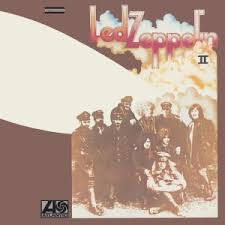
Dogrel – Fontaines DC

Of course, the great thing about Spotify for all of us old timers who still love music, is that you can try out anything you hear about and see whether it tickles your fancy. It’s risk free, unlike back in the day when, if you were lucky, you heard something on John Peel late at night and were sufficiently struck to go out and buy it the next weekend. You had to be sure, because an album was a huge investment back then and a balance had to be struck between the excitement of finding something new and the responsibility of not blowing your beer money on something that would eventually turn out to be either ordinary or a little embarrassing.

Nowadays, the fact that I read about how great Sharon Van Etten’s latest record was and that that led me to download it from Spotify, only to find that, actually, it was a dreadfully dull dirge, these days that is not such a disaster. It remains in my Spotify library, untouched. I gave it another go (the third) last week, in a rare fit of open-minded second chance giving. It was still pants.

But all of this is made meaningless by the occasional discovery of something beautiful and stirring. Which brings me on to the wonders that are Fontaines DC, who, I discover, are listed for the Mercury Prize. In the same way The Black Keys had echoes of the first half of the Seventies, with their bluesy rock, guitar, bass and drums based sound, Fontaines DC recall the sound and feel of the latter part of The Seventies. On first hearing, on Spotify in the car, I almost had to pull off the road, so strong were the associations. I was transported back to the refectory at Leeds University, sweat condensing on the ceiling as we bounced to The Clash, thrilled by the raw energy of it, intrigued by the intelligence of the lyrics, and intoxicated by the sense of the sweeping away of the old.

There’s no sweeping away of the old here. All that was, has gone and is back again, so nothing shocks in quite the same way, but the songs are wonderful, the lyrics clever, the melodies a sweet counterpoint, the drive insistent. The illegitimate love child of The Clash and The Pogues, after a quick fumble with Joy Division, Fontaines DC produce a compelling love letter to Dublin, their home city. In the opening song, “Big” they announce their intent with a great first line: “Dublin in the rain is mine/ A catholic city with a pregnant mind”. The song also boasts a chorus that should be etched on the consciousness of every teacher.

“My childhood was small,

My childhood was small.

But I’m gonna be Big.

I’m gonna be Big”

A lovely reminder of the bygone age of “Every Child Matters”

On “Television Screens”, the first few bars, with the driving drums and bass and spiky, jangling guitar, slicing across are eerily reminiscent of Joy Division, so much so that when  that section arrives at the point when the vocals should interject, people of a certain age, will be able to see in their mind’s eye, Ian Curtis, manically flailing his arms around, juddering from side to side as if someone had inserted an extra battery, about to launch into the lyrics. What’s even more reassuring is that when it turns out to be not Curtis but lead singer Grian Chatten, there is no disappointment, just a feeling of being in very safe hands

Their love of all things Irish permeates the album, which concludes with “Dublin City Sky” , a gorgeous Pogues-like ballad about love and loss, and  “Boys from the Better Land” with its memorable verse,

“ You’re not alive until you start kicking
When the room is spinning and the words ain’t sticking

And the radio is all about a run away model
With a face like sin and a heart like a James Joyce novel”

It turns out that they have been nominated for The Mercury prize. No matter what happens with that (and I have a very bad track record of picking winners) think of this as a gift from me to you. An early Christmas present. Download it. Because one thing I am sure of.

Their childhood was small. Their childhood was small. But they’re gonna be Big. They’re gonna be Big.

Don’t take my word for it, have a listen and make your own mind up.

The View from the Great North Wood

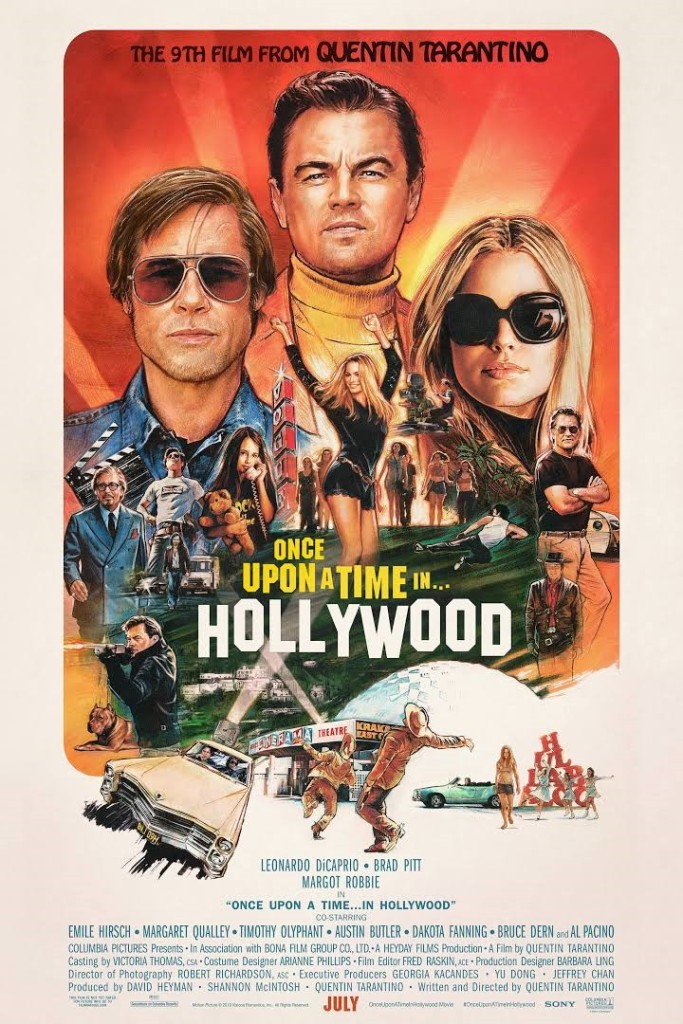
Once Upon a Time in Hollywood

Directed by Quentin Tarantino. Running Time: 2hr 45m Starring Leonardo DiCaprio, Brad Pitt, Margot Robbie

I went to this as a Tarantino virgin. Of course, I’ve seen untold clips from Pulp Fiction and Reservoir dogs, but for some reason, never a whole film, all the way through. It felt like I’d just missed the boat. Even at the beginning, when he was the hippest film maker in town, for some reason our paths did not cross. And latterly, exposed as a ghastly chauvinist and apologist for the likes of Harvey Weinstein, he held little appeal. And then there was the violence. Yes, I know, it was comic book and ironic, knowing and referential, but still it was enough to put me off shelling out to see his films at the cinema.

So I went to this as a sceptic. And came out as a convert. Apart from three minutes of ghastly, gratuitous violence at the end of the film, it was a magnificent, bravura piece of film making. The homage to late Sixties LA culture, with a fabulous soundtrack and wonderful sets and costumes, was delightful. Pitt and DiCaprio were a great double act, with their complex and nuanced “friendship” at the heart of the film. The criticism, on-line and in lots of the reviews, of Tarantino marginalising Margot Robbie by giving her hardly any lines in comparison to the two big beast leads, misses the point, I think. I’d normally be right there, criticising Tarantino’s attitudes to women, but the film is not really about Sharon Tate and therefore isn’t really about Margot Robbie. The handling of the Charles Manson story is subtly skewed so history is reworked and it’s a better film as a result.

There’s also a tantalising bit of evidence that he’s trying to behave himself in the light of #metoo. The Brad Pitt character gives a lift to the clearly underage, sexually aware, hippy girl and she propositions him. He takes the trouble to ascertain her age before turning her down when he finds out she is too young. It was so transparent you could see Tarantino having the conversation with his lawyer behind the screen. Didn’t fit the times nor the character, and there was just a sense that he was “playing” the issue while earning brownie points. Like Sir Geoffrey Boycott sponsoring a women’s refuge.

It’s not perfect, hence the four stars. The opening half is baggy and self-indulgent. You get the feeling that Tarantino was having a whale of a time, and no-one was going to tell him to leave that scene on the cutting room floor, but it could easily have been at least twenty minutes shorter. And there is that nasty blood rage at the end. But I’ll forgive him all of the faults for the scene where Pitt’s character goes to visit an old Hollywood ranch film set where the Westerns used to be made. Now in crumbling disrepair, it’s been effectively squatted by the psychotic hippies that fall in with Manson. Pitt goes to visit an old colleague, concerned for his welfare. He parks just inside the entrance and his buddy lives in a trailer at the far end of the lot. The darkness underlying the Summer of Love and its aftermath, seeps through the luminous sunny colours as Pitt walks the length of the ramshackle film ranch, with every step ratcheting up a sense of fear and foreboding in the audience. It’s a masterclass in creating tension.

Go and see it. And while you do that, I’ll stream all of his others. I’ve already waited too long.

The Young Person’s Guide to Conservative Government

A Public Service Announcement

Pitt the Younger

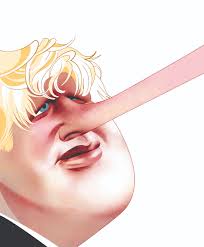
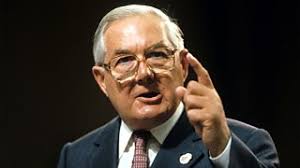
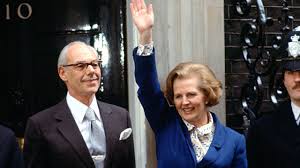
Given recent political developments, a new General Election seems imminent. In the interests of a fully informed electorate, to protect the democratic health of the system, you may find the following guide a useful tool to use with any Young People you know.

Conservative Governments follow a cycle of events in an unchanging, fixed way, like the seasons follow on from each other. These are the key stages:

  1. During a period of Labour Party Government (*see below), the Conservatives spend a lot of money given to them by rich donors and foreign powers, to issue propaganda rubbishing the actions of the Labour Government and falsifying statistics to create the impression that key areas of society are in decline. The money is given to them because, under a Labour Government,  the Rich have fewer opportunities to further enrich themselves at the expense of the state and the poor. This enrages them and they consider it to be very unfair and very detrimental to a productive economy. They mask their concern for the decline in their own personal enrichment by expressing concern for the lack of opportunities afforded to the poor by having a badly run economy, with rising unemployment.
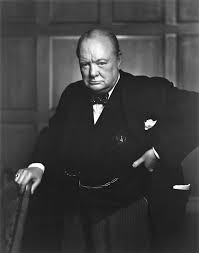
Mark Francois

2. As a priority, the Conservative party identify key areas of the economy or of Society that are in crisis. They use phrases such as “Broken Britain” and they issue misleading right wing think tank reports to stoke fears of terminal decline under the Labour Party that they portray as unpatriotic, economically illiterate, and in the pocket of terrorists and the trade unions.

3. They identify a series of key groups who can be routinely scapegoated for these manufactured crises. These tend to be the following: Immigrants, refugees, asylum seekers. Lots of preparatory work has to be done first to blur the distinctions between these groups and to create the impression that most of them are associated with Islam or terrorism. In recent years, this list has been supplemented by the idea of “Europe” or “The EU” as a sinister unelected body whose only purpose is to do Britain down because at heart we are better than them, culturally, historically, economically and morally. (see “British Values”). This narrative of British exceptionalism is pursued without embarrassment, and in some cases, it appears that some Conservative Politicians and supporters actually believe it. In recent months, new groups have been added to the list of scapegoats: The British Parliament, The legal establishment and the BBC. This has been given the helpful umbrella term, “The liberal metropolitan Elite” or more usually, “The sneering liberal metropolitan Elite”. No-one actually knows what this means. There is a suspicion that it is used in the same way that the term “Fake News” is used by Republicans in the United States, ie when they cannot give a plausible answer to legitimate questions that have been raised by a free press, or the political opposition.

4. Hand in hand with this decline goes a reckless spending of tax payers’ money, on projects and initiatives that actively make things worse. Higher taxes allow the Labour Party to encourage immigration, terrorism, criminality, unemployment. Because of high taxes and political correctness gone mad there is more homelessness, more immigration, more crime, poorer exam results, worse health outcomes, longer waiting lists. This list is literally endless. Why on earth would the Labour Party do this? What is in it for them? The Conservative Party in opposition have strained every sinew to make the answer to this glaringly obvious to everyone, apart from the handful of Communists in the country: The Labour Party are the Enemy Within.

Captain Mainwaring

5. Once in power, The Conservative Government follows its natural instinct, which is to dramatically reduce public spending, lower taxes and line the pockets of its supporters, the already very rich and powerful. These people, apparently, are not the liberal metropolitan elite. They may be the rural elite, or the fascist elite, but both of these groups are infinitely more acceptable than those damn liberals. The sneering ones especially.

6. This is all done in the name of freedom and to liberate entrepreneurship from the dead hand of the state, so that we can all become richer.  No-one seems to worry that this has never worked. Except The Enemy Within.

7. Carrying on the work carefully prepared when in opposition, the Conservative Government continue to denigrate the work of the BBC, accusing all of its journalists and newsreaders of being Lefties. There are clear threats made regarding the licence fee and, subsequently, all news broadcasts are grotesquely “balanced”, which means even the most rabid right -wing lunatics are given equal air time for their views. Please note: This is a process likely to accelerate given the success of the Trump experiment in America. (See “Fake News”)

8. As the life of the Government progresses, their policies start to have an impact. Statistics regarding Homelessness, Health, Poverty, Climate change Social Care, Children’s services, Crime, Infrastructure, Transport etc all plummet. On the BBC news, a succession of such disasters is reported by head shaking, hand wringing newsreaders, with a baffled expression, as if they are at a loss to explain these strange, unrelated phenomena. A simple graphic would show the cast iron correlation between the election of Tory Governments and the inevitable collapse of the fabric of civil society. The point is never made because it is too “political”, so we must get used to thinking of these events as Acts of God, not policy consequences.

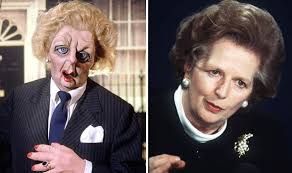
The Blessed Margaret

9. In the second half of a Tory Government, the arguments of the Labour Party and the possible policy solutions become very popular as clear and obvious solutions to the disasters wreaked by the gang of half -witted charlatans currently in office. Tory spokespeople reaffirm that they are spending more money than ever before on   (insert any issue people are moaning about).

10. The year before the election when the Tories are double digits behind in the polls, they steal 75% of the Labour policies they have spent the last four years demonising, and pledge to spend loads of money on Housing, the NHS, Social care, etc etc.

11. They spend billions of pounds from the magic money tree on bungs, bribes and propaganda that forcibly remind people that the Labour Party, The Greens and The Liberal Democrats are all Communists, in the pay of the Unions, Palestine, Islamists and foreigners generally. It used to be Russia, but that’s a bit awkward nowadays.

12. They will do absolutely everything in their power to obscure the basic choice everyone has to make about what kind of society we want to be. Either we can be a country that spends 42% of its GDP on infrastructure and the public realm, ensuring a country that runs efficiently (See Germany). This used to be the case for all civilised European countries. It is what we used to do during the post-war consensus, when all of the statistics mentioned several times above were all much, much healthier. Or we can choose to spend 37% of GDP on the same stuff and watch as society crumbles around us. No-one will ever point out his basic choice to you because they are disposed to treat the electorate as ninnies who don’t know their arse from the elbow. You will get used to this. You have a choice over whether to get angry about it and protest or to shrug your shoulders and eat more of the same shit.

13. Very often the electorate buy the lies and The Conservative Party is re-elected to Government. As soon as that happens, the steps outlined above start again, from step 5, and they begin to cut public spending savagely again. They reallocate a pittance from existing budgets as a fig leaf to cover up their broken promises. This is a bit of a bore for them to have to go through, but they are heartened by the success of Trump who has hit upon a new way of dealing with this. He simply lies about it and gets away with it. This will save the Tories a lot of time in the future. (see “Dominic Raab”)

14. Every now and again, things are so badly mismanaged by the Tories that no amount of lies and spin and propaganda can prevent the election of a Labour Government. Historically, this has been a statistical aberration, but, strangely, there was a period of over ten years of Labour Government, on the back of three election victories and they did great things, but the Left don’t like to talk about that. (ask your parents about this. I think it has been removed from Wikipedia) They (the Left) still think of that period as another period of Conservative Government, cleverly rebranded. During this period, Tony Blair did several things that did not help. They were:

  • Knocking back Proportional Representation. (This was a disastrous mistake, and, I believe, an example of Hubris. Jacob Rees-Mogg may correct me on this)
  • The Iraq War.
  • Being starry -eyed about the Rich and Famous
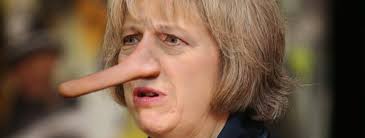
Someone whose name I can no longer remember, but who now seems a model of ethical behaviour, despite vague memories of her appalling performance in Government

There are signs that this immutable cycle may be entering a period of rare adjustment, on the back of the success of Trumpery in the USA. This has emboldened the Right to embrace cheating, lying and outrageously unethical behaviour. The current Cabinet appointed by Mr Johnson is so unspeakably Right Wing and so driven by ideological fervour that they are impervious to any appeal to morality or ethical standards. There are people in Mr Johnson’s cabinet who believe in the Death Penalty. Who are against abortion. Who do not support Gay marriage or a whole raft of LGBT rights. Who think that there should be no regulation of markets, or employers or housing. Who think that the creation of a low tax, no tariff, low standards sweat shop off shore is a step in the right direction. Who do not care about the return of bombs in Northern Ireland. Who have been openly racist. There are even rumours that a member of the Cabinet is planning to make not leaving a double space after a full stop illegal, no ifs, no buts. (In that sense, this whole article has been an act of civil disobedience, which is very gratifying). I never, ever thought that I would be able to write that paragraph in bold above in my life time. They believe that their view of the world is right and that The People cannot be trusted to realise that. This means that they can no longer countenance even a brief five year hiatus in their hold on power. The prospect of not being in charge for a minute enrages them beyond reason so steps will be taken to ensure that there will never be a Labour Government again. In the same way there is now talk from the USA that Trump will not step down if he is voted out and the rule about not serving for more than two terms will be scrapped if he does win again. (see “Vladimir Putin”)

Post no-deal sunlit uplands…….

We all need to be ready for this. There will be some very dark, difficult days ahead.

Theresa Did

 So, farewell then, Theresa May.
Theresa May. A strange name for a
Prime Minister. So
Conditional, so
Tentative, so
Hesitant, so
Equivocal, so
Subjunctive, so
Uncertain.
She has gone,
But Nothing Has Changed.
 
Theresa may decide.
Theresa may waver.
Theresa may resign.
Theresa may run through sunlit fields of wheat,
Under blue skies and high, wispy clouds,
Naked and abandoned.
She has gone,
But Nothing Has Changed.
 
Theresa will dissemble.
Theresa will obfuscate.
Theresa will not answer the question.
Theresa will be frightened and alone in a crowded room of dangerous foreigners.
Theresa will cry hot tears in the street, angry and confused.
She has gone,
But Nothing Has Changed.
 
Theresa May.
Theresa Did.


The Old Grey Owl

School Leadership: Mourinho versus Solskjaer

Sulky Jose…?

This was, originally,  going to start with the question, “Do you want to be led in your school by Jose Mourinho or Ole Gunar Solskjaer?” Imagine a situation where the interview process for the new Headship at your school has got through to the last stage and there are only two candidates chosen for final interview. The two surprise candidates, disillusioned with the world of top flight football management, have decided it’s time to “give something back” and devote themselves to State school leadership. Mourinho and Solskjaer have polished their Powerpoints, rehearsed their assembly and have mugged up on everything there is to know about Knowledge-Rich curricula, Zero Tolerance behaviour approaches and direct instruction. The staff room waits with bated breath. Which one would you rather have as your leader?

Or, smiley softie Ole?

Bloody Ole Gunnar Solskjaer. Everything was going so well after he took over the reins at Manchester United from Jose Mourinho in December last year. The scowling, miserable, sour faced bad loser Mourinho was finally despatched, though not, disappointingly, on Christmas Eve. It would have been fitting to have seen him trudge homeward through the snowy streets of Manchester, in time to spend a grudging Christmas with his nearest and dearest, complaining about the inadequate presents he had been bought. (“What? A pair of socks? Don’t you know my record? Three Premier League titles. Three. Respect. Respect.”)

Mourinho had turned Manchester United into the Theresa May of English football: cautious, wooden, frightened, ineffective. For May, that was no great tragedy. There was no fall from a great height, no previous evidence of charisma or invention or audacity. She had always been distinguished by her mediocrity. But United had flair and panache in their DNA. The team of Edwards, Charlton, Best, Law, Giggs and Cantona had been reduced to shuffling, shabby incompetence. It was embarrassing.

And then the Roundhead was replaced by the Cavalier. Mercifully released from Mourinho’s stifling safety first approach, where players operated under a culture of fear, they responded to Solskjaer’s reign like cattle let out of the winter sheds into Spring pasture. They gambolled. They leaped. They  ran friskily. They played games with a sense of joy rediscovered. Pogba once again was the midfield colossus from the French World Cup winning side. Lukaku looked like a forward who knew how to terrorise defences and score goals. Rashford tore into teams  with direct running and close control. And they won.

And for the blogger always on the lookout for the easy metaphor, it was a gift from heaven. The parallel with the current two tribes approach to School Leadership was uncanny. You could either have the New Brutalism, in the form of Mourinho, or the person-centered, relationship-nurturer of Solskjaer. And with Mourinho, and the Zero Tolerance advocates, you got systems, functionalism, fear and compliance. But no love. No passion. No commitment. And, as a direct result of that, no long term performance. No personal growth. No sustainability. The Roundhead Mourinho was yesterday’s man, old fashioned virtues repackaged for the modern age. You blame everyone else when things go wrong. Demonise the previous regime for sloppy, muddle headed progressivism. Blame the players, or the kids. Or the teachers. How wonderful when it didn’t work and it seemed that Mourinho had been comprehensively found out.

And at first, the human face that was Solskjaer worked brilliantly. They began to win again. Words of confidence worked their magic and players began to express themselves and their innate talent blossomed again. Trust the players, treat them like adults, listen to them and all will be well. Just like in schools. Fear will never produce anything more than compliance. Love and loyalty, on the other hand, move mountains.

And then they gave him a full time contract and the wheels fell off again.

Damn, damn, damn, damn, damn. My beautiful school leadership metaphor shrivelling up on the vine with every passing game. The players, like the naughty kids, started taking the piss again, presumably because they knew that nice Ole wouldn’t do anything about it. Not even give them a bollocking. There seemed to be no consequence for their actions, so why not mess around until the end of the season, picking up a huge pay check and knowing that you’d be off to better club in the summer. So what if Alan Shearer calls you out on Match of the Day on Saturday night for not working hard enough? Big deal. You could buy Alan Shearer ten times over.

And I recalled an incident from my time as a Deputy Head, watching a crowd of naughty Year 10 kids summoned to the head’s office, exclusions pending. With my adjacent office door ajar, I listened, fascinated, to their conversation. It was like the scene from “Kes” with the smokers outside the head’s door, except this time without the sweet, innocent lad who gets the cane for nothing and without the swivel eyed psychopathic headteacher wielding his cane like a light sabre.

As the Head breezed into his office past them, inviting them in as he passed, one lad turned to his mates and said, sotto voce, “Watch me get out of this.” And he did. Ten minutes later he walked out, having given an Oscar winning performance as the contrite sinner who had seen the error of his ways, the head’s chummy words of encouragement ringing in his ears. As he turned to go down the corridor, I caught, through the crack in my office door, the smirk the lad gave his fellow ne’er-do-wells. It was chilling.

The Head went home that day feeling good about himself. He’d shown his human side. He’d connected with a difficult child in difficult circumstances. He’d established a relationship and saved the child from another exclusion. But actually, he’d let the child and the family down and the rest of the school who had to field the consequences of his maximum tolerance everyday in the corridors and the classrooms.

Most of the time the guy was a great head. He did a very good job at a difficult school. He emphasised relationships at the same time as cracking down on behaviour issues and he definitely improved the school. If you had to categorise him according to the metaphor, he would definitely be a Solskjaer rather than a Mourinho.

You remember that wonderful piece of research about school leaders from a couple of years ago that categorised Heads as Architects, Surgeons, Philosophers, Soldiers and Accountants? The one that disappeared without trace because the coming wave of movers and shakers didn’t like the conclusions? All classroom teachers would have been able to recognise the categories. Many headteachers would have raised a sceptical eyebrow because they like to think of themselves as visionaries or missionaries or messiahs. Sorry Heads – gross and cheap stereotyping there. I know many of you are fabulous human beings, particularly those of you who are reading this blog. Follow the link below. It deserves to be resurrected and followed up because it’s never been more important than now, when Surgeons bestride the Education Stage, lionised, rewarded. Mourinhos all of them, at the height of his powers, before he got found out.

https://www.bbc.co.uk/news/education-37717211

There is another way to do it. Not Mourinho or Solskjaer. Not iron discipline or trendy, progressive  chaos. There is no need to polarise in this way. Let’s have ethical leadership that consults, engages, trusts staff, listens to students. That establishes and maintains good behaviour without treating children like convicts. That takes learning seriously without being enslaved by examination outcomes. That has a curriculum that serves the children, not the floor targets.

And, to finally flog my football metaphor to death, the beautiful game has, as it always does, the answers. Or some of them at least. There are four English teams in the two major European finals this year. And guess what? Three of them are managed by outstanding leaders: Guardiola, Klopp, and Pochettino. (Sorry Sarri – that chainsmoking hiding your tab from the cameras is just too Andy Capp and 1970s for you to be a serious candidate).

All lead by example, know their players, treat them like adults, give them responsibility, insist on the highest standards, allow people the space to make a mistake, turn them into better players. So no, my original question was wrong. Do you want to be led in your school by Mourinho or Solskjaer? Neither. Give us a version of Guardiola, Klopp or Pochettino instead. And watch everybody fly.

Brexit – I blame the teachers

The pause in Brexit proceedings ushers in a period of reflection, before we all take a deep breath and go again. Although, I have to confess to being one of those Brexit nerds for whom the pause is agony, like the gaps in between Game of Thrones seasons. Just before the Easter holiday, I found myself getting annoyed when not only did Brexit not occupy the first twenty minutes of the main news bulletins, but that, horror of horrors, it wasn’t even first item. I’m afraid my habit has got an iron grip of me. The six o’clock followed by Channel 4 news (a personal favourite of mine this and so refreshing after the right wing bias of the BBC. Although one does live in permanent fear of Jon Snow keeling over live on air. He does appear to be gabbling and getting a lot of his words wrong these days. Retire Jon! You’ve done your bit. Now you can sit back and just tweet like the rest of us. Obviously, the money’s not what you’re used to, but that’s getting old for you.) Then a gap that is filled by News 24,  Parliament Live, Twitter, and the Internet until Newsnight and the joy that is Emily Maitliss. Since the general election I’ve watched Newsnight religiously, partly in the hope (shameful, I know) that Paul Mason and Iain Dale will actually come to blows. He’s a big lad, though, Iain Dale. Then a gentle wind down to sleep with BBC News 24 before being woken at 6 am by The Today programme.

And this obsessive consumption of news programmes has left me with few certainties, except these: 1. European politicians, when interviewed, are notable for many things, but in particular, their effortless command of English. Can you imagine David Davies back at the start of the negotiations, conducting a meeting in French or German? No wonder he only went over there for about forty minutes in total. They also appear to be thoughtful and intelligent. Adults, in short, compared to the embarrassment that are our shower. They have a detailed grasp of the issues, they are well-briefed and endlessly patient with our amateurish efforts. It’s been clear to everyone for some time, and I suspect, to them almost immediately, that there is no Plan B, and barely even a Plan A, apart from Theresa May Maybotting for England until time finally runs out. When highly educated members of the British establishment think Foreign Languages consists of speaking English louder, it’s no wonder that the vast majority of the population don’t think its worth bothering. We really must get to grips with our failure to teach Languages with any degree of success. And I don’t mean to smear the heroic MFL teachers battling against all the odds in our schools to challenge indifference and outright hostility to foreign languages and foreign cultures. This is a cultural mountain to climb, not just a schools’ problem.

2. Nearly every TV news programme seems obliged to show its commitment to the will of the people by having some dreadful Vox pop, which always appeared to be dominated by Brexiteers, who don’t appear to know their arse from their elbow. And that’s a fully paid up member of the metropolitan elite talking there, or so the conventional wisdom goes. The vox pop is either a panel of ”ordinary folk”, often a revisit of some group of lost souls who went through the same nonsense in the run up to the Referendum, or it’s random punters in the street who are button-holed for their reaction to a decontextualized question, the answer to which is clearly engineered to be dangerously dim and populist. These little snapshots of uninformed prejudice never seem to bear any relation to what the polls are telling us. The rise in people wanting a second referendum or who have changed their mind, that many polls have indicated in the last few months, seem to have been conducted somewhere else in the space-time continuum, if these vox pops are to be relied upon. But then again, polls are notoriously unreliable. Or, in the case of Boris Johnson, don’t actually exist. Still that story this week at least had the merit of confirming what we’ve all suspected anyway, that The Telegraph just makes stuff up. What’s breathtaking, even in these post -truth days, is their casual admission that it doesn’t matter if one of their “Star” columnists lies. According to them, Johnson was “entitled to make sweeping generalisations based on his opinions”. Or lie, in other words.

Just one example of a ridiculously loaded question arriving at the required result, was the recent poll where shedloads of people mysteriously said they’d like to have a “Strong leader”. That would be instead of a really weak and weedy leader, presumably. Amazing. It’s like giving people the choice of having a cup of coffee that tastes strongly of urine or a cup of really nice coffee. “Yes, I’ll have the piss coffee thanks.” No, I don’t think so.

These are just some of the nuggets of public opinion the vox pops have treated us to in the last few months:

“I hate the French. I’ve always hated the French”

“I thought when I voted out in 2016 that we’d just be out like the next day.”

“Why can’t they just get on with it?”

“The bloody politicians are just going against the will of the people. They are all traitors.”

“They’re talking about the European elections now. Ordinary people like us don’t know how any of that works. What have the European elections got to do with us?”

“We’re British. We’ll get through it. We used to have an Empire.”

Apologies for any inaccurate paraphrasing, but you get my drift. In my darkest moments, stuff like this awakens my hidden, dormant inner-fascist and I begin to think that participation in democracy should be contingent on the possession of at least two A levels, or equivalents. Even a BTEC would do. And then, after I’ve calmed down, that turns into a lament for the state of political education in the UK. Why are we so ignorant about our most basic political institutions and structures? Why don’t people know, with any degree of certainty, what the parties stand for, who they represent, their history? And without knowing that, is it any wonder that people vote in the same way as many people choose their horse in the Grand National. The name sounds good. Nice colours on the jockey’s silks. Democracy, it seems to me, is far too important to leave to chance like this.

We must include political education as a statutory part of the curriculum that applies to all schools, public and private, academy and local authority. It’s had a token presence in PSHE programmes, but that is just not good enough. And that’s not to demean the efforts of PSHE teachers over the years, many of whom do a great job. But too often it’s a task left to form tutors as an afterthought, and, as a result, it carries the very clear message that this stuff doesn’t really matter. It’s not important. But it does matter. And it’s not just important, it’s crucial to our commitment to an informed and active citizenry.

And so, there, I’ve done it. I’ve done what every charlatan Government minister does when there is a catastrophic failure of Government. I’ve blamed the teachers. This Brexit mess is all their fault. But don’t worry. By blaming the teachers, I have, brilliantly, identified the sure -fire solution, the strategy that is always used when the whingeing teachers are at fault. More Academies. So, how does that work, you ask? Dunno, it just does. Where’s the evidence, you childishly persist? Errr… there isn’t any. Phew! Brexit sorted.