Lose the Booths?

The Isolation Room in StalagLuft III runs out of A4 lined paper again

In the light of the forthcoming conference, Lose the Booths, and the fact that the issue has recently made headlines in the national media, I thought it was worth revisiting an earlier blog on the topic, as someone who still works in schools, albeit at a lowly, part-time level now, but who was once a Deputy Head helping to implement a system of enlightened withdrawal from classes. So, here goes….

I’ve followed the recent debate on the use of isolation rooms in schools with some interest. It seems to have divided opinion, with a vociferous group condemning their use matched by an equally passionate opposition who take the view that staff and students need to be protected from the disruption to teaching and learning that poor behaviour usually brings. I wonder if the two sides are as implacably opposed as they appear.

At the last school I worked in as a Deputy Head, a school that could reasonably be labelled “challenging”, the isolation room was an essential component of our behaviour management strategy. We called it “Inclusion” to try and signal that students were placed there as an alternative to exclusion. We were actively trying to keep them in school. When I first arrived at the school the room exhibited all the very worst characteristics of an isolation room. It was staffed by a motley collection of odds and sods, who just happened to be free at that time (including NQTs!). It was in a tiny room with a handful of graffiti -covered desks, no window, no computer and, most of the time no books, paper or equipment. Some students were placed there for days at a time. Some students placed themselves there, to escape lessons and to meet their mates for a bit of R and R.

We appointed a behaviour specialist to run it, moved it to a large, airy, well stocked room and linked it to the SEN department. Over the years it was staffed by outstanding individuals, most of them not teachers, whose skill and dedication brought about genuine and positive changes for many damaged students. We had exciting plans for its development. We intended to link it to SEN formally and have two distinct wings: a temporary short- term penal institution with strictly enforced rules and a work programme that mirrored the classes they had been removed from. The second wing was for an alternative curriculum provision for groups of up to fifteen students. This could be for a month. It had specialist subject teachers attached to it as part of their timetable and we devised therapeutic programmes with counsellors and specialists to help these students address and confront some of their issues.  The aim was for them to be readmitted to the mainstream at the end of their programme. It took a lot of negotiating and planning to set it up, but finally we were ready to implement the new system.

And then, after dodging the austerity bullet for several years, we couldn’t avoid it any longer and we had to cut. We could not afford to set it up as we had planned. It stayed as it was, still doing stirling work. And then we had to cut again. And again. And make the brilliant, skilful staff redundant, or move them out of behaviour provision and into delivering mainstream classes. By the time I left, it was just about functioning as a sinbin. And it could have been so much more than that.

Isolation, inclusion, whatever you want to call it, is necessary. The option of removal of a student from class has to exist, for the good of everyone concerned. But it can only be justified if it fits some kind of model similar to the one described above. And, no matter what the apologists say, its blindingly obvious that too many versions of withdrawal, in schools across the country, do not match up to this model of best practice. And every system that condemns challenging students to harsh, isolated, punitive supervision regimes, without proper access to expert teaching and appropriate curriculum, brings all withdrawal systems into disrepute.

There were staff at my school during this implementation described above, who completely misunderstood the purpose of Inclusion. For them it was one of a range of punishments, alongside detentions, exclusions, meetings with parents and governors. These people would openly advocate removing students from classes for days at a time and they didn’t much care what they did when they were banged up. The idea that removal was not a punishment, but a measure intended to protect the class they had come from, and an opportunity to flag up a student with issues and actually do some therapeutic work with them, was anathema to them. In their eyes, these kids had forfeited any right to teaching and learning and needed to be got rid of. They could only understand the internal aspect of this kind of removal as a necessary evil in terms of protecting the school from the consequences of racking up too many exclusions.

Looking back, it seems clear to me that isolation rooms, or whatever you choose to call them, only work if they are properly staffed and resourced and if there is a commitment to work with the students in there, rather than simply getting them to copy in silence, the educational equivalent of solitary confinement. Even Steve McQueen had a baseball and a glove. That was the trouble with those Prisoner of War camps. They just weren’t tough enough. Students should not be left in there for days on end, and neither should staff, unless that is their interest in terms of their career development. The trouble is, I suspect this controversy stems from the fact that the tough, zero tolerance devotees amongst headteachers will not see a problem with solitary confinement.

This is a new breed of ambitious senior leaders – openly contemptuous of ideas of rehabilitation or restorative justice, with no regard for the nuance, flexibility or judgement essential to the successful operation of social organisations like school. In their eyes, these are the ideas of a discredited liberal progressive establishment, and they want nothing to do with them. Populist, common sense ideas that can be badged with a slogan of not more than three words is what they want. It seems to me that children, whether they are complying with the school or not, deserve more than that.

There are very few educational ideas that are intrinsically good or bad in themselves. A rubbish Senior Leadership, that hasn’t read the “How to be an emotionally intelligent human” manual, can poison the most enlightened, liberal initiative. Just as an example, I used to work in a school that completely ruined Charity MUFTI days. The kids were asked to donate a pound for the privilege of wearing their own clothes for the day, with all proceeds going to the charity they had chosen. Pretty standard practice, huh? And this, believe it or not, turned into smiling, happy kids being confronted by stern faced suits at the school entrance, making them wait silently in line while they handed over their “donation”. And, of course, some of them were from families that didn’t have two pennies to rub together, never mind a pound. At a stroke, charitable engagement turned into a Sheriff of Nottingham type tax grab and the day started with a sour confrontation.

If they can’t even get that right, I certainly wouldn’t trust them to run an isolation room.

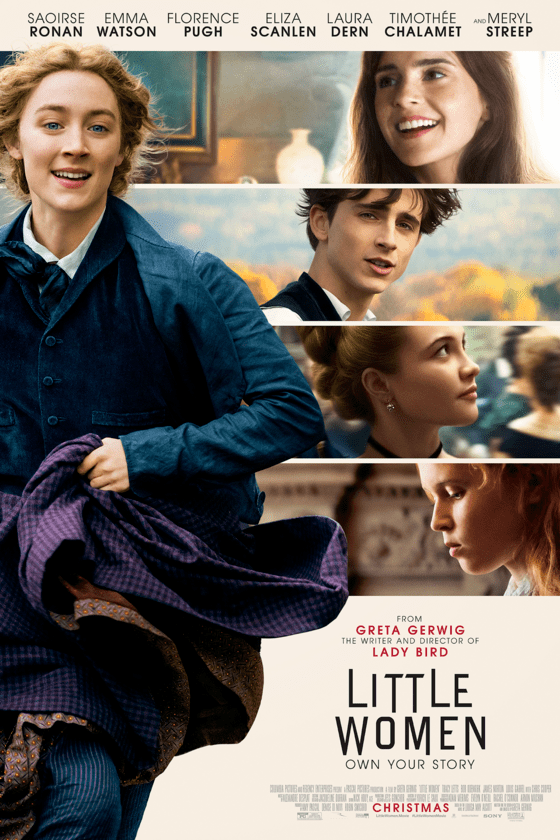
Little Women and The View From The Great North Wood

Little Women

Directed by Greta Gerwig

Starring: Saoirse Ronan, Emma Watson, Florence Pugh, Eliza Scanlen, Timothee Chalamet

Running time: 2hrs 15m

Rating:PG

The 1994 film of Little Women, starring Winona Rider, Christian Bale and Clare Danes was a really big deal in my house when our kids were growing up. We watched it avidly and regularly, revelling in the glorious snowy scenes in New England, and loving the early feminist role model of the completely splendid Jo March. It still means a huge amount to my children now, so when we proposed this as one of our Christmas family cultural outings, now that all four of us are fully fledged adults, there was more than a little trepidation that it wouldn’t measure up to the earlier version, wrapped, as it had become, in our own family mythology.

We needn’t have worried. We left the cinema two and a half hours later, buoyed by the wonderful experience we had just had. The world seemed a nobler, kinder, more splendid place than it had when we had stepped into the darkness earlier in the evening. Gerwig makes a bold decision with the structure of the plot, interleaving the later parts if the novel with the first half, and for the most part it works, showing us explicitly the adults the younger girls would become and the different ways they dealt with the realities of the adult world as women. Or not become in the case of Beth, whose tragedy would melt the heart of the Scroogiest of us, familiar though her part of the story is. On one or two occasions the structural leaps created a slightly furrowed brow as we had to focus to be certain which time frame a particular scene was in, but working hard in the cinema is no bad thing. I like a film that makes demands on its audience.

The other controversy was the casting of Louis Garrel as Friedrich Bhaer. Bhaer is explicitly old and unattractively foreign in the book. His appeal is in his refreshing attitude to Jo as a person and an artist. Here he is an altogether hunkier presence than Louisa May Alcott probably envisaged and although one can bemoan the superficiality of our celebrity airbrushed age, the movie does have to shift tickets and I for one can get behind the idea that bookish, unconventional, geeky types end up with the hot actor, as if it happens all the time. Which it doesn’t.

Ronan is wonderful as Jo, but then Jo is such a magnificent creation that anyone could seem impressive playing her. Anyone plucked from the pages of Hello magazine and dropped into the role would seem like a gritty feminist icon. (you can tell I’m too scared to name someone for fear of revealing my absolute ignorance of contemporary popular trash culture. I leave that to you.) The real revelation is Florence Pugh who, with Gerwig’s sure touch, transforms Amy March into a complex and sympathetic character, negotiating her passage through a man’s world without apology. Gerwig handles the contractual and financial nature of marriage for women explicitly, illuminating the relationships of the characters and the dilemmas faced by Alcott herself when trying to get published in 1860s New York.

It’s a wonderful film. Go and see it while it’s still showing. And when you do, wonder for a moment how on earth Gerwig was not nominated for an Oscar. It would have been enough to drive Alcott herself mad.

My Books of the Year, part 2

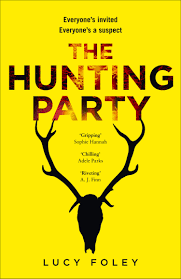
The Hunting Party by Lucy Foley.

This squeaks into the last days of 2019 as one of my Christmas presents. It’s been riding high in the best seller lists for a few weeks now, and I wanted to recreate Christmases of my youth when I would always treat myself to an Agatha Christie or an Alastair Maclean. They were the perfect books to bridge the wasteland years between 12 and 15 – short, immaculate lessons in plotting and manipulating an ensemble of characters. Foley was a Literary agent who has clearly learned the lessons of what makes a best seller. I was unsure when I started: there was a repeated phrase on the same page and I couldn’t think of a reason for that to have been done stylistically for effect, so I assumed it was a sign of a formulaic, crappy pot-boiler. The other black mark was the first person narrative, beloved of literary agents and consultants as being more intimate and immediate. So boring, so cliched , so wrong. But actually, in the end, that was me. Boring , cliched, wrong. And probably a little jealous that an agent can knock off a book and make such a success of it. Yes, they actually can walk the walk as well as talk it. I finished it in a day and a half and it’s an enjoyable read. It’s a variant on the houseparty detective novel. There’s a small group of characters thrown together for a few days, snowed in to their exclusive Scottish Highland holiday mansion, when one of them is murdered. It can only be one of the others whodunnit. The first person narrative extends over named chapters that cycle around the main six or seven characters and there’s a clever timeslip element to the structure. A snowy, scenic setting and some ghasty middle class yuppie type characters and a murder. I can see the ITV miniseries now. And, I imagine, so could Lucy when she was planning it. A nice festive palate cleanser.

Drive your Plow over the Bones of the Dead by Olga Tokarczuk

Another whodunnit, but of a very different kind this time. This is a bit of a cheek because I’m only three quarters of the way through it (another Christmas present), but it was too good to leave out. This book is delicious. From the cover which is brilliantly, brutally Stalinist in its stark functionality, to the first person narrative (see above) which is an authentic insight into the mind of a genuinely interesting, unusual character, to the evocation of the freezing snow-bound wilderness on the Czech/Polish border, via the unravelling of a series of bizarre murders, everything about this book is a treat. The main character’s musings, as the story unrolls, reveal her thoughts on the poetry of Blake, astrology, militant animal rights, illness (Her “Ailments”), nature, children versus adults and much more besides. A short, lovely book.

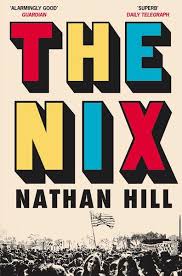
The Nix by Nathan Hill

This was my favourite book of the year. If you want something that will wrap you in a warm embrace for several weeks, so that you eventually deliberately slow down to delay the awful prospect of it not being part of your life, then this is the book. It’s engaging, affective, moving, clever, thought provoking and entertaining. Its got a clever time slip element between the civil rights movement of the sixties to contemporary America, romance, and social commentary. It’s a straight 9 out of 10. Lucky you if you haven’t read it yet.

There were some Turkeys as well as Crackers…..

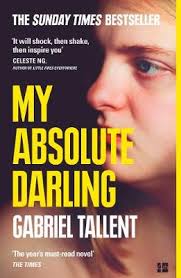
My Absolute Darling by Gabriel Tallent

I got this out of the library on spec, after having spent much of the previous year seeing its distinctive yellow cover in bookshops prominently displayed. It’s a chunky hardback with some hardcore recommendations on the front and back from the great and the good. About  third of the way in I thought I had discovered a  major new talent. The prose was extraordinary: sinuous, inventive, poetic, but unlike some of the more experimental writers around, Tallent seemed able to combine those figurative qualities with clear communication of meaning. He is particularly impressive conveying a sense of the rural location in woodlands by the California coast. But the last two thirds were dreadful, as it slipped into being a horribly exploitative book about male violence, power, child abuse riddled with cliches, improbable plot twists and action sequences. Avoid at all costs.

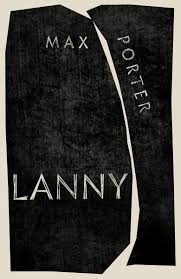
Lanny by Max Porter

I haven’t read Grief is a Thing with Feathers but was aware of Porter’s reputation. I started this and couldn’t manage more than about 35 pages. I’m a big fan of experimental, inventive prose, so don’t get me wrong and think I’m dismissing this because it didn’t tell a straight linear narrative. It just seemed to me to be willfully obscure and difficult for its own sake. Thankfully, I’m old enough now not to make the mistake of thinking that if  I don’t like a book then it means that the book is bad. The act of writing a novel is a labour of love, involving long hours of sweat and brain ache and self-doubt, followed by an agonising period of public exposure to possible humiliation. The book is not bad – there are far too many distinguished people who loved it for that to be true. It just didn’t speak to me. You might be luckier.

Paris Echo by Sebastian Faulks

I’ve loved many of Faulks’ books in the past (Birdsong and Charlotte Gray are two of my all-time favourites), so this was a particular disappointment. This was a novel that was phoned in. It is one big nothing, that exists because of what he has done before. It would never have made it past any Literary agent had it been a debut novel. A complete waste of everybody’s time. Sorry Sebastian.

Mentioned in despatches

Honourable mentions must go to, in no particular order:

Washington Black – Esi Edugyan

The Mars Room – Rachel Kushner

Everything Under – Daisy Johnson

How to be Right – James O’Brien

The Overstory –  Rchard Powers. (although there were too many trees for my liking. I know you can never have too many trees these days. Except in a book)

So, what a year it was. And I’m already looking forward to the treats in store in the year to come. I’m depending on them, actually. The horror of the election result can only be managed by retreat into culture and pleasure. I’ll emerge sometime later in 2020, hopefully refreshed, re-energised and ready for the struggle. But not just yet.

A New Year message of Hope

It’s still a B movie out there, but we must spread the word of the only way forward…
 As I walk through
This wicked world
Searchin' for light in the darkness of insanity
I ask myself
Is all hope lost?
Is there only pain and hatred, and misery?
And each time I feel like this inside
There's one thing I wanna know:
What's so funny 'bout peace love and understanding? Ohhhh
What's so funny 'bout peace love and understanding?
And as I walked on
Through troubled times
My spirit gets so downhearted sometimes
So where are the strong
And who are the trusted?
And where is the harmony?
Sweet harmony
'Cause each time I feel it slippin' away, just makes me wanna cry
What's so funny 'bout peace love and understanding? Ohhhh
What's so funny 'bout peace love and understanding? 

The Chains He Forged

A ghost story for Christmas by The Old Grey Owl

Read on or download the story with the link below:

Marley was alive, to begin with, but that’s not how it stayed. After a while, he died. This is how everyone’s story turns out, yours and mine, in the end.

They discovered the body when they finally unlocked the door to the loft, expecting to find a decaying rat or pigeon. The smell, which had steadily grown stronger over the previous weeks, was like a punch in the face when the cold, stale air billowed through the open doorway.

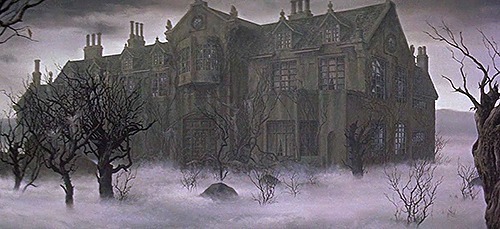
The old building was full of musty smells, creaking floorboards and hidden, disused rooms. They had been promising to refurbish it for years: the addition of a new block here, replacement windows there. There was even talk at one stage of razing it to the ground and replacing it with a plate glass, chromium and cedar-clad cathedral of prize-winning architect design. Staff had joined focus groups to talk to the architects and builders and pastel coloured plans had been drawn up and displayed with much pride in the old library. When the crash pulled the plug on all of the planned public sector investments, the grand schemes were quietly forgotten and the crumbling pile slumbered on undisturbed as the occasional tile or stained piece of plaster flaked and fell to the ground, as if the building was an ancient sleeping behemoth suffering from psoriasis.

It was the thing that Marley was most looking forward to about his new job. A Headship in a new school, in a gleaming new building, fit for the 21st century. Like him, he thought smugly. Fit for the 21st century. A Headteacher who had jettisoned all of those tired, ridiculous practices so common when he had started teaching. Learning styles, group work, discovery learning, thinking skills. What on earth had they all been thinking of? Marley had sniffed the way the wind was blowing early. He’d read the right books, gone on the right courses, networked on Twitter with the right people and had adopted the right poses.

The head he had first worked under, Richard Fitzwig, seemed like an exhibit from a museum now. Yes, it had been a happy place, but it’s easy to be happy when the Head lets you do what you want. Wiggy wouldn’t last five minutes in a school today. How happy would those kids be now, applying for jobs and courses on the back of crap grades? At least now, after three years of relentless focus on results and behaviour, they had something to show for it. And of course, there had been casualties on the way. Collateral damage, as he liked to think of it. Exclusions, “arrangements” for off-rolling, the endless detentions and uniform checks and silent lines and mobile phone battles. Not to mention the set piece assemblies to humiliate the ring leaders. What were they called again? “Flattening the Grass” assemblies, yes that was it. He smiled grimly at the memory.

And if many of the kids and more of the staff resented what he had had to do, then so be it. No-one had said it was a popularity contest. But, in his more reflective moments, usually alone in the small hours, he wondered. Part of him envied the easy camaraderie some of his colleagues seemed to have. And the same part was relieved he was leaving. The headship was just reward for hours of thankless work turning the school round, but more than that it was an opportunity to start afresh as the coming man in a shiny new building.

He looked around his bare flat, magnolia walls hardly troubled with pictures, shelves untouched by photos or books. A kitchen littered with a week’s worth of pizza boxes and foil trays. One Christmas card, from his mother, a bleak accusation of the lack of personal success to match his professional achievements. Not even a jokey card from Bella, for old times sake. Her poetry was for someone else now. Not that he’d ever understood it, mind you. He was a scientist, a rationalist, who chose the minimum number of words to communicate exact meaning, not nuance. She’d tried to explain it to him one day, when he was newly qualified, and it had sort of made sense then, but not any more. Nuance was for losers. Once he’d settled into his new job, the salary would mean he could buy somewhere bigger, somewhere more appropriate to his new status. And maybe then it would be worth investing something of himself in it, so it became his home, rather than an extension of his office. Whether it would be worth investing anything in anyone else was a different question. He had been badly burned last time. People always let you down, he thought, and the only way to guard against that was to keep everyone at arm’s length. Easier that way.

He roused himself, making a deliberate effort to shake off this dangerous introspection. Through the window he could see the blurred grey light of Christmas Eve ebbing away. There was a gust of wind and a flurry of thin snowflakes swirled across the pane. He shivered. Maybe this run was not a good idea after all. He could always leave it until January. But no, he needed to get it out of the way so he could leave the school and that life behind him, and the run would do him some good. Once he got going, he wouldn’t feel the biting wind. He reached for his rucksack, checked his laces and grabbed the keys before heading downstairs to the front door of his block.

There was already a thin dusting of snow on the pavement, and the knifing wind blew it up into dancing clouds and the beginnings of drifts in the corners. He took one final look at his watch underneath the gloves. One o’clock. He should be back in a couple of hours if all went well and the building was empty. He’d unlock and disable the alarm as usual, collect the last of his stuff from his office and most importantly, remove a couple of things from his computer, just in case. He’d intended to do it on his last day, but there had been too many people milling around, so he had resolved to wait until now, Christmas Eve, when he could be sure that he’d be the only human being in the building.

Fifteen minutes later, he rounded the corner, and saw the familiar turrets and towers of the sprawling, dirty red brick institution where he had worked for the last ten years. When he told people where he worked, they would invariably gush about how amazing it was. Hogwarts they called it. He had tried to explain the first few times it had happened that, close up, it was a dirty, crumbling, inefficient, fire hazard, but gave up when it became clear that people didn’t want their gothic fantasies to be spoiled. After a while he just smiled and nodded and agreed with them. And then, inevitably, they would move on to what a shame it was that the school had gone downhill so far and so fast, and how it was all down to the sorts of children that went there these days. He’d be glad to leave that behind as well.

As he pounded the last few metres, his breath steaming into the darkening sky, he noticed with a start that the gate was open. Turning into the car park, his worst fears were confirmed. There were half a dozen cars parked in front of the school, and the yellow lights blazed out into the gathering gloom. He pulled up, and leaned forward, his hands resting heavily on his knees, his breath coming in laboured pants and gasps.

“Shit,” he thought, “It’s open. Who the hell is in there?”

The poster on the plate glass of the entrance answered the question. The Longdon Players production of “A Christmas Carol”. Damn. Of course, how could he have been so stupid? And, yes there had been an email about it to all staff, but he had been so caught up in his leaving that it hadn’t registered. The local amateur theatre group had a two-week run at the school, before and after Christmas. They must be in doing some last-minute tweaking before they went again on December 30th.

He removed his headphones and pushed tentatively at the main entrance door. There was no-one behind the desk on reception and no signing-in book. Gary, the site manager, must have come to some arrangement with the Theatre group. He’d be hunkered down somewhere watching the football, and he’d re-emerge to switch off the lights and lock up when they had all gone. He looked up. Beyond the harsh neon lights that flooded the foyer, all was in darkness, but he could hear the distant noise of people, from the small theatre space in the far corner of the building. Good, he thought. If he slipped in and up to his office, he could avoid anyone noticing him and get away without any awkward conversations. If it took longer than he thought, he had the keys to be able to lock up again after he had set the alarm.

He switched on the torch on his phone and crept up the main staircase. If he turned on the main lights that would bring someone running, so he followed the eery, silvery light from his phone, occasionally catching his breath at the strange looming shadows it conjured up as he made his way to his office on the second floor. He had been here late at night on his own many times before and there was no doubt about it, it was a creepy place. In the wind, the building emitted the full panoply of creaks and groans and whispers, and with no lights save for the shimmering, unsteady beam from his phone, the shaky pools of darkness would have tested the most determined rationalist.

Still, that had worked to his advantage many times in the past. Being a key holder, and often on call for building and alarm issues, he had had to unlock and have a quick check many times in the past. And once in, on his own, he was free to do a little sneaking around. Hacking in to the passwords of every member of staff was child’s play for someone like him. He had never done anything criminal. He wasn’t stupid after all. But information was very powerful and he had information on everyone. He was conflicted about leaving all of this behind. One the one hand it would be something of a relief to not have that capacity in the future. As a Headteacher, he would have power of a different, more respectable kind, and it would be a triumph of sorts to have got away with some of his deceptions. But then again.

He unlocked his office and switched on the light, blinking as it pinked into life. There was a chill in the air as the seasonal shut down of the boiler had begun to take its toll. Those people down in the theatre must be freezing, he thought. He could just about hear the strains of one of the songs from the show, floating up from the rehearsal.  The office was stripped down to the bare bones, with just a few reminders of the previous five years. He went over to his computer and switched it on. There, on the key board, was a Christmas card. It was sealed and addressed to “Ben Marley”.

He sat down and shook his head. What a waste of money. People were so stupid. Why on earth didn’t they just send a group email to everyone? The virtue-signallers could link it to some charity thing if they really felt the need. And the Greens could feel smug about cutting down on waste. He just didn’t want to spend money and he didn’t feel the need to dress that up in any finer motive. Christmas was just one big con.

Still, he could take it home with him and it could join the one from his mother. He ripped open the envelope and pulled out the card. A bog-standard holly and robin snow scene. At least he was spared the sanctimonious Christian nonsense. He opened it up.

“Dear Ben. Thanks for all of your hard work and support over the years. Enjoy your well-deserved promotion. Now you will really find out what it’s all about! Here’s some advice from someone who knows. Take some time and trouble nurturing relationships with your colleagues. It will help in the long run. Regards, Margaret.”

His pleasure at getting a hand-written card from the Head, who normally got her PA to do all of that for her, was soured by his annoyance at the thinly veiled criticism of her advice. Relationships indeed. She should mind her own bloody business. Maybe he wouldn’t take it home after all. He picked it up and looked at it closely again. With a flourish, he ripped it into pieces and dropped them into his bin. He’d like to think of her finding it on her return in the New Year. That would show her.

And then he saw it, just to the side of the monitor. A neatly stacked pile of what looked like more cards, all identical in white envelopes. There must have been about twenty-five of them all in the same pile. Who the hell were these from? He took the top one from the pile and examined it. In black biro in capital letters on the front of the envelope was a single word: MARLEY. The card inside had a simple message: “Fuck off and Die, you miserable bastard.” It was signed “Jack, 10B4”.

He grabbed at the second card in the pile and ripped it open. It had exactly the same message, this time signed, “Sophie, 10B4”. He didn’t bother with the others. His heart sank. All of them, every single one, hated him with a passion. Yes, he had been very harsh with them since September, but that was necessary to knock them into shape for their GCSEs. Yes, the exam specification and the league tables demanded that everyone be drilled to within an inch of their lives, and he wasn’t paid to be an entertainer or a social worker. It would be him that would get it in the neck if they didn’t get the results that the school needed. People got the sack for that kind of poor performance. There were no second chances these days.

The first flush of pain he had felt converted steadily into anger. How dare they? What cowards, to wait until he was leaving the school before they were brave enough to put their names to this outrage, after months of lessons with sullen faces brought on by screaming and shouting and eventual compliant silence. In a fit of rage, he swept the pile of cards from his desk onto the floor, before turning his attention to his computer and memory stick.

He worked steadily for a couple of hours, deleting files, copying them, and getting rid of emails. Finally, he stretched and yawned and looked away from his computer for the first time. The window was a dark square now and to his surprise it framed a blizzard of thick snowflakes. It was time to go. He rubbed away at the condensation on the window and looked outside. The show had settled and there was a couple of inches laying in the car park. There were no cars there now and, strangely, no tracks. They must have all gone before the snow had really got going. Now he came to think of it, he hadn’t heard anything from the theatricals downstairs for some time. He shivered at the sight of the snow swirling in the darkness outside. His run back home was going to be a lot more challenging than the one earlier.

He took one last look around the office, the cards still strewn across the floor, and locked the door, fumbling with his keys in the darkness. The corridor was heavy with darkness, but right at the far end, a thin yellow light leaked from the doorframe of the last classroom. This high up he could hear the wind moan and the walls creak, as if the old bones of the building were flexing in the aches and pains of accumulated years. And then, just as he was about to feel his way to the staircase, there was another noise.

He stopped and listened. There it was again. But it couldn’t be, surely? He narrowed his eyes and bent his head down towards the far end of the corridor. Yes, again. The sound of a distant child softly crying. Using the torch on his phone again, he navigated his way to the end of the corridor and flung open the door of the lighted classroom. A small boy, sitting at a table at the back of the room, jumped out of his seat in fright, shocked by the violent entrance.

His face was tear stained and he was wide-eyed and staring. He was about ten or eleven years old, and he was wearing a shabby, old-fashioned looking uniform. He held a cap in his hands.

“What on earth are you doing here? Who are you?” Marley demanded.

“Please Sir,“ stammered the boy, “I’m Ignorance. Or was it Want? I can never remember which I am. Maybe I’m both.”

He wrung the cap between his hands and wiped his runny nose on one of his wrists.

Marley looked utterly baffled. “Ignorance? Want? What are you talking about lad? And what the hell are you doing here? Who else is here?”

He scanned the four corners of the room, as if a gang of the young boy’s accomplices were about to spring out and attack him.

“No-one Sir. I am quite alone. Quite alone in the world.”

Marley looked more closely at him. He was filthy. His hands and finger nails were black with accumulated grime, and his clothes were threadbare. Marley’s frown deepened and then suddenly broke into a smile.

“Of course!” he exclaimed, “The production. You’re from the Theatre thing, aren’t you? Do they know you’re up here on your own? They’ve all gone, I think.”

The boy wiped the tears from his face. “Beggin’ your pardon Sir, but I dunno. I dunno nuffink about no theatre group.”

“What are you talking about? You must be from the production. Don’t play games with me lad. Otherwise, where’ve you sprung from? Who are you?  What are you doing here?”

The boy looked up at him, his eyelashes jewelled with tears. “But I’m always ‘ere Sir.  Always ‘ave been. Always will be.”

“What do you mean, ‘Always here’?  I’ve never seen you before.”

“No, Sir, you ain’t. I’m always ‘ere, but you never seem to see me. No-one sees me. I sees you and I hears yer shout at the kids. Always shoutin’, never listenin’, that’s you. Not that you’re the only one, Sir, oh no. There’s plenty like you. More in the last few years, if anyfing. But you’re the worst.”

The boy pointed a bony finger at him and fixed him with his beady eye.

“You’re the worst,” he repeated.

Marley stared at him, mouth open. The chill in the room had started to bite and he shivered involuntarily.

“Is some kind of a joke?” he demanded. “Did someone in 10B4 put you up to this? “

The boy’s eyes flicked to the back of the room. There was a set of rickety stairs leading to a tiny landing in front of a door. Marley’s eyes followed the boy’s. The door led to the loft, a kind of attic space under the eaves. It had been used for storage before Health and Safety regulations prevented it. Nobody went in there now.

“They’re in the loft, aren’t they?” he demanded, a triumphant smirk on his face. “Aren’t they?”

The boy simply smiled without answering. In the silence that filled the gap came the moaning of the wind outside. It was really starting to blow hard now, and the rafters creaked and groaned as the gusts of wind battered them. Marley stared again at the door. Slowly, the handle started to turn.

“I knew it!” Marley exclaimed. “We’ll soon settle this nonsense.”

He strode up to the staircase, leaped up the five or six steps to the landing and grabbed the handle. The door would not open.

“Locked in, are you?“ he shouted through the door. “Shall I leave you in there? Wouldn’t be so brave spending the night in darkness locked in the loft, would you? You know what they say about it don’t you? Haunted it is. Haunted.”

As he was shouting these threats through the door, he fumbled with his keys. He found the right one, unlocked the door and opened it. It was pitch black inside.

“Come on out,“ he called into the room, “ You’re caught. You might as well give up now before you make things worse for yourself.”

He reached for the light switch which was outside the loft on the balcony and pressed it. The loft space was suddenly flooded with white-bright lighting, revealing the cobwebbed beams and dusty floorboards inside. There was a sound of scuffling, as if a rat had scuttled away into a distant corner. Marley stepped inside.

“I know you’re in here,” he said in a raised voice. “Just come out from where you’re hiding so we can get this thing over with.”

There was a sharp chill to the air inside and the wind in the darkness beyond was howling steadily now. He took another step inside. There was a sudden noise behind him. He whirled round to see the boy, still holding his cap, out of his seat and standing just outside the doorway on the landing.

“What are you doing? You’re not helping, you know” Marley said. “You kids, you’re your own worst enemies sometimes.”

The boy smiled at him, his tear-tracked, dirty face lit up like a beacon.

“Sometimes,” he repeated.

There was a sudden gust of wind and the timbers of the loft screeched and shifted. The door, caught in the blast, slammed with a tremendous bang. The boy turned the key in the door, reached for the light switch and the loft was plunged into inky darkness.

*

In the darkness outside, all was still and the sky was full of fat snowflakes gently floating down. The wind of earlier had subsided completely and the thick layer of snow on the ground muffled all the sounds of traffic. Gary drew the entrance gates shut, pulled off his gloves and fiddled with the padlock and key, cursing against the cold.

“Bloody theatre company. A no show on Christmas Eve. That administrator bloke must think I was born yesterday, saying he hadn’t sent any email booking a rehearsal.”

He paused, struggling to get his gloves back on over his frozen fingers. “Still,” he smiled, “It’s not all bad. Double time is double time, whether anyone showed up or not.”

*

Several weeks later, Gary was in his office taking the detectives through the CCTV footage of the holidays. They finally located Christmas Eve, and there, in grainy black and white, was film of Marley walking across the car park. Walking next to him was what appeared to be a young boy, from the theatre group, dressed as a Dickensian urchin. From the moment the camera picked him up until he entered the building, Marley didn’t turn or appear to talk to the boy. It was almost as if he did not know he was there.

They ran the film on, hoping to see someone, anyone, leave the school later. There was nothing. “That kid must still be in the building, “ said the senior detective on the case, a balding, corpulent man who gave the impression that he’d really rather be back in his warm office tidying up paperwork.

“But who is he?” asked Gary. “I’ve never seen him here before.”

The detective raised an eyebrow. “I think the question is, ‘Where is he?’”

In the months that followed, there were several TV appeals, posters all over the neighbourhood, and an extensive search of the school. The boy, whose blurred image stared out accusingly at anyone who chose to look, was never identified, nor found. Eventually, they were all discreetly taken down, discoloured and tatty by this time, as if people did not want to be reminded of the harsh realities of the world for which, somehow, they felt they were unfairly being made responsible. More comfortable to take them down, rather than look away.

When the police left, with cursory thanks and platitudes, Gary was left alone in front of the screen. He scrolled back to the point when Marley and the boy entered the school, and, on a whim, switched to one of the other cameras on the feed, pointing out from the main entrance, towards the front gate. There they were again, together but entirely separate, walking through the steadily mounting snow. And then he stopped. He froze the final shot. There on the screen, stretching back from the entrance to the main gate, like a line of punctuation marks, was a track of footprints.

One line for two people.

He stared, and shivered, as the wind rattled the panes of his window and the bones of the building creaked and groaned.

The Old Grey Owl

@OldGreyOwl1

https://growl.blog/

oldgreyowl.57@gmail.com

My Books of the Year

or in the words of Steven Patrick Morrisey, “There’s more to life than books you know. But not much more, not much more.”

It’s great being retired or semi-retired as an English teacher. There’s so much more time to read books. Here’s just a few I got through in 2019.

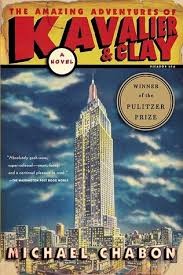
The Amazing Adventures of Kavalier and Clay by Michael Chabon

What a treat this book proved at the end of a challenging year. An affectionate homage to the golden age of American superhero comics from the thirties onward, this book tells the story of two Jewish creative entrepreneurs, who take New York by storm, making and losing a fortune on the way. Sammy Clay is troubled by his closet homosexuality, while Joe Kavalier, his cousin,  a recent emigre from Nazi- occupied Czechoslovakia, is tormented by the failure of his plans to engineer a similar, life-saving escape for this younger brother Tommy. This is an emotional, engaging and exciting read. Beautiful.


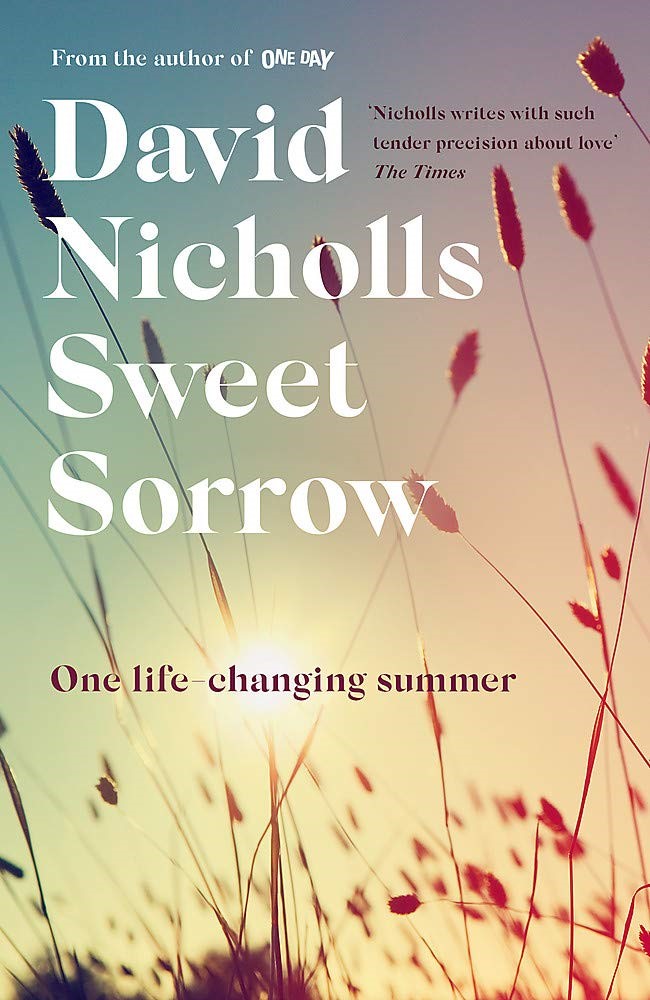
Sweet Sorrow by David Nicholls

When Nicholls gets it right, he really gets it right. His style, so lucid, so transparent, so non-tricksy, effortlessly carries the reader through the book as if it’s the easiest thing in the world. You almost don’t notice you’re reading, the book just happens in front of you. In that sense, it was like drinking a long cold glass of water when you’re thirsty on a hot summer’s day. A lovely, affecting story of a boy’s first serious  seventeen year old love, one long hot summer while taking part in an outdoor production of “Romeo and Juliet”

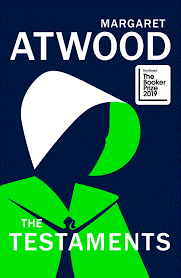
The Testaments by Margaret Atwood

I read this not having read “The Handmaid’s Tale” (I know, shocking), but having watched and enjoyed the TV adaptation. Or at least enjoyed the first series. So when it suddenly appeared on the New Books shelf of my local library, it seemed like providence was forcing my hand. And I’m very glad it did because it was a fabulous book. It seemed to be part of what is a very modern phenomenon, a creative interaction between film, television and literature. (See also Game of Thrones) The book expects familiarity with the TV version and builds on that. The result was a satisfying conclusion to the dilemmas posed by the Dystopian world created by the original book and sustained by the subsequent television series. A worthy Booker winner.

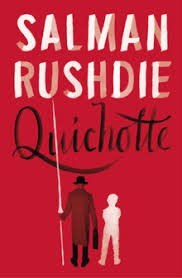
Quichotte by Salman Rushdie

Another gift in a Booker promotion by my library. I was seduced by the pristine crisp pages of a new, untouched hardback, with its perfect polythene wrapper glistening under the strip lighting. When I had seen the book listed, I was at first rather cynical about it. I must confess I hadn’t read any Rushdie since Midnight’s Children, and I thought that this must be the Old Guard, stale and irrelevant, pulling a few strings to steal a few more moments in the Literary spotlight. This was compounded by reading an article somewhere that suggested something similar on the back of his ex-agent being involved with the short-listing. Or something like that. And then I read it. What a treat! Very funny, full of allusions to contemporary culture, bonkers story -within- a -story structure. One review I read suggested that Rushdie was just showing off with his verbal pyrotechnics used for no greater purpose, but that is a jaded and cynical view, I think. Genuinely enjoyable.

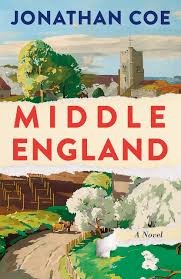
Middle England by Jonathan Coe

Seven eighths of this book is glorious, a frustrated Remainer’s tonic. It uses the much-loved character of Benjamin Trotter and friends, who first appeared in The Rotters Club back in 2001 (was it really 18 years ago?), to explore what Brexit meant to fifty- something vaguely liberal lefty middle class handwringers. Some hilarious set piece scenes and some skilful skewering of the political classes and the rise of unquestioned racism in our society, make the book both entertaining and analytical. Coe’s prose style, similar to David Nicholls in many ways, never intrudes on the unfolding of the story. My only caveat was the ending which I found unconvincing. Nonetheless, I can’t wait for Trotter’s next outing, hopefully to expose the dog’s breakfast Johnson will inevitably make of Brexit and to be part of the come-uppance such a calculated programme of lies deserves.

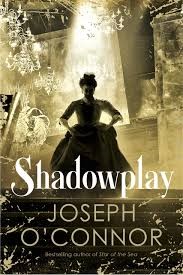
Shadowplay by Joseph O’Connor

This is a glorious imagining of the relationship between Bram Stoker, he of Dracula fame, Henry Irving, and Ellen Terry at the end of the nineteenth century /beginning of the twentieth. Irving, the celebrity actor producer of the late Victorian stage takes Stoker and his wife under his wing and relocates him from Dublin to London where Irving has become the Actor/Manager of The Lyceum. An intense set of relationships is explored, enmeshed in delightful period detail, with appearances by Oscar Wilde and Jack the Ripper in the suitably foggy streets of London. “Star of the Sea” by O’Connor is one of my all-time favourite books and this is a worthy return to that kind of form

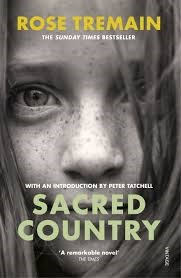
Sacred Country by Rose Tremain.

What a great writer Tremain is. This was another chance selection on a routine trip to the library, but what a find it proved to be. This was first published in 1992 and is astonishingly ahead of its time. It was reissued in 2017 to exploit the recent interest in transgender issues and it’s a book that must be read. It is, in part, the first person narrative of a girl who feels she has always actually been a boy. It starts in the fifties in rural Suffolk and relates her struggle to make the transition in a much less sympathetic time. Beautiful and affecting. Read it.

More to come next week, Christmas excesses permitting……

Back to the Future, Part Two: We’re on the brink….

Johnson: Are you sure this will work?

Cummings: It’s the Will of The People…

At the time of writing, it all looks pretty bleak for Labour Party supporters. The last poll put the Tories 19 points ahead.(update at the bottom of this article) Yes, it was similar midway through the 2017 election. Yes, this is an election with, more than ever before, constituency-specific conditions that buck the trend of national polls. Yes, the campaign allows Corbyn more direct access to people to be able to counter the most egregious media bias. Taking all of that into account, it still feels like a mountain to climb, and the ambition of being the largest party in a hung parliament, realistic a few weeks ago, seems unattainable now. The first sign of a closing of the gap in the polls has brought out the big guns of the anti-semitism tactic, a hugely successful plan to discredit the most overtly anti-racist political party in the history of the known universe. You can’t argue against it, if you’re not Jewish, without running the risk of being accused of, at best being in denial about the problem and at worst, being a racist. Even Jewish labour party supporters who have the temerity to contest the MSM version of events are demonised as traitors or not being real Jews. Please, give the tens of thousands of Jewish voices who are pro-Corbyn some air time. Please, when you write these articles, give us some evidence. Please Jeremy, argue your case. Look at some of these links for more: https://www.theguardian.com/news/2019/mar/07/debunking-myth-that-anti-zionism-is-antisemitic Michael Rosen’s blog: https://t.co/H6kKX1R2b0?amp=1 Jewish Voice for Labour: https://www.jewishvoiceforlabour.org.uk/article/smoke-without-fire-the-myth-of-a-labour-antisemitism-crisis/

It could still be the case that real people voting on December 12th will show the polls to have been wrong, but I have to be honest, I’m not expecting that and I’m beginning to feel more than a little depressed. Because what is at stake in this election makes it, by a country mile, the most important in my lifetime. Despite the best efforts of the mainstream media to normalise the Conservative Party led by Boris Johnson, to place them in a One Nation Tory tradition, they are really the Brexit party in all but name.

The Selfish, the Sentimental and the Stupid

Consider what has happened in the last year.

Moderate and mainstream Tories have left in their droves. Either they have something resembling principles, and they cannot in conscience be part of a party that is going to inflict such damage on the country. Or they cannot justify, with weasel words, (See James Cleverly, Matt Hancock, Nicky Morgan, Michael Gove) the blatant, repeated and outright bare faced lying and law breaking that is the modus operandi of the current leadership. Whether they have left, or have been ousted by the withdrawal of the whip, or the actions of rabidly right wing constituency parties, they are no longer there, a moderating influence on future policy direction. Look at the names of those who have gone: Rory Stewart, Ken Clarke, Amber Rudd, Dominic Grieve, David Gauke, Nick Boles, Justine Greening, Anna Soubry, Heidi Allen. His own brother, Jo Johnson, has stepped down as a candidate. We have no way of knowing, at the time of writing, how many of his children are standing against him for other political parties. The party is now an unembarrassed coalition of the selfish, the sentimental and the stupid, a mirror image of the voters they now attract.

You just have to look at the current cabinet for a flavour of what a Johnson Government would do.

Priti Patel as Home Secretary: Believes in the Death Penalty. Thinks poverty is the fault of local authorities. Broke Civil Service regulations last year as Secretary of State for Overseas Development by holding secret meetings without the required Civil service officials, with members of the Israel government over illegal settlements on the West Bank. Thinks British workers are “the worst idlers in the world” Has advocated reducing dramatically the welfare state in the UK and imposing working conditions of countries like Singapore, Hong Kong and South Korea

Sajid Javid as Chancellor. His main role appears to be as a token person of colour in the cabinet. Has suffered outright and open racism from other Tory members in the way he has been treated and in the torrent of social media abuse he has experienced from many constituencies, members and officials. Played a leading role, before becoming an MP, in Deutsche bank, enriching himself on the back of his trading of collaterised debt obligations (no, me neither), the financial instrument that played a central part in the collapse of the global banking system.

Liz Truss as President of the Board of Trade. Someone with the largest recorded gap between their ability and their own estimation of their ability, coming just ahead of Andrea Loathsome, the person who wants to get rid of all workers’ rights legislation from Europe.

Dominic Raab, co-author with Priti of the book “Britain unchained”, a rag bag collection of lunatic fringe right wing stuff, both on economics and social policy. This is the stuff that passes for the intellectual wing of the party. The compensation prize in this election, if the Tories win, is the prospect of Raab, IDS, and even Johnson himself losing their seats. Most of them, Johnson in particular, wouldn’t be able to find the high street of their constituency without a minder holding their hand, because they don’t give a flying fig leaf for boring old constituency work. That sort of stuff is for social workers.

Matt Hancock, minister for Health, who will say and do absolutely anything he has to, to cling on to power and his ministerial limo.

And that’s before we get onto Jacob Rees-Mogg, Minister for the eighteenth century and Michael Gove whose policy crimes and misdemeanours, and his absolute equanimity about lies and law breaking almost rival Johnson himself. (What a dream team that would have made back in 2016 – The Mendacious Brothers).

So what policies could we reasonably expect to be enacted if the Tories have a working majority, given that the new crop of MPs are likely not to have a single scruple or moral instinct between them? Well, for starters:

  • Savage anti-immigrant legislation
  • Selling off  much of the NHS to USA and a quantum leap towards Health insurance
  • Abolition of all meaningful workers’ rights laws – expect restrictions of sick pay entitlement and the right to paid holidays.
  • Abortion outlawed
  • Increase in State pension age to 75
  • Slashing of public spending on services and infrastructure
  • Increase in unemployment that not even the expansion of the unregulated gig economy can mask.

Most worryingly, once Johnson gets a majority, I don’t think that it’s far fetched to suggest that they will do everything in their power to stack the elections odds against Labour ever getting re-elected. The Boundary commission redrawing of constituencies will go ahead this time, with all that implies for Labour. They will bring in the blatantly partisan requirement for photo ID before citizens are allowed to vote. This will effectively disenfranchise tens of thousands of Labour voters. Johnson has shown his utter contempt for previously accepted norms of public discourse and for the rule of law and the conventions of parliamentary democracy, and will have no hesitation in dismantling anything that is a hindrance to his pursuit of power and his retention of power once he has his hands on it. The most recent heavy-handed threats against Channel four for not just rolling over are a sign of how none of the freedoms we have taken for granted for so long can now be guaranteed.

Lies, damned lies, and the media

Johnson: Won’t anyone notice?

Pa Johnson: Don’t worry -The great unwashed can’t even spell Pinochio

Cummings: Brilliant!

And it is this that is at the heart of this election, the reason it is of such importance. It is conceivable that reasonable, civilized people can vote Conservative because they believe in a smaller state and trickle-down economics. I don’t agree with them and I think that they are wilfully ignoring all the available evidence, but democracy dictates that we must suck it up when The People make the wrong choices.

But absolutely nobody can vote for this particular brand of the Tory party, who has any regard for the truth, for the law and for freedom.

It is possible that some of the apologists can convince themselves that the ends justify the means, that they know they are right so that it is acceptable, ultimately, to bend the truth and the law, to get a Tory Government. That is chilling enough. Even more sinister is the idea that they know they are wrong, but they want power above all else and are prepared to do anything to get it and then hang on to it.

I don’t want to be hysterical about this. I may be being overly susceptible because I watched the BBC4 series, “The Rise of the Nazi Party” a few weeks ago, and I’ve just finished reading the Booker prize winner, “The Testaments”, Margaret Atwood’s follow up to the dystopian nightmare view of the future, “The Handmaids Tale”. But the checks and balances of a mature liberal democracy that we have all taken for granted as guaranteed for ever are under attack, and suddenly it is possible to see how, step by step, populist authoritarianism slides in through the backdoor and slips into a seat on the back row. Before you know it, it’s taken the stage and the audience are all clapping furiously.

We’re half way there. Already Johnson has:

  • Suppressed the report into Russian interference and donations to the Tories
  • Unlawfully prorogued Parliament
  • Misled the Queen
  • Doctored video of Starmer talking about Brexit
  • Produced a fake “Fact checker” version of the Conservative Party website to mislead the public
  • Threatened a national broadcaster
  • Leant on the BBC, with the license fee an unspoken arm twisted behind their backs.
  • Avoided all serious scrutiny by the media
  • Avoided investigation into fraudulently funnelling money to Jennifer Arcuri when London Mayor.
  • Lied about the reason for having the general election

Ten to twenty years ago, just one of these things would have sunk any political career. Now, apparently, the public say that Johnson’s a naughty boy and we don’t trust him, but we like him and we’re going to vote for him because he will get Brexit done, with his “Oven-Ready” deal.

It’s not the deal that’s Oven Ready. It’s us – the long -suffering Turkeys.

Fight back! Vote tactically, even if that means holding your nose and voting for the Lib Dems. Find out who are the nearest challengers to the Tories in your constituency and vote for them.

Ps: Stop press! Latest polling suggests a narrowing of the gap -It’s not over yet and this makes the tactical voting message above even more important.

Back to the Future. Part 1:1979, Margaret Thatcher, and the end of Civilization

In which The Owl breaks the Law, but feels Morally Justified

I am 62 years old. The general election called for December 12th is, by a long way, the most important of my lifetime. There have been other significant elections, elections that I thought were critically important. The first Blair victory in 1997 springs to mind. After the crushing disappointment of 1992, when John Major snatched victory from the jaws of defeat, partly because of the inability of Neill Kinnock to speak simple, clear English, it felt as if that election was our last hope. But even that pales into insignificance when compared to what is at stake now. The only thing that comes close is the election of 1979, and given the recent media obsession with a return to the seventies that both parties spending plans are supposed to represent (more of that later), it seems appropriate to take a little trip down memory lane and recount the events leading up to my flagrant breaking of electoral law over forty years ago.

Thatcher v Callaghan 1979

1979. It is very difficult to accurately paint a picture of the 1970s for people who did not experience that decade as adults. So much has been obscured, wilfully, by the rewriting of the history of that time, that one can almost forgive youngsters for thinking that the seventies was a time of unbridled union power, of reckless public spending, of rampant nationalisation sending the British economy into near terminal decline, rescued only by the intervention of the IMF and the Blessed Margaret. This is the established version of our history. And, having lived through it, one is left wondering how much more of our history is similarly falsified. Indeed, “History is written by the victors” as Winston Churchill famously didn’t say. The only thing that representations of the decade have got right is that it was, indeed, a very brown and orange period, in terms of clothing and home décor.

Up until 1979, there had existed what came to be known as “The Post-War Consensus”. That is, both the major parties accepted that a modern economy and society ran most effectively on a judicious mix of Private and Public sector endeavour. The mixed economy balanced freedoms, rights and responsibilities and a strong state sector was essential, not just for social justice and equity, but for economic efficiency as well. It was accepted by both sides that spending about 40-42% of GDP on the state was necessary to ensure a smooth running, fair society. One effect of this consensus was that a period of Government by one’s opponents wasn’t too disastrous. The Tories had a slightly meaner approach to public spending, but that was about the only difference.

But then came Thatcher and the monetarist experiment. In opposition, when The Labour Party began to be known as the natural party of government, or as more efficient managers of capitalism, the Tories began to think. The pragmatists dabbled with ideology with catastrophic long term results. The ideology they espoused was embraced with the fervour of converting catholics and they developed a toxic combination of ideological certainty, limited intellect, and the common touch, aided and abetted by a command of rhetoric. It was the first signs of populism and it ran riot through the Labour party’s complacency.

At the time of the election, I was living in York, extending my student years after graduation via a series of crummy jobs and even crummier accommodation, until I could settle on what to do with the rest of my life. I’m still working on that last one by the way, but at the time, it felt like I would come up with an answer in the following year or so. One crummy job finished (was it the Great York and Surroundings Bus Census, a job that involved me and my partner in crime keeping ourselves warm as the snow fell, abandoned at some remote village green, by setting fire to our leaflets in the litter bin? Or perhaps it was the job at York bus garage where I was tasked with cleaning the garage floor with some watery detergent and a very small brush? There is probably some hapless youth still cleaning the same floor, with the same tools today, with the same chances of success) and I took a trip to the job centre to find another Crummy Job.

I picked a card from the display boards and took it to the lady at the desk. She peered at the card and read aloud, “Ah, yes, a stock clerk at Raylor’s Plant Hire, Thomas street, York.” She smiled and looked over the top of her horn-rimmed glasses at me. Her smile scurried away, back under its customary stone. She stared appraisingly at me. “Hmm. Are you sure this is the job for you?” It was a question that in later years as an English teacher I would recognise as one that expected the answer “No”. After a further hesitation she made up her mind and I was duly despatched to their offices just outside the city walls, starting at 9am the next day.

After my previous jobs, the prospect of sitting at a desk in a warm office ten minutes away from my flat was appealing. I scrubbed up and wore a respectable jacket and tie to look the part of the keen white-collar worker. This was a job I needed to keep hold of. The first clue that that might be a little more difficult than I had anticipated came when I walked into the huge, open plan office on that first morning. The boss was a dapper little chap called Derek. For devotees of seventies sitcoms, think John Inman in “Are you being served?” Tight suit and waistcoat combo with fetching floral kipper tie, he was the epitome of camp, at a time when no-one really knew what camp was. His desk, a stately mahogany monstrosity with the surface area of an aircraft carrier, dominated the far end of the office. From this vantage point he could surveill the whole team and keep them under his baleful eye. The clue was in the middle of his desk and on the wall behind him. Two enormous full colour pictures: one of Her Majesty, Queen Liz, the other of The Blessed Margaret Thatcher. In the middle of his desk, two plastic union jacks hung as limply as the unwatered Swiss Cheese plant in the corner. My heart sank. My boss was mad Thatcherite. And a monarchist to boot. And this was ’79, the time of The Pistols and Punk. I was shown to my desk, virtually two planks of wood tucked away in the corner furthest away from the mighty Derek. I slunk back there and vowed to myself to keep my head down and my mouth shut.

It was a fine plan, or as fine a plan as twenty-two year old wasters’ plans tended to be. Predictably, it did not survive for long. At 9.15, when the full complement of Derek’s crack team had assembled, each person to their own desk, a strange ritual began that was repeated every morning of the general election campaign.

Derek tapped on a glass on his desk with a spoon, like the best man at a wedding.

“Good morning campers. All ready for another day of free enterprise and wealth creation? Before we begin, let’s just do our daily roll call, shall we?”

His voice was a strange combination of flat Yorkshire vowels and a working man’s club version of a female impersonator. He turned to the woman sitting at the desk on the far end of the front row. “Good morning Joyce. And have you been following the events in the general election campaign?”

“Yes, Derek, I have.”

“And will you be voting Conservative on Thursday May 3rd, Joyce.”

“Yes, Derek, I certainly will.”

“Good girl Joyce.”

Derek moved on to the occupant of the next desk. The same interrogation took place, word for word, with the same responses. There were about 12 -14 people in the office, and each one in turn played their part. Sitting at the back, I watched the whole bizarre spectacle unfold, my heart sinking ever further towards my boots as the focus shifted inexorably towards me. Finally, the moment of truth arrived. The occupants of the other desks turned in their seats towards me. Derek beamed in my direction. “Ah, of course, we have a new member of our happy team. Christopher, isn’t it?” (Please note: all names have been changed to protect the innocent. And the guilty.)

“Yes, that’s right,” I managed to mumble, relieved that he had started with an easy question.

“Well, Good morning Christopher. Have you been following the events of the general election campaign?”

“Yes. Yes, I have actually Derek.”

“And will you be voting Conservative on Thursday May 3rd?”

There was a pause. I swallowed and licked my lips nervously. The silence grew in the room. The fixed, casual smile on Derek’s face began to flicker.

“Well, actually, Derek,“ I began and paused again.

“Yes?” he enquired, disturbed at this unprecedented break with routine.

“Well, I’ll be voting for The Labour Party Derek, actually.”

Everyone froze. The smile fled from Derek’s face and his brow furrowed. His eyes ranged around the massed ranks of his acolytes, as if to spread his disbelief amongst them. Satisfied, he stopped, raised an eyebrow and proclaimed, “We’ve got a bloody …. Socialist in the office. What the hell happened to my arrangement with the lass at the job centre to weed out the lefty students?” The word “socialist” was intoned in a voice dripping with contempt and a lip so curled that it was almost touching his nose.

I somehow survived the rest of that first day. I returned the next day to find my desk relocated to the corridor outside the office. Once a day I was called in for the ritual humiliation of Derek singing the praises of the forthcoming Thatcherite Free Market Utopia, followed by his withering condemnation of the failures and moral bankruptcy of Socialism. Dangerously, I challenged him and argued back. Part of the reason I survived was that Derek enjoyed the argument and he was unused to someone disagreeing with him. But mainly it was an exercise in power relationships. He enjoyed this daily affirmation of his own power and the rightness of his cause. It was like a Lion playing with a bruised and bloodied Wildebeest. And a really small and skinny wildebeest at that. And when the fun stopped, I was summarily banished to the corridor for the rest of the day.

Finally, Thursday May 3rd arrived. The polls had made gloomy reading for Labour supporters, and Derek’s steadily increasing sense certain victory made work ever more unbearable. That evening, my chums and I settled down in front of the telly in my tiny flat, with a few drinks prepared for the worst. I lived in two rooms of a huge Victorian three storey terrace just outside the city walls. Once grand, the house was then positively Dickensian in its squalor, and provided accommodation only marginally more comfortable than rough sleeping. The Landlord was a benevolent Christian from Hull who tolerated the casual and perpetual non-payment of the tiny rent that he charged and turned a blind eye to the recycling of the sole fifty pence piece through the gas meter to heat the fire. He would arrive at the house about once every two months, making pathetic, hand-wringing  attempts to get his tenants to pay at least some of their arrears and would depart some time later having lent most of his debtors a fiver each.

Various ex-university ne’er-do-wells and chancers had passed through this crumbling pile over the years and the net result was, by the time of election night, a stack of neatly arranged polling cards, about fifty in total, was placed just inside the front door. Their rightful owners were scattered to the four corners of the globe by this stage. I was registered to vote in North Yorkshire at that time, after a “Withnail and I” type spell living in a farmhouse near Easingwold. It was the biggest Tory majority in the country, a place where the working classes, horny-handed sons of toil and agricultural labourers, were transported to the polling station in one of the Lord Snooty’s tractors so that they could tug their forelock and vote Conservative because they knew their place.

I had resigned myself to not voting, partly because my vote would not dent the majority, partly because it was a round trip of about forty miles after work. Any remaining flicker of wanting to do the right thing and exercise my democratic rights, won at great cost by the struggle of my forebears, was totally extinguished by three pints of Sam Smiths and a bottle of cheap red. It was the beginning of a long career of armchair socialism.

And then, at about 9.30pm, there was a hammering on the front door. With much grumbling, I prised myself out of the cosy, warm sofa and went down see who it was. I swung open the door, expecting to find someone else come to join the post result wake, only to find three labour party workers, their faces furrowed and serious. They were all in identikit socialist worker outfits of Donkey Jackets, Rock against Racism badges, three-day stubble and John Lennon glasses.

Their leader did not waste time on any social niceties. “Alex is in trouble. You’ve got to come out and vote.”

Alex was Alex Lyon, the sitting MP for York at that time, a well-respected, popular and principled constituency MP in an area that was reliably Labour. If he was in trouble, the political tectonic plates were truly shifting.

“I can’t,” I stammered, “I’m not registered here. I haven’t got a polling card.”

The storm troopers of the revolution exchanged weary glances and shook their heads. Che Guevara leaned in through the doorway and picked up the pile of voting cards. He fanned out the cards in two hands and proffered them to me.

“Pick a card, any card,” he said. “As long as it’s got a man’s name on it.”

I hesitated. Breaking the law came hard to a well brought up lad from the North. My scruples crumbled, however, on the rocks of their scorn.

“Jesus wept,“ one said, “It’s not a hanging offence. Exercise your democratic rights, man. People have died for this, y’know.”

That did it. I marched to the polling station burning with democratic fervour. Wat Tyler, The Levellers, Oliver Cromwell, Emily Davidson, Keir Hardie – I was standing on the shoulders of giants. Songs would be sung in my honour, municipal closes of social housing would be named after me, I would feature in a film made by Ken Loach. Immortality was mine. The man who bravely defied the forces of reaction to cast his vote freely, without fear or favour. Well, there was quite a lot of fear, actually. I slunk into the polling station, collar turned up, mumbling at the teller, hyperventilating and sweating profusely and then scurried out, expecting to be wrestled to the ground by the police.

It made not a jot of difference, of course. The Blessed Margaret stormed to victory with a fairly modest majority of 44 seats. I slunk back into to work on Friday morning, hung over and depressed. I arrived to find that my desk had been moved from the corridor and now occupied pole position in the front row, right next to Derek’s desk. He greeted me that day with a sickeningly broad, beaming smile, and proceeded to lecture me on the onward march of history and progress under the benevolent wisdom of Mrs T. That day and every succeeding day for the rest of my tenure there. It was a horrible, horrible first day of the new Reich, one that left me squirming with disappointment and dread.

What my twenty-two year old self could not have realised back then, was that this was just the start. Over the following forty years, it was all going to get much, much worse.

Coming next week

Part 2: 2019 – The Forty Year Fact Check

John Keats versus Led Zeppelin – a score draw.

The approach of Bonfire Night always feels to me like the transition from autumn to winter. The dark, cold, wet nights after the clocks have gone back herald a time to be endured rather than enjoyed. It also coincides with what was traditionally thought to be the toughest school half term. It’s a long haul to the Christmas holidays. It’s time to hunker down by the fireside with a wee dram and a ghost story. But before we say a final farewell to the glories of autumn, let’s just remind ourselves of a time that has inspired great writers down the centuries. First off, John Keats. Bit of an irritating cough, but a fine poet and social thinker.

Ode to Autumn

 Season of mists and mellow fruitfulness,

   Close bosom-friend of the maturing sun;

Conspiring with him how to load and bless

   With fruit the vines that round the thatch-eves run;

To bend with apples the moss'd cottage-trees,

   And fill all fruit with ripeness to the core;

      To swell the gourd, and plump the hazel shells

   With a sweet kernel; to set budding more,

And still more, later flowers for the bees,

Until they think warm days will never cease,

      For summer has o'er-brimm'd their clammy cells.


Who hath not seen thee oft amid thy store?

   Sometimes whoever seeks abroad may find

Thee sitting careless on a granary floor,

   Thy hair soft-lifted by the winnowing wind;

Or on a half-reap'd furrow sound asleep,

   Drows'd with the fume of poppies, while thy hook

      Spares the next swath and all its twined flowers:

And sometimes like a gleaner thou dost keep

   Steady thy laden head across a brook;

   Or by a cyder-press, with patient look,

      Thou watchest the last oozings hours by hours.


Where are the songs of spring? Ay, Where are they?

   Think not of them, thou hast thy music too,—

While barred clouds bloom the soft-dying day,

   And touch the stubble-plains with rosy hue;

Then in a wailful choir the small gnats mourn

   Among the river sallows, borne aloft

      Or sinking as the light wind lives or dies;

And full-grown lambs loud bleat from hilly bourn;

   Hedge-crickets sing; and now with treble soft

   The red-breast whistles from a garden-croft;

      And gathering swallows twitter in the skies.


Now compare and contrast with the majestic Jimmy Page and Robert Plant. I’m convinced that if Johnny Keats had been strutting his stuff in 1969, he would have been wearing loon pants and a Led Zep T shirt. Now that is proper cultural capital, Ofsted. Go back to the drawing board, read Bourdieu properly, and raise your eyes above a narrow band of Great Works. There are contemporary Great Works all around you, if you are prepared to make a judgment that is not just parroting received opinion. Enjoy.