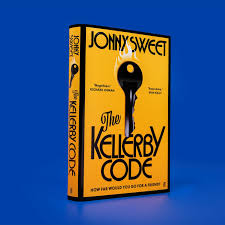
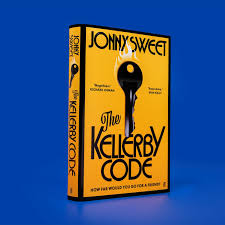
The Kellerby Code by Jonny Sweet

Writer walks into windowless, dusky room and switches light on. Room gets darker. The End

I’d been meaning to read The Kellerby Code since the beginning of Summer. I’d noticed a few references to it in the weekend supplements, and then it began to be more heavily promoted with Richard Osman’s one word verdict: Genius. On further investigation, it seemed that the book was a comedy, set in a Country House, with shades of Evelyn Waugh and P G Wodehouse. It sounded delicious, just right for two weeks away in the Mediterranean sun.

Such is the power of marketing – selling a book in shedloads, even though it falls apart virtually the minute you begin to read it. Its only possible virtue is its future role in Creative Writing courses as a manual on how not to write a novel.

I know this sounds cruel. After all, it is Mr Sweet’s debut novel and budding writers need gentle encouragement, but I really think you can put away your sympathy and save it for more deserving cases. He has, after all, sold millions, made a fortune, and has nicely set up a second career to slot alongside his night job as a Stand Up comedian, probably now with a multi book follow up deal.

The TV adaptation can’t be far away. And, to be honest, that will probably be much better than the book, because no one would have to read it and…….How can I put this politely? This is very, very badly written. Thankfully for you, dear reader, I’ve already read it, so that you don’t have to.

SPOILER ALERT!

(But actually, dont worry, You’re never going to read this book…)

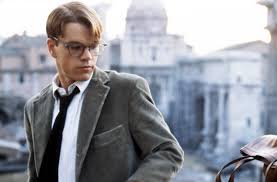
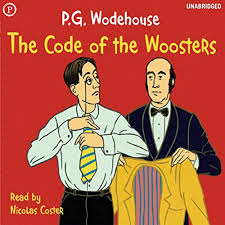
Although both Brideshead and  Blandings are both referenced in the book, and the title is an echo of The Code of the Woosters, the real comparisons are with the film, Saltburn, and Patricia Highsmith’s The Talented Mr Ripley. It’s about a lower middle class young man, Edward Jevons, who falls in with a posh, entitled, aristocratic set at Oxford, whose leader, Robert, takes him under his wing and simultaneously patronises and exploits him. The gilded crew naturally fall into highly paid jobs in the arts and finance, via their discreet network of patronage and influence, while Edward, embarrassing oik that he is, is reduced to tutoring the ghastly offspring of the Chelsea and Knightsbridge elite. His real job, however, is to be Robert’s unofficial factotum and gopher, being expected to fulfill a myriad of trivial bits of domestic administration, unpaid, at the drop of a hat. This is done under the heading, Friendship, apparently, because Robert is grappling with the higher problems of being an up and coming theatre director and has no time to wipe his own arse and he doesn’t much care for getting his hands dirty.

Edward is completely besotted with this world, leaving his roots behind him, and is completely blind to the fact that his new posh friends actually despise him, and refer to him as Jeeves behind his back. The situation is complicated by the fact that he is totally in love with Stanza (yes, really), more posh entitled totty who treats him like dirt and things really begin to take off when Robert starts going out with her and eventually marries her. The second half of the book brings a murder, which is the trigger for Edward’s descent into nervous breakdown territory and several more, ludicrous murders.

The plot  is actually quite engaging, and even when the coincidences and hugely overblown prose threatened to make me chuck the book against the wall and admit defeat, wanting to have narrative resolution kept me going. The characters are uniformly ghastly. I read the whole book without incurring any warm feelings or concerns about anybody – not the vile poshos, and certainly not the wholly pathetic Edward, whose whinings and self pity produced a dreadful toxic cocktail of a personality that was more repellant than sympathetic. In the end, I felt the Bullingdon club crowd were actually too nice to him

The “twists” and “turns” of the plot were laughably poor. At times we were asked to believe that Edward, presumably our hero, had never read or seen a contemporary detective drama and was completely unaware of CCTV, DNA, fingerprints or even the basic fact that the police might ask him some questions and then triangulate his answers against what other witnesses/suspects had said. None of it matters though – there are so many loose ends and plot holes, so many inexplicable decisions made, that the real pleasure of the book was seeing what the next ridiculous plot twist was going to be. The concept of suspending disbelief was taken to new heights, such that in the end it became not a matter of suspension of disbelief but total disappearance of belief. This is a book that rests entirely on blind faith, like a religion, but without the rewards religion purports to offer. Textual Fundamentalism is the way forward. It stops hard pressed writers having to give a second thought to all those tiresome ideas about credibility, motivation, or authenticity.

But the worst is yet to come. My God, the prose, dear reader, the prose. The analogy that pushed its way into my consciousness, as I was ploughing through this car crash of a book was that of the IKEA flat pack piece of furniture. You get the damn thing home and open it up, and then diligently read through the language-less instructions.

Bolts and screws of various sizes are included in separate plastic bags, but it’s not until you have nearly constructed the thing that you realize that it doesn’t fit together and that you’ve used the wrong screw for the wrong bit of MDF. Here, Mr Sweet discovered that he’d been sent a big bag of commas and a tiny bag of full stops.

Sentences stagger on, many clauses lashed together by commas, desperately searching for a full stop, until they collapse, bleeding and exhausted. This is someone with a nice turn of phrase and a vocabulary that they are secretly very proud of, but who is determined to show you everything they can do. In every sentence. Every time. As a former GCSE and A level English teacher, my greatest priority was to impress upon my students the utter beauty of the short sentence, and the absolute necessity of a variety of sentence lengths and structures, so that there was some sense of rhythm to the whole thing. So that it sounded good when read aloud and felt nice in the mouth. Here, it sounds like radio static and tastes like a mouthful of Brylcreem. Back in the day, if little Jonny were one of my students, his submission would have tested my powers of constructive feedback and diplomacy. 

My sincere suggestion to you, dear reader, is don’t bother with this. Watch Saltburn instead. Or watch and read The Talented Mr Ripley. And for advice on how to write sublime sentences, read some Wodehouse. You know it makes sense.

Romance is not Dead

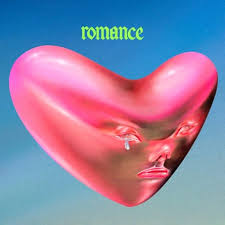
The new album by Fontaines DC is alive and kicking

More than five years worth of water has disappeared under the bridge since Dublin’s finest, Fontaines DC, released their debut album, Dogrel. There have been two more since then – A Hero’s Death and Skinty Fia, but neither of them generated the same excitement as their first, with its originality and verve.

They arrived heralded as nouveau punk and although those comparisons are always inevitably flawed and misleading, there was something in that characterisation. That album was many things but, like the original punks, one thing it was not, was polite. There was an authenticity and a couldn’t-care-less attack to it. This is us, it seemed to declare, and we don’t care what you say about it. This was my review of it at the time:

But now comes their fourth studio album, Romance, and it’s a game changer. Old heads with old hands now and they have produced something of rare beauty that triumphantly confirms what that first album promised: They’re gonna be Big. The start of the album generates fear of disappointment, with the title track, Romance. Moody, doomy synth washes with dark, dark lyrics: 

Into the darkness again,

In with the pigs in the pen

Don’t worry! It’s a deliberately misleading start. It’s not doom and gloom that await you in this album, it’s joy and beauty. This is not a band trying to curry favour with its potential new audience, playing it safe. It would have been so easy to start the album with Favourite for some uplifting poppy melody, but that is a trap they sidestep, preferring instead to make demands on their fan base. And they are demands that are worth responding to. After three listens, the subtle pleasures of vocals, lyrics and atmospheric layers lodge themselves in your brain, and you’ll wonder why you doubted them in the first place.

The album goes from strength to strength. The single, Starburst, is the perfect antidote to the slow gloom of Romance. First, strange mellotron is studded by liquid arpeggio piano notes that ooze a grave, poignant portent. Then the uptempo beat and word heavy, almost rapping rhythmic vocals – this will be the standout track on first listen. But that won’t last, as the subtle pleasures of all the other tracks begin to elbow you for attention.

The melodies are gorgeous, the lyrics subtle and clever, the vocals sweet, particularly the unexpected harmonies that punctuate many of the songs. It’s a repeat of the Black Keys scenario, back in 2011. After releasing three well respected hard electric blues rock albums, that clocked up mega critical approval but few sales, the Black Keys suddenly discovered how to write classic pop songs with killer hooks and choruses and came up with El Camino. Still quintessentially Black Keys, with their DNA pulsing through it, it was a compulsively fabulous commercial record. So it is with Fontaines and this album. It retains its Dublin accent, but uses it to tell better stories that will pull in a bigger audience. They look a little different as well. But then, don’t we all….

Fontaines now…

Fontaines then…

The two standout tracks for me at the moment have that unmistakable classic quality of great songs: they sound like they’ve been discovered, excavated in an archaeological dig rather than having been newly created. It’s as if they’ve always been here. Have a listen, first to the sublime “Bug”.

Then the closing song of the album, “Favourite”. In a pre-streaming age, this would have been the opener to pull the audience in, on vinyl or CD. Lovely shiny guitar riff and cleverly worked chorus, this is classic pop.

Do yourself a favour and follow these instructions.

  1. Play the two tracks linked here.
  2. Buy the record, or download it.
  3. Try and get a ticket to see them live.

You know it makes sense

The Return of Telling Stories

Regular readers of this blog will know that, if nothing else, it is eclectic, covering the highways and byways, the nooks and crannies of human interest. Fiction, Politics, Football, Writing, Theatre, Film, Music, original short stories – all human life is here. So you will forgive me, I’m sure, if this latest blog is unashamedly devoted to self-promotion. After a hiatus of a couple of years, my podcast Telling Stories has returned. When the kids move back out, the old recording studio moves back in. I’ve used it to contribute to Librivox, which in essence is an audio book version of The Gutenberg project. Anyone who passes the technical recording test can volunteer to read books that are out of copyright, and there is a vast library of free audio books, produced by said volunteers.

If you like listening to audiobooks, give this a go. It’s barely publicised, and the quality of the readers is varied, but with a bit of trial and error, you’ll be able to find something to your taste, that doesn’t offend your rigorous standards of fiction, technical specs and reading voice. It’s a really worthy project and deserves more support. Check it out at Librivox

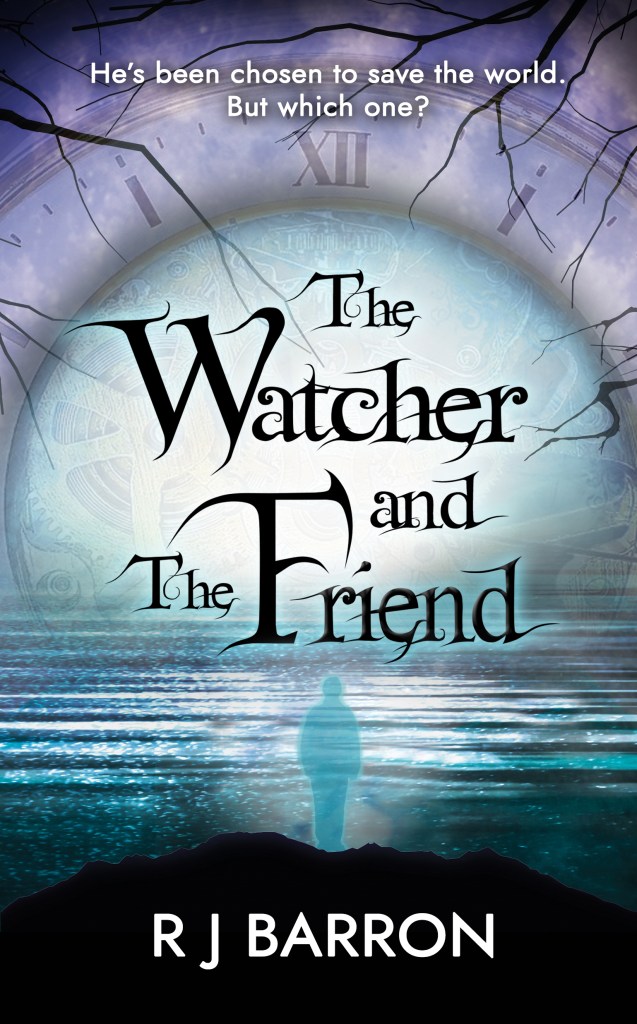
Another project even more worthy of support is my Podcast. I’ve resumed the momentous task of turning my YA book, The Watcher and The Friend into an audio book, via regular recordings on my podcast, Telling Stories. I’m trying to post a weekly chapter. Have a look at the ones I’ve done since the new studio arrived. The links are here.  Try it and pass it on if you like it. Or even if you don’t.

Make Sure you listen to the episodes in the right order! If you havent started yet, follow the links to the beginning and click follow on the Spotify Podcast page

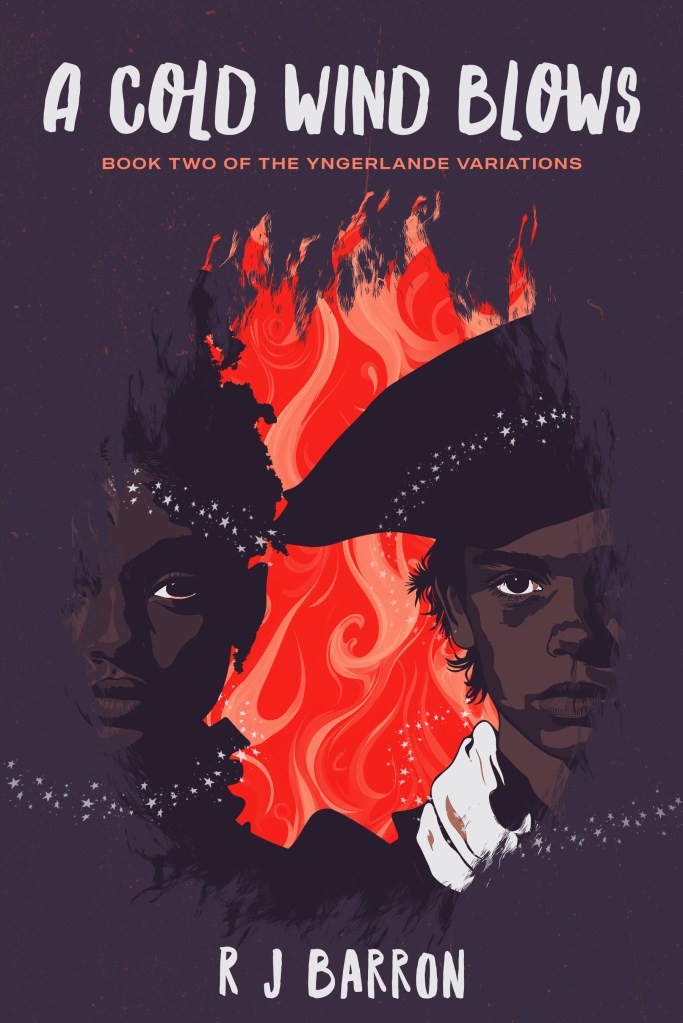
A Cold Wind Blows – Book 2 of The Yngerlande Variations

Finally, some exciting news. The sequel to the book is scheduled to be published later this year. It’s called A Cold Wind Blows, and I’m very pleased to be able to give you a sneak preview of the new cover – designed by me and produced by the very talented Youness Elh. More on this later!

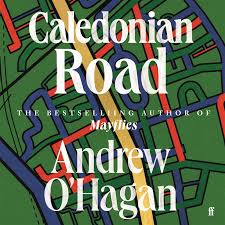
Caledonian Road

O’Hagan triumphs with that rare beast – a State of the Nation novel with heart.

The latest novel from Andrew O’Hagan, Caledonian Road, is a big beast, in every sense of the term. Physically, it’s got some heft. 640 pages of hard back book makes demands on the wrists. It’s also dealing with weighty, contemporary issues, so all told, the experience of reading it provides a holistic mind and body workout. Sounds like a week at a Spartan health farm, where the motto is no pain, no gain, but fear not dear readers, this novel also provides pure pleasure.

O’Hagan handles the intermingling of the personal and political with real skill and delicacy. A lesser novelist would have eschewed ideology and party politics for fear of committing the ultimate sin in the eyes of the serious, sensitive, superior and above-the-fray Literature Critics, that is the sin of taking sides. Ideology is both vulgar and limiting in this fragrant, lofty world. Evenhandedness is much more mature, much more subtle, much more human, darling. Perhaps. It’s certainly much more boring, in my opinion.

O’Hagan says a hearty bollocks to that and has dived in headfirst to this dissection of contemporary London society, and the power structures that both drive it and destroy it. He does it primarily through great storytelling. The novel succeeds first and foremost on that fundamental, primary level. The characters, their relationships, triumphs and disasters are memorable and compelling, even the utterly ghastly ones. Maybe especially the ghastly ones.

For the protagonist, Campbell Flynn, O’Hagan treads well-travelled paths. Working class lad done good, from the grim dereliction of 1970s  Glasgow, Flynn at the time of the novel’s start is an academic, a cultural commentator, and a media darling down in that there London. Not a million miles away, obviously, from O’hagan’s own background, material previously plundered in his exquisite Mayflies. And not just London, but very specifically Kings Cross, an area recently reinvented by money and gentrification, but one which has pungent resonance for any refugee from the North. As a first entry point for East Coast  Scots and Northerners, its streets, legends, and institutions retain a powerful grip on those arriving wide eyed from the sticks. Judd Street, the Eight till Late, the Scala, Peabody housing, Squats and Short Life flats, ULU, one hour rooms in lines of seedy hotels, kicking used syringes and condoms to one side leaving one’s flat in the morning – they are all part of the memory kaleidoscope conjured by the name Kings Cross.

As a big beast, the novel is teeming with characters, so much so that O’Hagan thoughtfully provides a cast list of two fully crammed pages. It’s essential if you want smooth passage through this behemoth, and a trick that Dickens himself could have profitably employed. The plot is multi-stranded and brilliantly handled, so that by the time the book has reached the halfway point, every time a new section of the book begins, there’s a sense of excitement at the resumption of that particular plot thread. That happens for all of the separate threads. That’s a real achievement. Usually, there’s always at least one thread that the reader has less engagement with, where you feel you’re treading water and sticking with, out of a sense of obligation. Here, all of them sing.

It’s a novel with laudable ambition, tackling big, serious issues. Any analysis of the current, woeful state of the UK would examine these topics in some depth, and O’Hagan looks them straight in the eye and explores them with both a pitiless forensic gaze and nuance, which allows him to eschew simplistic judgements and portray the issues and the characters with multilayered complexity. These are not the scribblings of a naive schoolboy marxist. He manages to cover

  • People trafficking
  • Cancel culture
  • British exceptionalism
  • The aristocracy
  • Public Schools
  • Russian money laundering
  • Social Media
  • Celebrity Culture
  • Gentrification
  • Housing 

All of this produces an excoriating picture of the malign influence of the British establishment, their sense of entitlement and superiority, and the devastating impact they have had on destroying Civil Society for everyone except the super rich. The “freedom” this class espouses becomes simply freedom for millionaires to become billionaires without the state interfering.

There will be readers at this point who are thinking, “Bloody hell, this sounds far too political for me. I don’t understand this stuff and/or I just want a story about people and relationships” Keep the faith, you apoliticals! O’Hagan delivers on that front as well, with a huge range of individuals and families, all of whom, even the nasty Tories, are portrayed sympathetically. It’s Dickensian in that sense, and similar in many ways to Zadie Smith’s White Teeth. An energetic, densely populated romp set in multicultural, class-riven contemporary London, it is, like Dickens, a serious work masquerading as an entertainment. Or the other way round.

There was one dud note for me at the beginning. His portraits of Media stars, the establishment, and the political classes all rang true and had the hallmark of authenticity. I found, at first, his depiction of knife wielding, estate dwelling, drug dealers less successful. It felt as if he had spent some time eavesdropping on an unfamiliar underclass and had produced a two dimensional portrayal. By the end, however, I was convinced and O’Hagan had totally won me over. This is A Great Novel, and I can’t wait for the adaptation, film or TV. Already commissioned, apparently.

My Novel of the Year – by a mile.

One last push, madam

Lest we Forget…..

Before we start, it’s always good to remind ourselves of the calibre of Tory MP we have had to suffer for the last 14 years…

Ah, that’s better. Now, lets think about the election for the last time.

At the time of writing, the general election is only four days away. It can’t come soon enough, after what has been a thoroughly miserable, profoundly depressing campaign. And the polls haven’t shifted a notch in terms of closing the gap, so we might as well have had a seven day campaign and spared everyone the grief. Instead, there’s been five weeks of watching a dwindling band of Tories, the few left who are still prepared to debase themselves, lie through their teeth on the media treadmill every day, which has left me feeling very detached from the whole business. Those Tories that have declined to take part in the undignified circus have done so, not because of an outbreak of guilt, or remorse, or shame, or the sudden rediscovery of a moral compass, but because they realise the game is up and there’s nothing in it for them anymore. Some (Jenrick, Patel, Braverman) have been largely silent and/or invisible because they are busy plotting their post election-rout leadership bid. Others like Jenkyn have been shamelessly brown nosing Nigel Farage, and fantasising about their dream merger with Reform and a possible comeback for Johnson. Students of 1930s Germany might recall strange parallels with Von Papen, Hindenburg and Hitler. That didn’t end well for anyone. Others have gone on holiday (Baker), gone to the betting shop (Williams) or gone mad (Nadine Dorries, Liz Truss) Yes, I know Mad Nad is not standing, but it’s always good to remind everyone just how ghastly the last fourteen years have been. Johnson posted one troop-rallying video, looking like a man who had just returned from a treasonous Bunga Bunga party in a Russian Oligarch’s Italian mansion, security detail nowhere to be seen, having over indulged on everything he was offered: cocaine, call girls, state secrets. When nobody took any notice he clearly thought, “Fuck this for a game of soldiers, I’m off” and buggered off back to the Sardinian villa ( paid for, of course, by some other gullible rich bastard who hasn’t the wit to realise that Johnson currently has the establishment clout of Matt Hancock, is shagging his wife, and has left a steaming turd in the middle of the villa’s marble floor.)

Meanwhile, Rishi Sunak has just plain gone, being helicoptered in to factory after factory wearing yellow hi vis and a glassy fixed smile giving the same answer to every question: “bold action….no plan…no surrender…” The loyalty troops (James Cleverly, Mel Stride) in the party are  talking up the idea that losing but getting over a hundred seats would be an act of heroic, leadership brilliance, before preparing to shaft him on July 5th. “Et tu, Jimmy?” gasps Sunak as the knife strikes. It almost makes one nostalgic for Matt Hancock, who has been airbrushed from History. I sometimes wonder whether someone called Matt Hancock did actually exist, or whether I just keep having a recurring bad dream. It can’t be that though, because when I wake up, the reality is even worse.

It looks like the ever wonderful Channel 4 news’ undercover filming of the Reform racist members/ workers/volunteers might shoot Farage’s fox, or at least wound it so they take votes from Tories, but not too many. It’s impossible to overstate the importance of them not taking any seats and having a lower share of the vote than the Tories. It would be the icing on the cake if Farage were to fail in Clacton, but that remains a real risk. The undercover filming was like one of those mad bits of social research that pop up now and then. You know the sort of thing, a research project that concludes that school students in classes that suffer from poor behaviour tend to achieve less well academically. No shit, Sherlock. I’m sure it’s come as an earth shattering shock to most sentient UK electors, that people associated with the sexist, homophobic, racist Reform party, led by the sexist, racist and homophobic Nigel Farage, are, deep down, er, sexist, racist and homophobic. 

And yet, it still feels like squeaky bum time, regardless of what the polls say. What would be the perfect outcome, in Fantasy General Election land? 

  1. A narrow Labour majority
  2. Lib Dems as second largest party.
  3. Greens having 4+ MPs
  4. Tories below 100
  5. Reform with 0
  6. The last two items generate wider support for PR 
  7. Starmer drops the mask, acts according to his centre left instincts, pushed by the Lib Dems, and jettisons the woeful policy positions taken up to appease the Daily Mail.

I am planning Election night, laying in a choice selection of fine wines and delicacies, having cleared my diary for the day after. I am determined to enjoy the evening because the cold-light reality of the next day will be depressing: a hangover, a Starmer-led Labour Government, with a shameful list of frit, populist policies and a weather forecast of rain. I’d like to think that, if the choice of 2024 General election songs was between Steely Dan, Change of the Guard (If you live in this world, you’re feeling the change of the guard”) of The Who, Fighting in the Streets (“Yeah, come meet the new boss, Same as the old boss”) then Steely Dan would win. But no, I fear The ‘Oo will triumph. Have a listen here and make your own mind up

We Dont Get Fooled Again

But I suppose it could be worse. Biden or Trump, anyone?

Finally, just to remind you where all the hollowing out of British society started, have a look at my memories of the infamous 1979 election, and the day I broke the law in the struggle against fascism. Or Margaret Thatcher at any rate. Enjoy the night, comfort yourself with how much worse it would have been under the fascists, and get ready for disappointments ahead,

Stop Press! The last word to Rishi Sunak, who this morning trumpeted his opinion that life in Britain is much better now than it was in 2010. Clueless.

Liars!

Rish! and The Tories exposed as desperate and shameless after only two weeks.

I write this after two weeks of an already dismal and depressing election campaign  – almost a third of the way through. Nothing much has shifted in terms of the polls – Labour are still a country mile in front and the Conservatives are still resolutely useless. So much so that my ingrained fear  of the media establishment lying the Conservatives back to power, reinforced by enduring many unsuccessful campaigns in the past, has not really kicked in. I should be sitting back enjoying the campaign assured of victory, but I’m not. First, it’s extremely depressing watching a series of Tory ministers (or at least the few that are still standing )  lie their way through interviews, knowing that the supine interviewers will not call them out on their lies. 

Second, unlike 1997, we are deprived of the delicious prospect of watching one grotesque Tory criminal after another being trounced by tactical voting. The biggest of beasts is vulnerable to ending their career in a rerun of the Portillo moment, shuffling from foot to foot in a drafty sports centre, as bepearled supporters sob uncontrollably. It’s petty and unworthy, I know, but it’s been the only thing keeping me going since 2010. Who would give the most pleasure?  Jacob Rees Mogg? Michael Gove? Priti Patel? Cruella Braverman? Mark Francois? Andrea Jenkyns. Dear me, even reading the list sends a shiver down the spine, as the full depth and breadth of the Tory fuckwittery is laid bare. Deeply stupid. Deepy incompetent. Deeply callous. In some cases, vaguely criminal.

The trouble is that evolution has not produced a creature with a more acute nose for danger to their own self interest  than the average sitting Tory MP. They’ve known for at least the past year that their days are numbered, and so they grandly announce their intention to stand down, citing privilege and honour, having made sure that they have secured a lucrative directorship or three of some businesses involved in their area of ministerial “expertise”. No reckoning for these charlatans after all. Michael Gove, taken by surprise by Rishi’s shock election call, didn’t even tell him he wasn’t going to stand. His announcement that he was standing down produced the most extraordinary paeans of praise for this supposed modern day titan of Westminster. The bar is set very low indeed  if Gove is a titan. Coke head, drinker, lickspittle, his main achievement is proclaimed by the Torygraph and The Spectator as the rescuing of Education from the clutches of the Blob, all, supposedly in the name of “Standards”. Standards my arse, as Jim Royle might have commented. Now there’s someone who would have made a better Education Secretary than Gove. Along with Pingu, and Ant and Dec. What an interview shortlist that would have made.

The other source of pleasure denied, of course, is the prospect of an incoming Labour government that would begin the herculean task of repairing the damage created by 14 years of incompetence, greed  and corruption. But unlike 1997, when there was real excitement at the end of Thatcherism, and what a Blair government  could achieve, there is no similar  joy or hope. Starmer has continued to disappoint and, lately, enrage. Before any of you Labour centrists explode, ranting about middle class Corbynistas threatening to jeopardize the Starmer project and thus betray “hard working families”, let me explain. (And don’t worry by the way about non-working, non families. No-one gives a toss about them. It’s their own fault.)

I absolutely get the strategy of saying virtually nothing and making no commitments that might give the Tories an easy target. We’ve been shafted too many times before by The Sun and the Mail. But what Starmer  has done has gone way beyond that, way beyond what might reasonably be deemed sensible and cautious. Their policies have gone to the right of the Tory party. Watering down of the Green deal. Processing immigrants overseas. Keeping the 2 child benefit cap. Not nationalising Water, Energy, Rail etc. Not talking about Europe and the single market. Not talking about PR. The list is endless – a Mandelson-advised Labour party outflanking the Tories on the right. Who’d have thought it?

There does seem to be a genuine prospect that the Conservative Party might split after the election. Whereas before that would have been a reason for celebration, now it would just be a bit of schadenfreude. Why? Because there’s no need for the Tory Party, given the transformation of Starmer’s Labour. The Tories, who had via Brexit turned into the English National party, can split asunder. The knuckle draggers will migrate to Reform UK, who are basically the Nazis with fewer policies. The Tories who represent seats in leafy Middle England will join Labour. Socialists and even mildly left of centre libs will join the Greens. And this inexorable drift to the populist Right will continue unchecked unless Labour is deprived of a majority and PR somehow gets itself back on the table. And at the moment, that doesn’t seem likely.

This is the mother of all own goals. After what has happened since 2010, the appetite for socialist policies in poll after poll is enormous. They are clearly popular and different to the tired old policy sacred cows that derive from redundant concepts of sound money. The trouble is you have to make the case for them over time, and in doing so, debunk the hysterical name calling that promises of increased  public sector spending always provokes. But the leadership don’t really seem to believe in it any more. Despite Starmer bizarrely self identifying as a – gulp – socialist. I’m still trying to work out the Machiavellian calculations that lie behind that announcement. Perhaps he just forgot.

The latest talking point is of Rishi Sunak taking politics and his own reputation into the gutter by his deliberate, desperate and blatant lies on tax. As ever with Rishi, despite the endearing flutter of excitement amongst the Media attack dogs on the night of the first debate, it’s all gone pear shaped twelve hours later. Everything he touches turns to dust, and I predict that before the end of the campaign, there will be major defections and open warfare amongst the Tories. It really couldn’t happen to a nicer bunch of people.

It was to be expected, of course. The Forty five year Thatcherite experiment has produced a shed load of evidence of its own spectacular failure. In every area of governance,  Britain is significantly worse than it was in 2010. You only have to walk through your local town centre to see it with your own eyes. And you’d have to walk because it’s too hard to get a bus or a train. Even they can’t defend the rising tide of shit their ideology has generated, so the only thing left is to lie about it. And they’re not even very good at that, apart from their lack of shame. They are certainly world leaders at that.

I am still undecided, but currently The Greens are making it hard for me to vote Labour, but I suspect I’ll wait until the July 4th and assess the state of play then. The way things are going , I’ll be able to vote Green with a clear conscience, knowing that Labour’s majority is unthreatened. Labour’s continuation of right wing policies, their timidity on economics, their disgraceful position on Gaza and Israel’s genocidal madness make it increasingly hard to support them. Ultimately though, I take the Mick Lynch line on this: the very worst iteration of a Labour government is a hundred times better than the very best iteration of a Tory one. But it’s getting very close.

Hold the Front Page! Latest Tory haplessness – just before going to press the D Day scandal was breaking. Sunak’s crack team of advisors have outdone themselves this time. I’m starting to believe a tweet I read that suggested that the only rational explanation for their campaign’s increasing level of incompetence is the idea that Rish! has got a hedge bet on that depends on him losing the election by achieving less than 100 MPs. It’s delicious – the ultimate vaccuous flag shaggers hoisted by their own petard by the Dad’s Army propaganda sheets, The Torygraph, The Mail, The Sun and The Express.

More ramblings from the election battleground next week.

The Golden Age of Cinema? Guess what? It’s right now.

Something weird is happening to films. It’s crept up slowly, revealing itself bit by bit, until now there’s so much evidence that it’s irrefutable. We are living through the Golden Age of Cinema, after the Wasteland of Pandemic Lockdowns and their aftermath. What’s driving this? Lockdown. Streaming. The unstoppable proliferation of narrative outlets and the demand for stories that will satisfy the gamut of tastes and preferences. The thirst for longer narratives with space to develop character, relationships, themes. The usual stuff.

It seemed, when we were in the middle of it, that Lockdowns were going to destroy cinema, as everyone got used to staying in and subscribing to a range of streaming services. The content was good and it was cheap. But by the end, we were all thirsty for the experience of going out again. In the same way that Zoom, at first a lifeline, became an annoyance, when it became obvious that the experience it provided was thin gruel compared to the Michelin-starred flavour of talking to real people in the same room, with eye contact, nuance and body language. You know, like properly being alive.

At first, it was hard, going to the cinema again. An act of faith, even. We went to see countless films in cinemas, to find that there were only six or seven other people dotted around the auditorium. It was only a matter of time, we agreed, that there would be a wave of closures to match the decimation of retail units in High Streets across the country. But, somehow they clung on.

And then, probably about a year or so ago, I began to notice something else, when watching the trailers. For at least ten years before Lockdowns, sitting through the trailers was usually a deeply depressing experience. I had become innured to the naked cynicism of the adverts. Corporations were desperately, unsubtly trying to sell me stuff. Millions of pounds of production costs, undercut by appallingly, clankingly obvious scripts, overlaid with equally grim music tracks. The combination of visuals (admittedly, often very beautifully shot visuals), terrible scripts, and obvious music overlays characterised all cinema adverts. Having to sit through them, always left me feeling vaguely unclean before getting ready to watch a film, usually with some kind of moral message. 

During this period, it was difficult to distinguish between the ads and the trailers for films that were coming our way. They too, were just an extension of this appeal to the basest instincts of Homo Sapiens: Marvel adaptations, Fantasy CGI fests, endless, mindless, explosions, car chases (or spacecraft chases, Dinosaur chases, orc chases etc) It was like watching human evolution going backwards and I did despair of the celebration of stupidity it all seemed to represent. Don’t get me wrong. There’s a place for escapist/adventure/action type films. But a) do them well, and present a story with a plot that makes sense and respects your audience and b) make them as part of a wider, more diverse offering.

So the first time it happened, it was a bit of a shock. After the film, on the walk from the cinema to the car, the conversation was less about the film, and more about the trailers. Puzzled expressions and lines like, “There’s some really interesting looking films coming up”, were delivered hesitantly, as if it was just a scam to get us back, but really we would find that nothing had changed.

But it has. Every month there are great films and , on leaving the cinema,  I think, “That’s the best film I’ve seen this year.” Over and Over again. I may be wearing rose tinted spectacles, but I can’t remember this happening before. They are long (sometimes too long), have stories, have interesting characters and believable relationships, are beautifully filmed in interesting locations, have significant human dilemmas to be resolved. I don’t know how long this is going to go on for. I’m just determined to enjoy it while it lasts. Because when it all blows over, and we are forced to trawl through mediocre shit on Netflix, recreating that Friday night  visit to Blockbuster, where everything in the shop, could be pulped without adversely impacting the stock of human happiness, we’ll be forced to reminisce sadly about the time when going to the movies was great.

And what have been the films that have inspired this analysis? Well, since you asked so nicely, in no particular order…

Oppenheimer

Barbie

Saltburn 

Poor Things

Zone of Interest

Killers of the Flower Moon

All of us Strangers

Anatomy of a Fall

Past Lives

The Holdovers

I can just about narrow this down to a top five:

5. Saltburn

Saltburn

I’m amazed that this film divides opinion. It’s a funny, stylish Brideshead pisstake that turns the usual working-class-oik-adopted-by-the-bastard-Upper-Classes-at-Oxbridge-before- being-humiliated trope on its head. People who don’t like this are the same as those who didn’t get Don’t Look Up a couple of years ago – sadly very wrong.

4. Killers of The Flower Moon

Lots of moaning from the older cinema-goer ( my very own tribe) about toilet breaks needed because of its excessive length. Not for me. It flew by and I loved it. Fascinating, unknown (to me) story from American Twentieth Century history, with fabulous performances from De Niro, Gladstone (who really should have changed her name to De Gladstone) and the ever underappreciated Leonardo De Caprio. And if bladder control is increasingly a problem for you, there’s a range of remarkably effective, discreet products you can now buy. Next to the Maltesers in the cinema shop.

3. Poor Things

Wow! What a treat this film is. Visually stunning, steam punky Glasgow vibe, moving through Europe to Paris and back. Amazing performances from Emma Stone and Mark Ruffalo, who is hilarious all the way through and who should have won an Oscar, if that particular travesty of an award ceremony had anything to do with quality rather than promotion and virtue signalling. Is it a feminist epic? What a dim question – of course it is. How to learn to become a woman in a patriarchal society is a great premise and it’s delivered in an un-hectoring way. The scenes in the Parisian brothel are notable for the collection of highly unprepossessing men who make up their client list. In any other year, this would have been the best film of the year by a mile.

This brings us to the top two, and we move into a completely different league of experience.  In Joint First Place are:

Zone Of Interest

This is an amazing film. The Second World War and the holocaust are strange subjects. In one sense, how can you go wrong? They naturally carry their own drama, their own horror so they’re a gift as subjects for people who are making stories. The downside, of course, is the fact that they’ve been done to death. How could you possibly find anything new or compelling to say, when confronted by the ultimate, still barely believable, example of the worst of humanity? But Zone of Interest pulls it off.

It’s a great premise. The mundane domestic arrangements of the Auschwitz commander whose family home abuts the death camp are an obvious way of exploring how absolute evil becomes commonplace. Generations of GCSE English students will also be familiar with the poem Vultures by Chinua Achebe on the same theme:

Thus the Commandant at Belsen
Camp going home for
the day with fumes of
human roast clinging
rebelliously to his hairy
nostrils will stop
at the wayside sweet-shop
and pick up a chocolate
for his tender offspring
waiting at home for Daddy’s
return…

Praise bounteous
providence if you will
that grants even an ogre
a tiny glow-worm
tenderness encapsulated
in icy caverns of a cruel
heart or else despair
for in the very germ
of that kindred love is
lodged the perpetuity
of evil.

Vultures. Chinua Achebe

Everything positive that has been said about this film is true. The soundscape is extraordinary and a compelling reason to watch it on the big screen. There are some wonderful scenes: the commandant hurriedly getting his kids out of the nearby river, running through idyllic woodland next door, when he realises that the water is carrying some horrific evidence from the camp next door. This is followed by frantic scrubbing of the kids in the bath. The commandant’s wife casually sorting through booty left behind after prisoners had been exterminated: fur coats, gold teeth, jewellery. The negative night scenes, of a young girl from the village visiting the outside work areas hiding food for the inmates, are both beautiful and haunting. It’s a film that will never leave you, once seen.

  1. All of Us Strangers

This is the film that sums up, for me, the new approach of adult serious films, for adult serious people. Please note: Adult and Serious does not mean Boring. Far from it. The four central performances are luminous: Andrew Scott, Paul Mescal, Clare Foy and Jamie Bell are all brilliant. It’s so good, you want a new category of Oscar: the ensemble acting award. People talk to each other. They struggle with their feelings, they show what it is to be alive as an individual in an alienating society. There’s a hint of lockdown isolation, but that is suggested rather than laid on with a trowel. It’s enlivened by some, beautiful, subtle magic realism, in the form of the Scott character going back to visit his childhood home as part of his research for a new film he’s working on and finding his parents, unaged, still living there. It uses this device to explore memories of childhood and regrets for all of the things that were not said. Tears are shed in the audience. Beautiful.

Baggy, Saggy and Flabby

A Review of “Demon Copperhead” by Barbara Kingsolver

Ok so let’s cut to the chase. The only real question about this book is, how on earth did it win the Women’s Prize for Fiction? It’s not that it’s bad, it’s just that it’s not good enough. And in a reversal of the old Jewish joke, there’s just far too much of it. It comes in at about 540 pages, and were it to be trimmed to around 400, it would still be baggy, saggy and flabby.

There is a second, supplementary question. Why is it impossible to find a negative review in the whole of cyber space? Or even a luke warm one? After I didn’t finish the book, I trawled the internet for the reviews to see what the literary establishment thought about. And well whadda ya know? They all loved it. Of course they did. I am wearily used to lying firmly outside the mainstream when it comes to opinions about cultural products. The lonely furrow is the one I seem to plough repeatedly. And there is always the problem of reviews done by other writers where an institutional phenomenon of “You scratch my back, I’ll scratch yours” is in rude health. It’s not that I want to be negative about anyone’s work. Writing a novel is a major undertaking and all kudos to anyone who achieves it, but really, let’s not suspend our critical judgement. It’s not a hanging offence to publish something that’s not absolutely wonderful. Let’s actually read the book, and then be truthful about it.

The other possibility, of course, is that I’m just wrong, and that it is, in fact, a major piece of work.

The problem here, the elephant in the room, is Mr Charles Dickens. Kingsolver is on the record professing her deep love and admiration for the Great Man and his works, and her determination to do a modern day version of David Copperfield. All well and good so far. The trouble is she seems to be so intent on her updated homage to her hero that it has elbowed out of the way all other considerations. You know, things like writing a novel that works on its own terms. One that engages, entertains and enlightens. One that leaves you moved by the plight of the protagonist and gives you some insight and empathy into a pressing social issue of the day. Set against that, pulling off a trick of adoring imitation seems a little shallow and pointless.

It’s not as if she didn’t have promising material. Setting the book in rust belt Virginia, looking at Blue Collar poverty and neglect, exploring the opioid addiction crisis of these left behind communities and exposing the seemingly scandalous mess of foster care and adoption in the US – all of these issues are worthy of a big novel. Unfortunately, I have to report that this is a big novel only in the sense of the number of pages it amasses. On all other available measures, it falls short.

To be scrupulously fair, there’s a lot of good writing here. KIngsolver has been around the block a bit and knows how to put together a sequence of well tuned sentences. And there are times in the first half of the novel when it seemed that it was on the verge of lift off, but each time proved to be a false alarm. Hope and expectation, time and time again, are throttled at birth by repetition, relentless accumulation of peripheral characters and scenarios, and an overall sense of meandering.

I wondered whether this was Kingsolver deliberately attempting to be Dickensian, trying to ape his characteristic gallery of grotesques and eccentrics in order to create a world where all human life is here. The trouble is, Dickens does it with great verve and style. Each diversion, when the reader is inducted into the lives of yet another group of oddballs and ne’erdowells, re-energises the novel as a whole. The prose sparks and fizzes, the subplots entertain, the narrative drive of the main plot is undiminished, Maybe it’s his skill at the episodic nature of monthly installments, where cliffhangers and structure drags the reader forward on a basic mission to find out what happens next. In this case, there is no sense of forward propulsion. Each diversion causes the book to sag. Each set of grim circumstances and terrible characters seem indistinguishable from the previous lot, until the reader starts to actively not give a toss about the fate of our hero. Or, at any rate, this reader didn’t.

It’s not helped by Kingsolver’s use of the first person. The voice of Demon Copperhead, the eponymous hero, (David Copperfield. Come on – keep up) is used throughout the novel. It’s his story, told by him. And it’s brilliantly done. There is an authenticity to it and it adds to the sense of place that Kingsolver achieves. But after a while, I found it rather relentless and rather limited. I wanted to see this world from some different perspectives, to hear another voice.

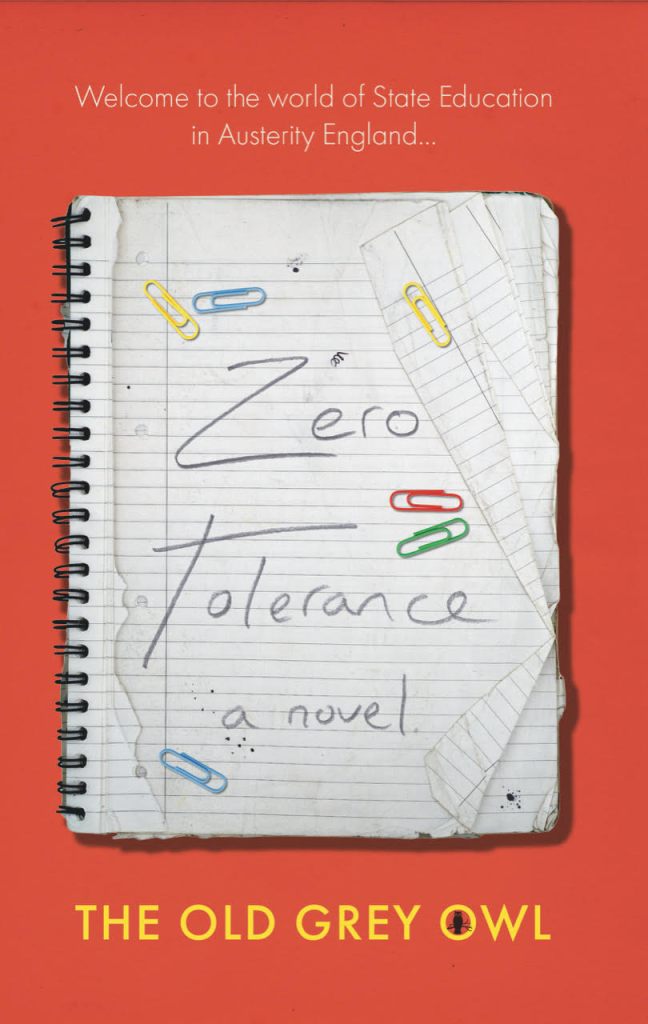
In the end, you can’t escape Mr Dickens, who is always there, looking over your shoulder as you read. Like Kingsolver, I love Dickens. I’ve read all of the novels and some of his stories. I love the plotting and the prose style and the characters. I love the vastness of them and the pleasure of the language. I love the fact that they are as much about a society at a particular time in history as they are about particular characters and relationships, and that Dickens’ voice and views are never far away. But they are from a very different time, and novels, and people and cultural consumption have changed utterly since Charlie’s heyday. What worked for him and his readership doesn’t really work for us in quite the same way. Dickensian is an adjective often used to describe modern narratives and it’s never used pejoratively, always as a quality kite mark of approval. It’s a go to for reviewers to “place the product”. Zadie Smith’s debut, White Teeth, gets the tag, partly for its London setting I suspect, partly for its teeming cast of characters, partly for its exuberance. My own novel, “Zero Tolerance” saw me dubbed as the “Edu Dickens of his generation” in one memorable review. I always feared that was a nod to the fact that it was too long, a little boring in parts and full of improbable coincidences. But enough of me, as no novelist ever said, ever.

Really, when you get down to it, the only person who does “Dickensian” well is, er , the man himself. But I do think this explains the prize winning. Just like any moderately famous actor who does a film playing someone with autism, or a mental health condition, or impersonates someone famous in a biopic becomes a shoo in for an Oscar, so a writer who tries to parallel a famous Dickens novel is aiming for the glittering prizes. Every parallel, every witty updating, every character name spotted by the discerning reader, each of these things generates more brownie points in the pot. We do love a writer who can help us feel a bit cleverer than we usually are. 

Personally, I prefer a writer who writes a novel that grips and intrigues and excites and enlightens. A novel that I can’t put down, to take refuge in a familiar cliche. 

“Demon Copperhead”, unfortunately, was a novel that I couldn’t  stop putting down.

No Acting Experience Needed

My week of faking it as an Actor on the professional stage

After having taught An Inspector Calls as a GCSE set text for more years than I care to remember, the chance of appearing in a professional production of it was too good an opportunity to turn down. And not just any production. This was the legendary Steven Daldry production, which had improbably revived an old creaking classic when it first burst onto the scene at The National Theatre in 1992. The play had been steadily falling out favour as an exam text, despite its many qualities. In stock cupboards of English Departments all over the country, dog eared copies of the play were left gathering dust. The main problem was that it is, essentially, a very wordy play. Not much happens. It takes place largely in one room, where various people tell their story under interrogation from the mysterious police man, Inspector Goole. It’s the ultimate example of tell not show. The drama of Eva Smith’s tragic suicide is conveyed at a distance via the relentless question and answer technique of Goole. This is usually resolved in TV and Film versions by setting up a series of flashbacks, with an actress playing the role Eva Smith, despite the fact that the play makes it clear that the stories the characters tell concern several young vulnerable women, not one.

The Daldry production takes a radically different approach, honouring the text, and using, instead of flashbacks, scenery to ramp up the drama, and to underline the contemporary relevance. The ingenious collapsing house becomes a powerful metaphor for the collapse,  not only of the cosy successful upper middle class world of the Birlings, but also of a society whose structures are rigged against the poor and the dispossessed.

Having ossified into a wordy exam text, at a stroke Daldry transformed it back into a drama that thrillingly presents issues of fairness, poverty, and class divisions in a vital and engaging way for audiences, not readers. For English teachers it has another compelling quality. It’s virtually the only time in a philistine curriculum, when fifteen year olds learn about politics: parties, ideology, structures of government. As a result,  they also learn that boring old politics, despite what they are encouraged to think, produces significant material effects on everybody’s life. Your vote does make a difference.

Its relevance today is unmistakeable, when we have a government that is shockingly cruel, both by design and by outcome, to some carefully selected scapegoats. It’s impossible to sit through the Inspector’s last speech in the play without immediately thinking of our current shambolic set of charlatans who still cling to power. If they cling on for a further term, don’t be surprised to see it removed from exam specs. And in the Gradgrind world of the Tories, if it’s not examined, it may as well not exist.

So when I was sent a copy of the Facebook page of The Churchill theatre in Bromley, just round the corner from where I live, with a notice asking for “Community Volunteers” to take part in their forthcoming production of the play, I was intrigued. Reading it more closely, there was one detail that was the clincher: No Acting Experience needed. That was a selection criteria that I definitely met. Apart from a much talked about role as Jacob Marley in A Christmas Carol, in a school staff/student Christmas  show, my last performance had been as a tree in my primary school nativity play. It was a role I reprised for several years for Hackney Red Star and then Acacia Dynamo, on the Marshes and Clapham Common, as a willing but limited Sunday League centre forward.

I emailed Charlotte Peters, the Company Director, and then promptly forgot all about it. And then, a couple of weeks later, the invite to take part was received. This provoked a strange mixture of regret, excitement and fear, all of which were in evidence when, as instructed, I made my way to the Stage Door of the Churchill Theatre in Bromley.

It’s a little embarrassing to report that that instruction seemed impossibly glamorous to me, a stranger to the world of theatre. The Stage Door! And even if the Stage Door at The Churchill is hidden in a nest of scaffolding and decay, it was still a thrill. The fact that we (the Community Company) were due to be taken through our part at about 3 pm on Tuesday afternoon and the first performance proper was at 7.30pm the same day, stoked all three emotions afresh. 

The Community Volunteers (left): Thomas, Rosie, Giselle, Peter, Colin, Sir Lawrence Olivier, Asti and Hugh

There were eight of us in the Community Volunteer group, and our role was principally to gather on stage in a cloud of dry ice to sit in judgement on The Birlings as The Inspector reached the climax of his investigation. This was done by taking our positions on stage, then, on cue, taking a threatening half step forward.

For all of our time on stage we were to be stony faced, staring into the middle distance. Then, we were to turn and walk off ahead of the Inspectors exit in the famous scene where the ingenious Birling House literally collapses on stage in a cacophony of fireworks, bangs and flashing lights. We stare at this spectacle over our shoulder, before leaving the stage.

The whole thing took about fifteen minutes. Sounds pretty simple, right? Wrong! In that fifteen minutes of hard-faced staring, one is left in stark isolation under the lights, in front of an audience, contemplating all manner of things to do with the workings  of the human body. An itch on one’s nose. Cramp in one’s left leg. Cramp in one’s right leg. The first, frightening tickle of the beginning of an explosive cough. A tiny belch. A runny nose. Hold that fart in. The palpitations of the heart and laboured breathing that in your fevered, overworked imagination, are clearly the start of cardiac arrest. Actors have died on stage, haven’t they? And then one’s thoughts are overloaded with the practicalities of managing a heart attack on stage, such that you miss the cue to begin your exit turn.

The walk back to the dressing room after successfully getting away with it on stage is a heady cocktail of euphoria and relief. We gathered together downstairs for a 15 minute wait before going back on stage for our curtain call. For three or four of us, there was an additional scene where they investigated the ruined house, but clearly, the criteria for selection for this onerous task was to be young and pretty. (and less than 6 feet 4 inches tall so you could comfortably navigate your way around a crowded space). That left me, a reject along with 3 other losers, to assemble on one side of the stage to take the applause. Sounds pretty simple, but we had to maintain our stony judgemental faces, when every human instinct is to smile in recognition of the audience’s acclaim. Impassive silence is not as easy as Buster Keaton makes it seem!

Well, we spent an awful lot of time together. The role involves an enormous amount of hanging around in the dressing room, so it was very important that we all got on. It would have been disappointing if we had just retreated into the world of social media on our phones for hours at a time. We did do a lot of that as well, but there was a lot of chat and a lot of laughs.

Mobile Phones and the Art of Conversation, above

We did this for 8 performances over 5 days. It was a strangely exhausting week, notwithstanding the fact that, really, we did very little. If it was acting at all, it was definitely the Robert Mitchum version of acting – walk on and point your suit at the audience. But it was a fascinating, thrilling experience, and I finished the week with a huge sense of respect for the skill, teamwork and professionalism that underpins putting on a quality production such as this. That judgement is reserved for the professionals we worked with, but what of the other Community volunteers?

The other people were fascinating. The 8 divided into various groups. First the Young Ones – Rosie and Thomas, who were Front of house staff at the theatre, relishing getting back stage and on stage. Rosie did a great impersonation of an air stewardess in her costume and organised several attempts to get us to do a Tik Tok dance routine. Thomas took great pleasure in mimicking the main players in the cast and took particular delight in honing his Scottish accent to perfection. He was also responsible for most of the photographs.

Then came the AmDram squad, led by the extraordinary Hugh, aged 81, who reckoned he had done about 1500 performances as a Community Volunteer, and who was also a veteran of amdram productions going back years, to the silent movie days. (OK, not quite) Peter and Colin were also heavily involved in amateur productions, with Peter a leading light of the Bromley Little Theatre (Licensee, actor and set builder).

Then we had Giselle, a professionally trained ballet dancer and teacher, whose day job was as CEO of Darcey Bussell’s dance fitness brand, DDMIX. She had boundless energy and would often fit in classes or other work commitments even in days when we had two performances. Finally, there was Asti, who, in between stories about the ABBA hologram gig she attended during the run, brought her laptop into the dressing room, to keep on top of her, remote, day job. In discussion, it quickly became clear that there were no shows or plays of note in London’s Glittering West End that she hadn’t been to.

The Community Volunteers ( minus Asti who was partying with Abba that night) above, right.

In comparison to the others, as far as the theatre world was concerned, I wasn’t even a rank amateur, I was nowhere. I concluded that the only reason I got the gig was because I was retired and available, I lived a 5 minute bus ride away, and I knew the play inside out, having taught it for thirty years or more. To their credit, the others tolerated me and my pretensions to write a novel set in a provincial theatre, (Coming, but not soon, “Exit Stage Left”) and responded patiently to all of my rather obvious questions that were from the box labelled “background research”.

The chat ranged far and wide over topics that included:

  • Lower league football teams – Middlesbrough, Plymouth, QPR. Also Crystal Palace – yes, I know, they’re not lower league yet, but they soon will be. (sorry Colin, but simetimes you have to be cruel to be kind)
  • TikTok and what it’s like to have 500,000 followers
  • Superhero Comic Conventions
  • The history and origins of the Little Theatre movement
  • Agatha Christie and rescuing her reputation as a Playwright
  • The importance of having an expensive lightsabre
  • Jim Davidson and the importance of not being rude and offensive
  • Where to get the best Hot Cross Buns
  • Modern theatre audiences drunkenly abusing theatre staff
  • The Police Force and institutional Misogyny and Racism
  • Stage Fright
  • Where to get hold of cheap theatre tickets
  • Telly: Gold, Succession, Happy Valley, White Lotus
  • The relative merits of Greggs, Pret and the local Greasy Spoon
  • A guided tour of great performances we have given. (I was very quiet during these particular conversations, which happened approximately every five minutes. There’s nothing that actors, particularly amateurs, I suspect, like better than talking about their greatest performances of all time. Colin even brought his script for his latest play, so that he could learn his lines. What a trouper!
Back to the Professionals

We were looked after for the week by Philip Stewart, who took us through the choreography of our scene, and checked in on us throughout each day to make sure we were alright. His main role was as the understudy for Mr Birling. Luckily, we got to see him perform the role in one matinee towards the end of the run. Like everyone else, he was excellent in the role: authoritative and convincing as a self-made, blinkered Capitalist. Birling is someone who has pulled himself up by his bootstraps to make something of himself and can’t see why all those who bleat about poverty can’t do the same. It’s hard to overstate how difficult being an understudy must be. They have to know the part inside out, and have the confidence to step in at a moment’s notice without it showing. Phil epitomised this – he appeared to have been doing the role for the whole of the run. The Company Stage Manager, Brad Fitt, was also very welcoming and helpful, making sure we got loads of photos of our experience.

Because we were onstage for only one scene, we got to know it inside out, and it was fascinating to see how the actors, individually and as an ensemble, varied it from night to night. We witnessed the Inspector’s interrogation of Eric, the young wayward son of Mr Birling, leading to the collapse of the family’s smug, pompous self confidence in a terrible physical confrontation between Eric and his mother, before his father smashes the whiskey tantalus, hits Eric and throws him to the ground. Eric was played by George Rowlands, a young actor in one of his first roles. We were privileged to watch him do this scene so close up. He changed it slightly every performance, but each one was as intense as the last. He’s got a big future, I think.

I’m sure all of the other actors were brilliant as well, it’s just that we didn’t see as much of them. We didn’t see the Gerald Croft character on stage at all, because of the structure of the play. Sorry, Simon!

I must confess that one of my concerns before the first day was how we would fit in with the professionals. I had a very stereotypical view of how that was going to go, assuming that we wouldn’t even register a flicker on the actors’ radar. After all, they had been together since August, and they see a new group of volunteers from the community every week. It wouldn’t have been a surprise if they had regally blanked us all.  Nothing could be further from the truth. They were all extremely friendly and welcoming, and did everything they could to put us at our ease. 

We (the community volunteers) were all struck by how much the audience communicate with the actors on stage, and how much they play a part, differently, in every performance. For the Am Dram crew, this was nothing new, but for the rest of us, it added a whole new dimension to the experience. I imagine we’re all familiar with the concept of a “Good House” or a “Good audience”, but to experience the reality of that was something else. During the matinees, and the evening performances to a lesser extent, in the first few days of the run, school parties, full of GCSE students and their hard pressed teachers, dominated.

For the kids, particularly in the matinees, this was as much an escape from the drudgery at school as it was a theatrical experience. And it was an experience they were determined to enjoy. They whooped! They cheered! They groaned! They showed their approval or disapproval of each character as they all told their stories.

As an ex English teacher with many such trips under my belt, this brought back many memories, some of them uncomfortable. Before we used to take a school group to the theatre, we would spend a lesson briefing them on theatre audience etiquette, emphasising that a trip to the theatre was not the same as going to the cinema, with its noisy, continual eating, and discussing the film (at best) or their social life (at worst). It wouldn’t have been fair to put them in an unfamiliar situation and expect them, instinctively to know how to behave. Even with the briefing, group hysteria and peer pressure would often take over, and we were left fielding disapproving looks and comments from all of the card carrying members of the Young People Today Are Awful Brigade. There were a few of them in attendance at The Churchill, several of them haranguing the box office staff for a refund because they were surrounded by kids. How terrible for them.

So, there were times when I winced at inappropriate laughter, chat, or whooping. But then, as the run went into Friday and Saturday, when the serious local theatre buffs attend, I began to long for some evidence of the audience’s engagement with the play. At moments of high drama, moments when the student-dominated audiences would gasp or groan or cheer, from the respectable burghers of Bromley, there was nothing. And on stage, even as a high class bollard, that was strangely deflating. For the principal actors, it must have felt like being ignored – chatting to someone at a party when you notice they are more interested in looking over your shoulder for someone more interesting. Not that that’s ever happened to me, you understand.

I was struck by the gruelling nature of life on the road for a jobbing actor. For the principal characters in particular, doing two performances a day must be physically very demanding. They’ve been doing this run since September, criss crossing the country, changing locations every week. Living in digs away from one’s family, only getting back for a break for a day every now and again – this is not an easy life. Nor a glamorous one.

Backstage, celebrating our glittering success (above right)

As a tiny example, at the end of the last performance on Saturday evening, the thing I was really looking forward to about the return to normal life was the opportunity to eat something vaguely green in colour. A salad leaf. A broccoli stem. A green bean. Even a frozen pea would have been welcome. An unvarying diet of sugar/grease sludge, snatched between performances in a high street chain is not good for you, particularly when combined with a visit to the pub every night. I had expected the actors and crew to conform to the stereotype of the wild thespian troubadors, out on the lash every night in a carnival of excess, but in fact, they were disappointingly sober and professional. Probably why they were all so good at their jobs, on reflection. Or perhaps they just went, sneakily, to a different pub, away from the Hoi Palloi. Hmm.

I was also fascinated by the innards of a professional theatre. Going through the stage door, and making one’s way down the stairs into the bowels of the theatre was real thrill. There was a warren of dressing rooms and ancillary rooms: rehearsal spaces, the wardrobe and laundry area, kitchen, the Company Stage Manager’s office, the Green room. I thought of all the great names that might have occupied the same rooms over the years. And Jim Davidson.

The wings and back stage were another mysterious area, full of shadowy experts silently going about their business to knit the production together. I was particularly struck by the member of the Company (don’t know if it was the DSM or ASM) following each performance on a monitor, in front of a Star Trek dashboard of knobs and controls, issuing instructions to the crew: “Open the house, please”.She was also the person who summoned us from the dressing room to the wings to be ready for our cue.

The strange world of “Back Stage” (above)

Overall, it was a wonderful, memorable experience, one I’ll never forget. It was the sort of thing that retirement, as a second playtime, was designed for. If only I’d followed up that performance as a tree in the Primary Nativity play, all those years ago, things could have been very different.

Me on set, a strange hybrid of a Tree and a Bollard

Lessons in Chemistry

Bonnie Garmus’ debut novel in “surprisingly good” shock

When I was thinking about this review, I searched for something from the professionals, and came across this, from Stephanie Merrit in The Guardian. Merrit is the real name of the very fabulous S J Parris, writer of the Bruno Giordano historical detective thrillers. And just like in those books, she is right on the money regarding this new novel from Bonnie Garmus. This is how she starts her review:

Every now and again, a first novel appears in a flurry of hype and big-name TV deals, and before the end of the first chapter you do a little air-punch because for once it’s all completely justified. Lessons in Chemistry, by former copywriter Bonnie Garmus, is that rare beast; a polished, funny, thought-provoking story, wearing its research lightly but confidently, and with sentences so stylishly turned it’s hard to believe it’s a debut.”

She’s exactly right. I started the book, primed and ready to savour its shortcomings. Not, I hasten to add, because I’m that kind of sour, narrow minded, mean spirited kind of person, you understand. No, simply because it’s an experience so common that it becomes an expectation. A couple of times a year, at least, a book rockets into the Literary Heavens, seemingly out of nowhere, and becomes the “Next Big Thing”. It’s endlessly tweeted about, suddenly all the weekend papers are splashing interviews with the author, and, in a sure fire sign that this is a genuine publishing phenomenon, it gets traction in mass market publications. The writer appears on the One Show, it’s featured in Hello! Magazine, and lo and behold, Reece Witherspoon has bought the rights and is making a 5 part mini series that can only be seen via some new streaming platform that requires you to take out yet another £9.99 monthly subscription.

I often read these literary meteors while they are still burning brightly. This is partly out of an interest in the Literary world in general, partly in an attempt to discern what the secret is to writing a best seller (though to be honest, I’d be happy with finding what the secret is to writing anything that other people – that’s people I don’t know, personally or professionally- might quite like. Maybe even read to the end of, one day. Well, one can dream.) And almost always, the result is the same. The book stinks.

OK, that’s a little harsh. Stinks is maybe pushing it. How about, the book is a little dull. A little obvious. A little lowest common denominator. A little, a book written for people who don’t really like books, in the same way that Ed Sheeran writes music for people who don’t really like music. Stop it. I’m just being deliberately waspish now. It is a weakness of mine. I often give into it and write damning reviews of these meretricious page turners, sarcastic and withering, condescending and judgemental by turns. 

This has become so common, I was beginning to fear it was indicative, not of falling standards in the literary world, but of a propensity to clever cleverness on my part. Not wanting to be perceived as being a part of the common herd, who fall for any old rubbish as long as it’s being featured in the media. These lumpen members of the herd are incapable of forming an independent opinion of their own, having such atrophied powers of analysis and comparison that they can never step out from the pack and say what they think before checking it against the approved opinion. Was I just signalling my own credibility as a cultural consumer by automatically damning the latest literary blockbuster without even reading it?

Still from forthcoming Apple TV adaptation, above right

With all of this in mind, it’s a relief and a pleasure to report that I can fear no more. It’s official – this is A Good Book. By the end, admittedly, it’s flaws have become more obvious, but the opening is so convincing, so welcoming, so right, that one forgives even the most jarring of errors that emerge as the story unfolds. Set in the dark ages of the early sixties, when the USA, outside of New York and San Francisco,  was a stultifying, homogenous sludge of conformity. The promised land if you were male, white and Christian. A treadmill of lowered expectations and domestic thraldom if not. Particularly for women. And it’s that group who the book is primarily concerned with, via a series of likeable characters who the reader is rooting for right from the get go. The obstacles faced by the protagonist, the intelligent, resourceful, attractive career woman, Elizabeth Zott, are petty, ubiquitous and insuperable. It seems barely credible to our twenty first century eyes that such talent was so routinely and unthinkingly suppressed. Of course, we know the story. We know the progress that has been made. But it still has the power to shock and disturb when we see it dramatically presented through the operations of a woman we instinctively warm to.

So the setting, characters, relationships, plot and themes all tick boxes. This is a book that, from the beginning, enlists our sympathy and support. But often, even such a list of positives is not enough. The clincher in Lessons in Chemistry is the prose style. It’s gorgeous. Immaculate sentence after immaculate sentence aggregate into a steadily growing mound of pleasure: precise, economical, engaging. This is not firework prose. It’s not meretricious. It doesn’t show off, or shout its own virtues to the heavens. Instead, it’s quiet, unassuming and effective. It’s the sort of writing that sneaks up on you. You pick up the book because you fancy a bit of reading, and then, before you know it, you’ve read 90 pages in a flash. It’s like a long cold glass of water when you’re thirsty – just exactly what is required. And, miraculously, all of this occurs in her debut novel.

Bonnie Garmus, above left

And ultimately, it’s that that immunises the reader against the novel’s weaknesses. The characters, although engaging, sometimes strain the reader’s credulity. I simply cannot believe that Elizabeth’s neighbour, even though she is locked in a loveless marriage, would get up at 4 am to mind Maddy, Elizabeth’s daughter, to allow Elizabeth to go rowing with her husband. The bloody minded intransigence of Zott, in the face of the nonsensical demands of 1960s American daytime TV, aimed at the only female viewer the executives recognised, the housewife, doesn’t really ring true. Nobody, except perhaps  someone a fair way along the spectrum, would continue not to recognise the commercial realities of both the university research world and the daytime TV world.

The other weakness is that the plot depends on more bare faced coincidences than even old Charlie Dickens himself tried to get away with. Again, the fund of good will the book has built up with the reader by the time we reach the home strait, generates a willingness to suspend disbelief, but the rope is a little too tight by the closing scenes.

Still from upcoming Apple TV adaptation (above right)

Then we come to the thorny matter of the dog. Yes, the dog. Not the one that didn’t bark, but the one that, apparently, as the arch rationalist Gormus tells us, has a vocabulary of nearly a thousand words. The same one that comments on the predicaments of Elizabeth, Calvin, Maddie and Harriet with more wisdom, insight and emotional intelligence than any human appearing on reality TV. I love a bit of Magic Realism as much as the next Joe, but this was a bridge too far for me. And yet, it does work, no matter how ridiculous it makes you feel as a supposedly discerning adult reader. The dispassionate observer role that the dog, Six Thirty, performs does bring something significant to the table. I just don’t know what, how or why.

Garmus with her dog above left. The dog is, strangely, important

Maybe a little mystery about the mechanics of an engaging novel is a good thing every now and again. As an  antidote to over analysing, perhaps one should simply experience a book, and take pleasure from it. After all, you can’t do a post mortem without killing the subject, so, just for once, let’s trust our reactions and let the book live and breathe without trying to find out why. Try it, and see whether you agree.