Isla by Jim Pollard – A Review

This novel should be number one on your summer reading list this year

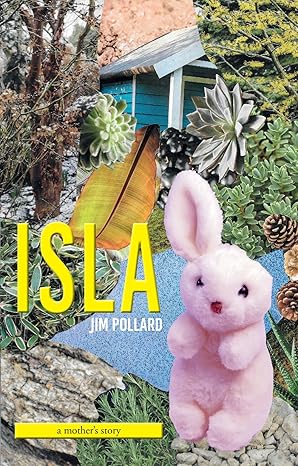
Isla, the new novel from award winning writer, Jim Pollard, is a real treat. It tells the story of Isla Shaw, a student in London in 1983, taking us through the formative events of her life up until 2018. She shuttles between London and Paris between those years, in pursuit of jobs, relationships and some sense of meaning and contentment. It’s an intricate portrayal of a life as a series of seemingly random yet connected scenes, with twists and turns resulting from decisions taken or not. There’s no smooth character arc here. Stuff happens and Isla deals with it, sometimes well, sometimes disastrously, but always with a sense of being true to herself.

The random nature of life is emphasised by Pollard’s clever use of structure. After a fairly conventional linear opening, the story splinters into pieces taken from the immediate future and the medium-term future. The reader is left to do a lot of work reconstructing events, trying to ascribe cause and effect in the relationship between events. Occasionally the reader is given a banister to hold on to, when a chapter is headed by a date and a location, but you soon get used to not being able to rely on that every time.

The book is set up to deliver a story of how someone can recover from a devastating event in her life, charting her progress through the aftermath, but then, without warning, it does a somersault and shifts into detective mystery territory. The shift comes out of the blue, and revitalises the narrative drive of the story.

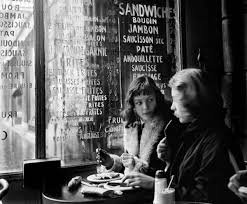
There are many notable pleasures in the novel. The evocation of Paris seen from the perspective of a damaged newcomer, grappling with a change of culture and language is very well realised. The atmosphere of Parisian cafe culture, both glossy and a little more alternative, is seductively rendered, leaving one scouring the internet planning your next Eurostar trip.

The same is true of the character’s reflections on life and love. Because of the first person narrative, most of these reflective passages are Isla’s reactions to the events as they happen to her. Pollard takes a risk with this. In a lesser writer’s hands, they would degenerate into discursive rambling that actively dilutes the forward momentum of the plot, but Pollard manages the balance between action and thought superbly well.

This is partly achieved by the empathy he has created for Isla. We are interested in her thoughts about the world, both her own little world and her relationships, and the wider world of politics and events. From the beginning, her’s is a completely believable, authentic voice that both changes over time as life batters her and essentially remains the same. In that, and in so many other aspects of the book, the writing is wise and insightful. Isla’s journey, via therapy and relationships, with detours into the cul de sacs of drink and drugs, champions the notion of the value of a life examined. “Talking about it” emerges as one of the few reliable routes to stability and contentment. And not even that provides guarantees.

A lovely book, more than worthy of your time this summer. Available in bookshops and online including Amazon (https://www.amazon.co.uk/Isla-Jim-Pollard/dp/0995656304 ) but it’s easier and quicker to buy direct from the distributor at: notonlywords.co.uk/isla

Buy it, read it, and spread the word.

Ungovernable? Unspeakable more like

A review of Simon Hart’s Political diaries

Just to give you a flavour of Simon Hart’s powers of political analysis, here’s a memorable sentence from the book: 

Their styles are so different, that I’ve decided that when it comes to politics (thank goodness for this clarification!) Boris “fucks” and Rishi “makes love”. Both are strangely effective.

Both presumably guarantee an earth-moving orgasm every time. No such joy from Simon Hart’s political memoir, which will not trouble the scorers in the pantheon of political history. The lack of an index is a bit of a giveaway. This is not serious history, just tittle-tattle, self-justification and whining about unfairness. By the end even Hart seems a little embarrassed about how the thin gruel is that his book contains, (yet rather pleased about the raunchy sentence above – Tories are sexy, Labour are dull. Yawn.)

Several factors conspired to bring me to this book: a series of glowing reviews (“remarkable insight”, “engrossing, entertaining, ..so funny”,) an unquenchable appetite for revelations about the disaster of government since 2010, and the serendipity of finding it available, pristine and untouched in my local library. Circumstances that were too good to turn down at the time, but, in the end, I almost wished I had passed on this and got something else instead.

It barely delivers on the shocking revelations front, apart from a couple of scarcely believable, tawdry anecdotes that were well-trailed prepublication.

The first was the tale of the Tory MP ringing in the middle of the night to be rescued, having found himself in a brothel with a Russian spy (well, we’ve all been there).

The second was this beauty: “ a departmental SPAD went to an orgy at the weekend and ended up taking a crap on another persons head…..in a separate incident a Commons employee went to a party dressed as Jimmy Saville and ended up having sex with a blow up doll” Obviously, apart from that, the Tories are straight up regular guys.

Don’t read the book if you’re expecting page after page of scandalous behaviour like this by the naughty party. The majority of the book is mind numbingly dull: endless reports of Cabinet awaydays, PMQs, events in Wales (Hart was Secretary of State for Wales at one point) and name dropping accounts of drinking sessions or meals out with sycophantic journalists. It does, however, perform an invaluable public service in reminding us just how ghastly, how inept, how morally bankrupt the Tories in office were. Barely a page goes by without details of one Tory after another getting found out for  a misdemeanour: child abuse, rape, corruption, bullying, watching pornography in the commons. The cases accelerate when Hart becomes Chief Whip under Rishi Sunak, presumably because in that role he was privy to information about all badly behaved MPs. The main conclusion Hart draws from this is that the Tory party needs to improve its candidate selection process, to avoid the serial sex offenders, criminals, bullies and freeloaders. It seems to have escaped him that the Johnston intake, in 2019, was so full of those sorts of loathsome chancers that a better vetting process would have left them with a list of  suitable candidates down to double figures.

To everyone else in the country, it was perfectly clear that these rogues were quintessentially Tories. Their sins, not aberrations or mistakes, but an essential part of who they were and what they believed in. Born to rule, rich, entitled and convinced that the rules laid down to regulate behaviour were meant for the little folks, not for them. It was The Bullingdon Club writ large.

It appears from these diaries that virtually no work of any meaningful kind goes on. Yes, there are late meetings and early meetings, but they are all fuelled by expensive lunches and dinners, where the drink flows freely. The meetings involve endless wrangling, navigating a route around different political factions, leading to absolutely nothing in terms of improving the lives of people. All of their energies appear to go into party management to ensure a compliant parliamentary party, using patronage and threats of exposure to keep everyone in line. This becomes clearer in the years when Hart was chief whip, when the diary is overwhelmingly about Tory MPs relentlessly hassling him for honours. Hart himself says that he was thinking about calling the book ”About my Knighthood” because that’s how most Tories started a conversation with him. It’s a portrait of a system that runs on naked corruption, and self serving venality. These people ooze entitlement, and the notion of serving their constituents seems never to cross their minds.

The biggest insight the book provides is into the full, horror shit show that is the mindset of the average Tory MP: entitled, snobby, completely deluded about their values, actions, and how they are viewed by Joe Public. Everything that goes wrong is someone else’s fault, usually the media in general and the BBC in particular which Hart ludicrously seems to think is a branch of the Communist Party. Here are a few snippets, giving us a pretty accurate snapshot of the cut of Hart’s jib. 

First is his description of Mark Drayford, the Labour leader of the devolved Welsh Assembley. Hart as Welsh Secretary had a lot of dealings with him and seems incensed that Drayford was more popular than him and got a lot of plaudits for his handling of Covid. Here’s Simon Hart’s verdict: “Drakeford’s public persona  was one of a dull academic, the sort of lefty philosophy lecturer you used to find at Luton Polytechnic in the 1970s. A Welsh Jeremy Corbyn…” “ Drakeford looks like a scruffy old university lecturer with dirty shoes” Multi-layered snobbery or what?

His contempt for public service is also never far from the surface. Here is one example he casually throws in when describing Starmer. “ He may have been the Director of Public Prosecutions but as some of our MP lawyers observe, any decent lawyer goes into private practice” 

His political judgement is hopelessly awry. Every description of PMQs, whether it be Johnson, Truss or Sunak at the helm, gives the impression that the Tory incumbent aced it every week, with Starmer missing open goal after open goal. He is baffled by the reputation of Gavin Williamson, who he describes as “one of us” and who is treated “terribly unfairly”.

He opines, with a straight face presumably, that “we have done a good job on water.” Blimey. Just imagine how bad it would have been if they’d messed it up.

He describes a lunch with Laura Kuensberg and provides further evidence of his razor sharp political antennae: “ For all the years I have known her, I would have no more clue now how she votes than on the day we first met.” Really, Simon? You must be the only person in the country with a double figure IQ who doesn’t know that Kuensberg is virtually in the Tory cabinet.

Once again, Hart provides clear evidence that the average Tory really doesnt see what all the fuss is about. It’s perfectly normal that the news should have an instinctive Tory bias because well, so does the country. If anything, the BBC is in the grip of Commies. The depth of delusion is compounded by his casual barbs about the left in general. “Why are they always so angry? It must be so exhausting.”

Perhaps because they see that all that has gone wrong with the country was avoidable. The damage  inflicted as policy by a series of governments from the Right and Far right. You got away with it for so long because at first the damage only affected the people at the bottom, and no-one gives a toss about them. Things began to get sticky for the Tories in power as more and more people could see with their own eyes the damage being inflicted on the institutions of civil society. Just walk down the High Street, try to rent a flat or swim in the sea. That’s Tory shit you are navigating around.

Just like your swim, this is a book that will require you to wash your hands after reading it.

Ps – nearly forgot. Surely Hart has some insight into the Government’s handling of Covid? And the parties?

Parties? Didn’t happen, mate. Vaccine rollout. Starmer Curry.

Shorts

Some of the things I’ve been reading recently

Professional Reader

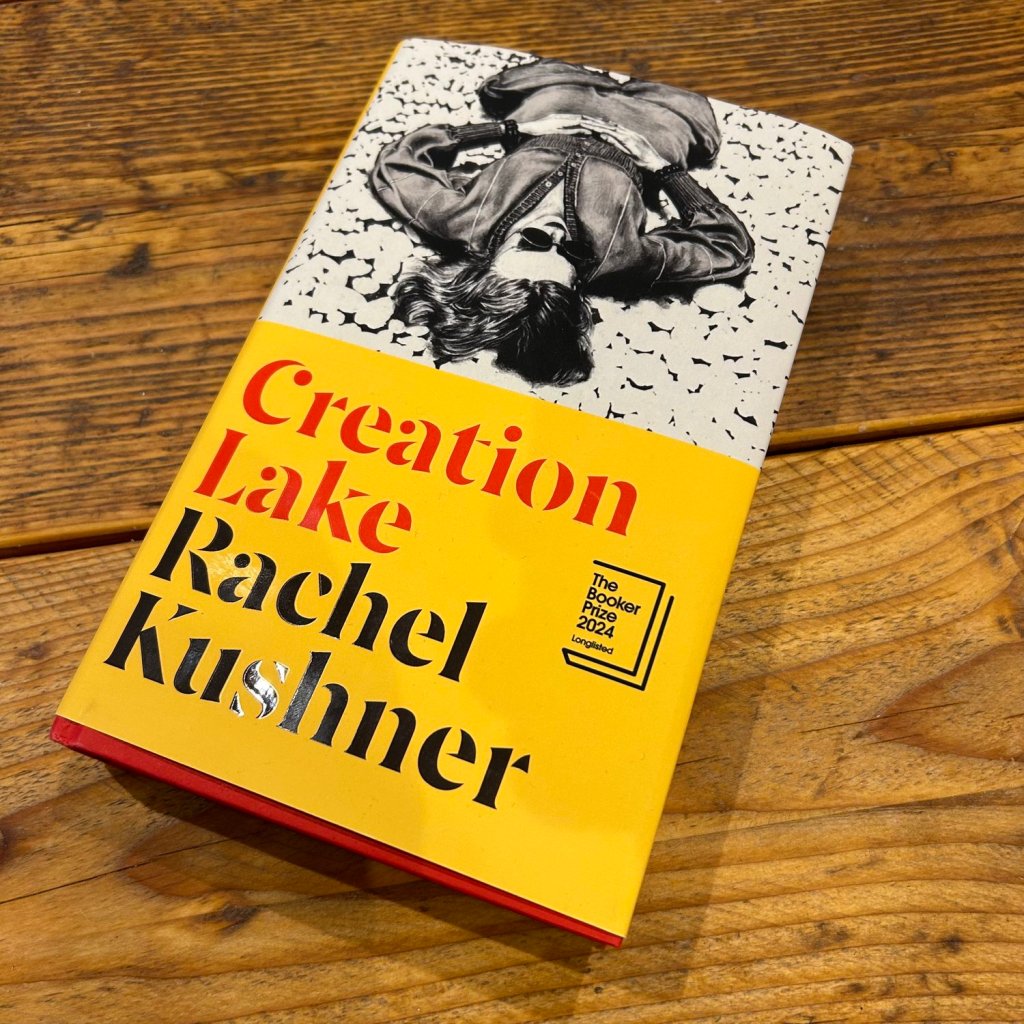
Creation Lake by Rachel Cushner

Another novel that makes you seriously fear for the judgement of Booker folk. Shortlisted this year, you would at least expect competence, even if it’s not a total surprise that it doesn’t live up to the breathless hype of the critics. I loved The Mars Room, her last novel, so came to this with great expectations, particularly after reading the juicy quotes lifted from reviews: “Reinvents the spy novel in one cool, erudite gesture….a gripping philosophical thriller”

“Fast paced noir”, “smart , funny and compulsively readable”

Seriously, these quotes come from the same stable as J D Vance describing the main threat to Europe as coming from within and referencing attacks on Free Speech and Democracy. They are so far from the truth (Vance and Cushner’s reviewers) as to be actionable under mis-selling legislation.

Just like The Republicans/ Conservatives and The Rule of Law, Cushner seems to think that rules about showing and telling apply to everyone except her. Vast tracts of reported back story, about several indistinguishable characters slow this down into a dull trudge. Presumably it’s a “philosophical thriller” to compensate for the fact that it couldn’t possibly be sold as an “action” thriller. (or what we used to just call a “Thriller”) It also references the ludicrously pretentious ramblings of lefty intellectual Bruno Lacombe who lives in a cave and communes with Neanderthals. 

Here’s a taster: “In my Cave.. under my cave, welling up from deeper passages, I hear so many things…I hear voices. People talking….whose voices are eternal in this underground world, which is all planes of time on a single plane. Here on Earth is another earth. A different reality, no less real.” There are pages and pages of this drivel. Even his dwindling band of acolytes, holed up in a French rural idyll, finally despair of his frequent bouts of teaching via interminable emails: “He  (Bruno) claims his cave is a temporal labyrinth that holds the answers to the great riddles. At first, we all got  kind of sucked in. But when you pull away, it starts to seem like madness.”

Now that last sentence would have been a more truthful quote to plaster over the cover.

The Safe Keep by Yael Van de Wouden

From the ridiculous to the sublime. Another Booker listed novel, this time a debut from Dutch writer, Yael Van de Wouden. Set in early 60s Holland, it deals with the hidden aftermath of Second World War Dutch complicity in the holocaust, via the story of Isabel, a single woman not quite thirty, who lives alone in the family home. It belongs to her older brother Louis, a serial womaniser who shows no signs of ever wanting to settle down, but the threat of eventually being evicted weighs heavily upon her.

The house functions as an emotional stabilising weight for Isabel, whose awkward loneliness and social unease, chip away at her self esteem to such an extent that she comes across to the reader as an angry, unfulfilled, unsympathetic protagonist. She guards her independence and solitary life in the house assiduously, and is appalled when she bounced into helping out Louis by having his current girlfriend, Eva to stay when Louis is away for several months because of work. We also encounter her younger brother, Hendrik, in a gay relationship at a time when Holland was not the hotbed of enlightened social attitudes it is today.

The hostility that first characterises Isabel’s attitude to Eva gradually gives way to grudging acceptance before she finds herself swept away by a torrent of feelings she has denied herself  for so long. This changing relationship, and Isabel’s struggle to embrace the change,  is more than enough to carry the book. It’s subtly but powerfully conveyed, but the final section of the novel elevates it to an even higher plane, as a Fingersmith type shift changes everything. By the end, a beautiful and affecting novel.

Wild Houses by Colin Barrett

Yet another from the seemingly endless conveyor belt of excellent Irish writers. This is Barrett’s debut novel (though he has done a couple of short story collections) and it’s great. It focuses on the resolution of beef between petty criminals and drug dealers in County Mayo. A memorable collection of characters and settings produce an entertainment that resonates long after you’ve finished reading.

Dev, the reclusive man mountain and Nicky, the hostage’s long suffering girlfriend (yes, that’s right, hostage) are particularly well drawn, with subtlety and sensitivity. Cushner could learn a lot about how to deal with back story from this. Barrett proves himself no slouch when it comes to lyricism either. This to describe one of the scary guys:

“He was touching forty but looked ten years older again, with a face on him like a vandalised church, long and angular and pitted, eyes glinting deep in their sockets like smashed out windows”

The chill that sends down the spine is fully justified, believe me, as the story unfolds. Colin Barrett is one to keep an eye on, I reckon.

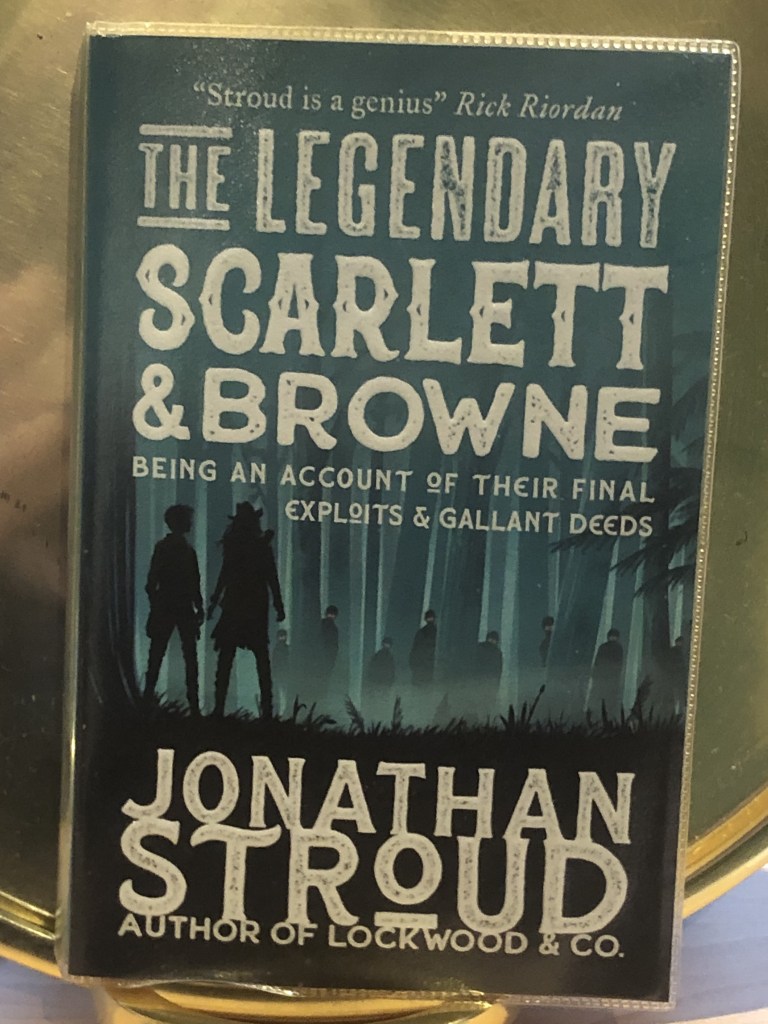
The Legendary Scarlett and Browne, being an account of their final exploits and gallant deeds by Jonathan Stroud

The only sadness about this book is that it’s the final part of the trilogy, so we can no longer eagerly look forward to the next installment. That’s it. Finito. Done. Over. I was completely bowled over by the first book, and went through Stroud’s back catalogue voraciously. The Lockwood series is wonderful as well and it’s a huge mistake that the TV adaptation was so brutally culled after only one season.

Stroud (despite the “genius” tag on every cover) is still under the radar for some bizarre reason and frankly, he’s a genius. Can’t think where I got that from. He is the master of controlling a children’s  adventure story, manipulating cliff hangers, pacing dialogue and lyrical description effortlessly. Read the first chapter and marvel. It should be compulsory reading on Creative Writing courses as a model of economy and effectiveness in how to start a novel to hook the reader. But as well as the nuts and bolts of a twisty page turner, Stroud gives us subtlety and feeling. The developing relationship between Scarlett and Albert is so delicately done and brings a tear to the eye, but without the reader ever feeling manipulated. There is an authenticity and a truth to his writing that is rare. Do yourself a favour: buy all three books, wallow in them and then tell everyone you know who is interested in children’s fiction to do the same.

Traitor’s Legacy by S J Parris

An ARC review for NetGalley

A new SJ Parris novel is always an event to celebrate, particularly for someone like me,  with an incurable weakness for historical crime. I’ve read and loved all of Parris’ Giordano Bruno novels, set mainly in Elizabethan England, with the occasional foray into Europe. Parris has established Bruno as an attractive and  sympathetic hero. An ex catholic monk, philosopher, and possible heretic,  he ticks all the boxes: Good looking, intelligent, brave and a respecter of strong women.

So it was with some trepidation that I began her latest novel, when I found out that Parris had ditched Bruno for a new protagonist, Lady Sophia de Wolfe. It’s a bold move, when the Bruno novels have been so successful.

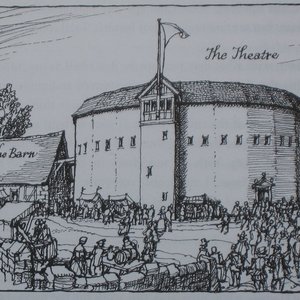
By and large, it works, with some caveats. The depiction of Elizabethan London is convincing. The plot is handled with Parris’ usual aplomb, requiring the merest hint of goodwill on the part of the reader (usually in connection with De Wolfe’s protection of her child – there’s no way this would pass with so little comment, but I’m just splitting hairs here) There’s a delightful rendering of the transportation of The Theatre in Shoreditch to The Globe, Bankside in the opening chapter and a knowing, touching scene focusing on a conversation between Shakespeare and the protagonist, about love and the loss of a child, towards the end. De Wolfe, a character who has already appeared in several of the Bruno novels, partly as a love interest, finds herself recently widowed (and therefore available for all kinds of adventures). By the end, her daring romps across London convince Robert Cecil to reemploy her as a spy working for Elizabeth’s government, thus setting us up for a new series. Good. I for one look forward to seeing her in more. But please, Stephanie, don’t completely abandon Bruno. There’s life  in the old dog yet.

If a new series of De Wolf adventures emerges, I would just make these pleas to S J Parris, as a huge fan.

  1. Do something about Anthony Munday, a playwright attached to the same company as De Wolf’s son Toby, and a second division rival to Shakespeare. He’s potentially an excellent character but his devoted lapdog impersonation in this novel began to grate after a while. GIven De Wolfe’s lack of romantic interest in him, this relationship promises more irritation than interest.
  2. Please abandon the use of the present tense. I know it’s what younger audiences are meant to like and it’s what Creative writing tutors and Boutique consultancies tell writers to adopt for more “Immediacy”, but really that’s nonsense. (See Jonathan Coe on this in his latest, “The Proof of My Innocence.”). To me it feels affected and inauthentic. You didn’t need it in the Bruno novels and you don’t need it here.

But they are just nitpicks in the grand scheme of things. What a potential reader needs to know is this: S J Parris/Stephanie Merritt has come up with another winner. Fans of historical crime should settle in and enjoy the ride.

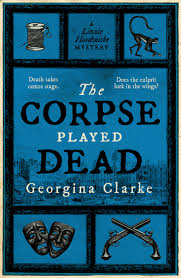
The Corpse Played Dead by Georgina Clarke

Poldark meets Bridgerton meets Strike.

An ARC review for NetGalley

This is the second book in the series reissued by Verve books and it confirms the promise that was suggested by the first, Death and the Harlot. It’s set six months after that, in 1759, and picks up the tale of nineteen year old Lizzie Hardwick, a prostitute in Soho who is not all that she appears.

An educated daughter of a respectable gentleman, she was thrown out and disowned after a rich family friend had sexually abused her. Changing her name, she arrived in London, finding a position at Ma Farleys, a high class, relatively safe brothel. In book one she gets entangled in the murder investigation of one of her clients, forging a relationship with Davenport, a detective with the Bow Street runners. Her skill leads him to offer her paid work for the runners as a source of intelligence about the goings on in Soho, while keeping the security of her job in the brothel.

In this second book, Davenport installs her as a seamstress in the theatre of David Garrick, where Lord Hawbridge is found brutally murdered, hanging upside down over the stage. She comes across a series of suspicious characters, from every section of society, before the culprit is unmasked, in a breathless finale. It’s an excellent historical murder mystery.

Clarke’s knowledge of the period and its theatre world is impressive and she uses it with a light touch to create a convincing sense of time and place. She provides a range of suspicious characters with a range of motives so the reader has enough to fuel the speculation that is at the root of much of the pleasure of this kind of fiction, and the story is well paced, with twists and turns and end of chapter cliff hangers. 

It’s not all fabulous though, which is why I gave it 4 stars rather than 5. Some of the plot twists, or breakthroughs in Lizzie’s understanding of the mystery are a little far fetched to say the least. I’m all for suspending my disbelief when I’m invested in the story and the characters, but my eyebrows jerked upwards on more than one occasion, accompanied by a knowing smirk and a thinks bubble above my head bearing the single word, “Really?”. Although the portrayal of the eighteenth century theatre world was very seductive, I did miss Ma Farley’s genteel brothel and Lizzie’s coworkers, which added an extra dimension to the first book. And, a minor point I know, but try as I might , I couldn’t work out how the title works. Which corpse is playing dead?

But this is splitting hairs. The books work because of Lizzie Hardwick. She’s a fabulous, attractive creation and her growing relationship with Davenport is a beautifully understated driver in the narrative. It will certainly make me look out for the third in the series, also due to come out in 2025. I think it’s only a matter of time before the series is adapted for TV – it would be a very welcome addition to historical drama – Poldark meets Bridgerton meets Strike.

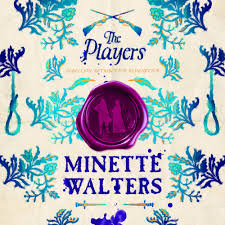
The Players by Minette Walters

An ARC review for Netgalley

Oh dear, what a disappointment this turned out to be. I hadn’t read Minette Walters for years, not since The Scold’s Bridle and Fox Evil. They were excellent: taught, tense thrillers/ whodunnits with real pace and verve.

After something of a hiatus, Walters, now 75, has turned her hand to historical thrillers. This latest one is set in  the 1680s in the dying days of King James II’s reign, taking in the Monmouth  rebellion, the Bloody assizes of Judge Jeffreys, and the peaceful transition to William and Mary. A fascinating, dramatic few years of British history that does not often feature in historical fiction. It should be a gift to a skilled and experienced novelist but Walters manages to turn this literary gold into something dull and dreary.

The main characters are excellent, (with some caveats): Lord Granville and his mother are scarcely believable as liberal aristos, whose driving concern is always for the little people, ensuring they get justice, no matter what the risk to them personally. It’s as ludicrous as the portrayal of above stairs folk in Downton Abbey who just love the plebs downstairs. It’s so well done however,and the two are such appealing characters, that disbelief is willingly suspended, and the reader finds themselves willing them on to succeed. The character of Lady Althea is also beautifully drawn as Walters explores 17th century attitudes to disability. The love interest is really well done, with Althea’s shyness and reluctance to believe in Granville gradually overcome. It’s a bit of a cop out however, as Walters shies away from any scenes where love is declared and we are left a little cheated as we are simply presented with the aftermath in the epilogue.

The main problem here is that Walters seems to be obsessed with her research into the period, hence the number of reviews that home in on that. “Immaculately researched” is always a bad sign in my opinion. It shows that research has become an end itself, rather than serving the story. There are interminable scenes where she goes through the mechanics of the legal system, transportation, local and regional, explaining in great detail how those people awaiting trial for sedition could be sprung from captivity. Perhaps Walters is too big a figure to be edited, but this is exhibit A for assertive intervention. Without it, we’re left with a novel that’s at least a hundred pages too long. Shame – the characters, plot and historical scenario promised much but deserved a lot more. Maybe next time.

Christmas Crackers

My books of the year, 2024

Sally Rooney triumphs with the novel of the year, a welcome return to form after the disappointing Beautiful World, where are you? Stylistically and structurally interesting, this portrayal of two brothers, separated by age, temperament and position in society, groping their way to recovery after the death of their father, is subtle, sensitive and engaging. Rooney explores how lack of communication in relationships entrenches misunderstanding and generates misery, but with a glimmer of hope that rapprochement is possible.

Full review here: https://growl.blog/2024/11/15/intermezzo-by-sally-rooney/

Andrew O’Hagan’s weighty state of the nation novel is but a short head behind Rooney. Caledonian Road is a positively Dickensian romp through London society, skewering the establishment, the media, populism, the ghastly Tory party and their upstart illegitimate child, Reform UK, to name but a few. Clever and clear sighted, the novel rises above satire through its multi layered plot delivering thoughtful, engaging and moving relationships to add heart to its steely intellectual societal analysis. Can’t wait for the TV adaptation.

Full Review here: https://growl.blog/2024/07/03/caledonian-road/

Jonathan Coe on top form with this clever dissection of the rise of far right think tanks  in the US and here alongside the rise of the cosy crime genre. At times it’s hard to tell which he is more appalled by. It’s structurally clever, placing the murder of a journalist who has spent forty years since leaving Cambridge investigating the murky dealings of the poshos he endured as a provincial oik. He has paddled along a back water while they rub shoulders with the rich, the privileged and the powerful. Very funny, very sharp, pleasingly meta. Almost nudged O’Hagan out of second place. But not quite.

Elizabeth Strout does what she does best – an immaculately observed portrayal of small town life for a cast of older characters, focusing on Lucy Barton once again. The seemingly meandering tales they tell each other hide an interesting murder plot from years before, but that is almost a distraction from the forensic examination of love, friendship and relationships amongst people who are getting old and reflecting on the choices they have made in their lives.

Percival Everett made the Booker shortlist for this re-imagining of Huckleberry Finn from the point of view of James, the slave. It’s a lovely, skilful piece of work that has at its heart an ingenious conceit that twists our understanding of the slave master relationship. Although it’s clever, by the end I was beginning to grow tired of what is essentially a one trick pony. Still, worthy of your consideration for end of year reading, or gifting.

Nathan Hill’s breakthrough debut, The Nix, was one of the great American novels of the last few years, but that was back in 2016. It’s been a long wait, but trust me, this follow up is worth it. The opening section that sets up the central relationship is an absolute treat. It doesn’t quite maintain that ( it’s a big book) but it’s still a triumph. Beautiful prose, compelling relationships and characters, Hill makes Jonathan Frandsen look like an amateur.

Read this, read her previous novel, The Bass Rock, read anything of hers you can get your hands on and wait eagerly for what she does next. Quite simply, Evie Wyld is a wonderful writer. End of.

David Nichols is the master of romantic relationship novels. Funny, perceptive engaging, You are here is the latest, tracking the start of a romance between two characters, set up by one concerned friend, who are thrown together on the coast to coast walk, from St Bees in Cumbria to Robin Hoods Bay, on the North Yorkshire coast. This is a minor Nichols work, leaving the reader with a feeling of slightness, insubstantiality, but even so, much better than a lot of the talked about novels of the year. (See Christmas Turkeys, below). A parochial point, I know, but I was particularly thrilled by the references to Teesside and Middlesbrough FC, as the characters started the last leg of the walk. Can’t think of many other cultural works where this happens – Teesside must be the most invisible, most unheralded area of the UK.

Stop Press!

A late entry that I just had to include. I’m only half way through this book, but it’s too good to ignore. If you liked Clare Chambers’ Small Pleasures, you will love this. Suburban lives, small frustrations, unfulfilled relationships threaded through with a weird tale of a Boo Radley figure who comes to light in a near derelict house in Croydon. Sublime.

The Perfect Christmas Presents

Obviously, if you’re looking for gift ideas, I think you’ll find my own books will hit the spot. Zero Tolerance will give you a real insight into the scandal breaking about unethical behaviour in certain Academy Trusts. For the teacher in your life. You can buy the ebook or a paperback, and read the reviews by clicking the link below:

https://wordpress.com/page/growl.blog/1142

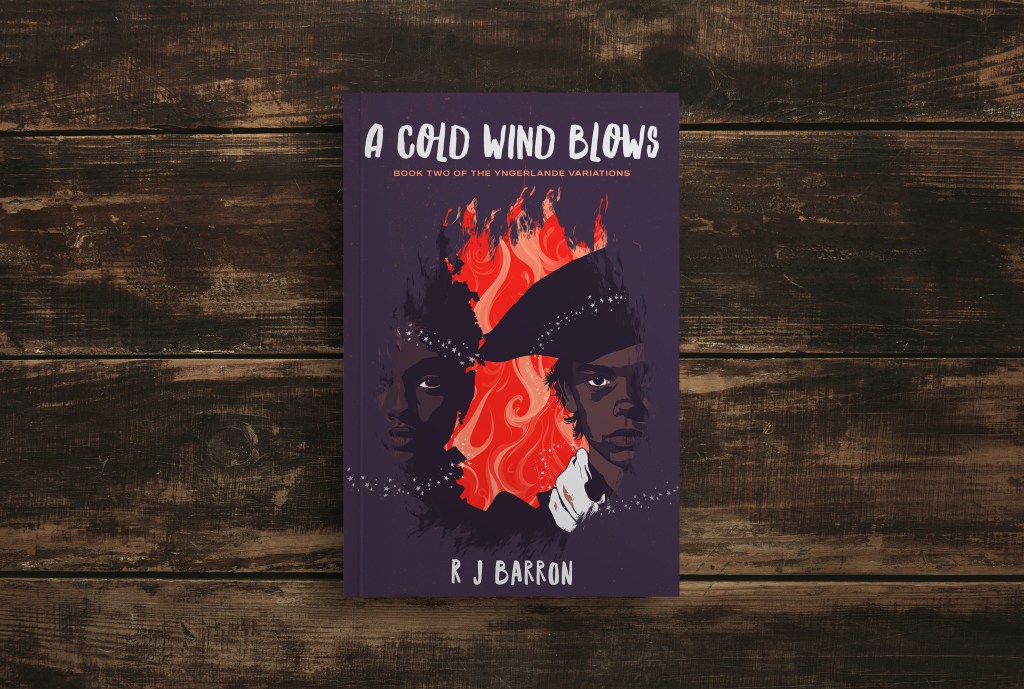
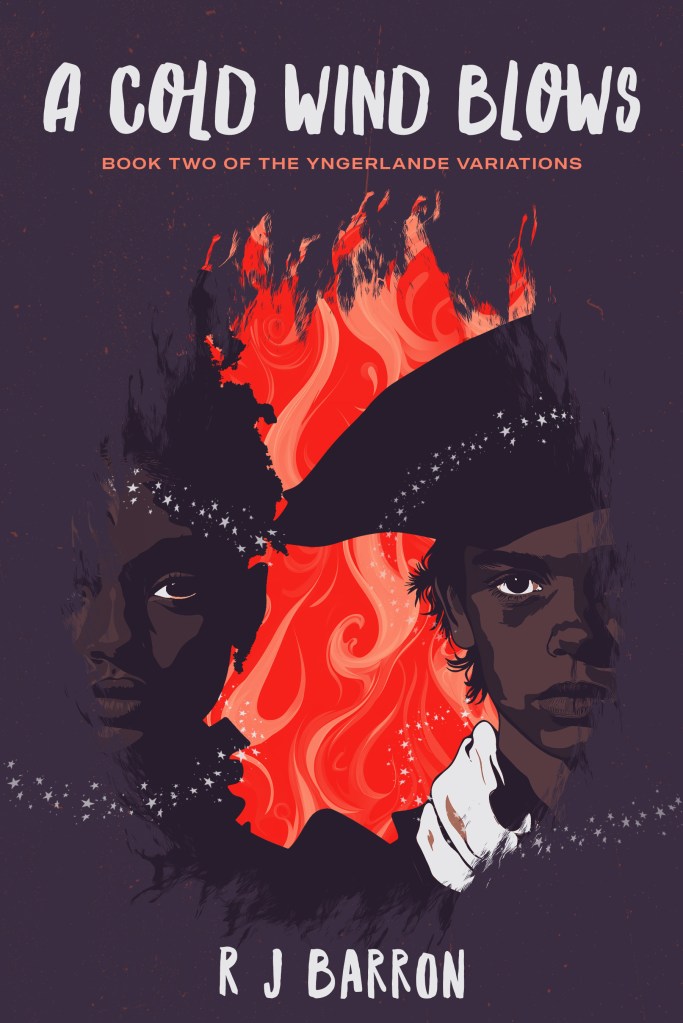
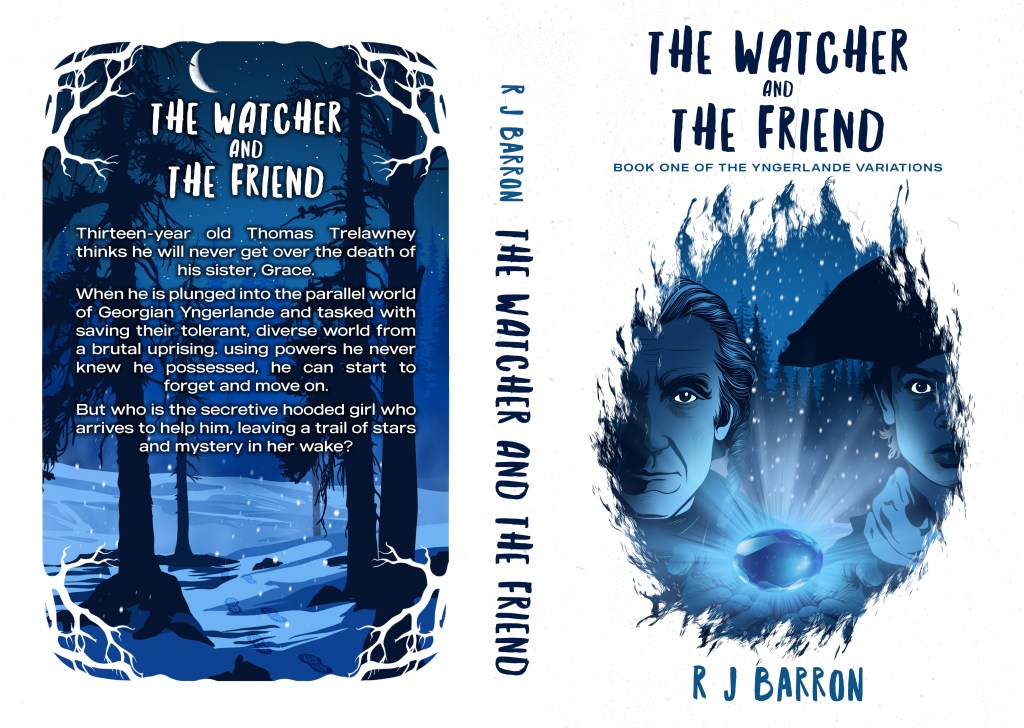
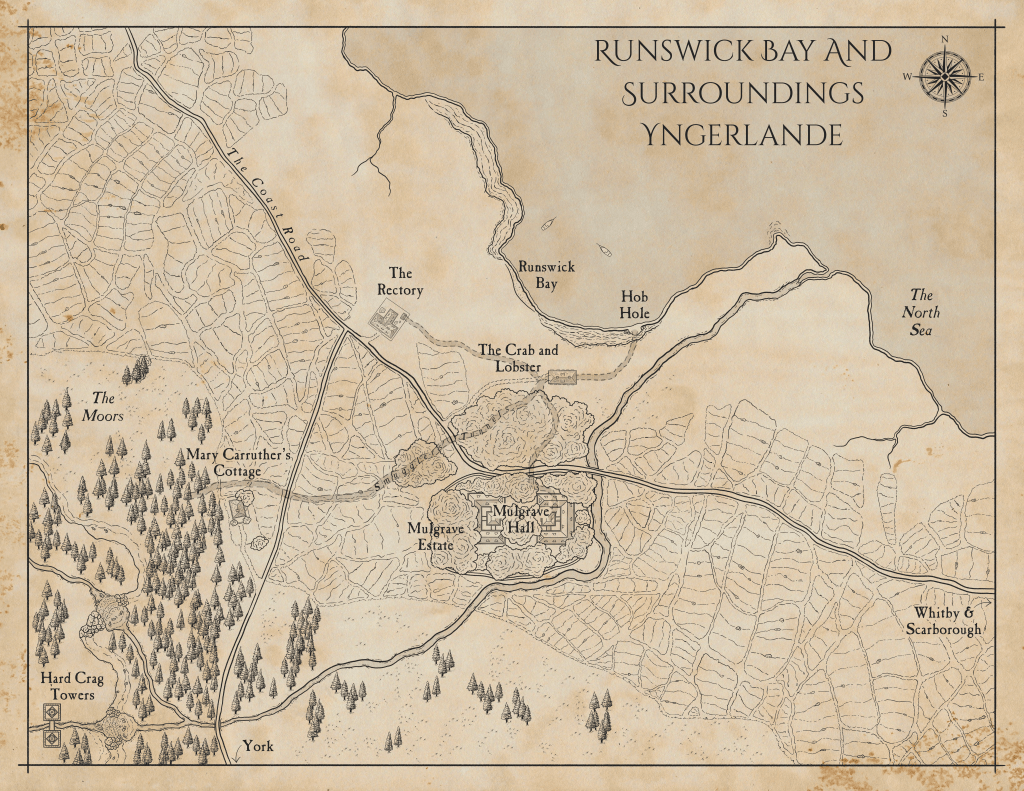
Fans of Fantasy, YA and children’s books need look no further than The Watcher and The Friend, from Burton Mayers Books. The sequel, A Cold Wind Blows, is scheduled to come out next year. For a flavour, check out the podcast audio book.

https://www.amazon.co.uk/s?k=the+watcher+and+the+friend+r+j+barron&crid=15DH4BU4YWUF5&sprefix=the+watcher+and+the+friend+r+j+barron%2Caps%2C200&ref=nb_sb_noss_2

Christmas Turkeys

A little unfair this title. Some of these books were just a little disappointing, a little overhyped. Others were just plain dreadful.

Picture the scene: It’s Christmas morning and you’re a little heady from the breakfast prosecco. You rip open the first of a pile of presents, to find The Kellerby Code waiting for you. Your nearest and dearest tell you it’s the word of mouth hit of the year, so funny, like Saltburn and you can’t wait to get started. Let me save you some time here. Put the book down. Forget you ever received it. Wipe it from your memory. Because this is the clear winner of the Turkey of the year. I know this sounds mean, but my longer review will explain why.

What’s happened to the writer who produced The Essex Serpent? Sarah Perry’s atmospheric debut stands clearly as her high watermark, as her Christianity seems to have overwhelmed her concern for craft. Enlightenment is dull and clumsy, and, just like the equally disappointing Melmoth, the critics raved about it. Do any of them actually read the books they are sent? Apologies to Christians everywhere – Happy.. er … Christmas.

A new Jackson Brodie crime outing from The wonderful Kate Atkinson is usually a cause for unconfined celebration. It starts so well – a clever play on cosy crime (bit of a theme this year). Brodie is reunited with Reggie Chase, the feisty, clever orphan from When Will There Be Good News? Chase is now a rookie cop who unofficially teams up with Brodie to investigate a case with links to his latest job. It’s an improbable mash up involving all the classic elements of old school murder mystery: isolated country house, list of stereotypical Agatha Christie suspects, all snowed in together as the bodies mount up. Sounds great fun, and it is, until the twists of the ever more unbelievable plot become tiresome.

William Boyd is the grand old man of English letters, but his latest, a brazen attempt to begin a multi million selling spy series to rival Bond is limp, derivative and lazy. It’s sad to see it and say it but the prose is risible. Every scene begins with a description of the place and the main characters, down to the clothes they are wearing. If that’s not enough to slow the action down, Boyd can’t resist any opportunity to tell us what drinks the character has and then, what they have to eat. ( “ a cheese and onion sandwich and a Dubonnet”)  There must be about thirty scenes where Gabriel meets someone in a pub, bar or restaurant. Phoned in, reversing the charges.

Han Kang’s novel won the 2024 Nobel prize for Literature. Seriously, I wouldn’t want to go for a drink with anyone who was on the panel. This was such a deadly dull,  dreary trudge, that I gave up after fifty pages. Life’s too short.

Death and The Harlot by Georgina Clarke

An ARC review for NetGalley

Fans of historical crime fiction set in Georgian England will love this reissue from Georgina Clarke. Set in Soho in 1759, it has all the ingredients of a successful historical murder mystery in the vein of Leonora Nattrass: authentic setting, engaging heroine, page turning twisty plot, hints of future romance and the setting up of a series.

It’s a delight. The heroine, Lizzie Hawkins, lives and works as a member of a more genteel brothel, run under the benevolent (mainly) eye of the Madam, Ma Farley. Lizzie tells the tale with a subtle combination of intelligence, warmth and cynicism. From the beginning we can see she is not one of your run of the mill bawds, and as the story progresses, her own back story is gradually revealed. She is drawn into the investigations that take place when one of her clients is found dead in the yard behind a Soho pub. She works closely with Will Blackstone, one of the original Bow Street runners, under the leadership of John Fielding, the brother of the celebrated literary figure, Henry. From initial suspicion and mistrust, they grow to respect each other as Blackstone increasingly realises that Lizzie is someone of depth and integrity.

The plot is unfolded with skill and pace and the reader is carried by this forward propulsion as the mystery thickens and is then resolved after a climactic showdown between Lizzie and the villain.The resolution at the end is both satisfying and carries the promise of more to come in future books. Clarke has written a sequel and a third book is due later in 2025. I will definitely be reading both of them to see what develops between Lizzie and Will.

I had just a couple of doubts about the world Clarke creates. Although she shows the abject misery of the street prostitutes, addled with gin, sleeping rough, and willing to provide any service to pay for food and more gin, there is something strangely sanitised about Lizzie’s experiences as a higher class working girl, and the other members of Ma Farley’s establishment. Lizzie gives full vent to her feelings about her work: her exhaustion, her disgust, her contempt for her clients, but despite that, it seems a relatively safe and tranquil situation that Lizzie is too comfortable with. It’s clear that Clarke knows her stuff and has done a shedload of research about the period, but I felt that the reality would have been more perilous, even for the cosseted girls of Ma Farley’s. I also didn’t quite believe in the wonderful Lizzie, who was a little too untouched by her experiences. She’s a great character: appealing,  beautiful, feisty, intelligent, but a little too kind, it seemed to me.

More positively, I thought Clarke was unflinching in her portrayal of the aristocracy and the gentry – callous, entitled predators, slicing through the seedy side of London, blissfully untroubled by the human wreckage left in their wake. Some things never change. Overall, a highly enjoyable recreation of 18th century London life and a compelling crime mystery to boot. My Thanks to Verve publishers and NetGalley for providing a free ARC copy for review.

Death and The Harlot will be published by Verve in 2025

Into the Wild

A short story

It was a beautiful June day, mid-afternoon, and the sun was high in the sky. John’s garden was a picture. He had spent the morning edging the lawn and weeding. He made frequent pauses, when he scanned all four corners of the plot, making plans for future planting. He was sure that if he took down that old shed and extended the vegetable plot, he could put a greenhouse on the concrete base and really make something of the bit at the back. For the previous ten years, all of his good intentions had come to nothing as the demands of domestic administration and work had taken up all of his time and energy. He had struggled to mow the lawn regularly, if truth be told, and it had not been unusual to miss the seasonal window for planting wall flowers or spring bulbs, leaving the garden rather ragged and unkempt. No matter how busy he had been at work or with the children, however, he had always made a point of devoting time to the patio, so that every summer, the table and chairs were surrounded by fragrant pots and exuberant climbers.

Gardening, he had often told himself and anyone else who would listen, is essentially a venn diagram of Time, Money and Inclination. This pearl of wisdom was generally delivered as an excuse to any visitor who happened to find themselves sitting at the table, drinking tea and looking out onto the far reaches of the garden that, frankly, did not quite live up to the expectations created by the perfumed oasis that was the sitting area.

It was nearly wonderful at the bottom of the garden. But not quite. The previous owners had planted palm trees, and exotic foliage plants around a pond, and at this time of year it was green and lush and luxuriant in the full flush of an early English summer, before July and August had taken their dusty toll on the plants, and before the rampant annual weeds had had a chance to take off and choke the structural plants in a tangle of bindweed. The jungle effect was enhanced by the flocks of parakeets that periodically swooped across the palms, and more bizarrely, by the occasional howl and shriek from the peacocks and other exotic animals from the little zoo that was situated on the other side of the river at the bottom of the garden. The kids used to love going there when they were little, with its adventure playground and petting farm. They even had some proper animals, though they were hard to see as they skulked resentfully at the back of their bleak cages, sad and bored. They hadn’t been for years now, though. Not since the kids got mobile phones and they started to skulk resentfully in their rooms.

He shook himself free of the memory, the smile fading on his lips, and turned his attention back to the garden. This year it would be different. This year, he would systematically weed and dig and prune and nurture. Time, Money and Inclination. These days he had enough of all three ingredients, and he was really looking forward to exploiting that fact this summer. He smiled as he poured himself another cup of coffee. He did a lot of that these days. Smiling and drinking coffee, sitting in his sunny garden under a parasol with the heady scent of roses and honeysuckle and the ceaseless soundtrack of birdsong. Oh, and doing the crossword of course. He was getting quite good at it these days. Practice makes perfect and all of that. He reached out for the folded copy of The Guardian and his pen and tried again. It was Monday, generally one of the easier days, and John always looked forward to Monday knowing that he would have a sporting chance of completing it before Sylvia got back from work.

He had to be careful, of course, not be sitting out here with coffee and crossword on the go, when Sylvia did get back from work. That would be rubbing her nose in it. She was always rather irritated when she did discover him in flagrante delicto, so to speak, as if he had been idling his time away all day in the sunshine while Sylvia was still on the mortgage treadmill. Since his retirement he had almost completely taken over the running of the house in terms of cooking, shopping, cleaning and being in for deliveries and tradespeople and so on. It was amazing how much time it took up. He couldn’t imagine now how they had managed when they were both working full time, and he didn’t really think he got the credit he deserved from Sylvia. He was sure that there weren’t many men of his age performing the househusband role so efficiently, with such good grace and with so little thanks. Not that he’d ever say that, of course. That would cause far too much trouble for very little gain

She was younger than him and probably had another ten years to work before they had paid off their mortgage. She had always worked too hard. Bringing casework home, endless typing of letters and notes and records on her laptop in front of the telly. She often fell asleep in front of the TV these days, as early as nine o’clock, with the stupid cat, sprawled across her lap, purring like a rattling window. She loved that cat. Probably more than him, he thought. It was another point of conflict between them.

He didn’t actively hate Watson. He just wasn’t a cat person. So much money, time, energy and love lavished on the creature for so little in return. The cat was getting old now and John was convinced it was suffering from dementia of some kind. Watson appeared to have no idea where his food bowl was, despite the fact that it had been in the same place in the kitchen since they had moved in ten years earlier. Every day, Watson seemed surprised to be directed to the same spot whenever he started hassling them about food, meowing pitifully and banging his head against legs. He seemed to have no spatial awareness, nor any awareness of consequences and would regularly trip up him or Sylvia or anyone else who happened to be in the house, by weaving in between their legs. One day, John was convinced, this would happen on the way down the stairs and someone would be found in a crumpled heap at the bottom. Watson would also periodically go into some kind of manic fit that would involve him spontaneously breaking into sprinting around the house from room to room as if he were being pursued by some mystery predator, before indulging in extended bouts of crazed flea scratching.

And it wasn’t just Watson either. That bloody cat from next door was just as bad. Not only did the sight of it provoke hair raising, spitting and caterwauling on Watson’s part, but the creature was shameless in terms of coming through the cat flap into the kitchen, as silent as a shadow, and eating all of Watson’s vile food. John wasn’t so much concerned about Watson’s welfare and diet, he was more outraged at being exploited by this malevolent invader. It was a violation of some sort.

There was Watson now, under the table on his special mat, out of the full glare of the sun, stretched out like an outline of a cat in an Egyptian mural, panting and heaving. John was really just waiting for him to die. He can’t have much longer to go now, surely, he thought. How long had they had him? Must be over fifteen years. Well, that was a pretty good innings in cat terms. He had had a good life. It was for the best that he keeled over sooner rather than later instead of spoiling John’s retirement with his incessant demands and interruptions. Much more likely for the cat to outlive him, by tripping him up on the stairs as he was rushing to open yet another pouch of foul smelling “chicken in gravy”. Yes, he thought, that cat will be the death of me.

He turned back to the crossword. He’d made pretty good progress but there was one corner that he had barely touched. Nine across – if he could just get that, it would open up that whole area of the puzzle and with a bit of luck he could polish off the rest in time to start cooking the dinner. Courgette Lemon linguine tonight, he thought, a new one of Jamie’s. Nine across, come on now. “Let’s see. ‘More elegant woman, with higher degree, seen as dangerous.’ Eight letters.” He sucked the end of his pen.  “Now what could that be? Higher degree. PHD? MA, maybe?”

Beneath the table, Watson suddenly roused himself, sitting up and nervously scanning the horizon. The hairs on his back stood to attention and a faint hiss slipped from his mouth.

John looked down. “For God’s sake, Watson, calm down. You frightened the life out of me then.”

There was a rustle from the bushes to his left, the ones that screened the fence from view and Watson’s hissing began again but louder this time. He stretched up onto his paws and arched his back. John became aware that the birdsong had stopped and there was an eerie, oppressive silence, broken by more faint rustling from the bushes. At this, Watson flew into one of his manic fits, screeching, and running in circles before scrambling up the trunk of the gnarled old lilac tree.

John turned to look up at him, annoyed that his crossword break was being spoiled. “Watson, you stupid animal. It’s just next door’s cat. It’s just another bloody cat……”

He never got to finish the sentence. A crash sent his coffee cup flying and scattered chairs and newspaper to all corners of the patio.

Sometime later there was the sound of a key being turned in the front door. The door opened.

“It’s only me John love. Have you heard about the zoo? I was just listening to it on the radio in the car. I hope Watson’s all right. We really should keep him indoors until…….”

Outside on the patio, amid the broken pieces of cup, the scattered chairs and the pages of the Guardian, blown against some low-lying shrubs, Watson sat neatly on his mat, lapping with a delicate pink tongue from the wide streak of blood that was smeared across the paving stones. The blood, like a watercolour wash of crimson on a white canvas, was dragged across the stone, finishing where the bushes spilled over the edge.

The bushes quivered but no breeze blew and no birds sang.

by Rob Barron

Intermezzo by Sally Rooney

Sally Rooney seems liberated by slipping under the radar for the release of her fourth novel.

The release of a new Sally Rooney novel is an event, something to look forward to and savour when it finally comes. There was a lot riding on this novel, her fourth in 6 years. Her last outing, Beautiful World Where Are You?, was a disappointment, particularly after the fireworks of Normal People. Self indulgent, too obviously autobiographical, too self conscious of her place as an up-and-coming superstar of letters, it was dull and strangely irrelevant, like the third album from your once favourite rock band whose new songs are all about alienation of life on the road in hotel bedrooms. Seriously guys, who cares? On the back of that, I’m particularly happy to report that Intermezzo is an unalloyed triumph and a step up into a seemingly effortless maturity as a writer.

I don’t know if I missed something, but there didn’t seem to be the same hype about this novel. A bit of pre publication publicity, to whip up interest and anticipation, but then, on release, it all seemed to go quiet, as if Rooney was no longer the bright young tyro. And publishing, like every other industry that flogs culture, loves nothing more than something new and shiny. So it made for a strange experience when reading the latest Rooney. It was like reading any other novel- lower expectations, without the annoyance of negotiating all that young person social media stuff that so characterised her earlier work. It seems to have liberated her, not having to perform, to live up to her persona, and instead to focus on producing an immensely satisfying novel.

It’s contemporary, about a tangle of romantic relationships, with plentiful graphically choreographed sex scenes, set in the Republic of Ireland (so far, so Rooney), but it’s so much more than that. It tells the story of two brothers, Peter and Ivan, miles apart in so many ways (age, job situations, outlook, relationships), who are dealing with the aftermath of the death of their father. Ivan, the younger by ten years, is on the spectrum and has a hand to mouth “career” in Data Analysis. His real talent, however, is for chess.

Once a teenage prodigy, tipped for greatness, he is on a downward curve when the book begins, competing in minor, local tournaments. Peter is a Dublin lawyer – successful and sophisticated in both his career and, on the surface, his relationships. They are virtually estranged from each other and the novel traces their  attempts to make sense of their relationship, and of the world, in the light of their bereavement.

Both Peter and Ivan are in relationships where there is a significant age gap. Peter is instinctively judgemental about Ivan taking up with a divorcee ten years older than him, while seeing no problem in his own relationship with a much younger woman. Rooney examines the immense pressures felt by the older woman, from the Catholic Church, her friends, neighbours and family, such that she keeps it a secret for as long as possible. It’s just one of a series of “issues” Rooney deals with in a subtle and humane way. Most impressive is her avoidance of cliche and stereotype when portraying the main characters and their relationships. They are warm, unflinching sympathetic portrayals. She recognises them principally as human beings, individuals, rather than just types and the novel is richer, more complex and more satisfying as a result. Her sensitive portrayal of two men, completely inhabiting each persona in the distinct sections of the book is unusual and brilliantly convincing. If this had been a male novelist portraying women in such an authentic and nuanced way we would never hear the last of it. They both navigate complex relationships, with their mother, with each other and with significant women. They both make crass mistakes. As a result, they are entirely compelling and credible.

Stylistically, it’s a very interesting departure for Rooney. It’s told in alternating styles to correspond to the two main characters. Ivan’s story is immediately more engaging. The traditional third person narrative is warm and engaging, and the reader instinctively takes his side, as a picture emerges of a sensitive, thoughtful young man who has grown up in the shadow of his more extrovert, bullish brother.

The sections that focus on Peter use a distancing, staccato style of repeated brusque observations of the world and the people in it. At first, that becomes annoying very quickly, and you can’t wait to return to the more soothing world of Ivan’s narrative. But then, over time, the style differentiates the two worlds on an emotive level, in the sense that the reader feels the tension and discomfort of Peter’s world through the prose style and it becomes clear that Rooney has cleverly represented Peter’s state of mind. It functions like a verbal equivalent of impressionist painting. Positively pointillist, in fact.

One of the more annoying characteristics of serious literary fiction is that very often, in order to signpost their command of their art, too many writers make “bold” decisions about style. You know the sort of thing: no paragraphs; no full stops; writing the novel backwards. They are often disastrous in terms of reader enjoyment and I feared at first that the same sort of thing was going on here. But no. It actually works brilliantly. (Although I still cling to my conviction that Rooney’s insistence on not using conventional speech marks, is a similar, entirely redundant stylistic tic that serves only to irritate and draw attention to itself, like a loud precocious child at a party.)

The other outcome of alternating between Ivan’s experience and Peter’s is that it underlines one of the central points of the novel: self reflection, self absorption can seriously sabotage relationships, between brothers, lovers, friends, parents and children. The reader can see the obvious love that exists between these pairs of characters much more clearly than they can themselves. Resolution, when it comes in all its forms at the end of the novel, comes as a relief, not as an annoying sentimental cop out, because we’ve been screaming at them silently throughout the book, “Just tell him (or her), for gods sake!” Rooney is excellent at exploring the fall out resulting from not communicating honestly and openly because of the fear of what might happen. She did it brilliantly with Marianne and Connell in Normal People and repeats it here. As Elvis Costello told us so presciently all those years ago, “It’s the damage that we do and never know/It’s the words that we don’t say that scare me so.”

Notwithstanding my churlish note about Speech punctuation – a tiny pinprick of irritation in a sea of pleasure – Intermezzo is a wonderful novel from a writer just getting into her stride. There’ll be a lot more to come from her, I’m sure of that. Can’t wait for the next one!