
Some of the things I’ve been reading recently
Creation Lake by Rachel Cushner
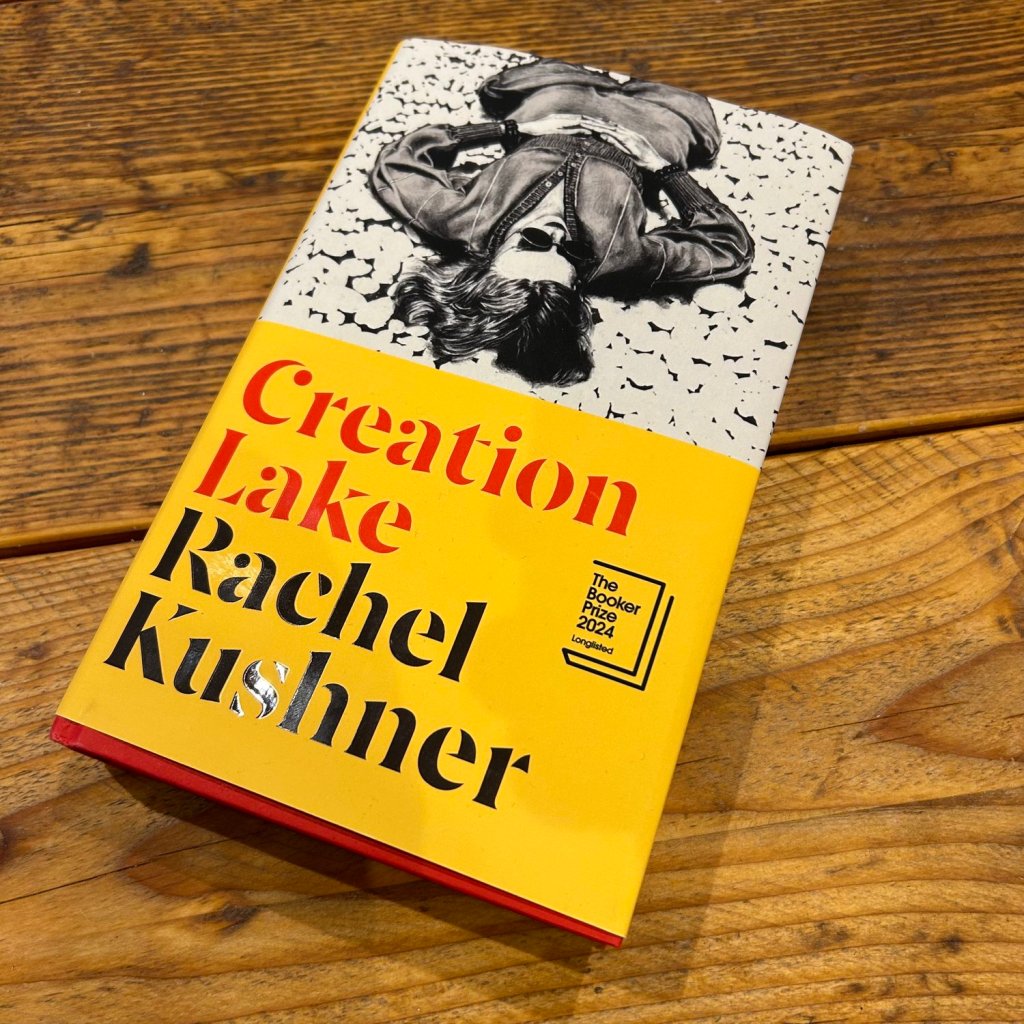
Another novel that makes you seriously fear for the judgement of Booker folk. Shortlisted this year, you would at least expect competence, even if it’s not a total surprise that it doesn’t live up to the breathless hype of the critics. I loved The Mars Room, her last novel, so came to this with great expectations, particularly after reading the juicy quotes lifted from reviews: “Reinvents the spy novel in one cool, erudite gesture….a gripping philosophical thriller”
“Fast paced noir”, “smart , funny and compulsively readable”
Seriously, these quotes come from the same stable as J D Vance describing the main threat to Europe as coming from within and referencing attacks on Free Speech and Democracy. They are so far from the truth (Vance and Cushner’s reviewers) as to be actionable under mis-selling legislation.
Just like The Republicans/ Conservatives and The Rule of Law, Cushner seems to think that rules about showing and telling apply to everyone except her. Vast tracts of reported back story, about several indistinguishable characters slow this down into a dull trudge. Presumably it’s a “philosophical thriller” to compensate for the fact that it couldn’t possibly be sold as an “action” thriller. (or what we used to just call a “Thriller”) It also references the ludicrously pretentious ramblings of lefty intellectual Bruno Lacombe who lives in a cave and communes with Neanderthals.
Here’s a taster: “In my Cave.. under my cave, welling up from deeper passages, I hear so many things…I hear voices. People talking….whose voices are eternal in this underground world, which is all planes of time on a single plane. Here on Earth is another earth. A different reality, no less real.” There are pages and pages of this drivel. Even his dwindling band of acolytes, holed up in a French rural idyll, finally despair of his frequent bouts of teaching via interminable emails: “He (Bruno) claims his cave is a temporal labyrinth that holds the answers to the great riddles. At first, we all got kind of sucked in. But when you pull away, it starts to seem like madness.”
Now that last sentence would have been a more truthful quote to plaster over the cover.
The Safe Keep by Yael Van de Wouden
From the ridiculous to the sublime. Another Booker listed novel, this time a debut from Dutch writer, Yael Van de Wouden. Set in early 60s Holland, it deals with the hidden aftermath of Second World War Dutch complicity in the holocaust, via the story of Isabel, a single woman not quite thirty, who lives alone in the family home. It belongs to her older brother Louis, a serial womaniser who shows no signs of ever wanting to settle down, but the threat of eventually being evicted weighs heavily upon her.
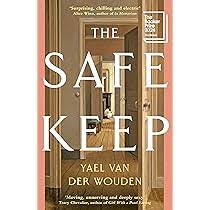
The house functions as an emotional stabilising weight for Isabel, whose awkward loneliness and social unease, chip away at her self esteem to such an extent that she comes across to the reader as an angry, unfulfilled, unsympathetic protagonist. She guards her independence and solitary life in the house assiduously, and is appalled when she bounced into helping out Louis by having his current girlfriend, Eva to stay when Louis is away for several months because of work. We also encounter her younger brother, Hendrik, in a gay relationship at a time when Holland was not the hotbed of enlightened social attitudes it is today.
The hostility that first characterises Isabel’s attitude to Eva gradually gives way to grudging acceptance before she finds herself swept away by a torrent of feelings she has denied herself for so long. This changing relationship, and Isabel’s struggle to embrace the change, is more than enough to carry the book. It’s subtly but powerfully conveyed, but the final section of the novel elevates it to an even higher plane, as a Fingersmith type shift changes everything. By the end, a beautiful and affecting novel.
Wild Houses by Colin Barrett

Yet another from the seemingly endless conveyor belt of excellent Irish writers. This is Barrett’s debut novel (though he has done a couple of short story collections) and it’s great. It focuses on the resolution of beef between petty criminals and drug dealers in County Mayo. A memorable collection of characters and settings produce an entertainment that resonates long after you’ve finished reading.
Dev, the reclusive man mountain and Nicky, the hostage’s long suffering girlfriend (yes, that’s right, hostage) are particularly well drawn, with subtlety and sensitivity. Cushner could learn a lot about how to deal with back story from this. Barrett proves himself no slouch when it comes to lyricism either. This to describe one of the scary guys:
“He was touching forty but looked ten years older again, with a face on him like a vandalised church, long and angular and pitted, eyes glinting deep in their sockets like smashed out windows”
The chill that sends down the spine is fully justified, believe me, as the story unfolds. Colin Barrett is one to keep an eye on, I reckon.
The Legendary Scarlett and Browne, being an account of their final exploits and gallant deeds by Jonathan Stroud
The only sadness about this book is that it’s the final part of the trilogy, so we can no longer eagerly look forward to the next installment. That’s it. Finito. Done. Over. I was completely bowled over by the first book, and went through Stroud’s back catalogue voraciously. The Lockwood series is wonderful as well and it’s a huge mistake that the TV adaptation was so brutally culled after only one season.
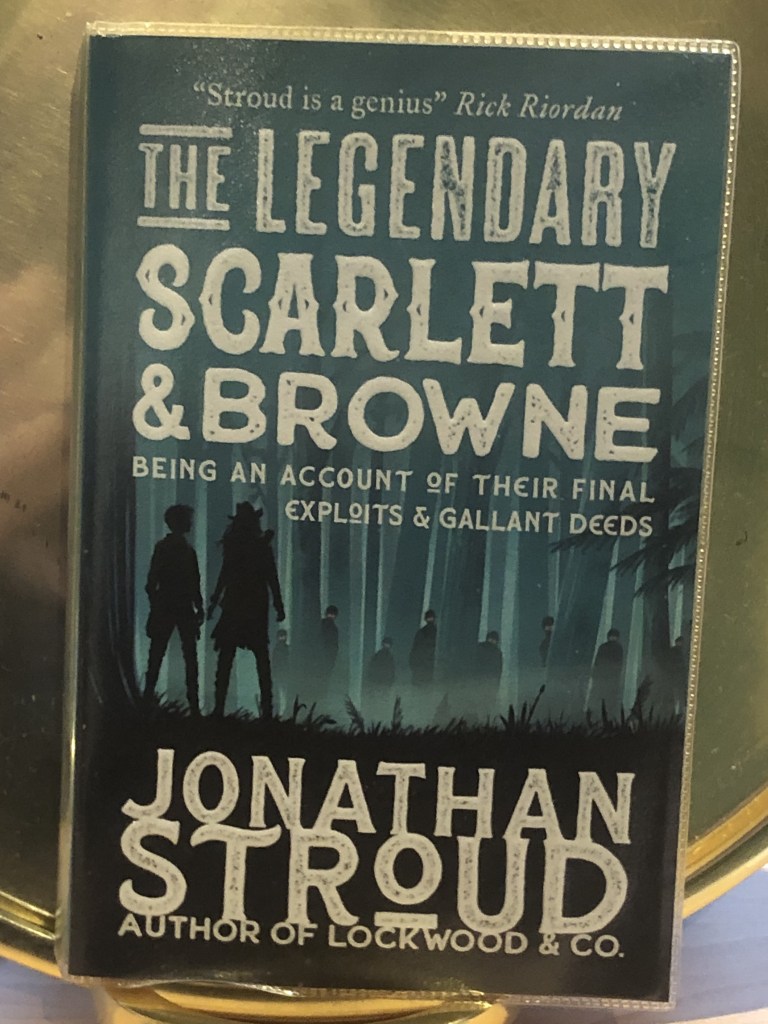
Stroud (despite the “genius” tag on every cover) is still under the radar for some bizarre reason and frankly, he’s a genius. Can’t think where I got that from. He is the master of controlling a children’s adventure story, manipulating cliff hangers, pacing dialogue and lyrical description effortlessly. Read the first chapter and marvel. It should be compulsory reading on Creative Writing courses as a model of economy and effectiveness in how to start a novel to hook the reader. But as well as the nuts and bolts of a twisty page turner, Stroud gives us subtlety and feeling. The developing relationship between Scarlett and Albert is so delicately done and brings a tear to the eye, but without the reader ever feeling manipulated. There is an authenticity and a truth to his writing that is rare. Do yourself a favour: buy all three books, wallow in them and then tell everyone you know who is interested in children’s fiction to do the same.

 The Old Grey Owl