
Sally Rooney seems liberated by slipping under the radar for the release of her fourth novel.
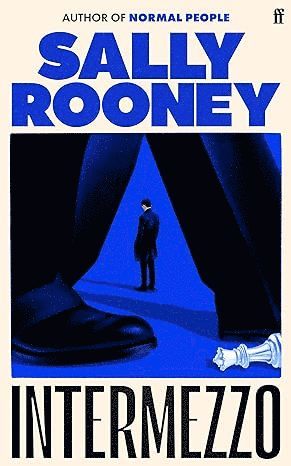

The release of a new Sally Rooney novel is an event, something to look forward to and savour when it finally comes. There was a lot riding on this novel, her fourth in 6 years. Her last outing, Beautiful World Where Are You?, was a disappointment, particularly after the fireworks of Normal People. Self indulgent, too obviously autobiographical, too self conscious of her place as an up-and-coming superstar of letters, it was dull and strangely irrelevant, like the third album from your once favourite rock band whose new songs are all about alienation of life on the road in hotel bedrooms. Seriously guys, who cares? On the back of that, I’m particularly happy to report that Intermezzo is an unalloyed triumph and a step up into a seemingly effortless maturity as a writer.
I don’t know if I missed something, but there didn’t seem to be the same hype about this novel. A bit of pre publication publicity, to whip up interest and anticipation, but then, on release, it all seemed to go quiet, as if Rooney was no longer the bright young tyro. And publishing, like every other industry that flogs culture, loves nothing more than something new and shiny. So it made for a strange experience when reading the latest Rooney. It was like reading any other novel- lower expectations, without the annoyance of negotiating all that young person social media stuff that so characterised her earlier work. It seems to have liberated her, not having to perform, to live up to her persona, and instead to focus on producing an immensely satisfying novel.
It’s contemporary, about a tangle of romantic relationships, with plentiful graphically choreographed sex scenes, set in the Republic of Ireland (so far, so Rooney), but it’s so much more than that. It tells the story of two brothers, Peter and Ivan, miles apart in so many ways (age, job situations, outlook, relationships), who are dealing with the aftermath of the death of their father. Ivan, the younger by ten years, is on the spectrum and has a hand to mouth “career” in Data Analysis. His real talent, however, is for chess.
Once a teenage prodigy, tipped for greatness, he is on a downward curve when the book begins, competing in minor, local tournaments. Peter is a Dublin lawyer – successful and sophisticated in both his career and, on the surface, his relationships. They are virtually estranged from each other and the novel traces their attempts to make sense of their relationship, and of the world, in the light of their bereavement.
Both Peter and Ivan are in relationships where there is a significant age gap. Peter is instinctively judgemental about Ivan taking up with a divorcee ten years older than him, while seeing no problem in his own relationship with a much younger woman. Rooney examines the immense pressures felt by the older woman, from the Catholic Church, her friends, neighbours and family, such that she keeps it a secret for as long as possible. It’s just one of a series of “issues” Rooney deals with in a subtle and humane way. Most impressive is her avoidance of cliche and stereotype when portraying the main characters and their relationships. They are warm, unflinching sympathetic portrayals. She recognises them principally as human beings, individuals, rather than just types and the novel is richer, more complex and more satisfying as a result. Her sensitive portrayal of two men, completely inhabiting each persona in the distinct sections of the book is unusual and brilliantly convincing. If this had been a male novelist portraying women in such an authentic and nuanced way we would never hear the last of it. They both navigate complex relationships, with their mother, with each other and with significant women. They both make crass mistakes. As a result, they are entirely compelling and credible.
Stylistically, it’s a very interesting departure for Rooney. It’s told in alternating styles to correspond to the two main characters. Ivan’s story is immediately more engaging. The traditional third person narrative is warm and engaging, and the reader instinctively takes his side, as a picture emerges of a sensitive, thoughtful young man who has grown up in the shadow of his more extrovert, bullish brother.
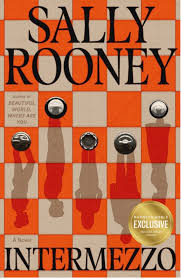
The sections that focus on Peter use a distancing, staccato style of repeated brusque observations of the world and the people in it. At first, that becomes annoying very quickly, and you can’t wait to return to the more soothing world of Ivan’s narrative. But then, over time, the style differentiates the two worlds on an emotive level, in the sense that the reader feels the tension and discomfort of Peter’s world through the prose style and it becomes clear that Rooney has cleverly represented Peter’s state of mind. It functions like a verbal equivalent of impressionist painting. Positively pointillist, in fact.
One of the more annoying characteristics of serious literary fiction is that very often, in order to signpost their command of their art, too many writers make “bold” decisions about style. You know the sort of thing: no paragraphs; no full stops; writing the novel backwards. They are often disastrous in terms of reader enjoyment and I feared at first that the same sort of thing was going on here. But no. It actually works brilliantly. (Although I still cling to my conviction that Rooney’s insistence on not using conventional speech marks, is a similar, entirely redundant stylistic tic that serves only to irritate and draw attention to itself, like a loud precocious child at a party.)
The other outcome of alternating between Ivan’s experience and Peter’s is that it underlines one of the central points of the novel: self reflection, self absorption can seriously sabotage relationships, between brothers, lovers, friends, parents and children. The reader can see the obvious love that exists between these pairs of characters much more clearly than they can themselves. Resolution, when it comes in all its forms at the end of the novel, comes as a relief, not as an annoying sentimental cop out, because we’ve been screaming at them silently throughout the book, “Just tell him (or her), for gods sake!” Rooney is excellent at exploring the fall out resulting from not communicating honestly and openly because of the fear of what might happen. She did it brilliantly with Marianne and Connell in Normal People and repeats it here. As Elvis Costello told us so presciently all those years ago, “It’s the damage that we do and never know/It’s the words that we don’t say that scare me so.”
Notwithstanding my churlish note about Speech punctuation – a tiny pinprick of irritation in a sea of pleasure – Intermezzo is a wonderful novel from a writer just getting into her stride. There’ll be a lot more to come from her, I’m sure of that. Can’t wait for the next one!

 The Old Grey Owl