
A short story
It was a beautiful June day, mid-afternoon, and the sun was high in the sky. John’s garden was a picture. He had spent the morning edging the lawn and weeding. He made frequent pauses, when he scanned all four corners of the plot, making plans for future planting. He was sure that if he took down that old shed and extended the vegetable plot, he could put a greenhouse on the concrete base and really make something of the bit at the back. For the previous ten years, all of his good intentions had come to nothing as the demands of domestic administration and work had taken up all of his time and energy. He had struggled to mow the lawn regularly, if truth be told, and it had not been unusual to miss the seasonal window for planting wall flowers or spring bulbs, leaving the garden rather ragged and unkempt. No matter how busy he had been at work or with the children, however, he had always made a point of devoting time to the patio, so that every summer, the table and chairs were surrounded by fragrant pots and exuberant climbers.
Gardening, he had often told himself and anyone else who would listen, is essentially a venn diagram of Time, Money and Inclination. This pearl of wisdom was generally delivered as an excuse to any visitor who happened to find themselves sitting at the table, drinking tea and looking out onto the far reaches of the garden that, frankly, did not quite live up to the expectations created by the perfumed oasis that was the sitting area.
It was nearly wonderful at the bottom of the garden. But not quite. The previous owners had planted palm trees, and exotic foliage plants around a pond, and at this time of year it was green and lush and luxuriant in the full flush of an early English summer, before July and August had taken their dusty toll on the plants, and before the rampant annual weeds had had a chance to take off and choke the structural plants in a tangle of bindweed. The jungle effect was enhanced by the flocks of parakeets that periodically swooped across the palms, and more bizarrely, by the occasional howl and shriek from the peacocks and other exotic animals from the little zoo that was situated on the other side of the river at the bottom of the garden. The kids used to love going there when they were little, with its adventure playground and petting farm. They even had some proper animals, though they were hard to see as they skulked resentfully at the back of their bleak cages, sad and bored. They hadn’t been for years now, though. Not since the kids got mobile phones and they started to skulk resentfully in their rooms.
He shook himself free of the memory, the smile fading on his lips, and turned his attention back to the garden. This year it would be different. This year, he would systematically weed and dig and prune and nurture. Time, Money and Inclination. These days he had enough of all three ingredients, and he was really looking forward to exploiting that fact this summer. He smiled as he poured himself another cup of coffee. He did a lot of that these days. Smiling and drinking coffee, sitting in his sunny garden under a parasol with the heady scent of roses and honeysuckle and the ceaseless soundtrack of birdsong. Oh, and doing the crossword of course. He was getting quite good at it these days. Practice makes perfect and all of that. He reached out for the folded copy of The Guardian and his pen and tried again. It was Monday, generally one of the easier days, and John always looked forward to Monday knowing that he would have a sporting chance of completing it before Sylvia got back from work.
He had to be careful, of course, not be sitting out here with coffee and crossword on the go, when Sylvia did get back from work. That would be rubbing her nose in it. She was always rather irritated when she did discover him in flagrante delicto, so to speak, as if he had been idling his time away all day in the sunshine while Sylvia was still on the mortgage treadmill. Since his retirement he had almost completely taken over the running of the house in terms of cooking, shopping, cleaning and being in for deliveries and tradespeople and so on. It was amazing how much time it took up. He couldn’t imagine now how they had managed when they were both working full time, and he didn’t really think he got the credit he deserved from Sylvia. He was sure that there weren’t many men of his age performing the househusband role so efficiently, with such good grace and with so little thanks. Not that he’d ever say that, of course. That would cause far too much trouble for very little gain
She was younger than him and probably had another ten years to work before they had paid off their mortgage. She had always worked too hard. Bringing casework home, endless typing of letters and notes and records on her laptop in front of the telly. She often fell asleep in front of the TV these days, as early as nine o’clock, with the stupid cat, sprawled across her lap, purring like a rattling window. She loved that cat. Probably more than him, he thought. It was another point of conflict between them.
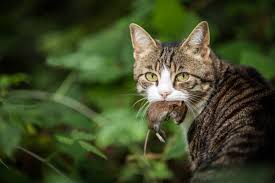
He didn’t actively hate Watson. He just wasn’t a cat person. So much money, time, energy and love lavished on the creature for so little in return. The cat was getting old now and John was convinced it was suffering from dementia of some kind. Watson appeared to have no idea where his food bowl was, despite the fact that it had been in the same place in the kitchen since they had moved in ten years earlier. Every day, Watson seemed surprised to be directed to the same spot whenever he started hassling them about food, meowing pitifully and banging his head against legs. He seemed to have no spatial awareness, nor any awareness of consequences and would regularly trip up him or Sylvia or anyone else who happened to be in the house, by weaving in between their legs. One day, John was convinced, this would happen on the way down the stairs and someone would be found in a crumpled heap at the bottom. Watson would also periodically go into some kind of manic fit that would involve him spontaneously breaking into sprinting around the house from room to room as if he were being pursued by some mystery predator, before indulging in extended bouts of crazed flea scratching.
And it wasn’t just Watson either. That bloody cat from next door was just as bad. Not only did the sight of it provoke hair raising, spitting and caterwauling on Watson’s part, but the creature was shameless in terms of coming through the cat flap into the kitchen, as silent as a shadow, and eating all of Watson’s vile food. John wasn’t so much concerned about Watson’s welfare and diet, he was more outraged at being exploited by this malevolent invader. It was a violation of some sort.
There was Watson now, under the table on his special mat, out of the full glare of the sun, stretched out like an outline of a cat in an Egyptian mural, panting and heaving. John was really just waiting for him to die. He can’t have much longer to go now, surely, he thought. How long had they had him? Must be over fifteen years. Well, that was a pretty good innings in cat terms. He had had a good life. It was for the best that he keeled over sooner rather than later instead of spoiling John’s retirement with his incessant demands and interruptions. Much more likely for the cat to outlive him, by tripping him up on the stairs as he was rushing to open yet another pouch of foul smelling “chicken in gravy”. Yes, he thought, that cat will be the death of me.
He turned back to the crossword. He’d made pretty good progress but there was one corner that he had barely touched. Nine across – if he could just get that, it would open up that whole area of the puzzle and with a bit of luck he could polish off the rest in time to start cooking the dinner. Courgette Lemon linguine tonight, he thought, a new one of Jamie’s. Nine across, come on now. “Let’s see. ‘More elegant woman, with higher degree, seen as dangerous.’ Eight letters.” He sucked the end of his pen. “Now what could that be? Higher degree. PHD? MA, maybe?”
Beneath the table, Watson suddenly roused himself, sitting up and nervously scanning the horizon. The hairs on his back stood to attention and a faint hiss slipped from his mouth.
John looked down. “For God’s sake, Watson, calm down. You frightened the life out of me then.”
There was a rustle from the bushes to his left, the ones that screened the fence from view and Watson’s hissing began again but louder this time. He stretched up onto his paws and arched his back. John became aware that the birdsong had stopped and there was an eerie, oppressive silence, broken by more faint rustling from the bushes. At this, Watson flew into one of his manic fits, screeching, and running in circles before scrambling up the trunk of the gnarled old lilac tree.
John turned to look up at him, annoyed that his crossword break was being spoiled. “Watson, you stupid animal. It’s just next door’s cat. It’s just another bloody cat……”
He never got to finish the sentence. A crash sent his coffee cup flying and scattered chairs and newspaper to all corners of the patio.
Sometime later there was the sound of a key being turned in the front door. The door opened.
“It’s only me John love. Have you heard about the zoo? I was just listening to it on the radio in the car. I hope Watson’s all right. We really should keep him indoors until…….”
Outside on the patio, amid the broken pieces of cup, the scattered chairs and the pages of the Guardian, blown against some low-lying shrubs, Watson sat neatly on his mat, lapping with a delicate pink tongue from the wide streak of blood that was smeared across the paving stones. The blood, like a watercolour wash of crimson on a white canvas, was dragged across the stone, finishing where the bushes spilled over the edge.
The bushes quivered but no breeze blew and no birds sang.
by Rob Barron

 The Old Grey Owl