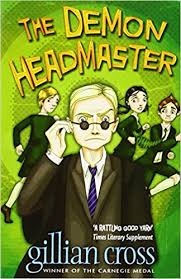
The Demon Headmaster- Satire or Instruction Manual?
Back in the 1980’s grateful English teachers seized upon
“The Demon Headmaster” as an engaging playscript for Key Stage 3 classes. It
started life as novel by Gillian Cross, but it was the script that was most in
demand. We taught it as a satire, a bit of light relief. Its shelf life was
extended by the TV version in the nineties, and its dystopian vision of the
school of the future, run by crazed, sinister and nameless aliens retained its
appeal. It was a clever, far-fetched, mad idea that teachers and school leaders
might have strange ideas of power and control over unsuspecting humans. It
allowed for the perennially attractive idea of a resistance movement, secretly
fighting against the monolithic powers of darkness and oppression. And just
like “The Handmaid’s Tale”, it’s back, with added relevance for the strange
times we are living through. Strangely, it’s set in an Academy, with a robotic
Head teacher who has weird ideas of how to treat children and staff. Where do
they get these crazy ideas from?
How we laughed at the idea of silent corridors, kids
chanting oppressive mantras in the playground, a Headteacher whose big idea was
the importance of order above all other things! Little did we know that it was
destined to be a set text on NPQH programmes, a sort of “Headteachering for
Dummies” guide. Senior leaders everywhere, who are trying to hold the line of
ethical leadership against the rising tide of the New Authoritarianism, stand
firm! You may get your feet wet, but the tide will turn.
Another great example of ideological correctness trumping
effectiveness. At a time of unprecedented austerity, His Goviness decreed that Free
Schools were The Answer, and hang the expense. If they were the answer, it must
have been a very silly question. On the back of zero credible evidence (I’m
discounting the report in Which magazine comparing the best school systems in
the world that came between the list of best small family saloons and the best
bagless cylinder vacuum cleaners) Gove pumped billions of pounds of tax payer
dosh into this madcap scheme to let anybody set up a school. You could use any
derelict building in the High Street (and, let’s face it, the supply of
derelict buildings rocketed round about this time) to put the students in and
you could get any Tom, Dick or Harry to teach them. If you remember, this was
also the time of Gove’s other stroke of genius, getting ex-service veterans
fast tracked through teacher training, to sort out local-authority -sponsored
feral student behaviour.
There didn’t even seem to be a fit and proper person test,
similar to the one that so effectively inoculates Premier League football clubs
from being taken over by dodgy Russian oligarchs, drugs barons and people with
pending court cases regarding human rights abuses. ( Oh. Hang on a minute…)
There quite clearly couldn’t have been such a test, because the poster boy for
this libertarian movement was Toby Young, a man whose brain could not cope with
the onerous task of tweeting messages
while considering , at the same time, all social norms of acceptable behaviour
with regard to women and minorities.
it was revealed that
between 2010 and 2017, the DFE spent £3.6 billion on setting up Free School. A
quarter of it was spent on Lawyers’ fees. £3.6bn! That’s nearly four bungs to
the DUP. At a time when class sizes are rising, teacher pay has been frozen for
years and class teachers are resourcing teaching materials out of their own
pockets. Value for Money, as Conservative spokespeople are wont to say. Value
for Money my arse, as Jim Royle was wont to say. You can’t put a price on
ideological purity.
The Isolation Room in StalagLuft III runs out of A4 lined paper again
I’ve followed the recent debate on the use of isolation
rooms in schools with some interest. It seems to have divided opinion, with a
vociferous group condemning their use matched by an equally passionate
opposition who take the view that staff and students need to be protected from
the disruption to teaching and learning that poor behaviour usually brings. I
wonder if the two sides are as implacably opposed as they appear.
At the last school I worked in as a Deputy Head, a school
that could reasonably be labelled “challenging”, the isolation room was an
essential component of our behaviour management strategy. We called it
“Inclusion” to try and signal that students were placed there as an alternative
to exclusion. We were actively trying to keep them in school. When I first
arrived at the school the room exhibited all the very worst characteristics of
an isolation room. It was staffed by a motley collection of odds and sods, who
just happened to be free at that time (including NQTs!). It was in a tiny room
with a handful of graffiti -covered desks, no window, no computer and, most of
the time no books, paper or equipment. Some students were placed there for days
at a time. Some students placed themselves there, to escape lessons and to meet
their mates for a bit of R and R.
We appointed a behaviour specialist to run it, moved it to a
large, airy, well stocked room and linked it to the SEN department. Over the
years it was staffed by outstanding individuals, most of them not teachers,
whose skill and dedication brought about genuine and positive changes for many
damaged students. We had exciting plans for its development. We intended to
link it to SEN formally and have two distinct wings: a temporary short- term
penal institution with strictly enforced rules and a work programme that
mirrored the classes they had been removed from. The second wing was for an
alternative curriculum provision for groups of up to fifteen students. This
could be for a month. It had specialist subject teachers attached to it as part
of their timetable and we devised therapeutic programmes with counsellors and
specialists to help these students address and confront some of their issues. The aim was for them to be readmitted to the
mainstream at the end of their programme. It took a lot of negotiating and
planning to set it up, but finally we were ready to implement the new system.
And then, after dodging the austerity bullet for several
years, we couldn’t avoid it any longer and we had to cut. We could not afford
to set it up as we had planned. It stayed as it was, still doing stirling work.
And then we had to cut again. And again. And make the brilliant, skilful staff
redundant, or move them out of behaviour provision and into delivering
mainstream classes. By the time I left, it was just about functioning as a
sinbin. And it could have been so much more than that.
Looking back, it seems clear to me that isolation rooms, or whatever
you choose to call them, only work if they are properly staffed and resourced
and if there is a commitment to work with the students in there, rather than
simply getting them to copy in silence, the educational equivalent of solitary
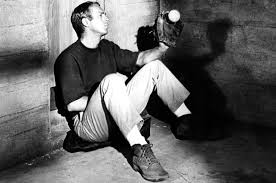
confinement. Even Steve McQueen had a baseball and a glove. That was the
trouble with those Prisoner of War camps. They just weren’t tough enough. Students
should not be left in there for days on end, and neither should staff, unless
that is their interest in terms of their career development. The trouble is, I
suspect this controversy stems from the fact that the tough, zero tolerance
devotees amongst headteachers will not see a problem with solitary confinement.
There are very few educational ideas that are intrinsically good or bad in themselves. A rubbish Senior Leadership, that hasn’t read the “How to be an emotionally intelligent human” manual, can poison the most enlightened, liberal initiative. Just as an example, I used to work in a school that completely ruined Charity MUFTI days. The kids were asked to donate a pound for the privilege of wearing their own clothes for the day, with all proceeds going to the charity they had chosen. Pretty standard practice, huh? And this, believe it or not, turned into smiling, happy kids being confronted by stern faced suits at the school entrance, making them wait silently in line while they handed over their “donation”. And, of course, some of them were from families that didn’t have two pennies to rub together, never mind a pound. At a stroke, charitable engagement turned into a Sheriff of Nottingham type tax grab and the day started with a sour confrontation.
If they can’t even get that right, I certainly wouldn’t trust them to run an isolation room.
The grass flattening takes my mind back nearly
twenty years ago when I was on the Deputy head interview treadmill. At one
gruelling interview process lasting three days (including an evening meeting the
Governors, who appeared to be the Tory Party at play in deepest Surrey. The
point of this bit seemed to be to see whether you could hold a plate of
canapes, a glass of dry white wine and still engage in small talk about
property prices and skiing holidays) I found myself in a group of five
candidates sitting in a circle. There was an outer circle, accommodating
members of the panel with clipboards, frantically scribbling notes as we all
strutted our stuff. We were meant to be members of the Senior Leadership group
and, at intervals, we were given a little slip of paper with a hot educational
topic on it. Each candidate took it in turns to introduce and chair the
discussion of the topic.
All was going well until a new topic was
introduced. To combat vandalism and poor behaviour in the toilets, the school
was going to introduce CCTV cameras inside the toilets and the cubicles. Three
of the candidates fell over themselves in their eagerness to demonstrate their
toughness. Nothing would stand in their way of stamping out bad behaviour.
Their proposals got wilder and wilder as they tried to trump each other’s
hardman credentials. I felt increasingly uncomfortable as this authoritarian
auction proceeded, but shamefully, I kept my counsel. But then, the fifth
candidate, a young woman who had been under the radar until this point,
interjected and gently pointed out that perhaps the issue of privacy had not
been given a proper airing. Silence filled the room and a look of horror spread
across the faces as they all realised that they had just made themselves look
rather foolish. It would be lovely to report that the young woman got the job,
but I’m afraid this story does not have a fairytale ending, not even for me.
One of the brutalist, authoritarian, sharp suited chaps got it, despite not
having uttered a word of sense nor imagination throughout the three days. I’m
pretty sure that he would have been first in the queue for grass flattening had
it been around back in the day. He’s probably advising them on it now.
It sounds like the sort of thing the servants might have been
tasked to do before a nice picnic on the lawn in gentler times, but the
metaphor conceals a more sinister practice. In the last week, allegations have
emerged of Academy Chains using this tactic to establish new zero tolerance
regimes in recently taken over schools. John Tomsett, Headteacher of Huntingdon
school in York, posted, “ Later in the week I heard of a MAT-endorsed
behaviour ethos-setting exercise called “flattening the grass” rolling
assemblies. Allegedly, this involves the MAT executives visiting the
school, en masse, to stand
around the edge of the assembly hall whilst the head of school outlines, in
emphatic terms to year group after year group, the MAT’s expectations of
students’ behaviour. Before the assemblies begin, individual students are
identified for the head of school to single out in front of their peers until
they cry. If the head of school is not emphatic enough, the MAT CEO walks
forward, replaces the head of school and concludes the assembly in a more
suitably emphatic manner. The students are the “grass” which is “flattened” by
the experience.” https://johntomsett.com/2019/02/03/this-much-i-know-about-behaviour-management-flattening-the-grass-and-mary-myatt/
This allegation, condemned for a while on
Twitter until it all went quiet, has resurfaced in Schools Week in an article
by John Dickens which accuses The Outward Grange Trust and the Delta Academies
Trust, both of which run many schools in the north of England, of routinely
adopting these practices. The article quotes unnamed employees of the OGAT
trust and the allegations are backed up by testimony from parents and students.
When the TES asked OGAT to respond to the allegations they were not denied and subsequently
they have employed a “political and media relations firm”, Abzed, to handle the
fallout.
What madness is this? How have we got to this
point? The response to these allegations by critics thus far has been wholly
inadequate: mild, tentative and questioning. A raised eyebrow rather than a
full-throated roar of condemnation. “Flattening” students until they cry? This
is a practice with more in common with psychological torture and interrogation
techniques than with school behaviour management. They are children for
goodness sake, children for whom the organisations in question have a duty of
care. I’m sure that every member of staff in these schools wears their ID
lanyard (too fearful of being “flattened” themselves, no doubt) and they have
been granted the Ofsted tick for safeguarding. But I have no doubt that the
pupils at these schools are far from being “safe”.
The real tragedy here is that we have
constructed a culture where this is no longer remarkable. The smack of firm
leadership is de rigeur these days. The “I make no apologies for insisting on
the highest standards” brigade have been allowed to chip away at civilized
norms of institutional practice so that just about anything goes. The end
justifies the means it seems and anyone who challenges that is dismissed as a
bleeding -heart liberal. And so these ghastly practices spread slowly and insidiously
until the fabric of the system is riddled with them.
It has to stop. Now. There needs to be an
immediate official enquiry and a statement from the DfE condemning these
practices in the strongest possible terms.
In her article in The Guardian, Susanna Rustin asks the
question, “Are (students) being put off by the way the Government says it
(English) must be taught?”
The answer, for anyone who has taught examination groups in
Secondary, or in Primary schools working towards Year 6 assessments over the
last five years or so, must be a resounding yes, yes, yes. Where there used to
be job satisfaction now lies frustration, boredom and anger. Joy, once a
regular companion on the road in English lessons, is now a rare visitor. When
it does come, it is considered a distraction, an irrelevance, a false friend. Internal
observations, performance management, analysis of exam results and residuals
have no time for this imposter. So irrelevant is it, that there is no metric to
measure it. And without measurement, there can be no value.
This arid wasteland has been coming for a long time. The
ideological tide has turned and there has been an inexorable sense that incremental
changes, in themselves often individually justifiable and manageable, together
are being used to create a model that is brutally functional, with no room for
beauty, or the shiver of emotion that a handful of crafted words can produce.
At Primary school, young children are frog marched through parts of speech, and
the disembodied parsing of their own language so that they can spot a prepositional
phrase at five hundred yards. I take my hat off to Primary colleagues who have
had to wade through all of this nonsense while still managing to preserve a
love of reading amongst their charges.
Then we have the fool’s gold of assessment without levels, provoking
an enormous waste of teacher hours and ingenuity to come up with a multitude of
systems that are impossible to compare and are less precise and accurate than
the system they replaced. Many of these new approaches were, in reality, levels
with a different label. There seems to have been a new orthodoxy established here,
and I have visited many schools where the GCSE grading system has simply been
adopted from Year 7. This compounds the idea that everything in school, from
the minute the child enters, is geared to their final product or outcome, their
GCSE grade. So once the common grading system has spread across the school community,
GCSE style assessments and texts follow. Students in Year 7 begin to tackle “GCSE
style” exam questions, on language and literature to better prepare them for
the final ordeal. They analyse Victorian non-fiction texts for structural devices.
Extended writing, where students have the space to develop ideas and sustain
them over several pages, has gone the way of the quill and VHS recorder. And
when the few students who have retained their interest in books arrive at their
first few A level lessons, they are frightened by the demands of an A level
coursework essay, which seems inordinately “long.”
The new Assessment Gods also decreed that “Best Fit” assessment
was dreadfully old- fashioned and not fit for purpose because Teacher
Assessment of children’s reading was wildly at odds with test scores. No, that
was woolly liberal thinking, the product of Gove’s Blob. Mastery Assessment was
the thing. As blindingly obvious as a populist’s analysis of the impact of
immigration and just as helpful and accurate. What a con! I have struggled in vain
to get my head around mastery assessment. I’ve tried to go beyond nodding my
head and saying, of course students must know one lesser thing, before they can
progress on to the next higher thing. Clearly, everything must aggregate incrementally,
so that bit by bit, the grains of sand accumulate to form a mountain of knowledge.
Secure knowledge that is. And from this flows the obvious conclusion, that students
must be held back, protected from knowledge they can’t possibly grasp, until
they have mastered the simpler knowledge. What nonsense. This is not the way
people learn. They learn haltingly, unpredictably, differentially. Mastery assessment
was a gift to hundreds of charlatan CPD providers (“Mastery teaching in
Geography.” Only £275 per course delegate, with discount for early booking) but
not much more. I might be wrong, but no-one has explained it to me
satisfactorily yet. Certainly not Mr Oates.
Best fit, certainly in English, is a much more useful
concept that allows professional teachers to exercise judgement, balance
strengths and weaknesses and arrive at a considered grade. Unfortunately,
judgement and balance imply a lack of rigour, a subjectivity, a lack of irrefutable
evidence. The idea that criteria- based assessment, examinations and mark
schemes provide more reliable and valid assessments of students’ achievement is
fanciful. That is just the justification, however. The real pull of the number
for the accountability gurus is the fact that it can be aggregated, to provide
system wide judgements. This assessment is not for the benefit of the student,
it is a mechanism to judge (and find wanting) teachers, schools, and local authorities.
Though not, interestingly, Academies. I prefer to go back to Myra Barrs and think,
“Words not Numbers” http://ioe.academia.edu/MyraBarrs
This new assessment brutalism has been accompanied by the
new GCSE specifications. No tiers of entry. No texts allowed in the Literature
exams. Complex questions, highly demanding reading requirement and great
pressure of time has produced a system where Senior Managements, and hard- pressed
Heads of English, have to plan their delivery of the spec, usually over three
years with endless repetitions of exam practice. Drill, drill, drill. Schools
where students spend a year learning their key literature text. No-one has yet
explained to me how making the exam harder means that standards rise. The
necessity to keep the same percentage grade distribution between the old spec
and the new clearly shows that standards haven’t risen. Once again, UK
education reverts to type, serving brilliantly the top 40% and failing
miserably the bottom 60%. Its no surprise, but a tragic policy consequence,
when students are delighted to wave good bye to the books they have been
battered with for two or three years and vow never to pick up a book again.
Meanwhile, as Rustin reminds us, there has been a crisis of
teacher recruitment. I’ll leave to one side the dog’s dinner that is Tory
policy on this area. The supply of trainee teachers has virtually dried up,
with the latest figures telling us that between 40 and 50 % of teachers leave teaching
within their first five years. In a previous life, as a Secondary Deputy Head,
I interviewed many candidates for jobs who told horror stories about the harsh
and bullying regimes in some of the best- known Academy chains, who seemed to
have an explicit policy of burning young teachers out, with a view to getting
two or three cheap years out of them before getting rid. This has also impacted
on English teaching. The Male English teacher is a particularly rare beast, at
a time when positive male role models are more important than ever. The Male
English teacher is fast becoming as endangered as the word’s insect population.
It’s a toxic cocktail: salary stagnation, oppressive and
bullying accountability regimes, grindingly dull officially -sanctioned teaching
approaches, a supply of trainees that has turned into a trickle. English
teaching was always a very demanding job, requiring real dedication and a
willingness to go the extra mile and burn the midnight oil, but it’s compensations
more than made up for the sacrifice. The classroom was a crucible of creativity
and regeneration and kept us all, students and teachers, coming back for more.
I fear that it will take a long time, and a concerted effort to change a mechanistic,
functional culture, to repair the damage that has already been done. I’m afraid
that the worst is yet to come.
On the back of the recent suggestions about banning mobile
phones in schools, I had a discussion with some of my Year 8 students. In the
middle of the discussion I noticed one student wearing what looked like a
Fitbit. In days of yore, I would have automatically assumed that they were
simply wearing a watch, but those gadgets have gone the way of the propelling
pencil or the C90 walkman. No-one seems to do watches anymore. To make sure, I
asked and was surprised when about fifteen kids put up their hands to show that
they did have a fitbit.
The discussion turned to speculation about what the next
technological development would be. One student suggested the Brain Bit. At the
beginning of every lesson, each student would be issued with a device worn on
the wrist just like the fitbit. Instead of monitoring physical indicators like
heart rate, steps, calories burned up etc, it would monitor brain activity.
Every ten minutes it would silently display a one- word summary of the wearer’s
brain activity during the last ten -minute slot. All of the summaries would be
sent automatically to a screen on the teacher’s computer, so that they had
instant access to the inner most recesses of each student’s internal life.
Possible judgements could be: Reflective. Deviant. Lazy. Vacant. Criminal. Genius. Methodical.
Speculative. Daydreaming. Creative. Oppositional. Logical. Socialist.
Each episode of display would give the student the
opportunity to self-correct, reinforce or modify their brain behaviour in the
next ten -minute slot.
Thankfully, my IT skills are as poorly developed as my sense
of entrepreneurial endeavour, otherwise I would be diligently planning world
domination on the back of this idea. It’s only a matter of time before some
visionary foists this on us.
The End of
Civilization as We Know It – School and the mobile phone
A few years ago, when “Challenging “ schools were up to
their necks in PIXL- inspired ingenious fixes to seemingly intractable
underperformance in league tables, I had to deliver the IGCSE English qualification
to those forty Year 11 kids who were amusingly labelled, “The key marginals”.
This was when Michael Gove, having totally misunderstood the nature of the
IGCSE because it was the qualification of preference of public schools great
and small, was encouraging Bash Street Kids Comprehensives across the land to
aspire to high academic standards and enter their feral kids for the IGCSE
instead. (When he actually got round to reading some of the specifications and
talking to a few people, it became clear why public schools chose to do it. It
was much easier. Academic standards my arse, as Jim Royle used to say. More of
this in the next edition of Gove’s Greatest Gaffes.)
I had attended the PIXL course, “How to deliver the IGCSE in
ten minutes from start to finish” and was working my way through it with said forty
key marginals in the Exam Hall. One of the coursework assignments we did (Yes,
that’s right, Govey recommended doing coursework. As I said, he hadn’t bothered
to do his homework.) was based on a ghastly article on the Mail Online about
the iniquitous evil of mobile phones in schools, which suggested that up and
down the country school students were viewing porn in the classroom and physically
assaulting teachers who dared to challenge them. It produced great written
responses from most of the students, once they had got their heads around the
fact that the journalist in question seemed to be writing about a school system
that only existed in her tabloid imagination. As one of the kids said,
scratching his head in bewilderment, “Why didn’t the school just have rules
about mobiles in the classroom and enforce them?” That was the system he was
used to and, I suspect, the vast majority of students across the country as
well.
The fact is that most schools have perfectly sensible and
workable rules regarding mobiles and it really isn’t a big problem. Banning
them belongs to the same school of over the top Senior Management madness as Corridors
of Silence and Zero Tolerance. They are part of modern life and they aren’t going
to go away. Teach students how to use them appropriately and get over it. Last
week, just as this story broke , I had just had two fantastic lessons with Year
8 that absolutely depended on all of the kids using their mobiles for research.
Be the adult in the room.
Gove’s
Greatest Gaffes
Number 2. Introducing the e-Bacc
Coming in at number 2 is this, one of many incarnations of
that curious phenomenon, the return to Michael Gove’s School Days. Many of
Michael’s deepest instincts reside in his certainty that things used to be
better in the golden age, before trendy lefty liberals dumbed it all down with
stuff like, umm, Media Studies, and GNVQs in Peace Studies that were worth four
GCSEs in the league tables. This was a brazen attempt to make everyone take
Geography and Languages and the like, rather than noddy left wing subjects like
Drama and Art. Although National College of School Leadership lickspittle
clones cracked the whip and proudly boasted of how they had forced through
these changes on their students and staff, many school leadership teams showed
much more backbone and resisted, preferring to stick instead to a curriculum
that was right for their children. Oh, the irony. The forces of darkness, who
in their Thatcherite guise loudly trumpeted their commitment to “choice”, would
not tolerate thick working class kids choosing “easy” subjects. Choice is all
well and good, as long as the right things are chosen. A bit like the will of
the people.
I
used to work at a boys’ school in South London with a good friend who one day
was tasked with giving the leaving speech at the end of the Sumer Term to the
Headteacher who was retiring after ten years or so of service. The Head, Arthur
Bland (names have been changed to protect the innocent), had been supremely
ineffective for the entire period of his tenure. The speech provoked gasps of
shock and then admiration as it started with the immortal lines, “I think we
all owe you a profound debt of gratitude for your singular achievement over the
last ten years, an achievement so radical, so revolutionary, that it is
unlikely to be either understood or emulated. You have made absolutely no
difference. You bravely ignored the temptation to introduce radical change and
you left us all alone to get on with our jobs. And we have been much the better
for it.”
Truth
to tell, Arthur was not following a deliberate philosophy of Zen-like inaction.
He was just lazy and clueless. But his example holds an important lesson for us
all: Beware the new Senior Leader desperate to Make Their Mark.
And
now my confession. Reader, I was that guy. And I’m sorry. If I were to be
knocked over by a bus tomorrow and rushed to hospital, the consultant who
opened me up to perform emergency life-saving surgery would find curiously
engraved on my heart the legend, “ Sorry about VAK.” If it all got too much,
and a neatly folded pile of clothes were to be discovered on Brighton beach,
days after my disappearance, the letter left next to the pile would read, “And
I’m really sorry about making you do that Brain Gymn.”
Honestly,
although the memory makes me go all hot and flushed, it seemed like a Good Idea
at the Time. Everyone was doing it, not just me. And I had to do something,
obviously. I was new, external and in post. And everyone was looking at me,
waiting for me to bugger it all up. I had a career to build and a mortgage to
pay. I had to do something. Anything.
And, of course, the same thing has carried on relentlessly. It’s going on now. Its going on in your school. A new, thrusting young firebrand leader somewhere is ruthlessly implementing some mad scheme, convinced that not to do so would be failing the kids. Or at least making you and the rest of the staff feel that. And they still keep coming: E-Bacc, Assessment without levels, Mastery assessment, the Knowledge curriculum, Literature exams without books, silence in corridors, lining up in fire drill positions every day, triple marking, PIXL madness. Dear Lord, spare us.
A new Hippocratic oath is needed for Education: Do No Harm.
Gove’s Greatest Gaffes
There
have been countless utterly hopeless Secretaries of State for Education since
the original swivel- eyed, mouth- foaming loon, Sir Keith Joseph at the back
end of the Seventies. The queue from the current incumbent, Damian “Simple”
Hinds, stretches back to the crack of doom. But the unchallenged Daddy of all
of these charlatans has to be Michael Gove.
The
charge sheet against him is long and weighty. On the principle that History
teaches us what mistakes to avoid in the future, it’s useful and instructive to
remind ourselves of Gove’s most heinous crimes. Coming in at Number one is this
little beauty:
Singlehandedly sucking the last atom
of joy out of teaching English, and more important, learning English.
Picture
the scene. Early September and I’m teaching a beautiful Year 7 class, uniforms
still pressed and pristine, faces eager, books unblemished, new and full of the
promise of the future within their grasp. I’m teaching a hoary old classic,
getting them to do some extended writing (after some exploratory group talk, of
course) about their old primary school. The kids love, in the middle of this
Brave New World, to give themselves up to a bit of comforting nostalgia.
I’m
trying to establish a class agreement about some useful criteria to extend the
depth and quality of their writing. “So”, I say breezily, “what kind of things
might you include to make this piece of writing better?”
A
forest of hands go up, the kids leaning on one elbow, almost bursting. I turn
to one girl and ask, “Yes, what do you think?”
She
hesitates for a moment and composes herself. Finally, she tentatively gives her
answer, dredging up all she had learned back in her old school in the run up to
the tests. “Err…….., a fronted adverbial, Sir?”
Something
inside rolled over at that moment and died quietly.
If anyone mentions a fronted adverbial again, I’ll scream….









 The Old Grey Owl